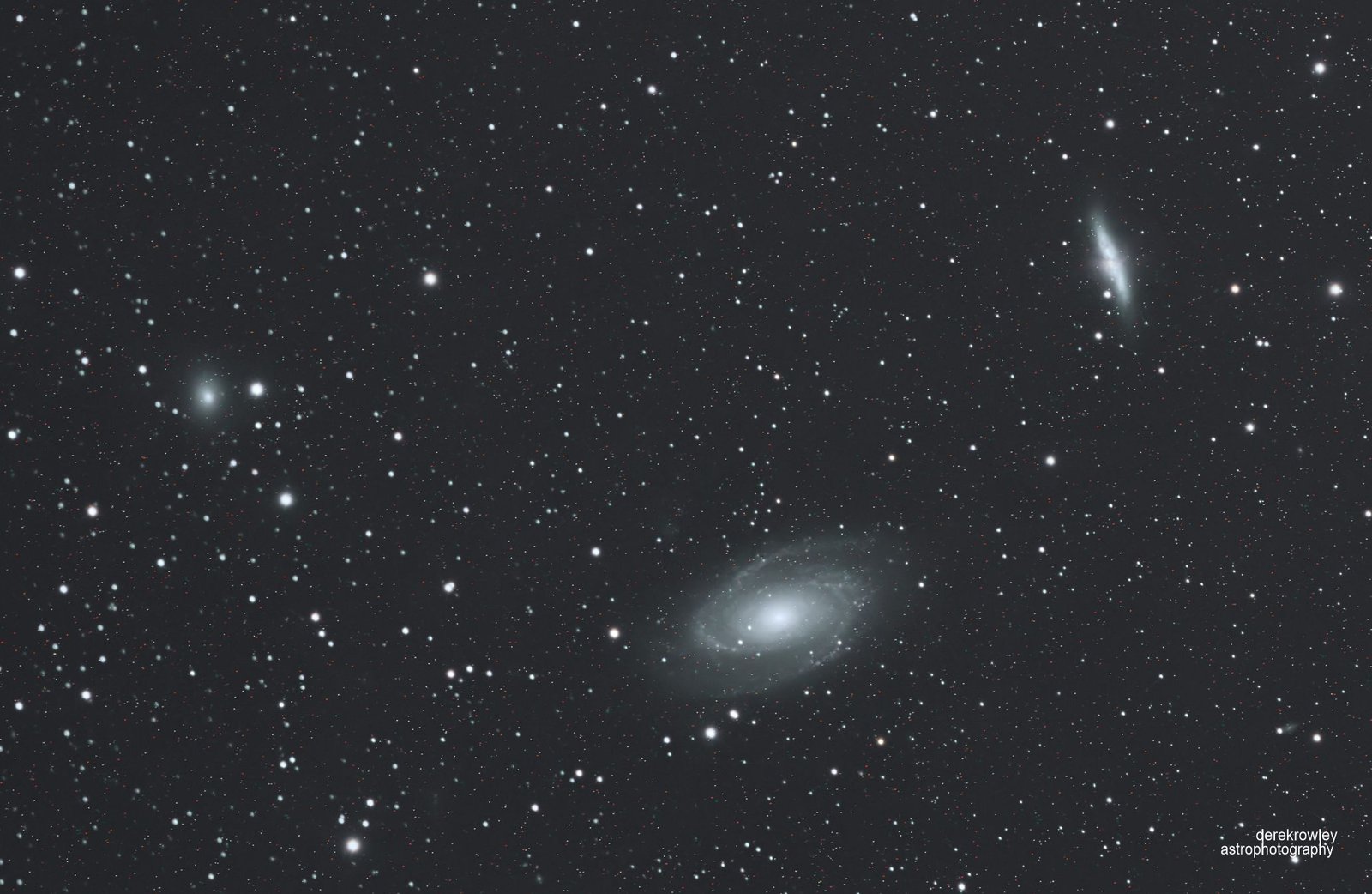
Messier 81 & 82 (companion)
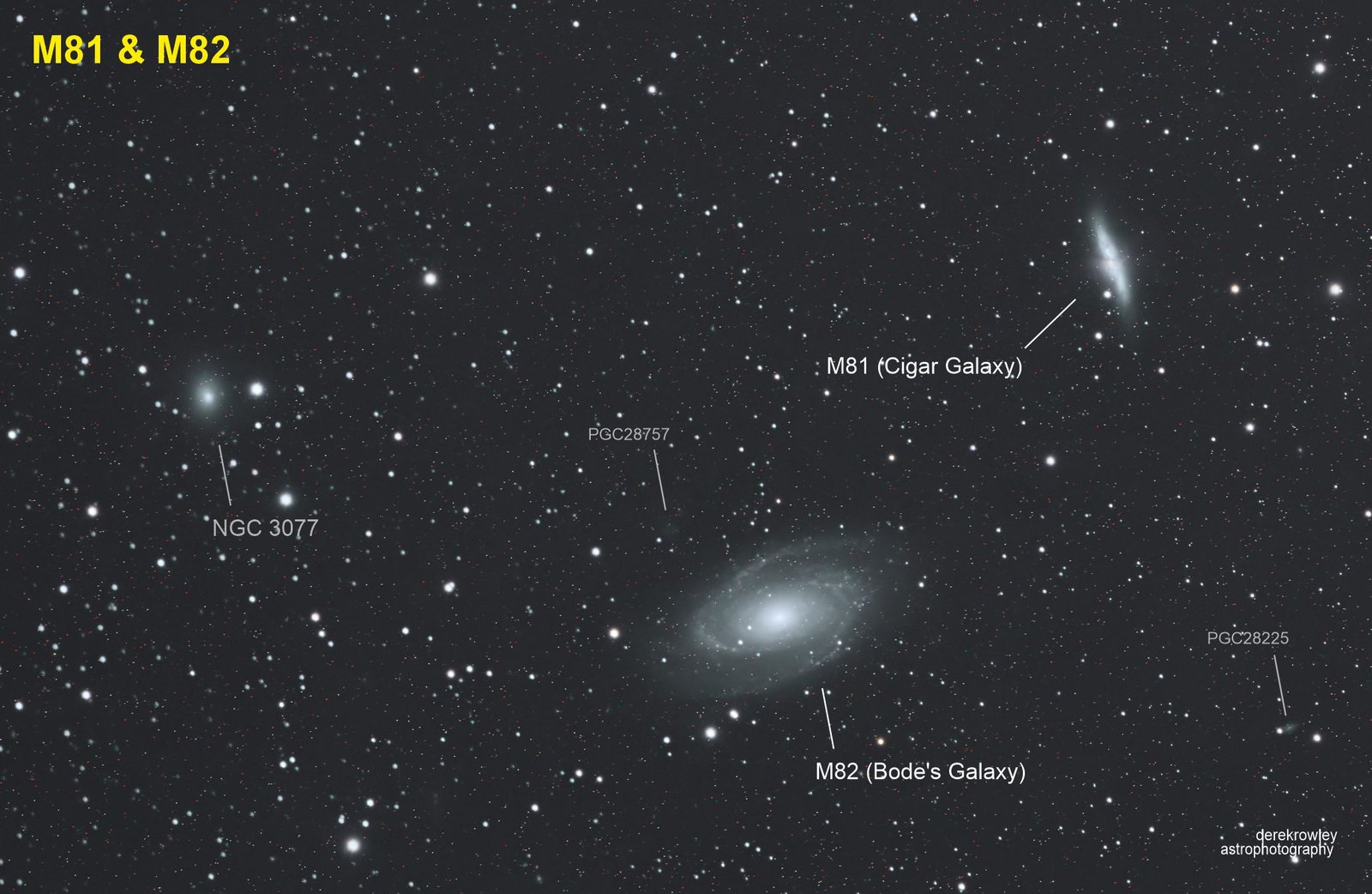
- Messier 81 (M81) and Messier 82 (M82) are famous for being a dynamically interacting pair of galaxies located in the constellation of Ursa Major.
o - Messier 81 (Spiral) almost perfect, well-defined spiral arms, making it one of the brightest and most visually stunning spiral galaxies in the night sky.
o - Messier 82 (Starburst Activity) is the “starburst” galaxy ~ it is producing stars at a rate 10 times faster than the entire Milky Way.
- Object Name
M81 & M82
- Object Type
Galaxies
- Constellation
Ursa Major
- Magnitude
M81: +6.9
M82: +8.4
- Distance
M81: 11.8 million ly
M82: 12 million ly
- Annotate
oooo
Equipment
Telescope:
Mount:
Accessories:
Sky-Watcher Esprint 80ED Triplet
Sky-Watcher AZ-EQ6 GT
ZWO ASIair Plus / PixInsight
Camera:
Guiding:
Filter:
ZWO ASI2600MC Pro cooling
ZWO ASI1200MM
2″ Optolong eNchance
Bortle Scale: Milton Keynes, Buckinghamshire (Bortle 6.6)
oooo
Integration
- Date:
Tuesday 17th March 2026
- Moonlit:
Wanning Crescent 28 days old
Magnitude: -8.57
Moonlit: 0.59%
- Total:
180’s x 25 subs = 1 hour 25 minutes
oooo
oooo
Constellation :- Monoceros (The Unicorn)
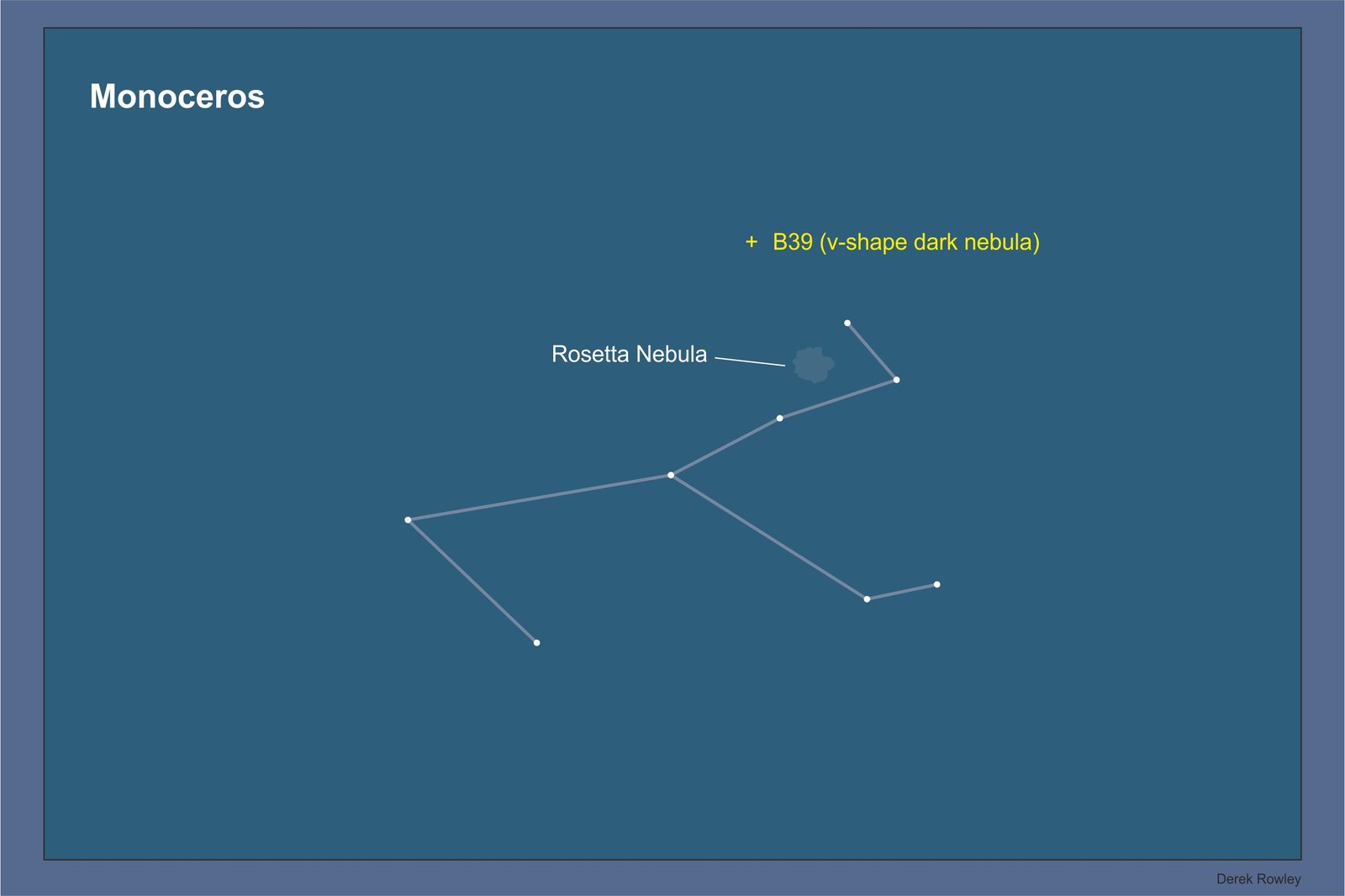
Object :-
oooo
Object :-
Other name :-
Type :-
Magnitude :–
Distance :-
Constellation :-
Right Ascension :-
Declination :-
oooo
oooo
B39
LDN 1610
Dark Nebula
n/a
2,700 light years / 23 light years across
Mon (Monoceros / The Unicorn)
06h 38m 27s
+10° 19′ 12″
Enlarge on click the map.
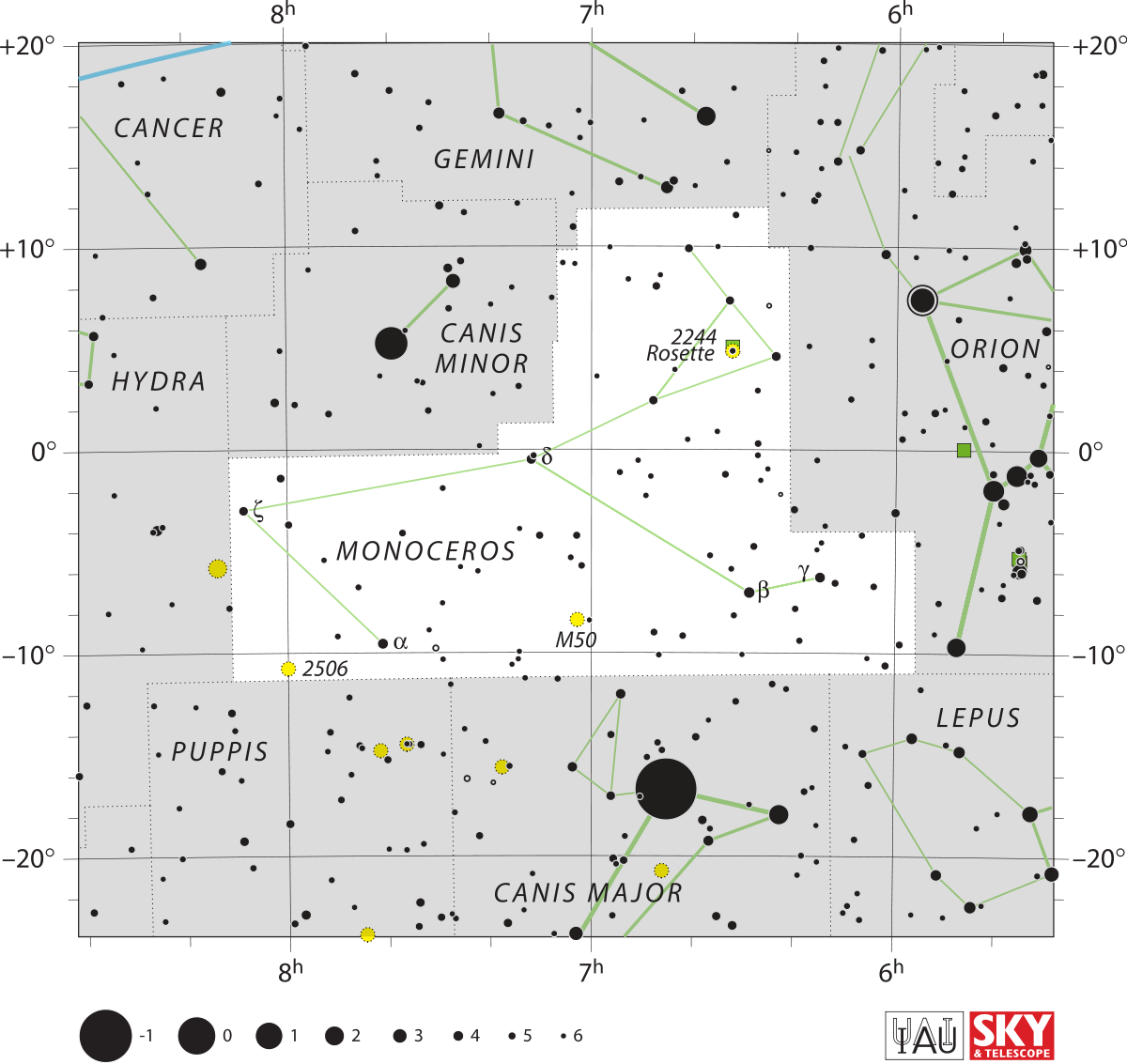
(Click the map above for a large view.)
| Abbreviation: Mon |
| English Name: The Unicorn |
| Genitive: Lucida |
| Hemisphere: Northern and Southern Hemisphere. (Bold means the more area in square feet in Southern Hemisphere.) |
| Location: Between the constellations of Canis Minor and Orion. |
| Visible between latitudes: +75 and -85 degrees |
| Best season: Late winter |
| Seen in three seasons: Autumn, Winter and Spring |
| Best seen in: February (map) and March (map) |
| Seen between: February and April |
| Right Ascension (RA): 07 hour |
| Declination (DEC): -05 degrees |
| Area (square degrees): 482 square degrees (35th) |
oooo
oooo
Facts about B39
oooo
- Barnard 39 is a huge cloud of dust and gas.
o - It doesn’t shine like a star. Instead, it blocks the light from stars behind it, making it look like a dark patch in the sky.
oooo
oooo
oooo
oooo
oooo
oooo