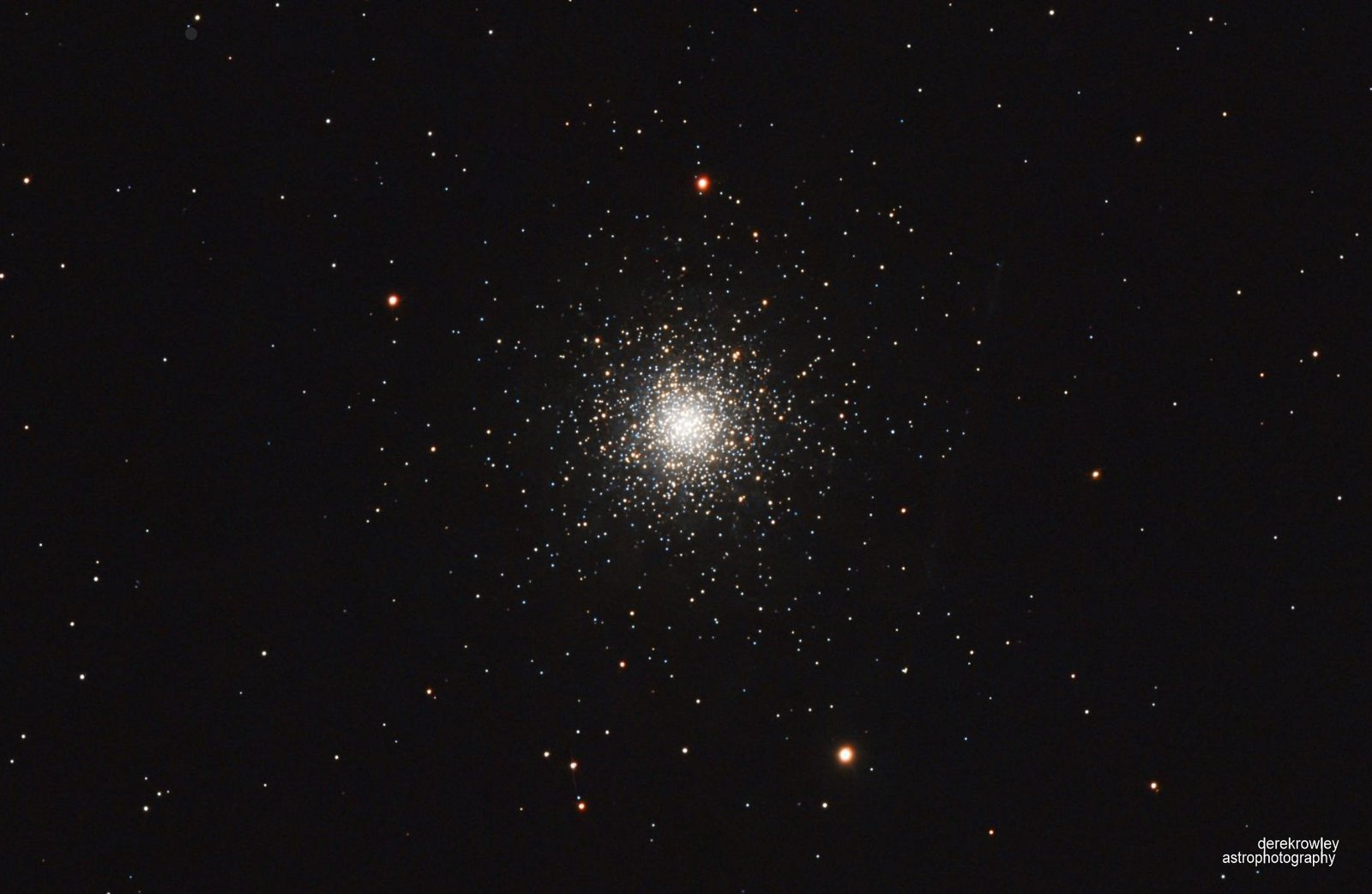
Messier 3 (Globular Cluster) / NGC 5272
- Hubble images reveal a large population of blue stragglers ~ stars that look young but are actually old stars that gained mass, likely by merging or stripping material from companions.
o - They’re perfect for outreach analogies about stellar evolution.
o - One of the brightest and best-known globular clusters visible from the Northern Hemisphere.
o - M3 Globular Cluster ~ it’s easy to find with binoculars or small telescopes.
o
- Object Name
M3
- Object Type
Globular Cluster
- Constellation
Canes Venatici
- Magnitude
+6.4
- Distance
33,900 light-years
- Age
6.5 billion years old
oooo
Equipment
Telescope:
Mount:
Accessories:
Sky-Watcher Esprint 80ED Triplet
Sky-Watcher AZ-EQ6 GT
ZWO ASIair Plus / PixInsight
Camera:
Guiding:
Filter:
ZWO ASI585MC Pro cooling
ZWO ASI1200MM
2″ Optolong eNchance
Bortle Scale: Kelling Heath, Welbourne, North Norfolk (Bortle 6.6)
oooo
Integration
- Date:
Wednesday 24th September 2025
- Moonlit:
Waxing Crescent 3 days old
Magnitude: -9.8
Moonlit: 7.8%
- Total:
180’s x 10 subs = 30 minutes
oooo
oooo
Constellation :- Canes Venatici (The Hunting Dogs)
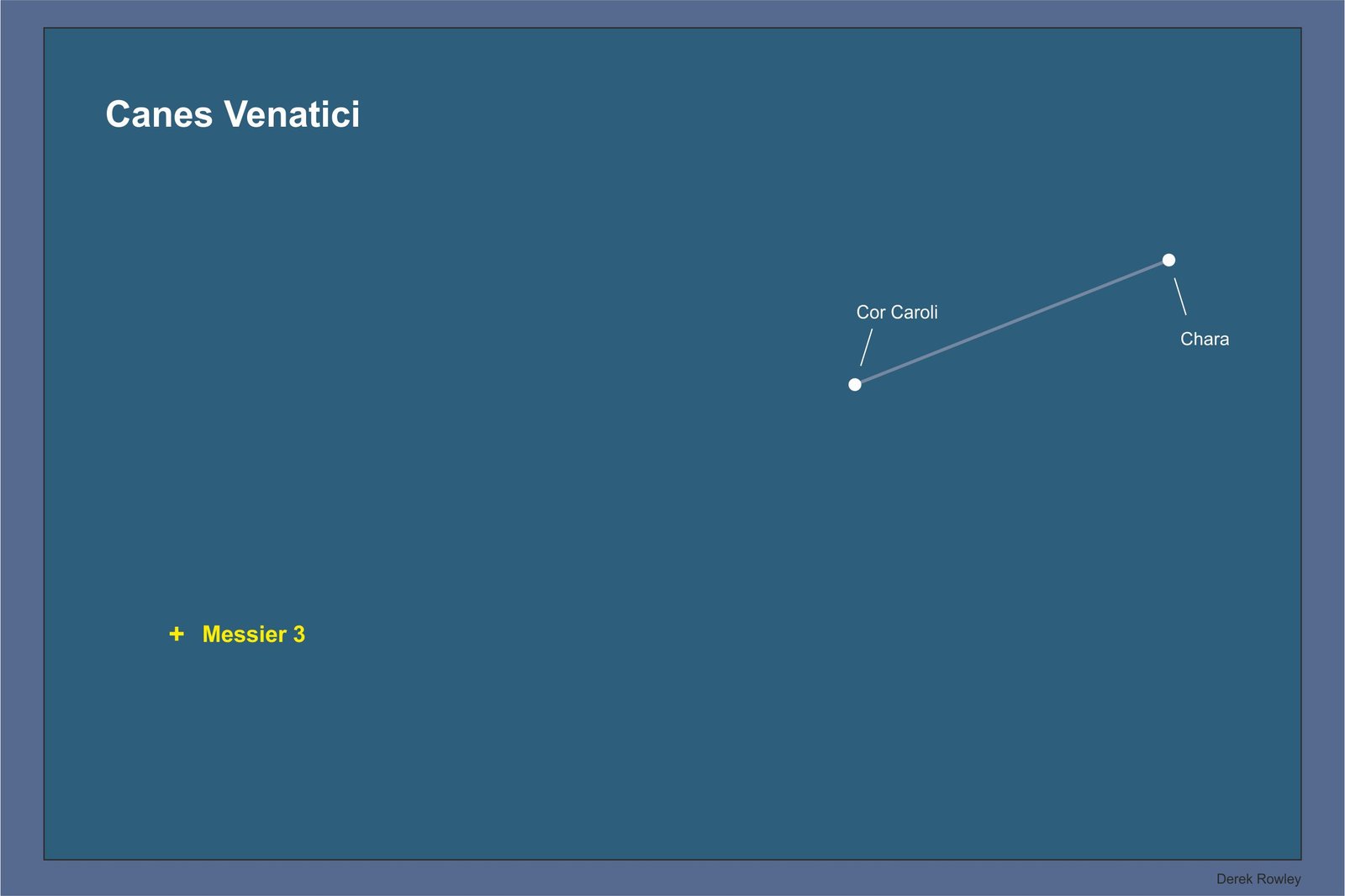
Object :-
oooo
Object :-
Other name :-
Type :-
Magnitude :–
Distance :-
Constellation :-
Right Ascension :-
Declination :-
oooo
oooo
M3
NGC 5272
Globular Cluster
+6.4
33,900 light years / 180 light years across
CVn (Canes Venatici / The Hunting Dogs)
13h 42m 12s
+28° 22′ 38″
Enlarge on click the map.
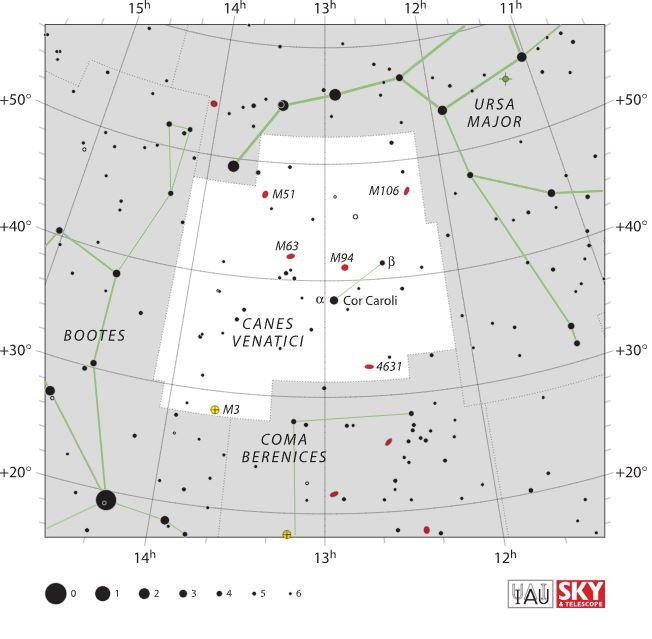
(Click the map above for a large view.)
| Abbreviation: CVn |
| English Name: The Hunting Dogs |
| Genitive: Cor Caroli |
| Hemisphere: Northern Hemisphere |
| Location: Between the constellations of Puppis and Lepus. |
| Visible between latitudes: +90 and -40 degrees |
| Best season: Spring |
| Seen in three seasons: Winter, Spring and Summer |
| Best seen in: Early May (map) |
| Seen between: Circumpolar (This constellation of Camelopardalis stays in the Sky all the year.) |
| Right Ascension (RA): 13 hour |
| Declination (DEC): +40 degrees |
| Area (square degrees): 465 (38th) |
oooo
oooo
Facts about M3
oooo
- Around 400,000 to 500,000 stars are packed into M3.
o - M3 contains more than 200 variable stars ~ Variable stars change brightness over time, like cosmic blinking lights.
o
oooo
oooo
oooo
oooo
oooo
oooo