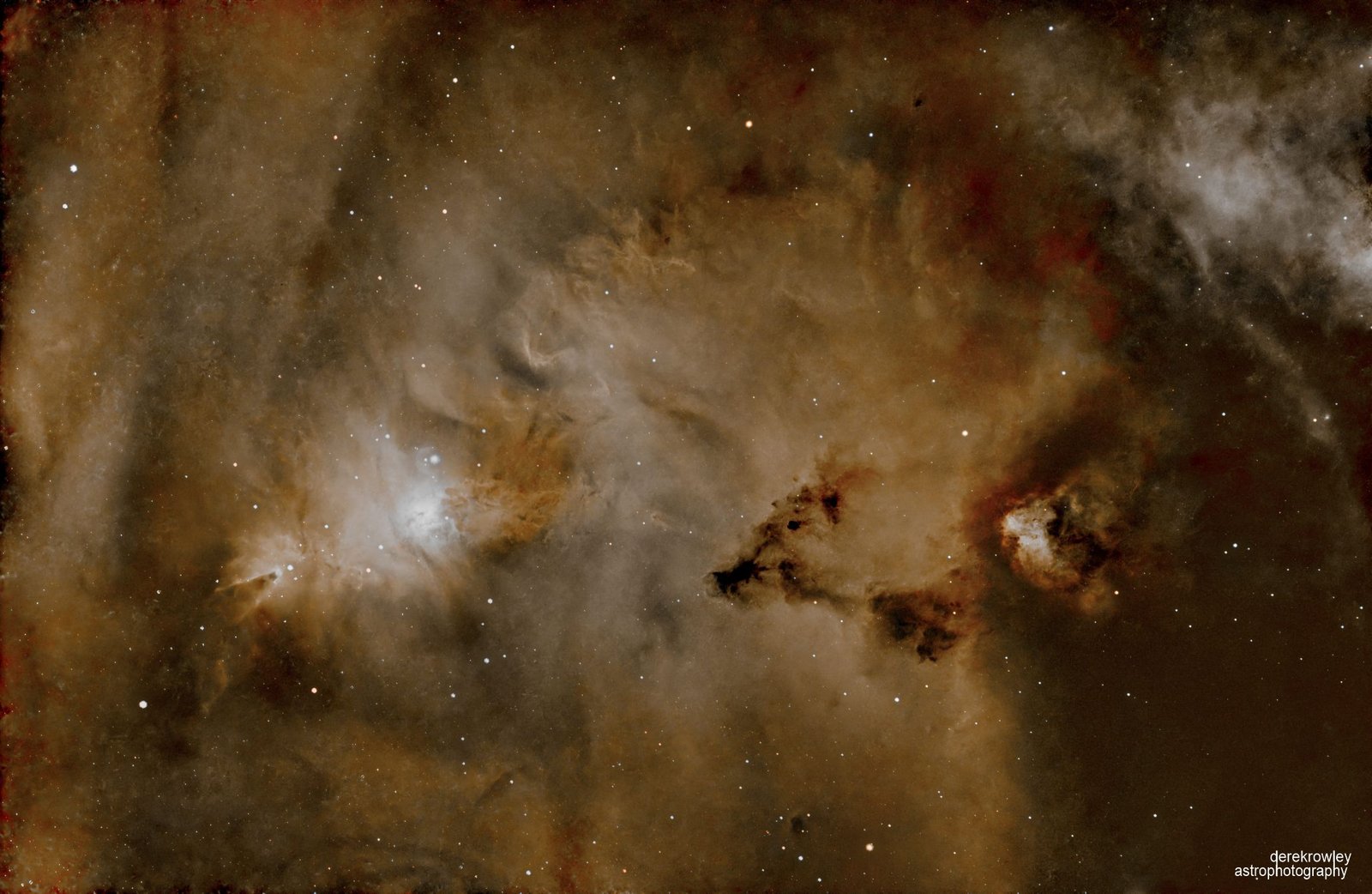
Barnard 39
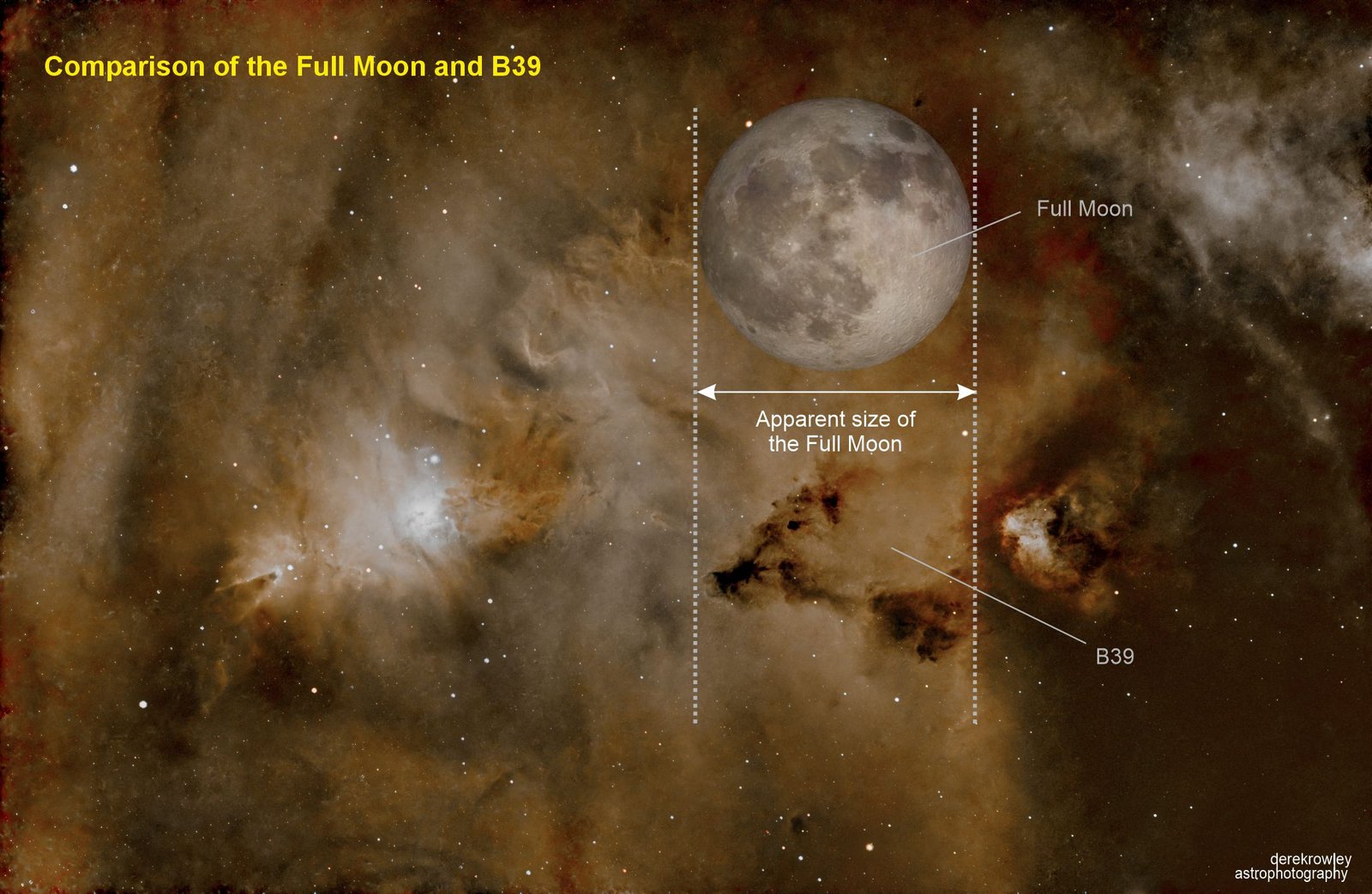
- Barnard 39 (B39) is a dark nebula.
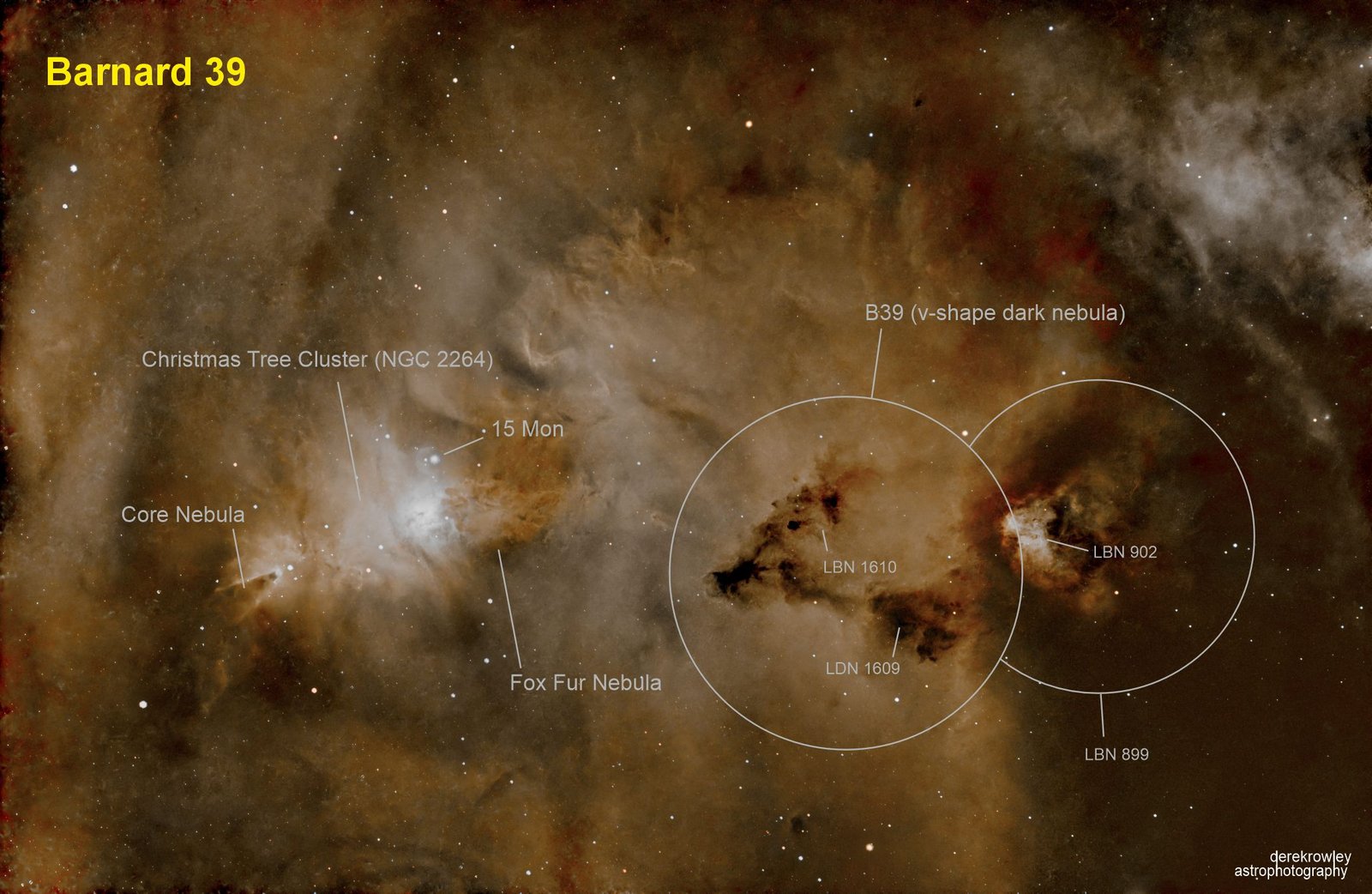
o - It has a dense cloud of interstellar dust that blocks the light of background stars, making it appear as a dark “V‑shaped” patch in wide‑field images of the Christmas Tree Nebula region.
o
- Object Name
B39
- Object Type
Dark Nebula
- Constellation
Monoceros
- Magnitude
n/a
- Distance
2,700 ly
- Annotated
oooo
Equipment
Telescope:
Mount:
Accessories:
Sky-Watcher Esprint 80ED Triplet
Sky-Watcher AZ-EQ6 GT
ZWO ASIair Plus / PixInsight
Camera:
Guiding:
Filter:
ZWO ASI2600MC Pro cooling
ZWO ASI1200MM
2″ Optolong eNchance
Bortle Scale: Milton Keynes, Buckinghamshire (Bortle 6.6)
oooo
Integration
- Date:
Wednesday 25th November 2025
- Moonlit:
Waxing Crescent 5 days old
Magnitude: -11.2
Moonlit: 24%
- Total:
180’s x 50 subs = 2 hours 30 minutes
oooo
oooo
Constellation :- Monoceros (The Unicorn)
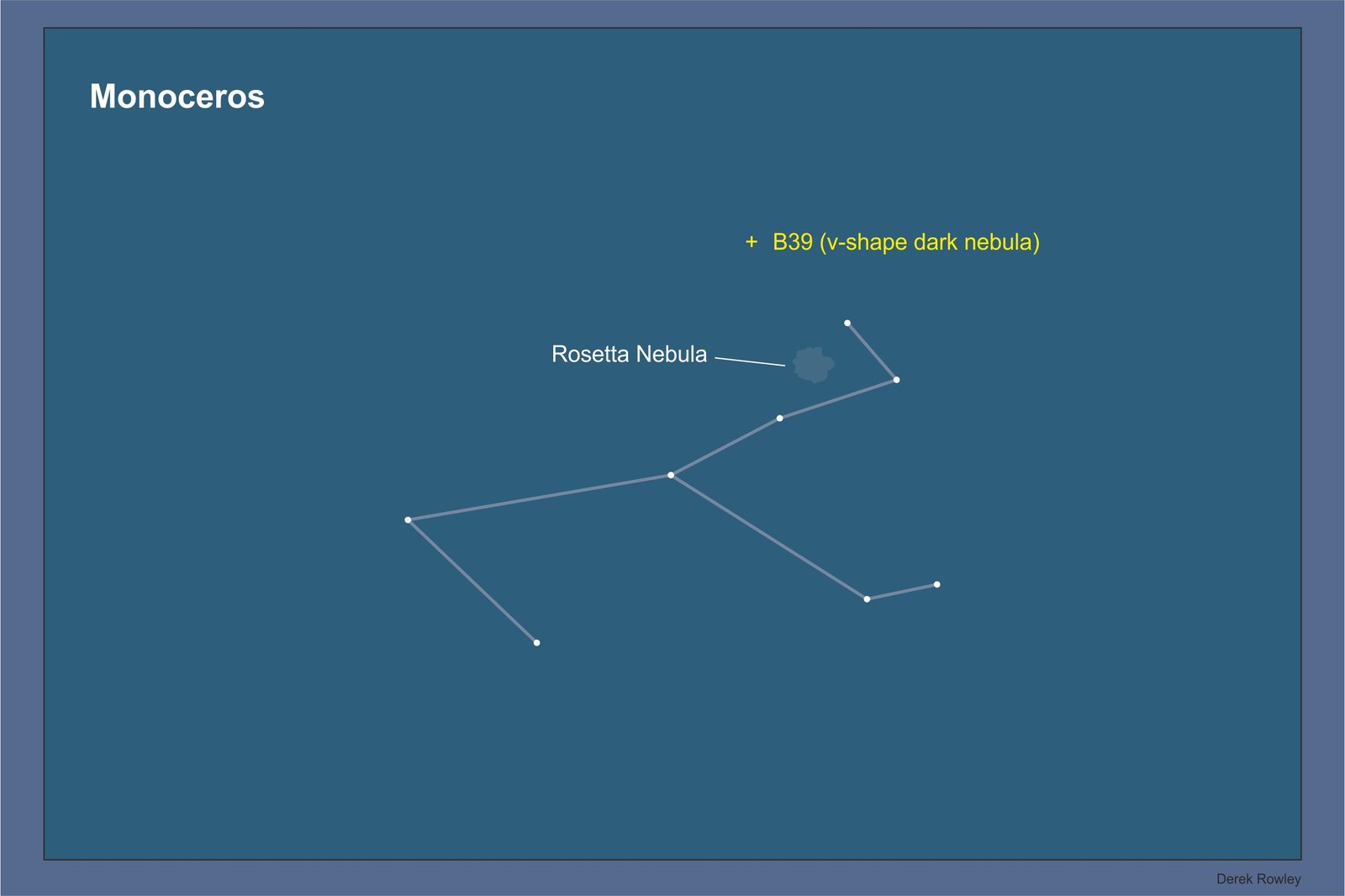
Object :-
oooo
Object :-
Other name :-
Type :-
Magnitude :–
Distance :-
Constellation :-
Right Ascension :-
Declination :-
oooo
oooo
B39
LDN 1610
Dark Nebula
n/a
2,700 light years / 23 light years across
Mon (Monoceros / The Unicorn)
06h 38m 27s
+10° 19′ 12″
Enlarge on click the map.
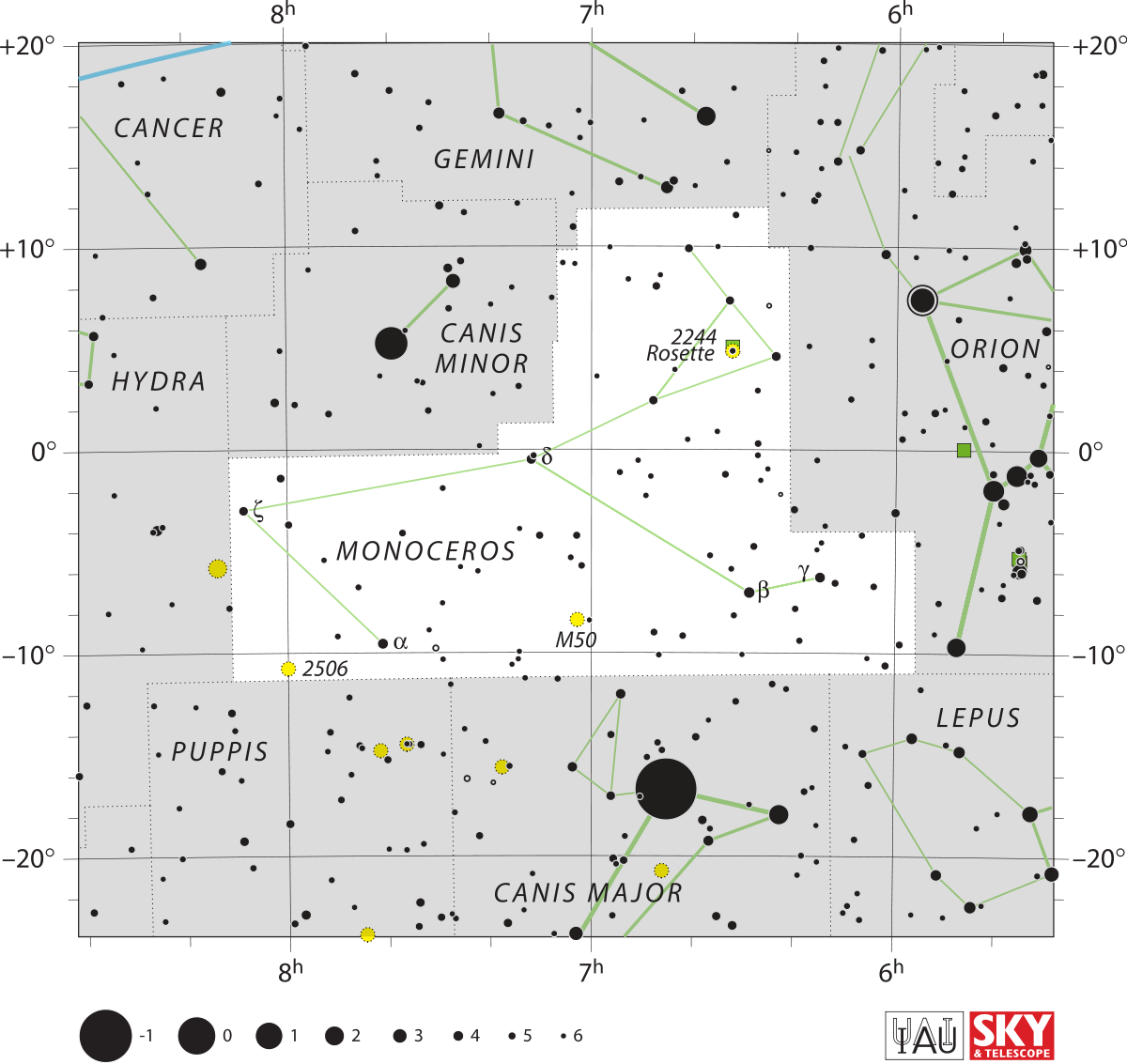
(Click the map above for a large view.)
| Abbreviation: Mon |
| English Name: The Unicorn |
| Genitive: Lucida |
| Hemisphere: Northern and Southern Hemisphere. (Bold means the more area in square feet in Southern Hemisphere.) |
| Location: Between the constellations of Canis Minor and Orion. |
| Visible between latitudes: +75 and -85 degrees |
| Best season: Late winter |
| Seen in three seasons: Autumn, Winter and Spring |
| Best seen in: February (map) and March (map) |
| Seen between: February and April |
| Right Ascension (RA): 07 hour |
| Declination (DEC): -05 degrees |
| Area (square degrees): 482 square degrees (35th) |
oooo
oooo
Facts about B39
- A wide‑angle view of the Christmas Tree Nebula region (NGC 2264) shows the vast scale of this cloud of gas and dust, far larger than the apparent size of the Full Moon.
o
oooo
oooo
oooo
oooo
oooo
oooo