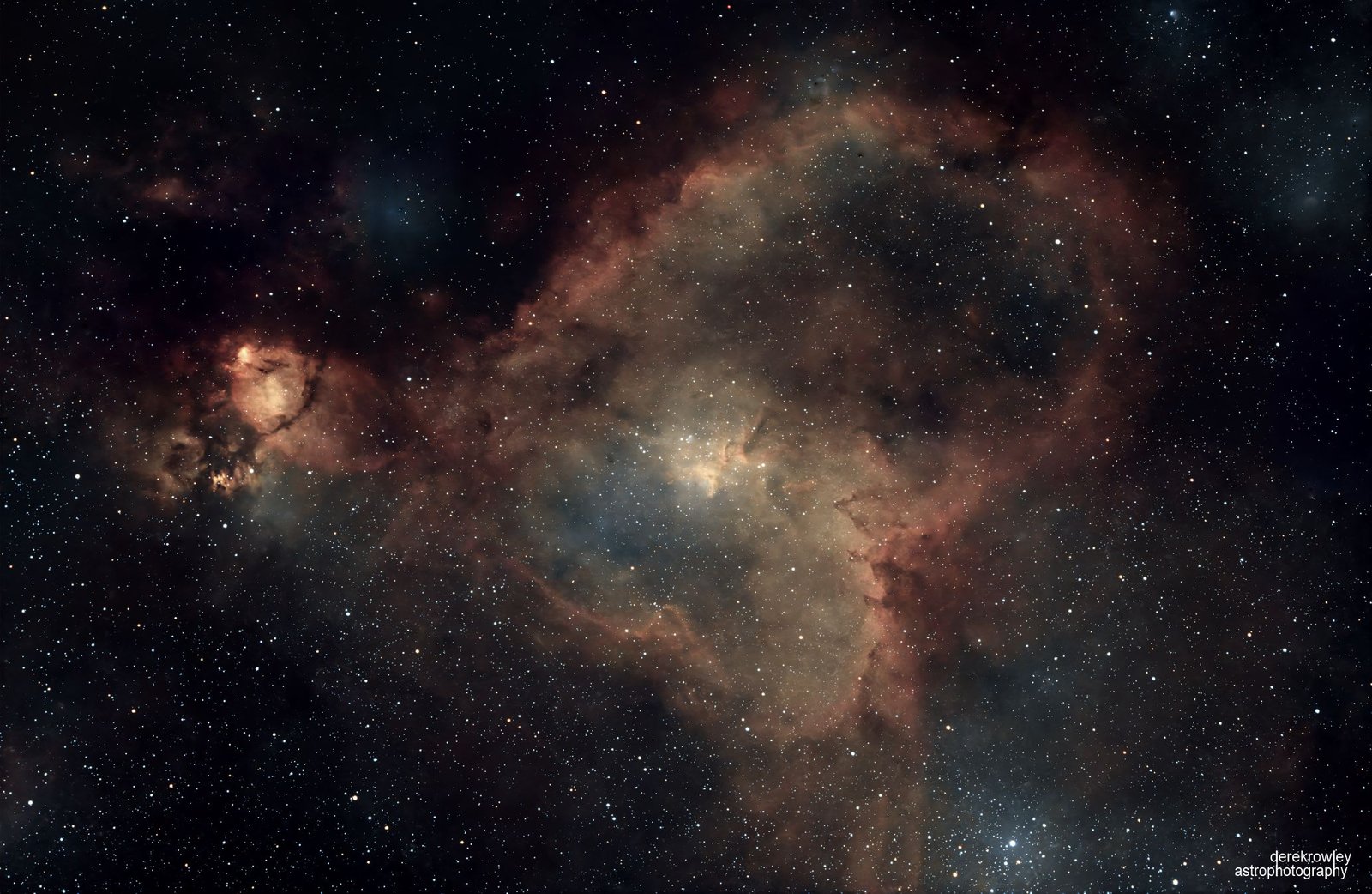
IC 1805 (Heart Nebula)
- The nebula’s famous heart shape (IC 1805)
It is sculpted by stellar winds and intense radiation from these young stars, which carve out cavities, pillars, and dark dust lanes within the gas.
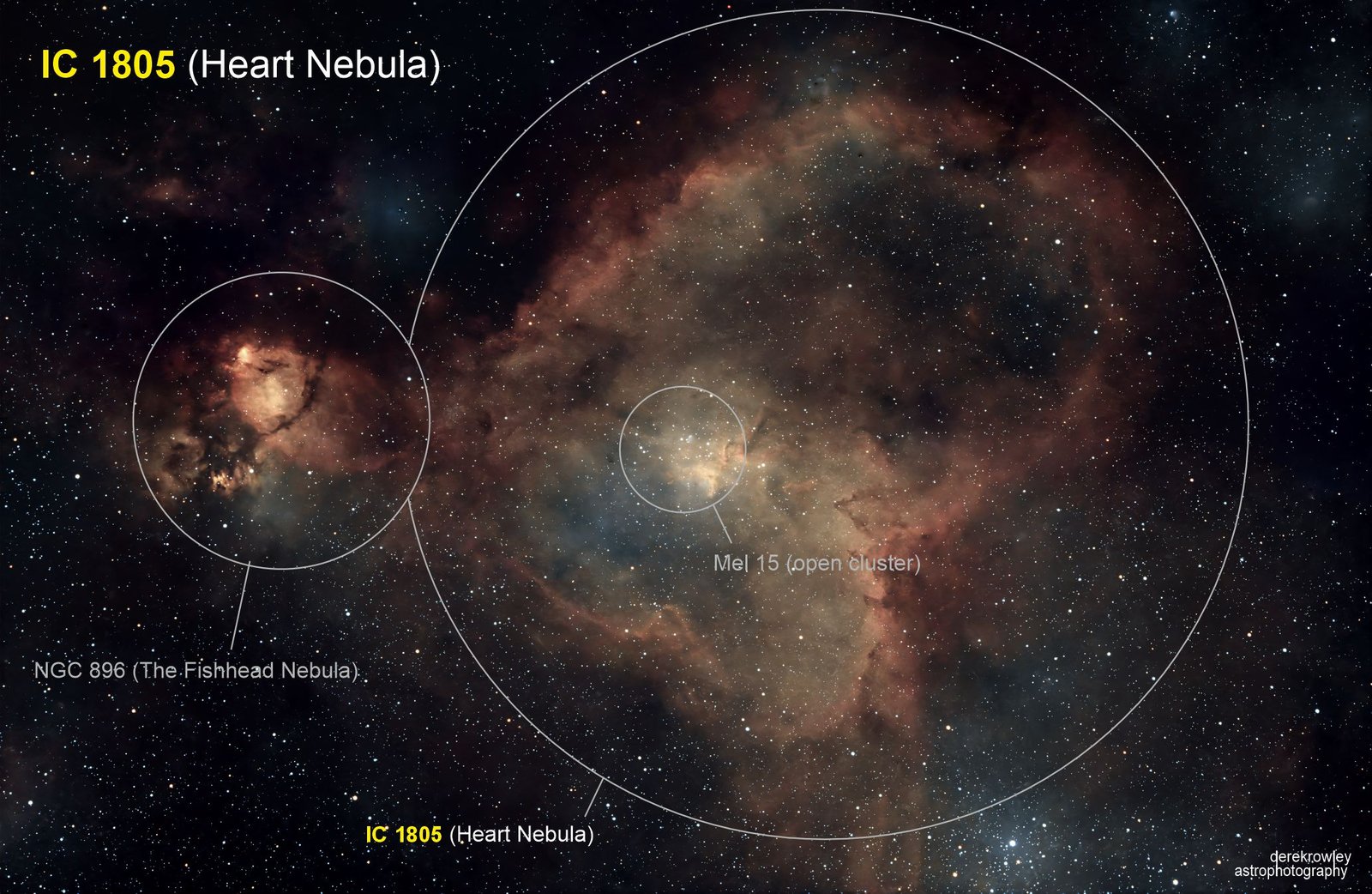
o - Central star cluster
Melotte 15 (Mel 15), a very young open cluster containing massive, hot stars whose ultraviolet radiation causes the surrounding hydrogen gas to glow.
o - Soul Nebula (NGC 1848)
The nearby Soul Nebula is often photographed together with the Heart Nebula.
o
o
o
- Object Name
IC 1805
- Object Type
Emission nebula
- Constellation
Cassiopeia
- Magnitude
7.0
- Distance
7,500 light-years
- Annotated
oooo
Equipment
Telescope:
Mount:
Accessories:
Sky-Watcher Esprint 80ED Triplet
Sky-Watcher AZ-EQ6 GT
ZWO ASIair Plus / PixInsight
Camera:
Guiding:
Filter:
ZWO ASI2600MC Pro cooling
ZWO ASI1200MM
2″ Optolong L-eNhance
Bortle Scale: Kelling Heath, Weybourne, North Norfolk (Bortle 4.1)
oooo
Integration
- Date:
Tuesday 10th October 20234
- Moonlit:
Waning Crescent 26 days old
Magnitude: -12.4
Moonlit: 14%
- Total:
180‘s x 20 subs = 1 hour
oooo
oooo
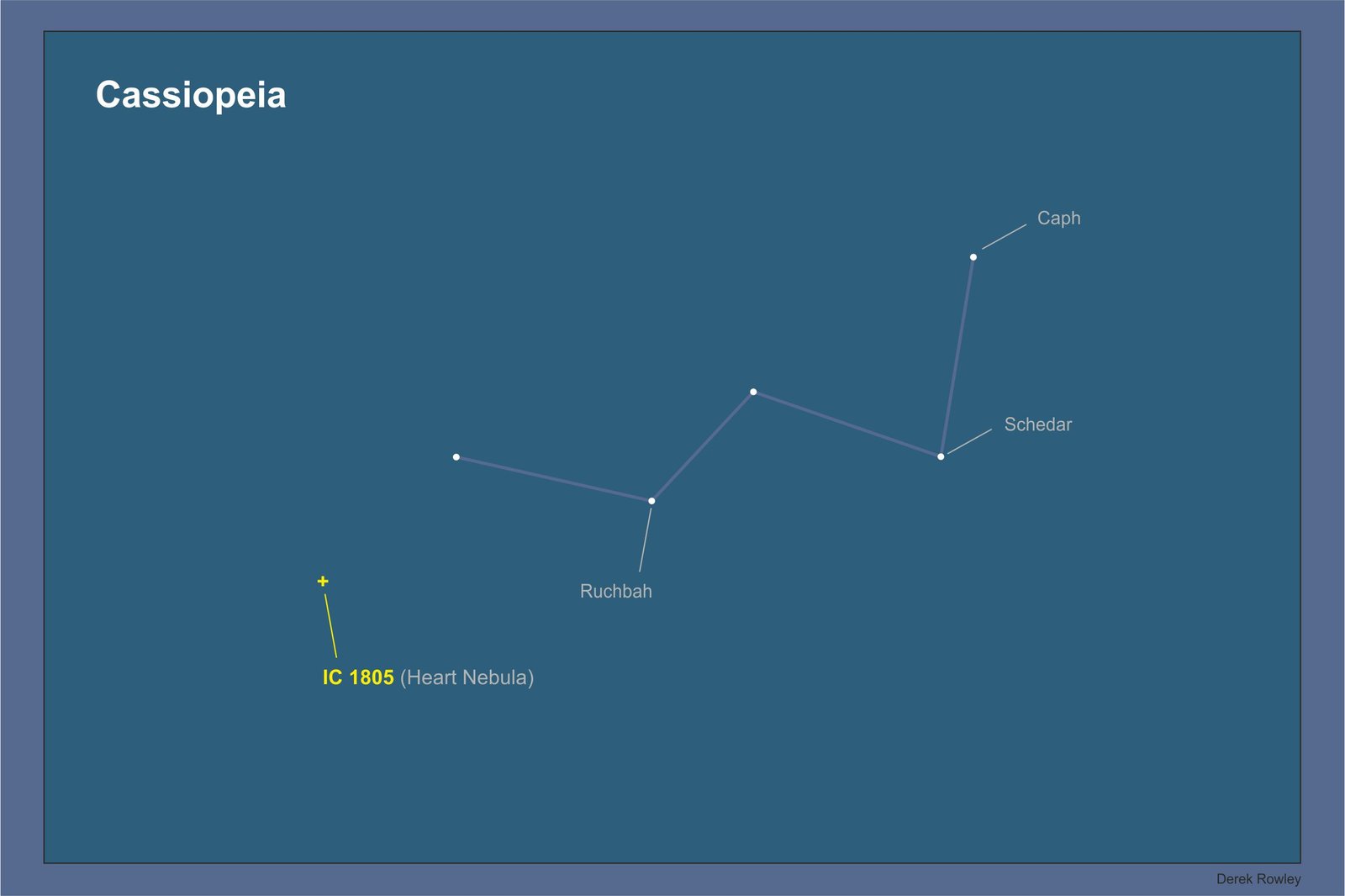
Constellation :- Cassiopeia (The Queen)
Object :-
oooo
Object :-
Other name :-
Type :-
Magnitude :–
Distance :-
Constellation :-
Right Ascension :-
Declination :-
oooo
oooo
IC 1805
Heart Nebula
Emission nebula
+7.0
7,500 light years / 200 light years across
Cas (Cassiopeia (The Queen)
02h 32m 42s
+61° 27′ 00″
Enlarge on click the map.

(Click the map above for a large view.)
| Abbreviation: Cas |
| English Name: The Cassiopeia Queen |
| Genitive: Schedar, sometimes spelt Shedar or Shedir. |
| Hemisphere: Northern Hemisphere |
| Location: Between the constellations of Andromeda and Cephus. |
| Visible between latitudes: +90 and -20 degrees |
| Best season: Autumn |
| Seen in three seasons: Summer, Autumn and Winter |
| Best seen in: November |
| Seen between: Circumpolar (This constellation of Cassiopeia stays in the sky all the year.) |
| Right Ascension (RA): 01 hour |
| Declination (DEC): +60 degrees |
| Area (square degrees): 598 (25th) |
oooo
oooo
Facts about IC 1805 (Heart nebula)
oooo
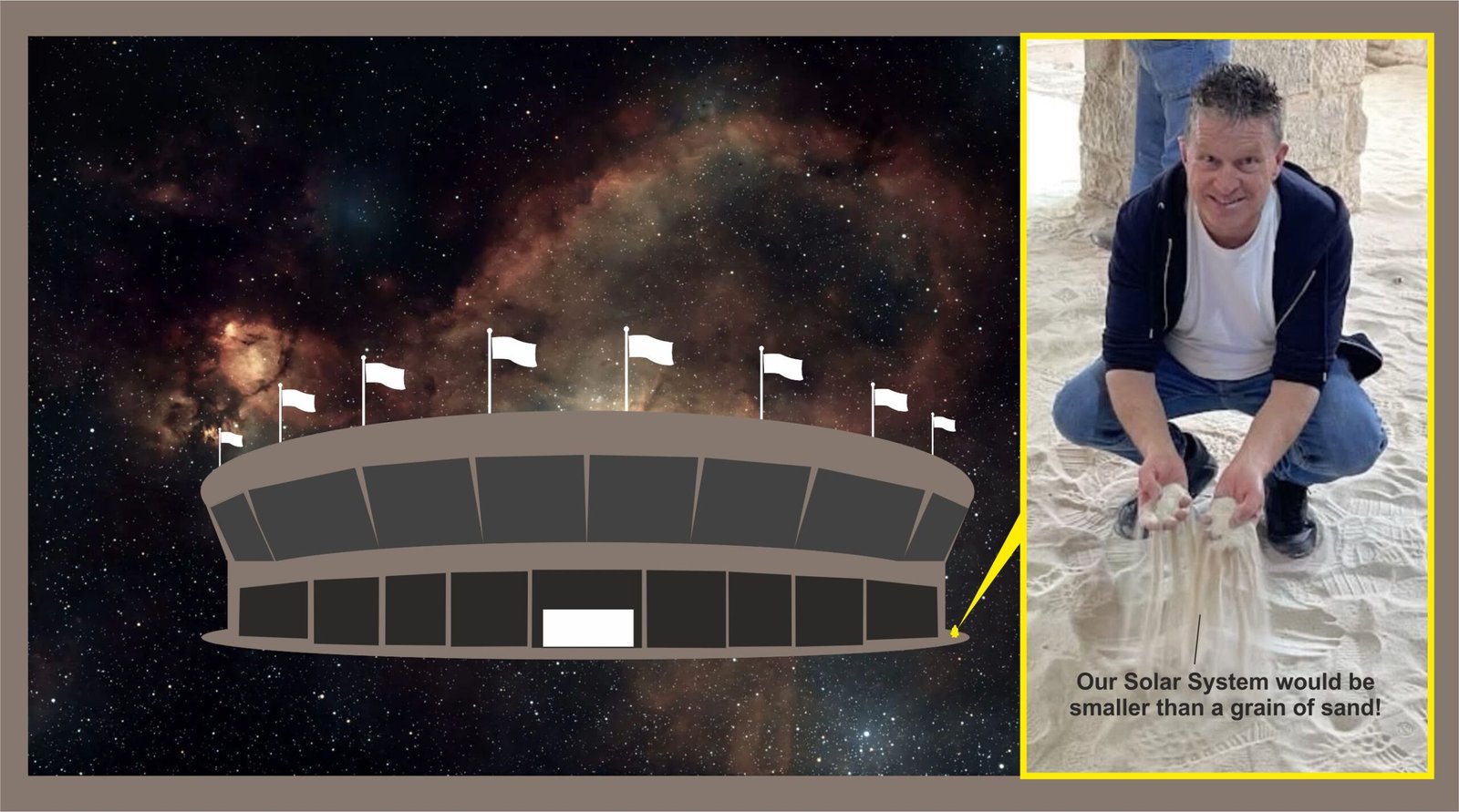
- Comparison
If the Heart Nebula were shrunk down to the size of a football stadium, our entire Solar System would be smaller than a grain of sand inside it.
o
oooo
oooo
oooo
oooo
oooo
oooo
oooo
oooo