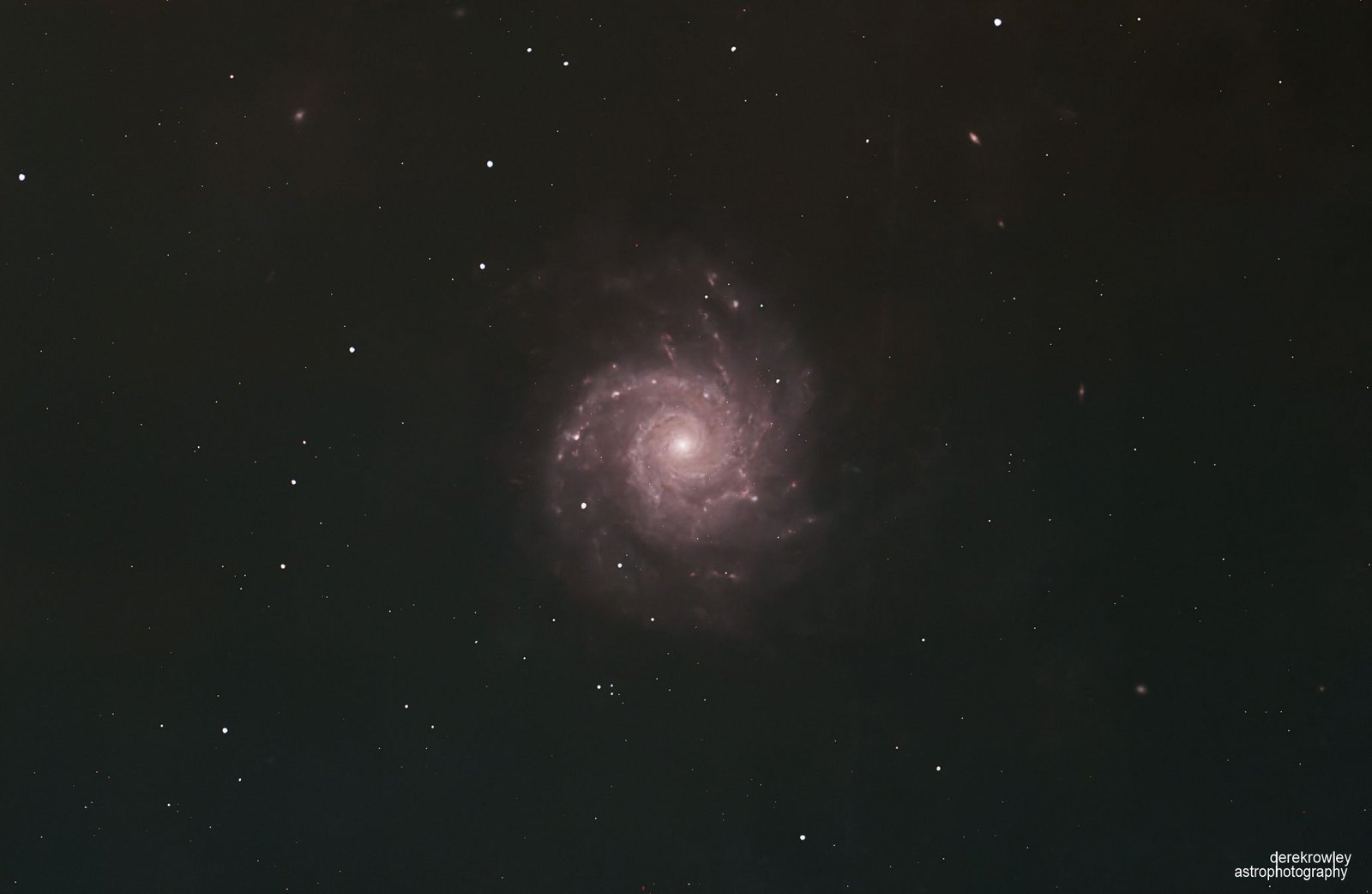
Messier 74 (M74 / Phantom Galaxy)
oooo
- Face‑on view, you see the whole spiral shape.
o - M74 is a face‑on grand‑design spiral galaxy in Pisces, famous for its perfect symmetry and delicate, low‑surface‑brightness glow.
o
- Object Name
Messier 74
- Object Type
Galaxy
- Constellation
Pisces
- Magnitude
+9.4
- Distance
31 million light-years
- Age
31 million years
oooo
oooo
Equipment
Telescope:
Mount:
Accessory:
Celestron 8-inch Edge HD
ZWO AM7 (equatorial mount)
ZWO ASIair Plus / PixInsight
Camera:
Guiding:
Filter:
ZWO ASI2600MC Pro cooling
ZWO ASI1290MM
2″ Optolong L-Pro
oooo
Bortle Scale: Kirby Farm, Shipston-on-Stour, Warwickshire (Bortle: 4.6)
oooo
oooo
Integration
- Date:
Saturday 12th September 2026
- Moonlit:
Waxing Crescent 1 days old
Magnitude: -5.0
Moonlit: 3%
- Total:
60’s x 20 subs = 1 hour
oooo
oooo
Constellation :- Pisces / The Fishes
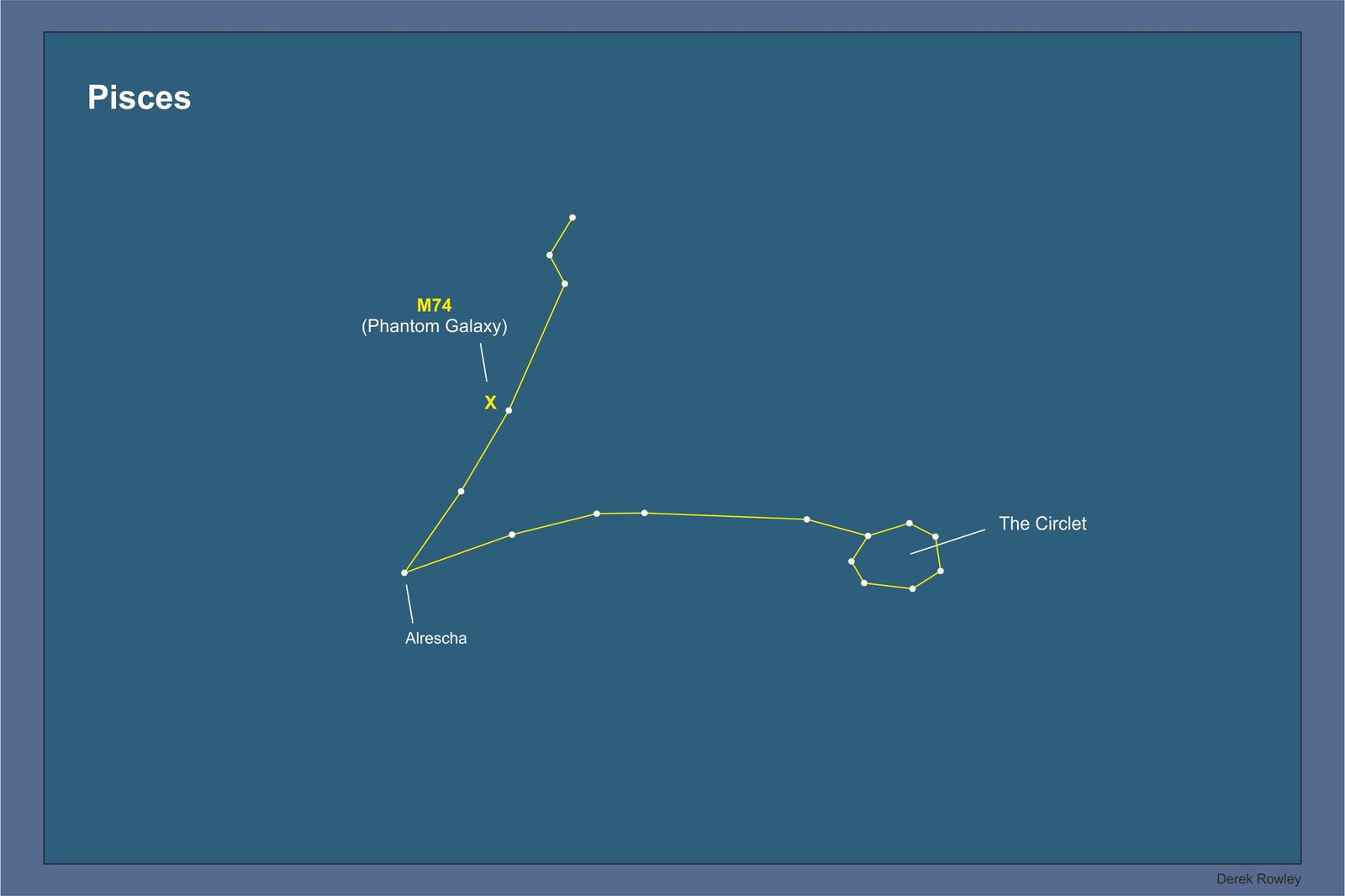
Object :-
oooo
Object :-
Other name :-
Type :–
Magnitude :–
Distance :-
Constellation :-
Right Ascension :-
Declination :-
oooo
oooo
M74
NGC 628 / Phantom Galaxy
Spiral galaxy (Class: SA(s)c)
+9.4
31 million light years / 90,000 light years across
Psc (Pisces / The Fishes)
01h 36m 41s
+15° 47′ 10″
Enlarge on click the map.
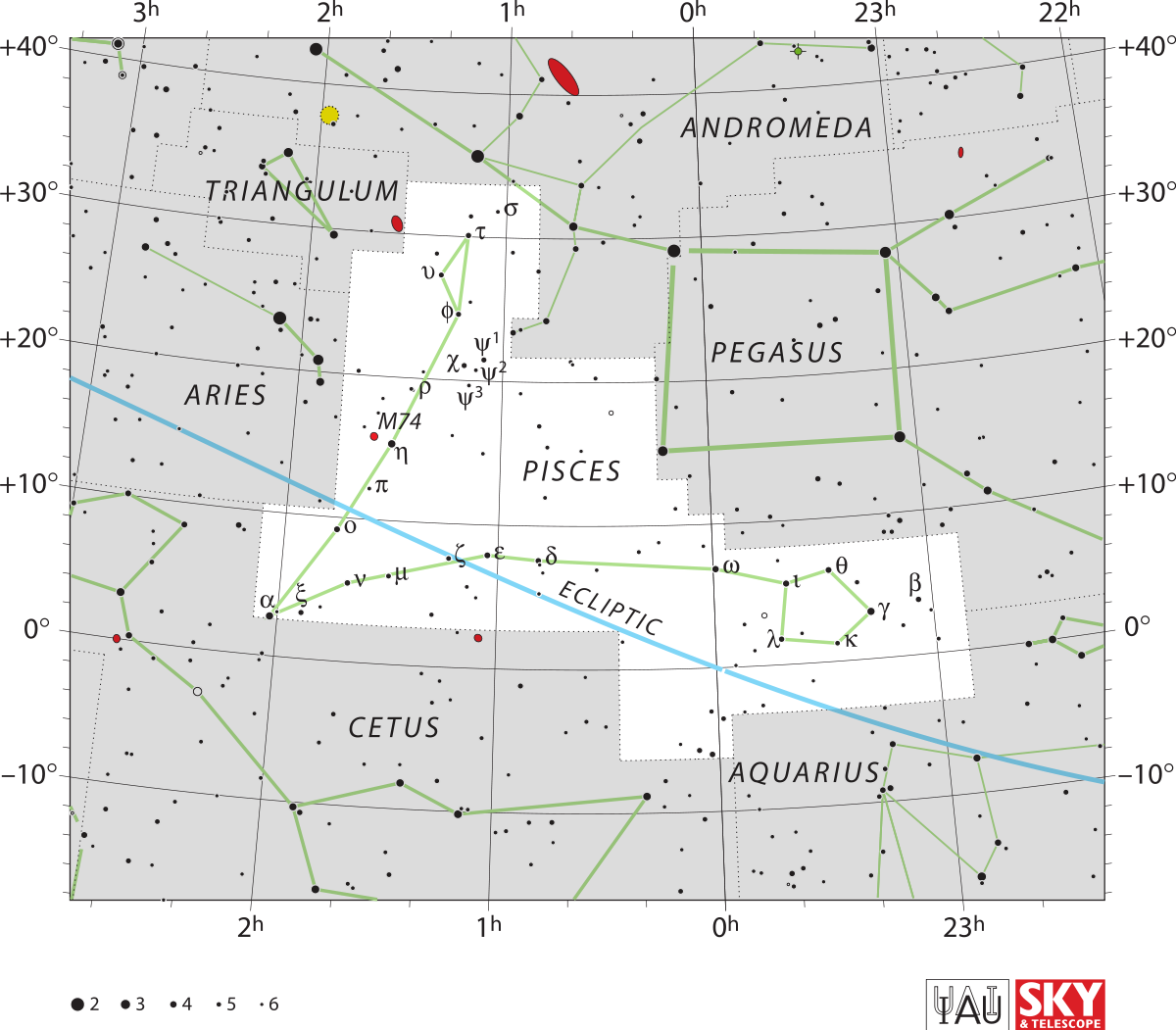
(Click the map above for a large view.)
oooo
oooo
More Information
| Abbreviation: Psc (Pisces) |
| English Name: The Fishes |
| Genitive: Alrischa |
| Hemisphere: Northern Hemisphere |
| Location: Between the constellations of Aries and Aquarius. |
| Visible between latitudes: +90 and -65 degrees |
| Best season: Autumn |
| Seen in three seasons: Summer, Autumn & Winter |
| Best seen in: November (map) and December (map) |
| Seen between: September and January |
| Right Ascension (RA): 01 hour |
| Declination (DEC): +15 degrees |
| Area (square degrees): 889 (14th) |
oooo
oooo
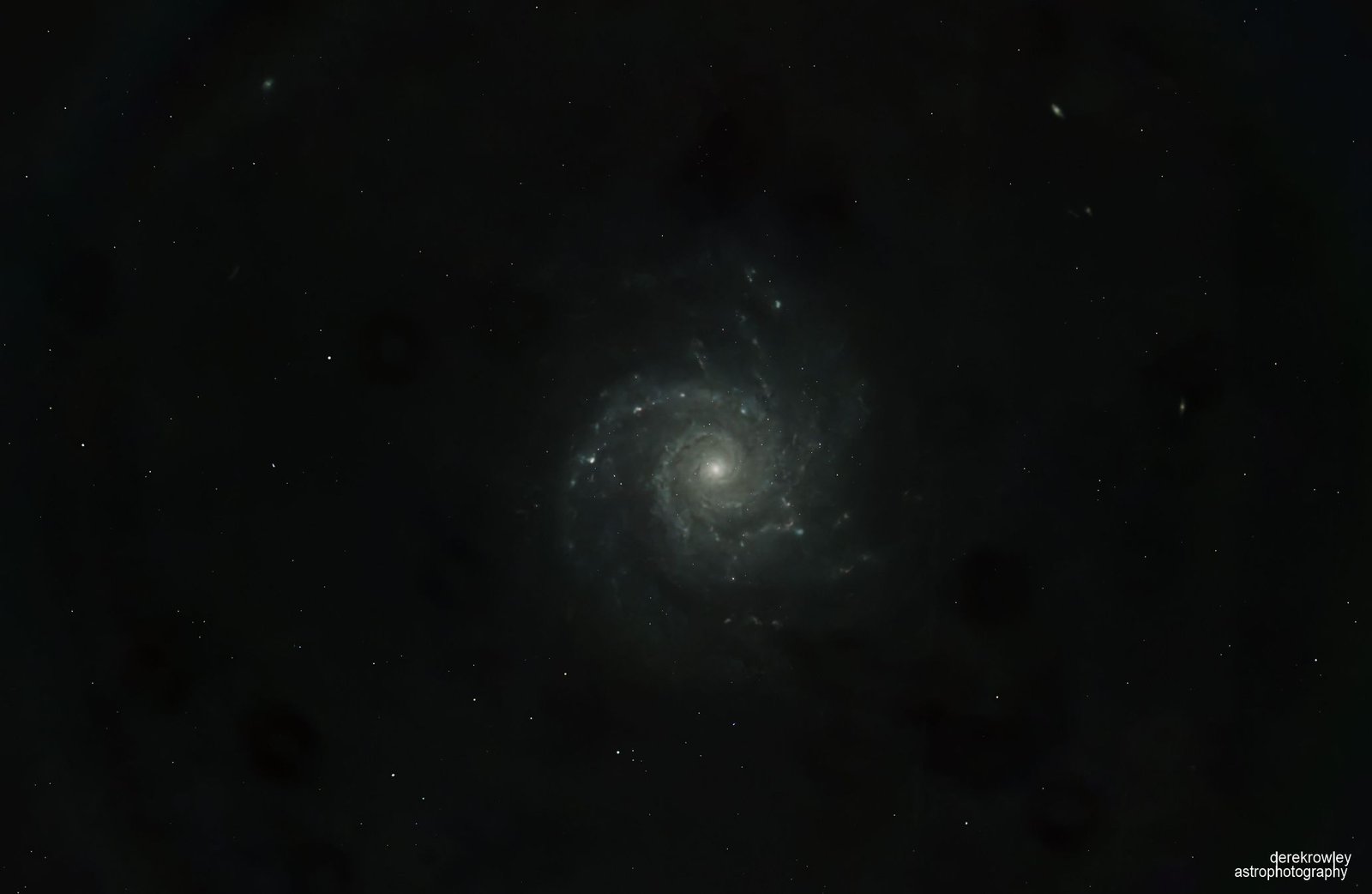
Why M74 is called Phantom Galaxy?
o
oooo
- Very low surface brightness
M74 spreads its light over a large area, so the glow becomes thin and ghost‑like. Even though its magnitude is ~9.4, it behaves more like a much fainter object.
- Hard to see in suburban skies
From places like Milton Keynes, it often vanishes unless the sky is very transparent. Many observers report “nothing there” on first try.
- Appears as a soft, misty patch
In small telescopes, the galaxy looks like a pale circle with no clear edges — almost like a fading phantom.
- Suddenly appears under dark skies
At a dark site (Kirby Farm, for example), the galaxy pops out gently, as if it has stepped forward from the background.
- Photographs reveal what the eye cannot
Long exposures show a perfect spiral — but visually, it hides its structure, adding to the “phantom” idea.
oooo
oooo
oooo
oooo
oooo
oooo