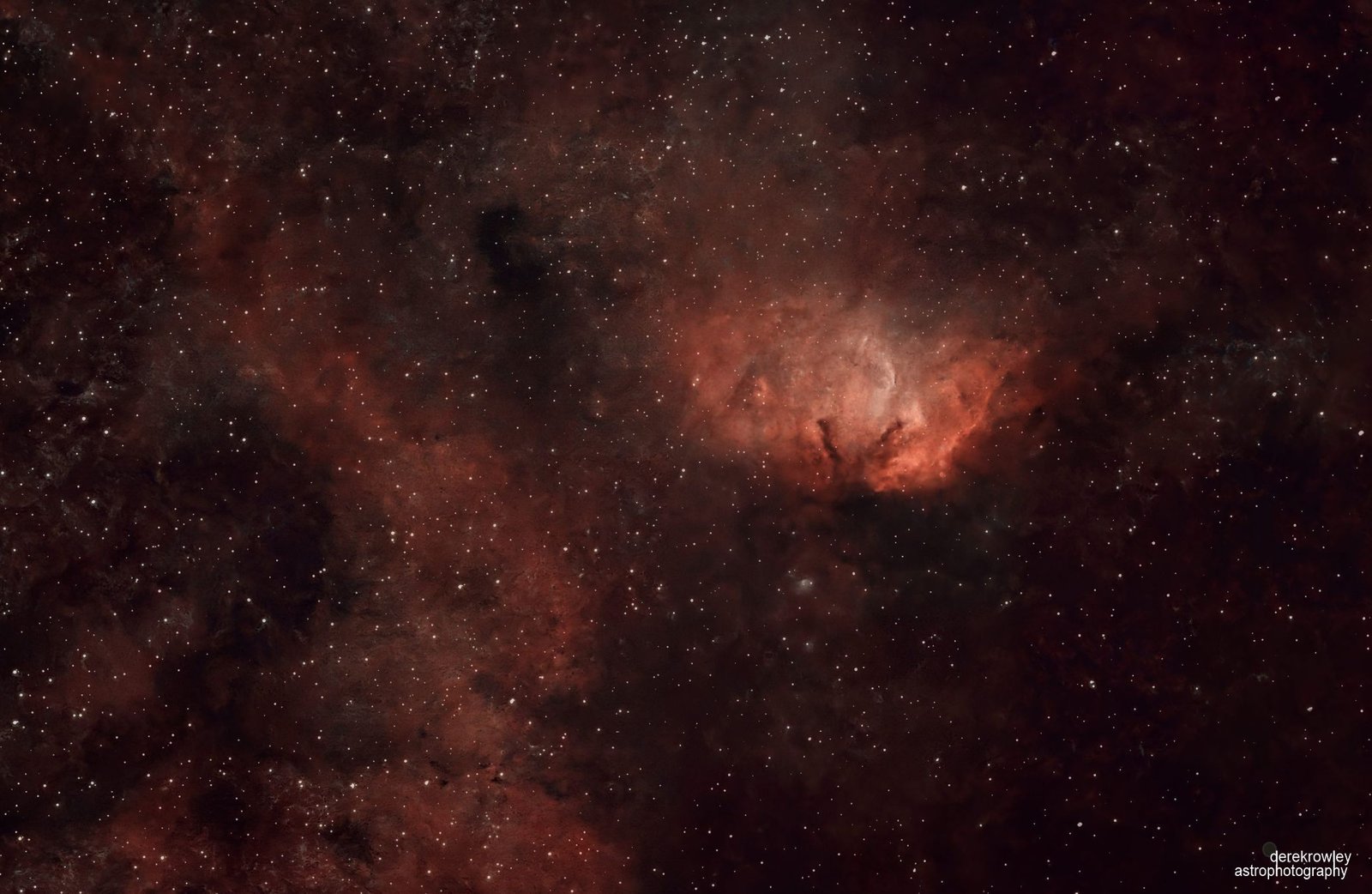
Sh2-101 (Tulip Nebula)
- Sh2‑101 (the Tulip Nebula) is a giant glowing cloud in space that looks a bit like a red flower ~ due to its flower-like appearance in long-exposure photographs.
o - It sits far away in the constellation Cygnus and shines because young, very hot stars nearby are blasting it with strong ultraviolet light, making the gas glow.
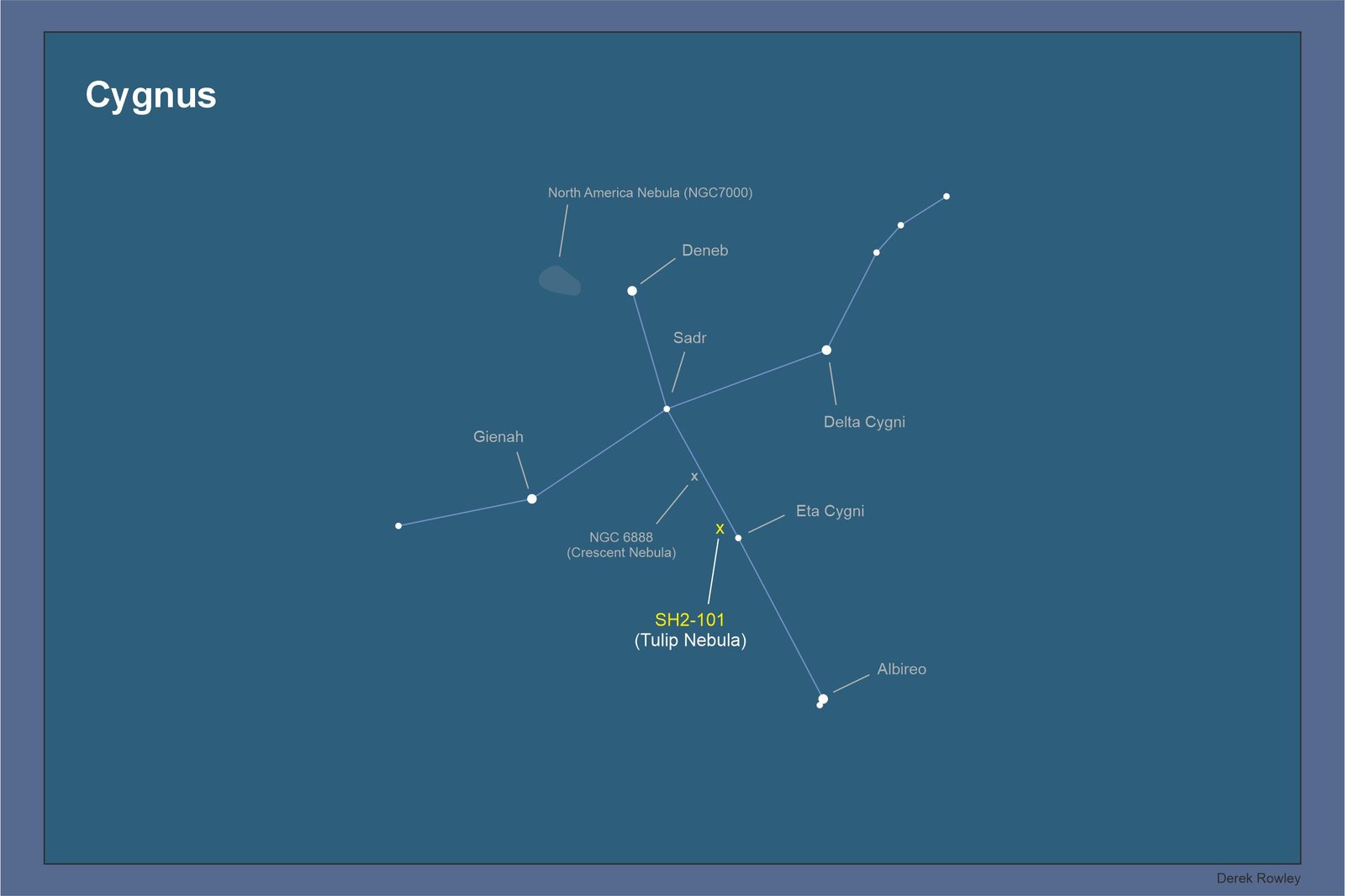
o - The Crescent Nebula (NGC 6888) and the Tulip Nebula are neighbours in space ~ if you draw a pretend line between two bright stars (Sadr and Albireo), both nebulae sit on that line.
- Object Name
Sh2-101
- Object Type
Emission Nebula
- Constellation
Cygnus
- Magnitude
+9.0
- Distance
6.000 light-years
oooo
Equipment
Telescope:
Mount:
Accessory:
Sky-Watcher Esprint 80ED
Sky-Watcher AZ-EQ6 GT
ZWO ASIair Plus / PixInsight
Camera:
Guiding:
Filter:
ZWO ASI585MC Pro cooling
ZWO ASI1200MM
2″ Optolong eNchance
oooo
Bortle Scale: Kelling Heath, North Norfolk (Bortle: 4.2)
oooo
oooo
Integration
- Date:
Thursday 25th September 2025
o - Time:
23:50 / 11.50pm (BST)
- Moonlit:
Waxing Crescent 3 days old
Magnitude: -12.6
Moonlit: 13%
- Total:
180’s x 20 = 1 hour
oooo
oooo
Constellation :- Cygnus (The Swan)
Object :-
oooo
Object :-
Other name :-
Type :–
Magnitude :–
Distance :-
Constellation :-
Right Ascension :-
Declination :-
oooo
oooo
Sh2-101
Tulip Nebula
Emission Nebulae
+9.0
6,000 light years / 70 light years across
Cyg (Cygnus / The Swan)
20h 00m 29s
+35°19′ 14″
Enlarge on click the map.

(Click the map above for a large view.)
| Abbreviation: Cyg |
| English Name: The Swan |
| Genitive: Deneb |
| Hemisphere: Northern Hemisphere |
| Location: Between the constellations of Cephus and Draco. |
| Visible between latitudes: +90 and -40 degrees |
| Best season: Autumn |
| Seen in three seasons: Summer, Autumn & Winter |
| Best seen in: August (map) and September (map) |
| Seen between: May and November |
| Right Ascension (RA): 21 hour |
| Declination (DEC): +40 degrees |
| Area (square degrees): 804 (16th) |
oooo
oooo
oooo
oooo
oooo
oooo
oooo
oooo