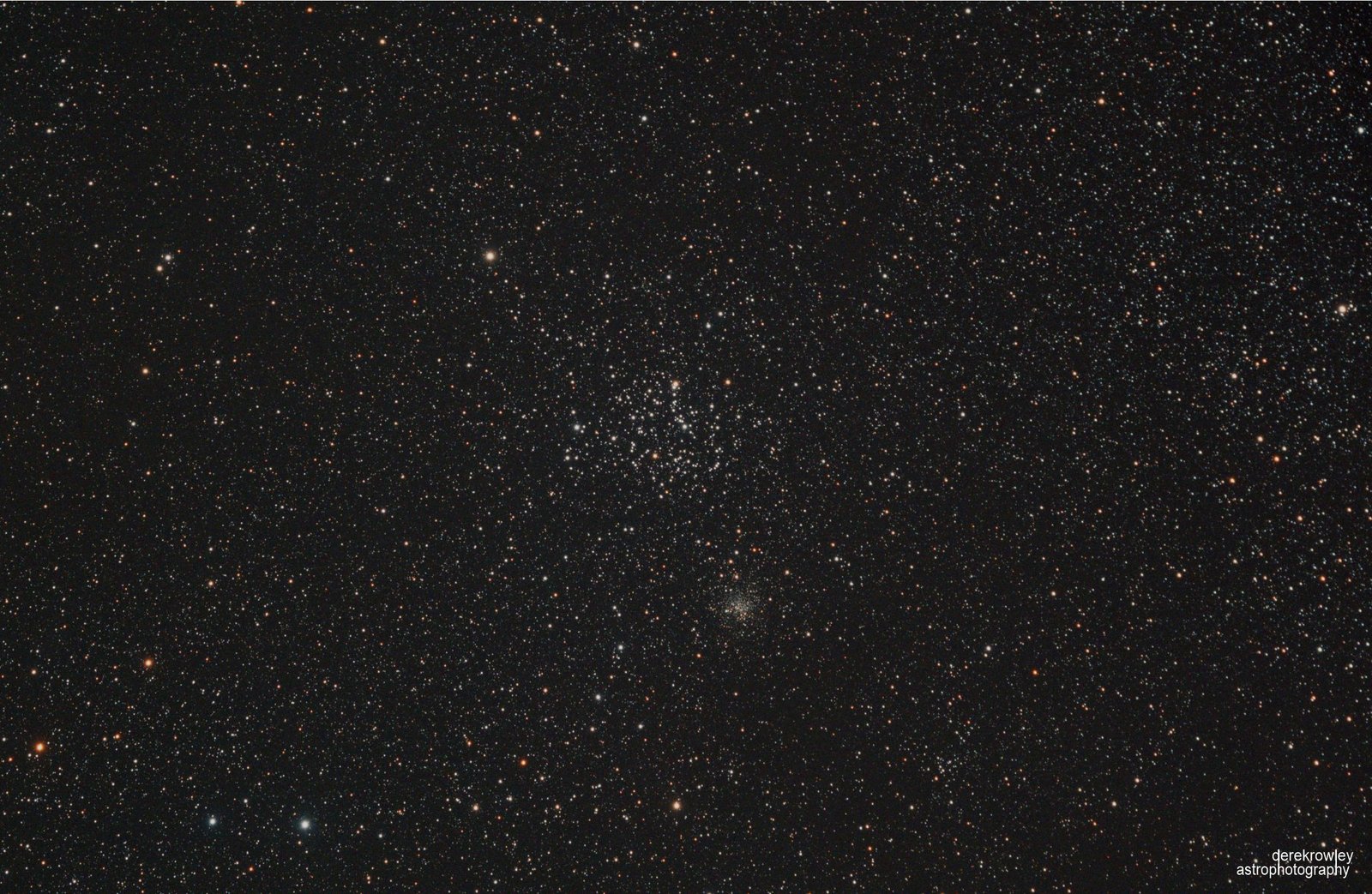
M35 (Open Cluster / NGC 2168 / Cr 82 / Shoe-Buckle Cluster)
- Messier 35 (M35) is a young open star cluster in the constellation Gemini, made of hundreds of stars born from the same cloud of gas and dust.
o - These stars include hot blue main‑sequence stars and some cooler orange/red giants, giving the cluster a colourful sparkle in binoculars or a small telescope.
o - It sits about 2,800 light‑years away and is bright enough to be seen with the naked eye under dark skies as a misty patch near the “feet” of the Gemini twins.
- Object Name
M35
- Object Type
Open Cluster
- Constellation
Gemini
- Magnitude
+5.3
- Distance
2,800 light-years
- Age
100 million years old
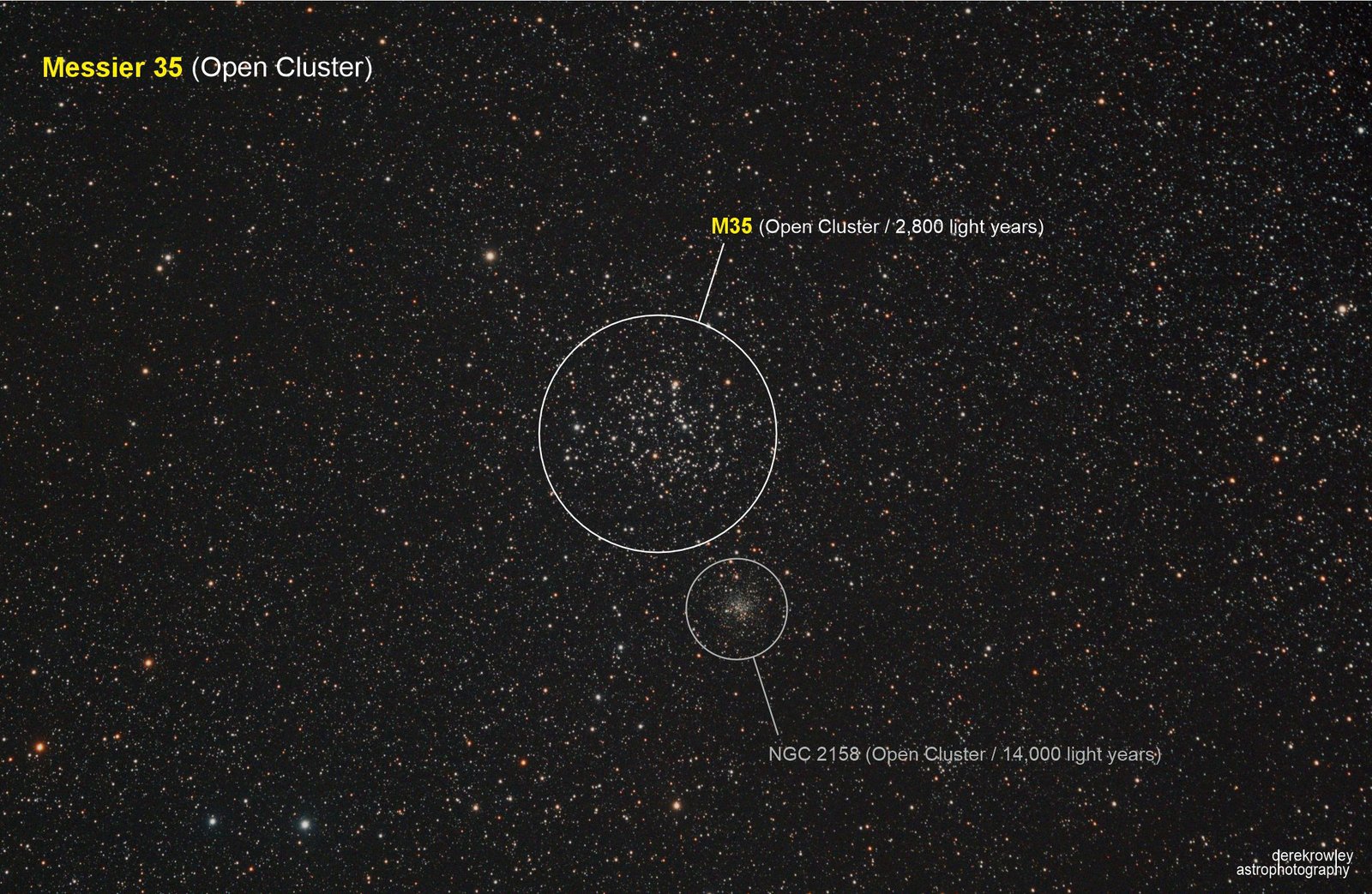
- Annoated
oooo
Equipment
Telescope:
Mount:
Accessory:
Sky-Watcher Esprint 80ED Triplet
Sky-Watcher AZ-EQ6 GT
ZWO ASIair Plus / PixInsight
Camera:
Guiding:
Filter:
ZWO ASI585MC Pro cooling
ZWO ASI1290MM
2″ Optolong L-eXtreme
oooo
Bortle Scale: Milton Keynes, Buckinghamshire (Bortle: 8 – City Sky)
oooo
oooo
Integration
- Date:
Friday 6th February 2025 - Time:
00:40 / 12.40am
- Moonlit:
Waning gibbous 19 days old
Magnitude: -12.3
Moonlit: 79%
- Total:
60s x 20 = 20 minutes
oooo
oooo
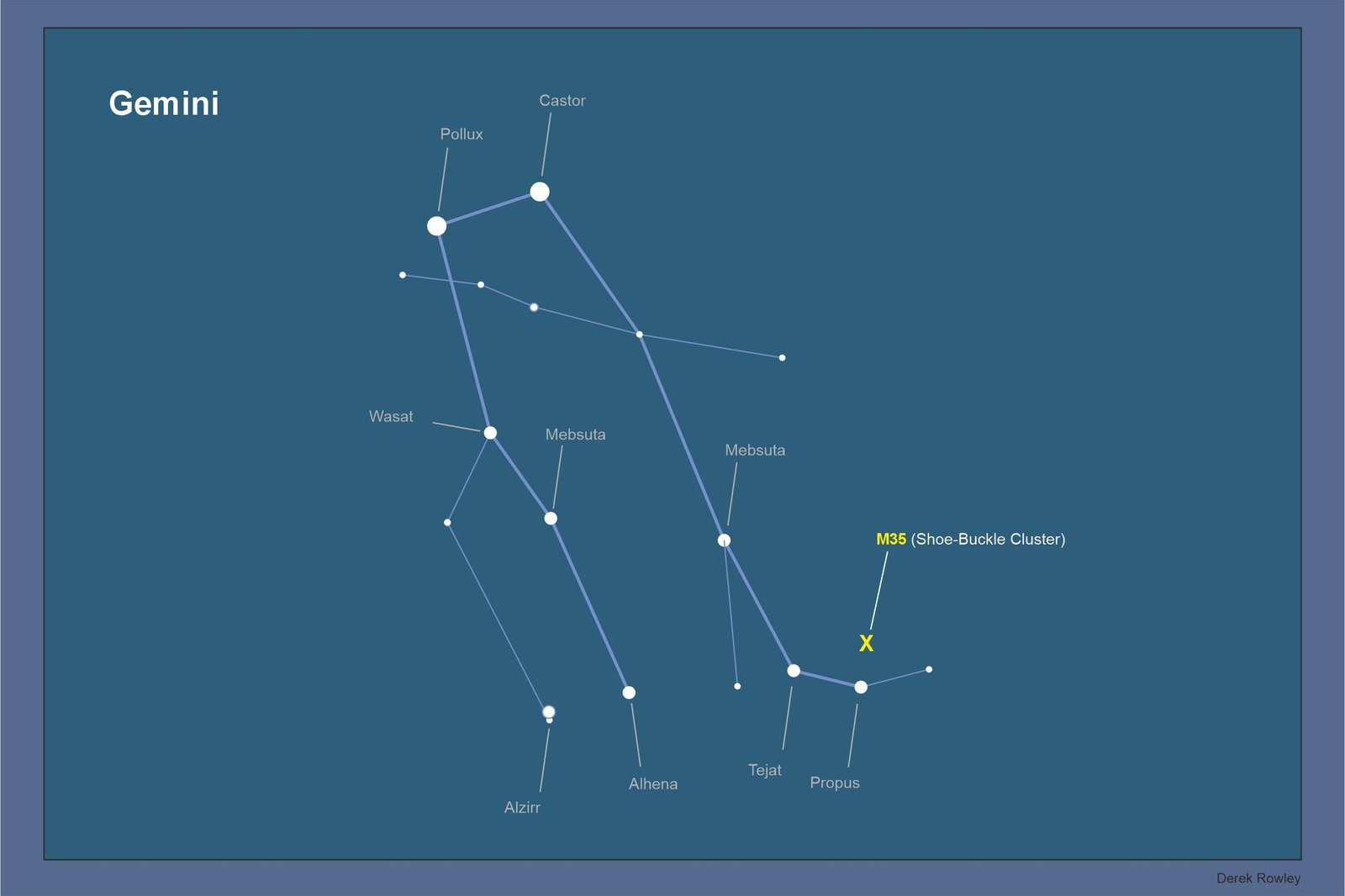
Constellation :- Gemini (The Twin)
oooo
Object :-
oooo
Object :-
Other name :-
Type :–
Magnitude :–
Distance :-
Constellation :-
Right Ascension :-
Declination :-
oooo
oooo
M35
NGC 2168 / Cr 82 / Shoe-Buckle Cluster
Open Cluster
+5.3
2,800 light years / 84 light years across
Gem (Gemini / The Twin)
06h 08m 15s
+24° 49′ 24″
Enlarge on click the map.
(Click the map above for a large view.)
oooo
| Abbreviation: Gem (Gemini) |
| English Name: The Twins |
| Genitive: Castor |
| Hemisphere: Northern Hemisphere |
| Location: Between the constellations of Cancer and Auriga. |
| Visible between latitudes: +90 and -60 degrees |
| Best season: Winter |
| Seen in three seasons: Autumn, Winter and Spring |
| Best seen in: February (map) |
| Seen between: November and April |
| Right Ascension (RA): 20 hour |
| Declination (DEC): +20 degrees |
| Area (square degrees): 514 square degrees (30th) |
oooo
oooo
oooo
Why is it called the “Shoe-Buckle” Cluster?
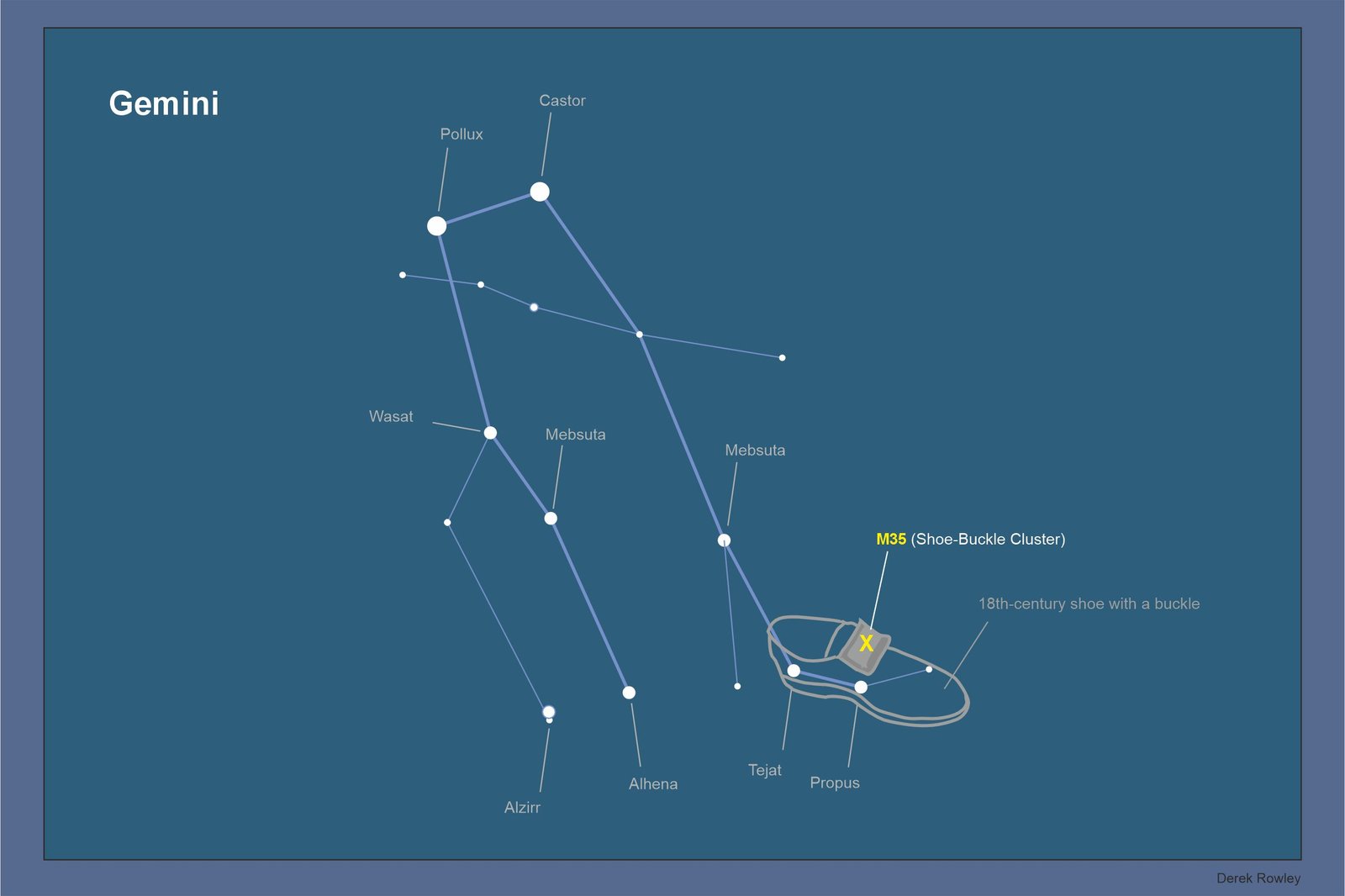
- The nickname comes from its location and appearance:
The Location
It sits right at the “foot” of Castor,
one of the celestial twins in the Gemini constellation.
o
The Appearance
The cluster features prominent, curving chains and rows of bright stars.
Early astronomers noting these curving alignments near the foot of the constellation
thought it perfectly resembled the ornate shoe buckles that were highly fashionable during the 18th century.
oooo
oooo
oooo
oooo
oooo
oooo