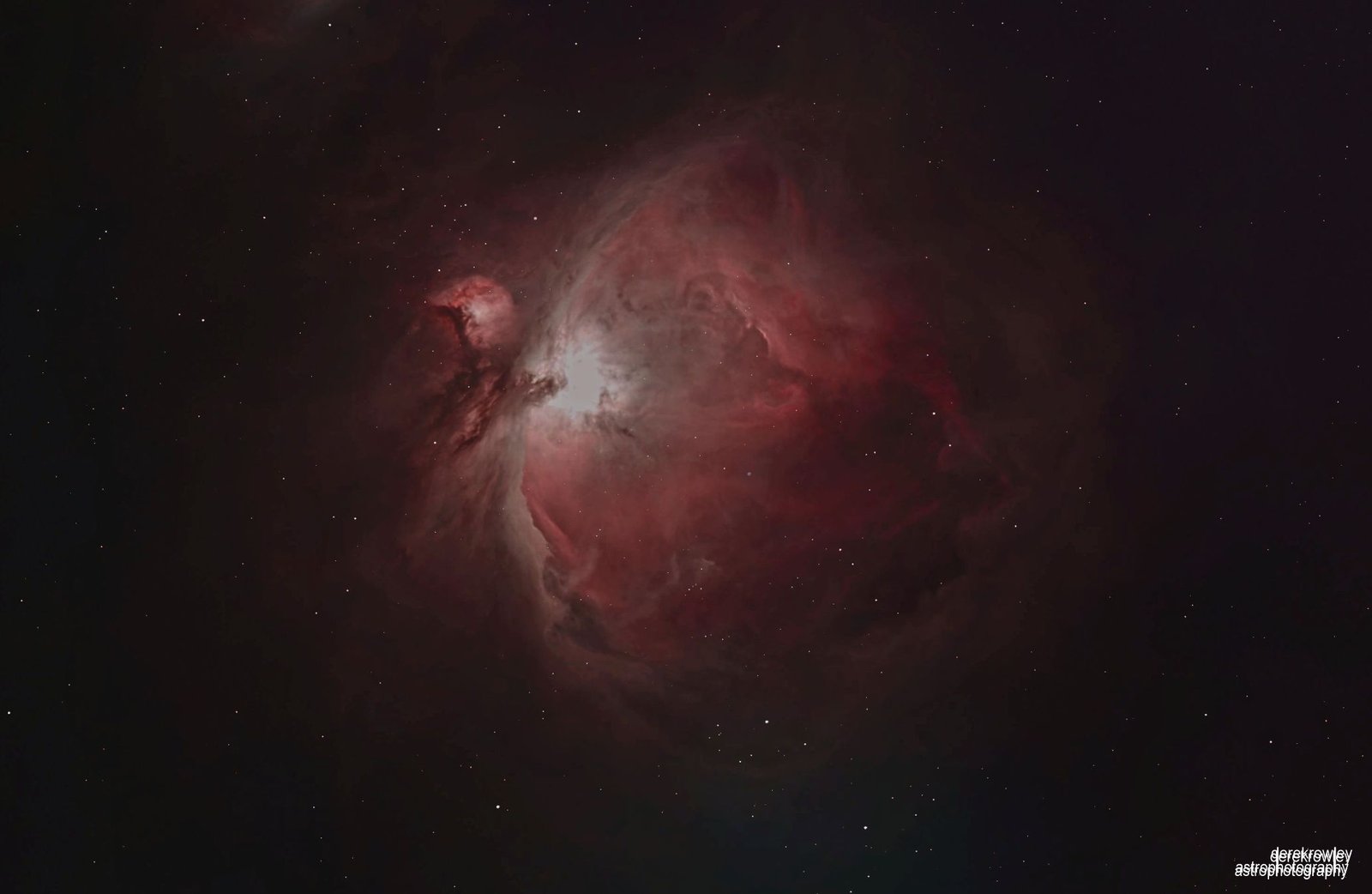
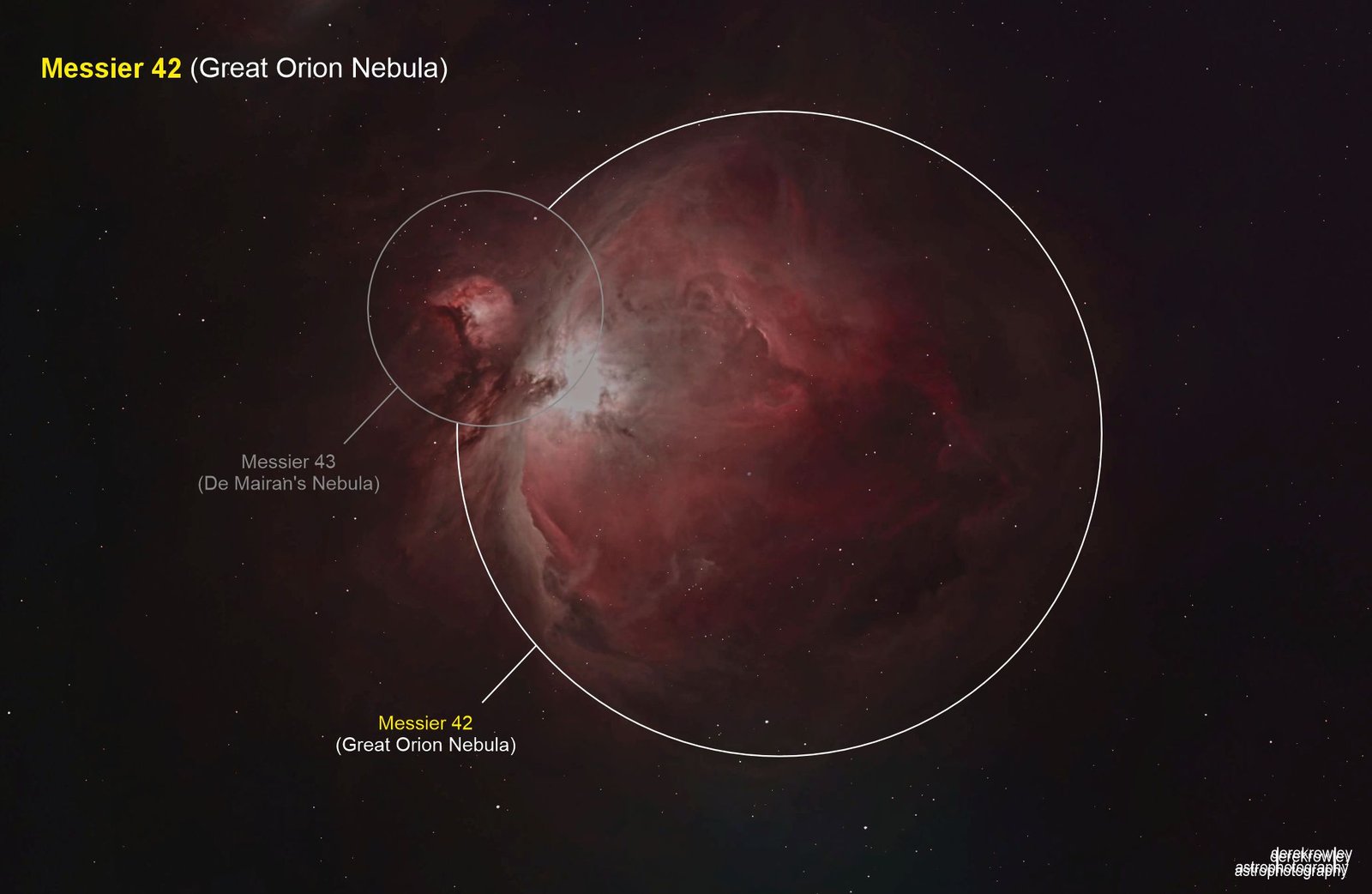
Messier 42 (Great Orion Nebula)
- Messier 42 (M42), the Orion Nebula, is famous because it’s one of the most spectacular and accessible objects in the night sky.
o - It is visible to the naked eye, even without a telescope, which makes it a favourite for both beginners and professional astronomers.
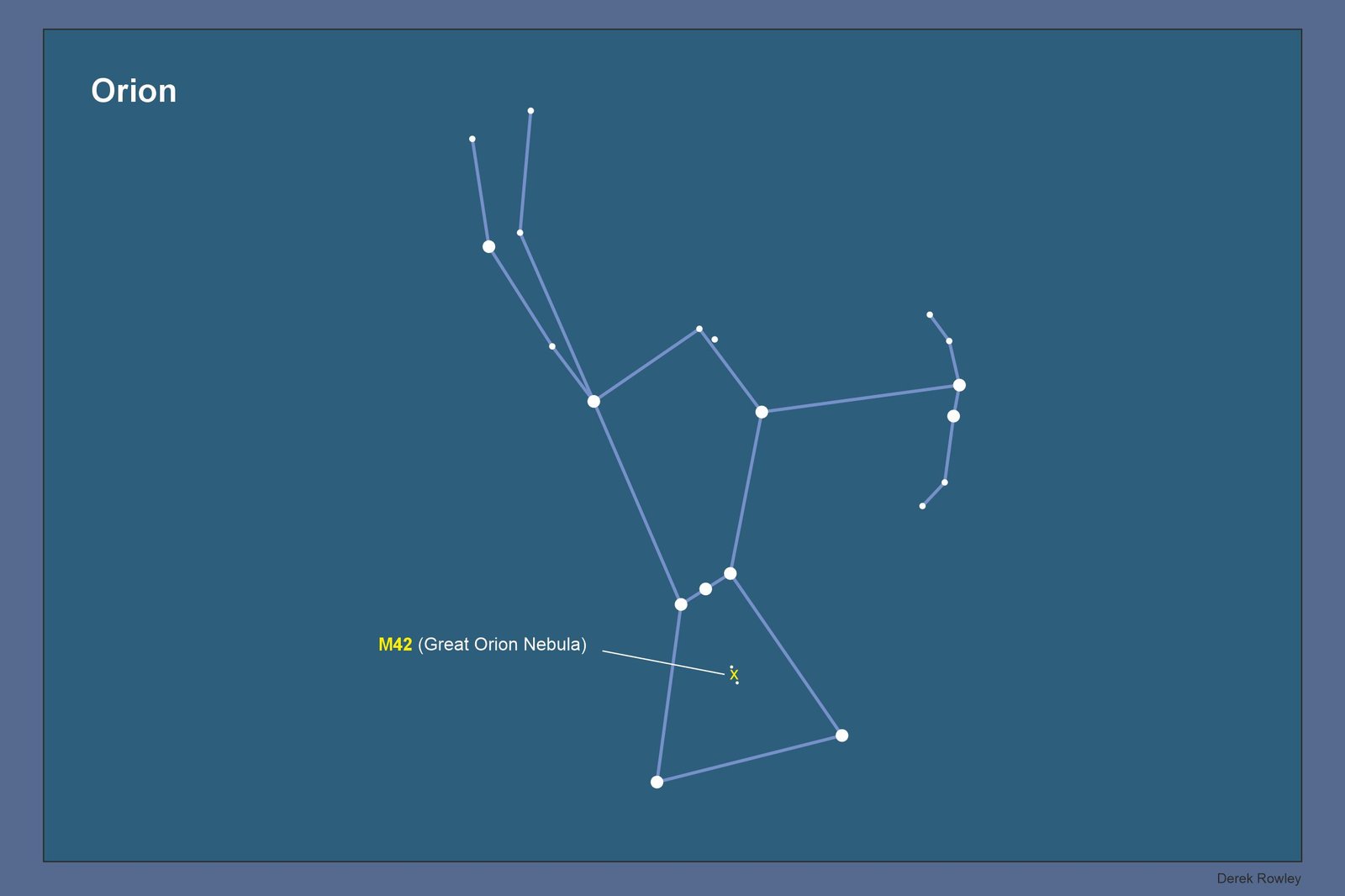
o - It’s bright and easy to find ~ M42 lies in the constellation Orion, just below Orion’s Belt, and can be seen as a fuzzy patch of light.
o - It has an apparent magnitude of +4, making it one of the brightest nebulae in the sky ~ bright enough to be easily seen with the naked eye under dark skies.
o
- Object Name
M42
- Object Type
Reflection Nebula
- Constellation
Orion
- Magnitude
+4.0
- Distance
1,400 light-years
- Age
2 million years old
- Annoated
oooo
oooo
Equipment
Telescope:
Mount:
Accessories:
Sky-Watcher Esprint 80ED Triplet
Sky-Watcher AZ-EQ6 GT
ZWO ASIair Plus / PixInsight
Camera:
Guiding:
Filter:
ZWO ASI2600MC Pro Cooling
ZWO ASI1200MM
2″ Optolong eXtreme
oooo
Bortle Scale: Milton Keynes, Buckinghamshire (Bortle 8 – City Sky)
oooo
oooo
Integration
- Date:
Monday 3rd February 2025
o - Time:
20:15 / 8.15pm
- Moonlit:
Waxing Crescent 6 days old
Magnitude: -10.2
Moonlit: 31%
- Total:
180’s x 16 subs = 48 minutes
oooo
oooo
Constellation :- Orion (The Hunter)
Object :-
oooo
Object :-
Other name :-
o
Type :-
Magnitude :–
Distance :-
Constellation :-
Right Ascension :-
Declination :-
oooo
oooo
M42
NGC 1976 / LBN 974 / Sh2-281 /
Great Orion Nebula
Reflection Nebula
+4.0
1,400 light years / 27 light years across
Ori (Orion / The Hunter)
05h 35m 24s
-05° 23′ 28″
Enlarge on click the map.

(Click the map above for a large view.)
| Abbreviation: Ori (Orion) |
| English Name: The Hunter |
| Genitive: Betelgeuse |
| Hemisphere: Northern and Southern Hemisphere. (Bold means the more area in square feet in Southern Hemisphere.) |
| Location: Between the constellations of Monoceros and Eridanus. |
| Visible between latitudes: +90 and -40 degrees |
| Best season: Winter |
| Seen in three seasons: Autumn, Winter and Spring |
| Best seen in: January (map) and February (map) |
| Seen between: November and early March |
| Right Ascension (RA): 05 hour |
| Declination (DEC): +05 degrees |
| Area (square degrees): 594 (26th) |
oooo
oooo
Trapezium Cluster inside Messier 42
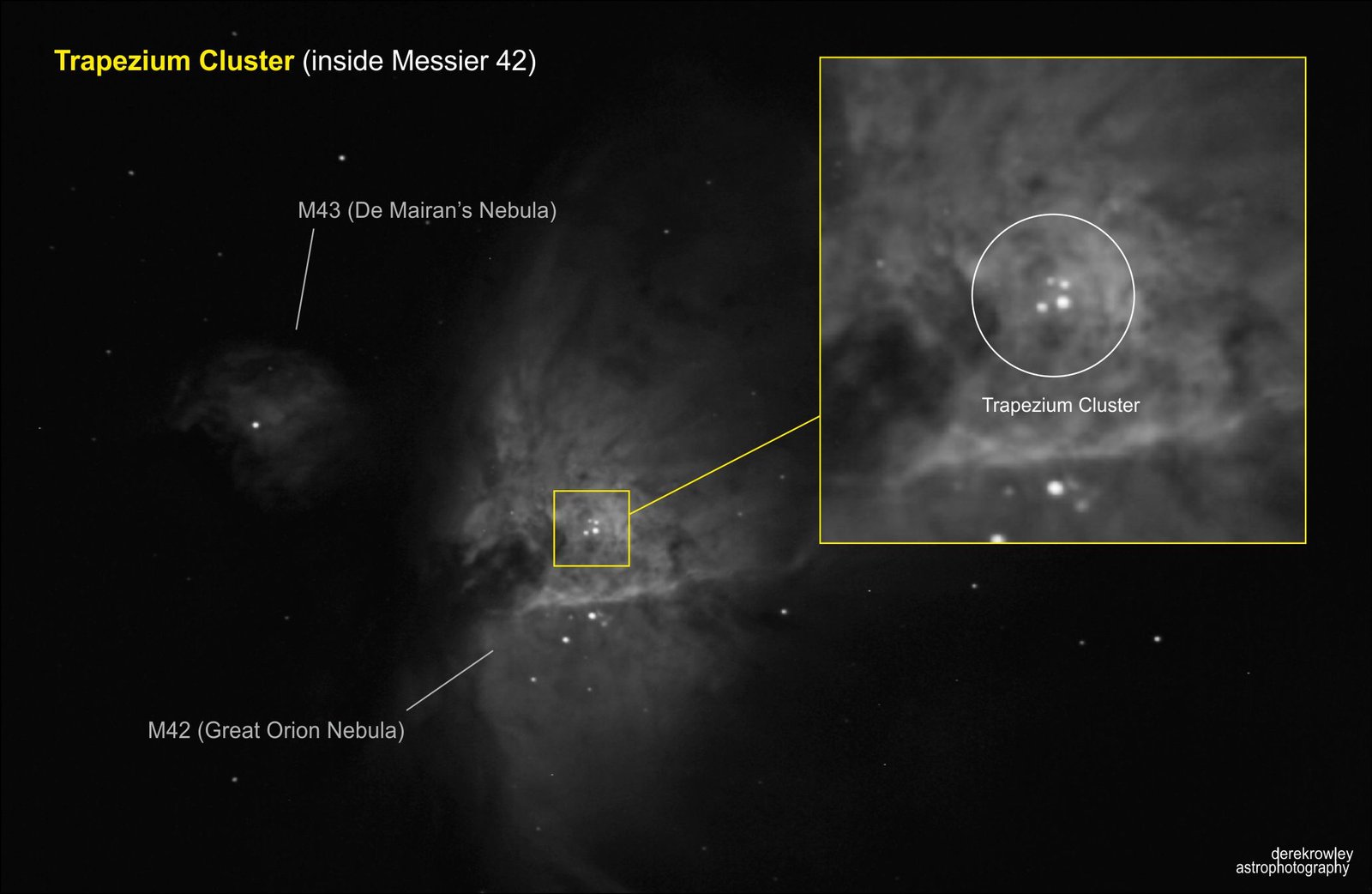
- The Trapezium Cluster is a tiny group of very young, hot stars at the heart of Messier 42 (the Orion Nebula), it contains intricate glowing clouds and the famous Trapezium Cluster, a group of young, massive stars illuminating the surrounding gas.
o - The name comes from the fact that the four brightest stars form a trapezium-shaped pattern when viewed stunning through telescopes and in photographs.
o - A favourite telescope target in a small telescope, most observers can see the four main stars ~ under steady skies and with larger instruments, six or more stars may be resolved.
o
o
oooo
oooo
oooo
oooo
oooo
oooo