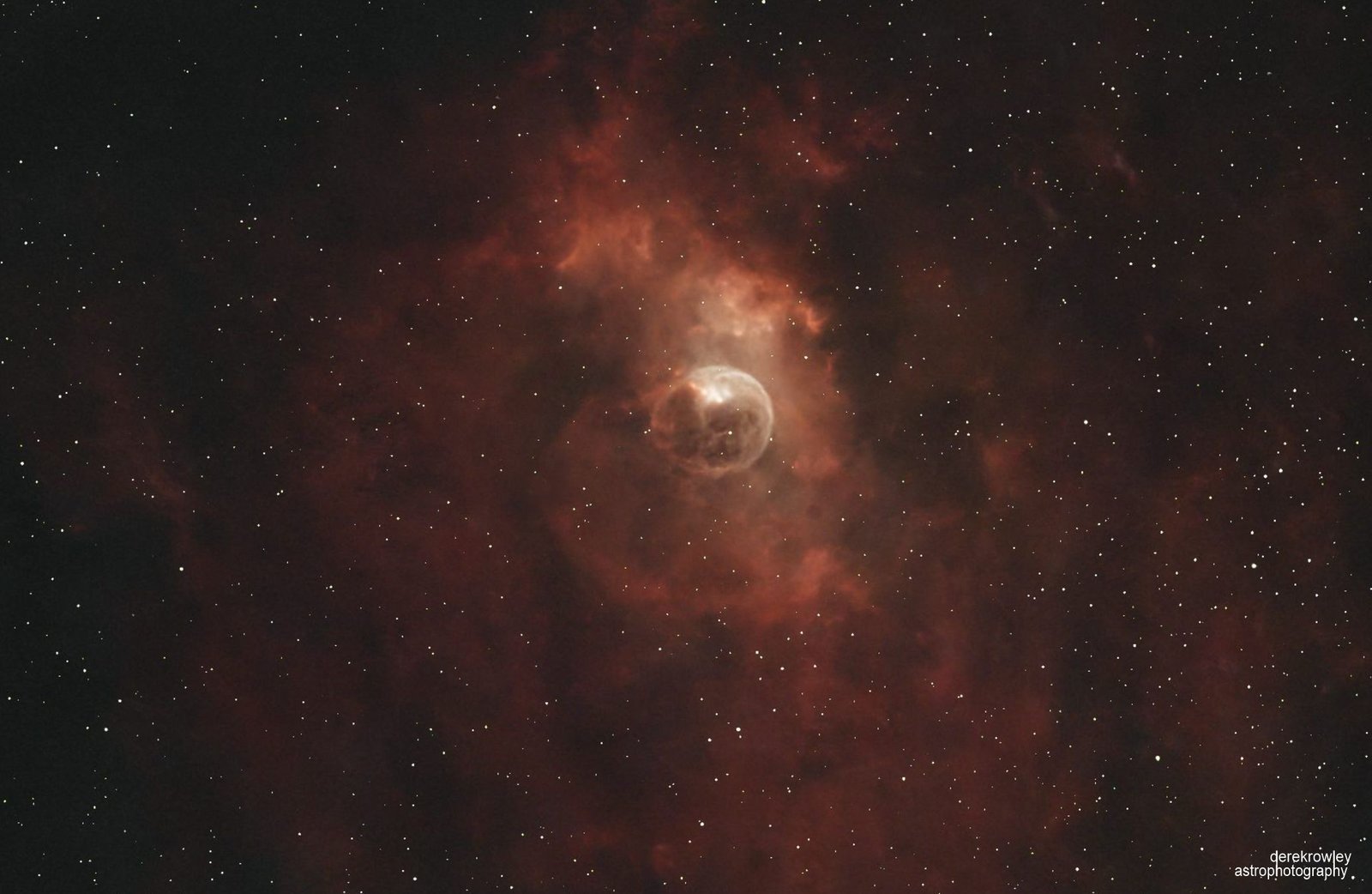
Caldwell 11 (NGC7635 / Sh2-162 / The Bubble Nebula)
- It lies in the constellation Cassiopeia, making it a popular target for astrophotographers in the Northern Hemisphere.
o - Despite its appearance, it isn’t a solid sphere ~ ‘The Bubble Nebula’ is a thin shell of gas surrounding a cavity, giving it its distinctive bubble-like appearance when viewed from Earth.
o
o
- Object Name
C11
- Object Type
Emission Nebula
- Constellation
Cassiopeia
- Magnitude
10.0
- Distance
7,100 light-years
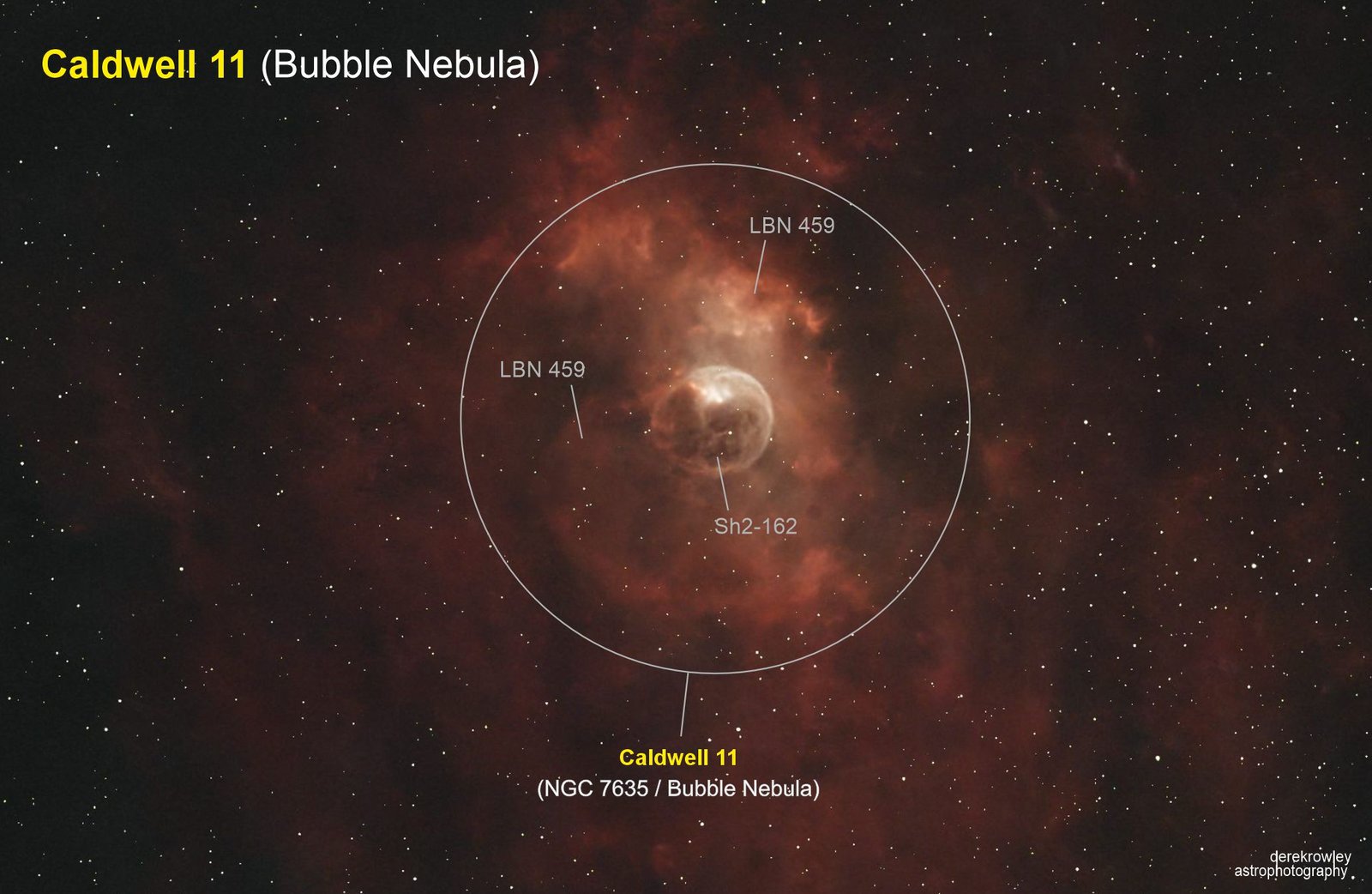
- Annotated
oooo
Equipment
Telescope:
Mount:
Accessories:
Sky-Watcher Esprint 80ED Triplet
Sky-Watcher AZ-EQ6 GT
ZWO ASIair Plus / PixInsight
Camera:
Guiding:
Filter:
ZWO ASI585MC Pro cooling
ZWO ASI1200MM
2″ Optolong L-eXtreme
oooo
Bortle Scale: Milton Keynes, Buckinghamshire (Bortle 6)
oooo
oooo
Integration
- Date:
Monday 24th August 2026
o - Time
23:45 / 11.45 pm (BST)
- Moonlit:
Waxing gibbous 12 days old
Magnitude: -12.6
Moonlit: 90%
- Total:
180’s x 20 subs = 1 hours
oooo
oooo
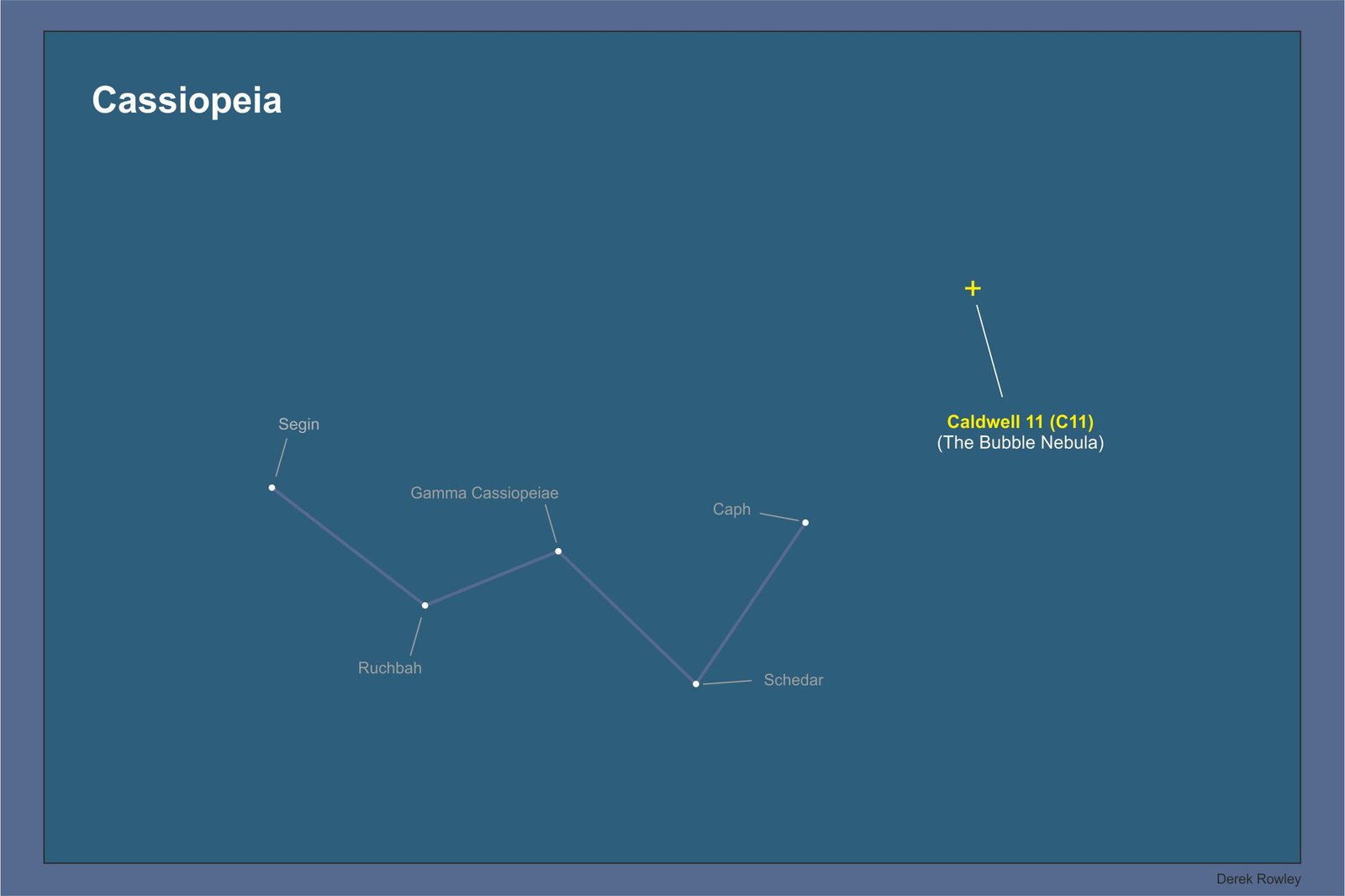
Constellation :- Cassiopeia (The Queen)
Object :-
oooo
Object :-
Other name :-
Type :-
Magnitude :–
Distance :-
Constellation :-
Right Ascension :-
Declination :-
oooo
oooo
Caldwell 11 (C11)
NGC7635 / Sh2-162 / The Bubble Nebula
Emission Nebula
10.0
7,100 light years / 7 light years across
Cyg (Cygnus / The Swan)
23h 20m 48s
+61° 12′ 06″
Enlarge on click the map.

(Click the map above for a large view.)
| Abbreviation: Cas |
| English Name: The Cassiopeia Queen |
| Genitive: Schedar, sometimes spelt Shedar or Shedir. |
| Hemisphere: Northern Hemisphere |
| Location: Between the constellations of Andromeda and Cephus. |
| Visible between latitudes: +90 and -20 degrees |
| Best season: Autumn |
| Seen in three seasons: Summer, Autumn and Winter |
| Best seen in: November |
| Seen between: Circumpolar (This constellation of Cassiopeia stays in the sky all the year.) |
| Right Ascension (RA): 01 hour |
| Declination (DEC): +60 degrees |
| Area (square degrees): 598 (25th) |
oooo
oooo
Observing Caldwell 11
- Apparent Magnitude
It has a visual magnitude of +10.0.
o - Equipment Needed
Because the bubble’s shell is quite faint, it is a notoriously difficult target to spot with the naked eye or small binoculars. To view it visually, you typically need an 8-inch or larger aperture telescope paired with pristine, dark skies (Bortle 3 or better).
o - Astrophotography
It is a highly rewarding and popular target for astrophotographers. Long-exposure cameras and narrowband filters easily reveal its vibrant hydrogen-alpha pinkish-red glows and the delicate blue perimeter of the bubble.
o
oooo
oooo
oooo
oooo
oooo
oooo
oooo
oooo