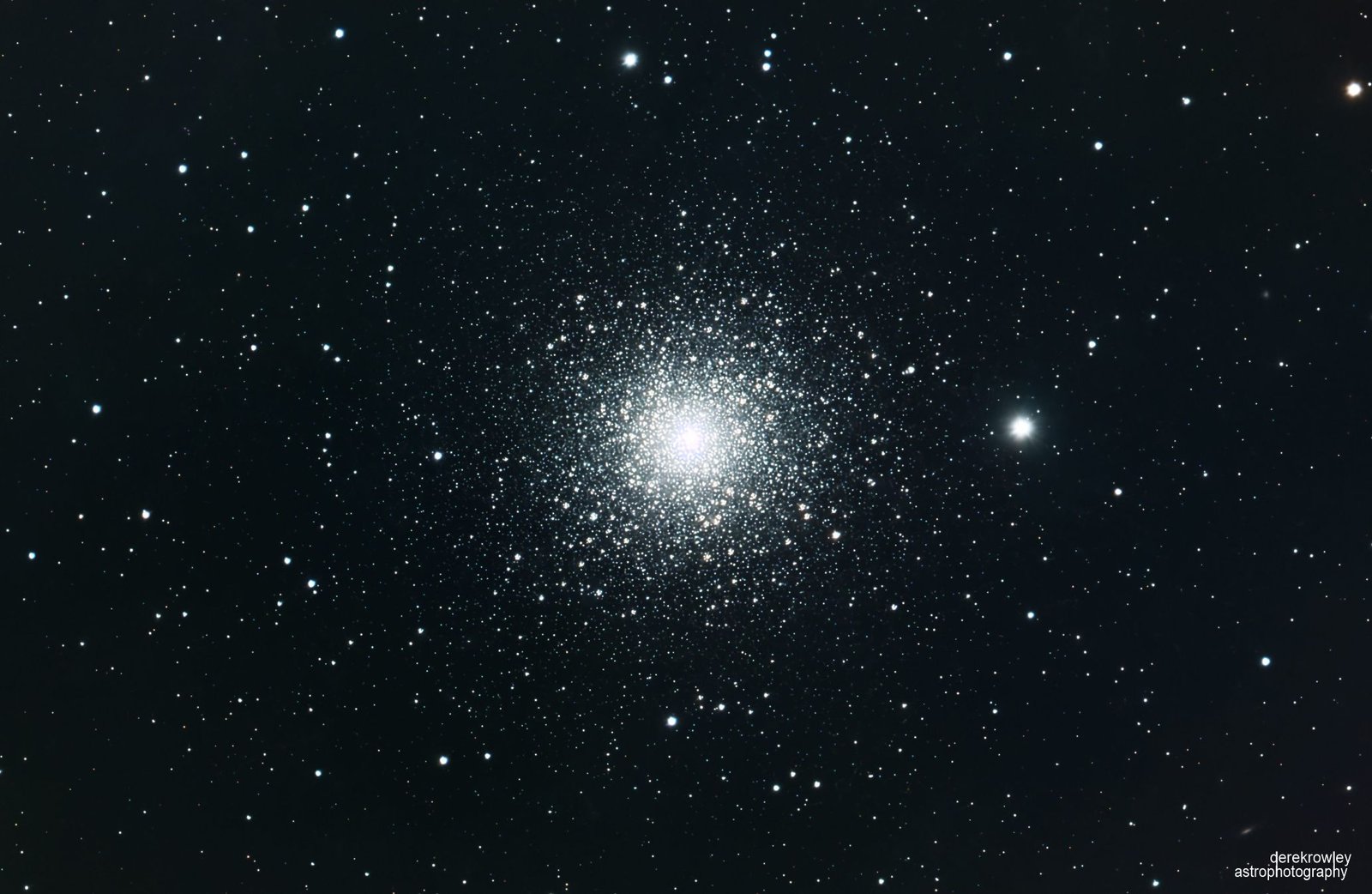
Messier 15 (Globular Cluster)
- M15 has one of the densest cores of any Milky Way globular cluster – a classic example of core collapse, where stars sink inward over billions of years.
o - Special Feature
M15 contains Pease 1, the first planetary nebula ever discovered in a globular cluster ~ only three others are known in all globular clusters. (M15, M22 and NGC 6441).
- Object Name
M15
- Object Type
Globular Cluster
- Constellation
Pegasus
- Magnitude
+6.4
- Distance
50,000 light-years
- Age
12 million years old
oooo
oooo
Equipment
Telescope:
Mount:
Accessory:
Celestron 8-inch Edge HD
ZWO AM7 (equatorial mount)
ZWO ASIair Plus / PixInsight
Camera:
Guiding:
Filter:
ZWO ASI2600MC Pro cooling
ZWO ASI1290MM
2″ Optolong L-Pro
oooo
Bortle Scale: Kirby Farm, Shipston-on-Stour, Warwickshire (Bortle: 4.6)
oooo
oooo
Integration
- Date:
Saturday 12th September 2026
o - Time: 01:00 am
- Moonlit:
Waxing Crescent 1 days old
Magnitude: -5.0
Moonlit: 3%
- Total:
60’s x 30 subs = 30 minutes
oooo
oooo
Constellation :- Pegasus (The Winged Horse)
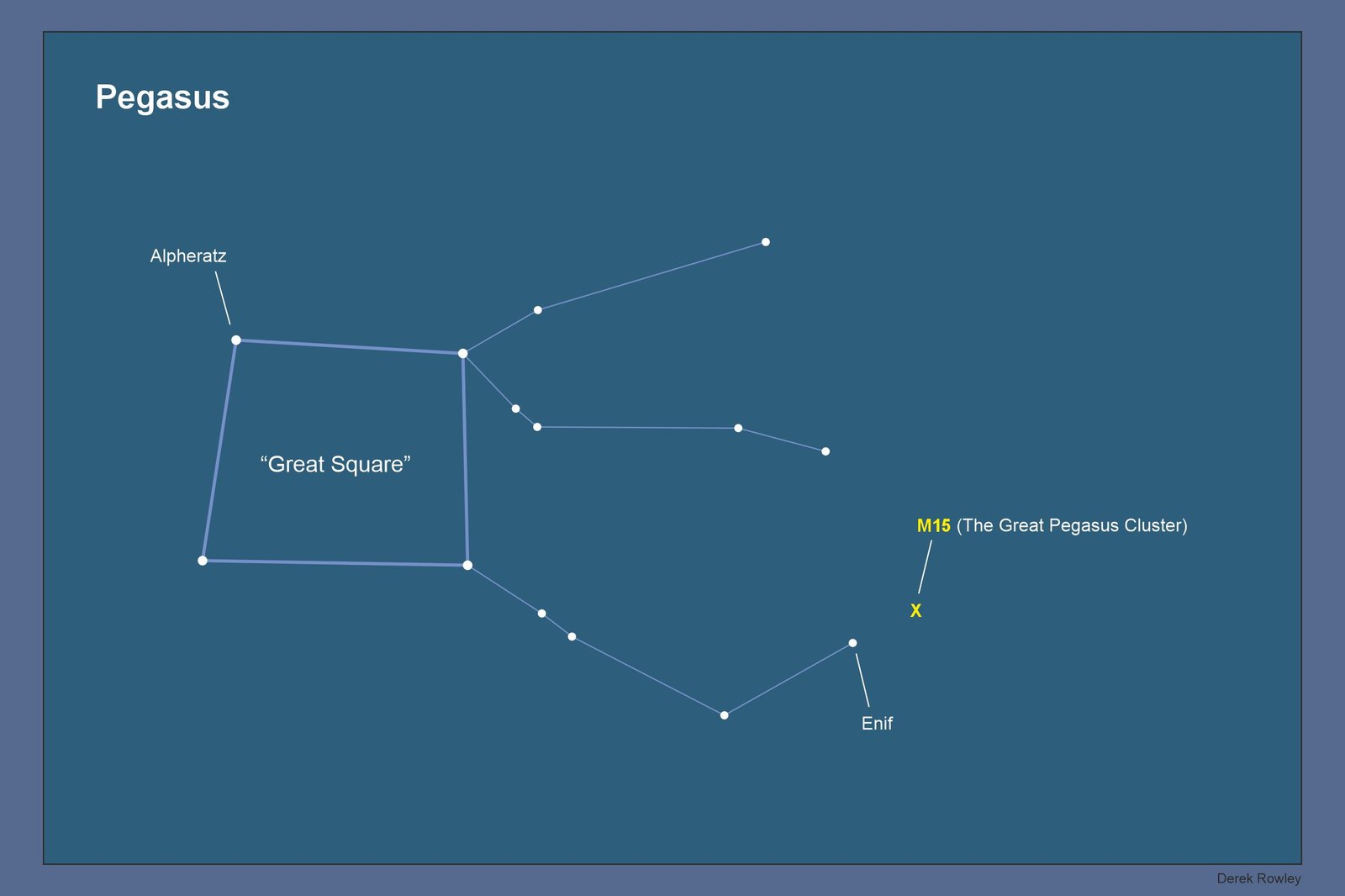
Object :-
oooo
Object :-
Other name :-
Type :-
Magnitude :–
Distance :-
Constellation :-
Right Ascension :-
Declination :-
oooo
oooo
M15
NGC 7078 / The Great Pegasus Cluster
Globular Cluster
+6.4
50,000 light years / 250 light years across
Peg (Pegasus / The Winged Horse)
21h 30m 04s
+12° 10′ 54″
Enlarge on click the map.
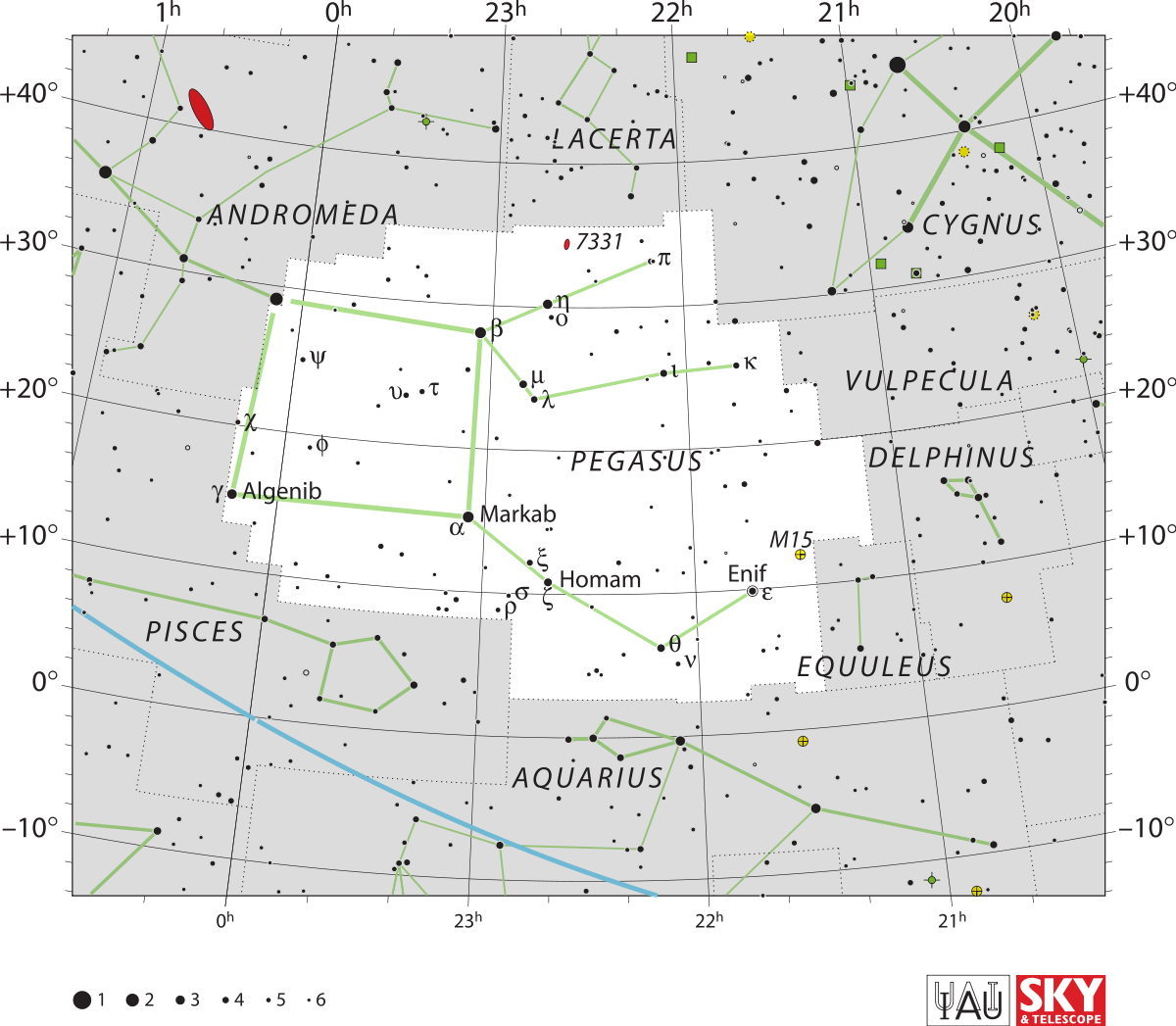
(Click the map above for a large view.)
| Abbreviation: Peg (Pegasus) |
| English Name: The Winged Horse |
| Genitive: Markab |
| Hemisphere: Northern Hemisphere |
| Location: Between the constellations of Pisces and Vulpecula. |
| Visible between latitudes: +90 and -60 degrees |
| Best season: Autumn |
| Seen in three seasons: Summer, Autumn & Winter |
| Best seen in: October (map) |
| Seen between: August and December |
| Right Ascension (RA): 22 hour |
| Declination (DEC): +20 degrees |
| Area (square degrees): 1,121 (7th) |
oooo
Messier 15 – The Black Hole Connection
- The Centre – astronomers believe an intermediate-mass black hole, roughly 4,000 times the mass of the Sun ~ may lurk at the very core of Messier 15.
o
oooo
oooo
oooo
oooo
oooo
oooo