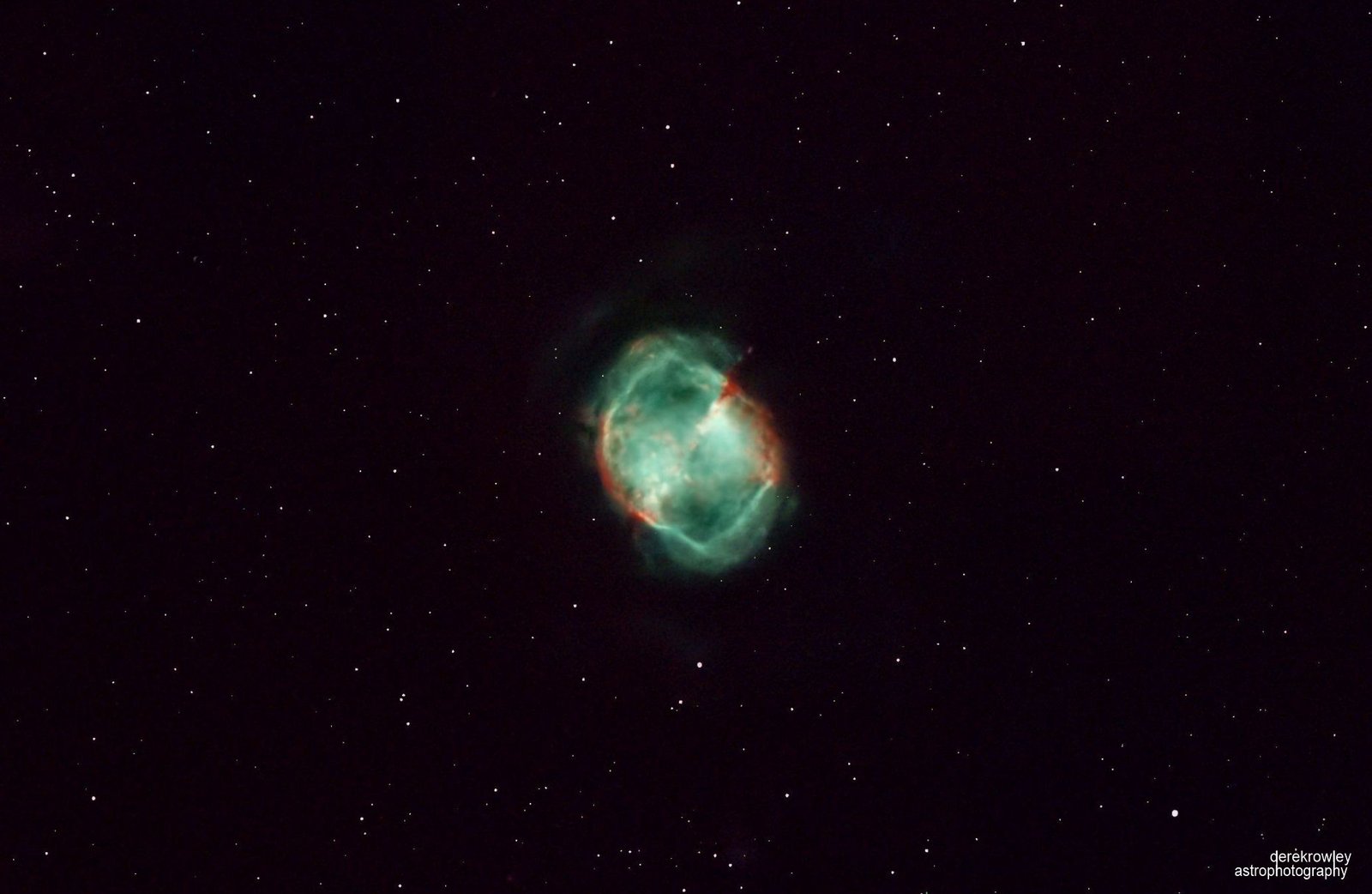
Messier 27 (The Dumbbell Nebula / The Apple Core Nebula)
oooo
- Messier 27 is a planetary nebula (nebulosity surrounding a white dwarf) in the constellation Vulpecula, at a distance of 1360 light-years.
o - M27 spans roughly 3 light-years across and looks like an hourglass, an apple core, or a dumbbell through a telescope.
o - With a visual magnitude of 7.4, it is easily seen using binoculars or small amateur telescopes, especially during summer and autumn months.
o - M27, famously known as the Dumbbell Nebula, is a giant, glowing cloud of gas in outer space created by a dying star – a glowing shell of gas cast off by a dying star, leaving behind a white dwarf.
o
- Object Name
Messier 27
- Object Type
Planetary Nebula
- Constellation
Vulpecula
- Magnitude
+7.4
- Distance
1,360 light-years
- Age
20,000 years old
oooo
oooo
Equipment
Telescope:
Mount:
Accessory:
Sky-Watcher Esprint 80ED Triplet
Sky-Watcher AZ-EQ6 GT
ZWO ASIair Plus / PixInsight
Camera:
Guiding:
Filter:
ZWO ASI585MC Pro cooling
ZWO ASI1200MM
2″ Optolong eXtreme
oooo
Bortle Scale: Milton Keynes, Buckinghamshire (Bortle 6)
oooo
oooo
Integration
- Date:
Saturday 22nd August 2026
- Moonlit:
Waxing gibbous – 6 days old
Magnitude: -12.3
Moonlit: 74%
- Total:
180’s x 15 subs = 45 minutes
oooo
oooo
Constellation :- Vulpecula (The Fox)
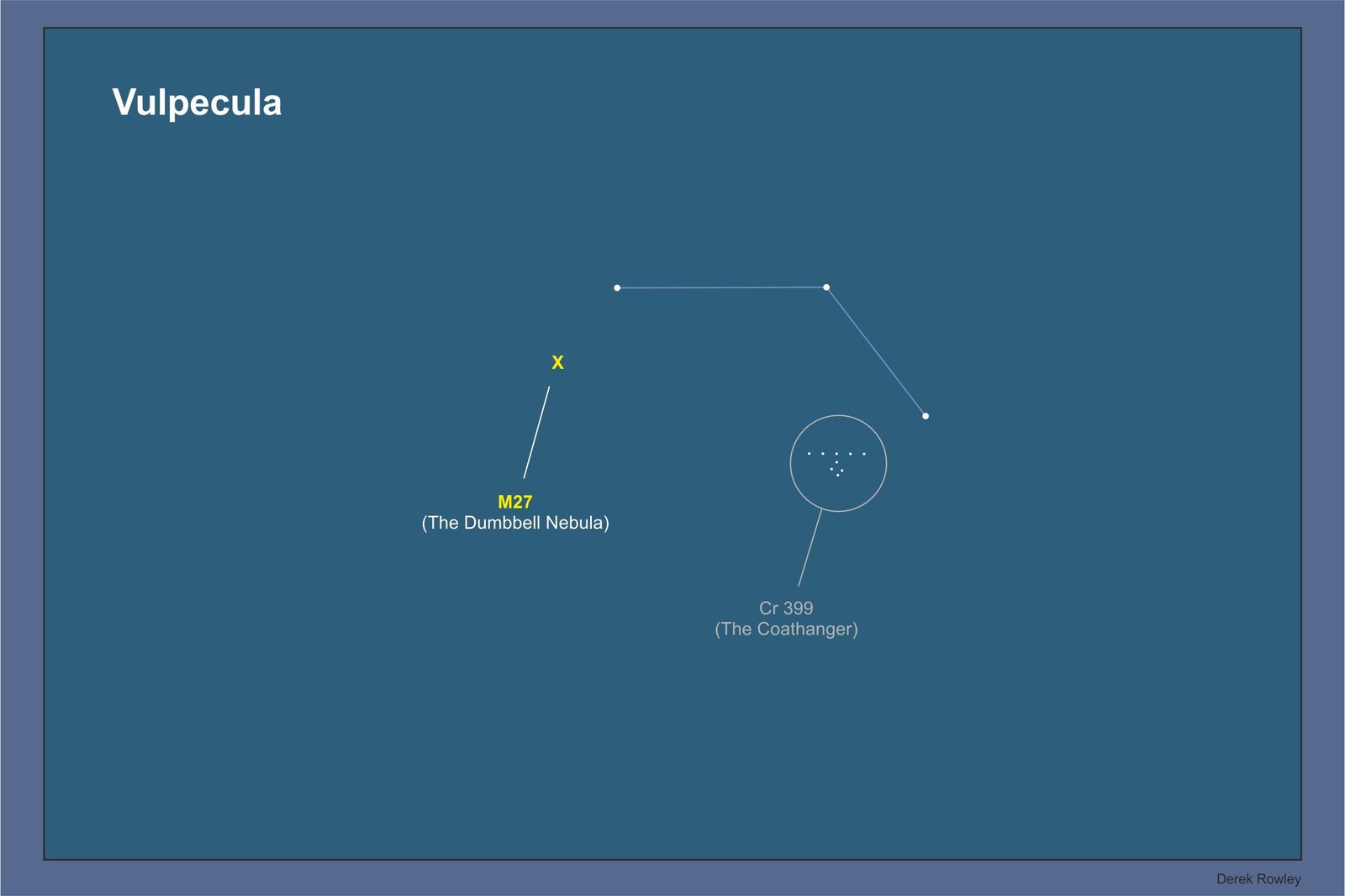
Object :-
oooo
Object :-
Other name :-
Type :–
Magnitude :–
Distance :-
Constellation :-
Right Ascension :-
Declination :-
oooo
oooo
Messier 27 (M27) / NGC 6853
Dumbbell / Apple Core / NGC 6853
Planetary Nebula
+7.4
1,360 light years / 3 light years
Vul (Vulpecula / The Fox)
19h 59m 36s
+22° 43′ 17″
Enlarge on click the map.
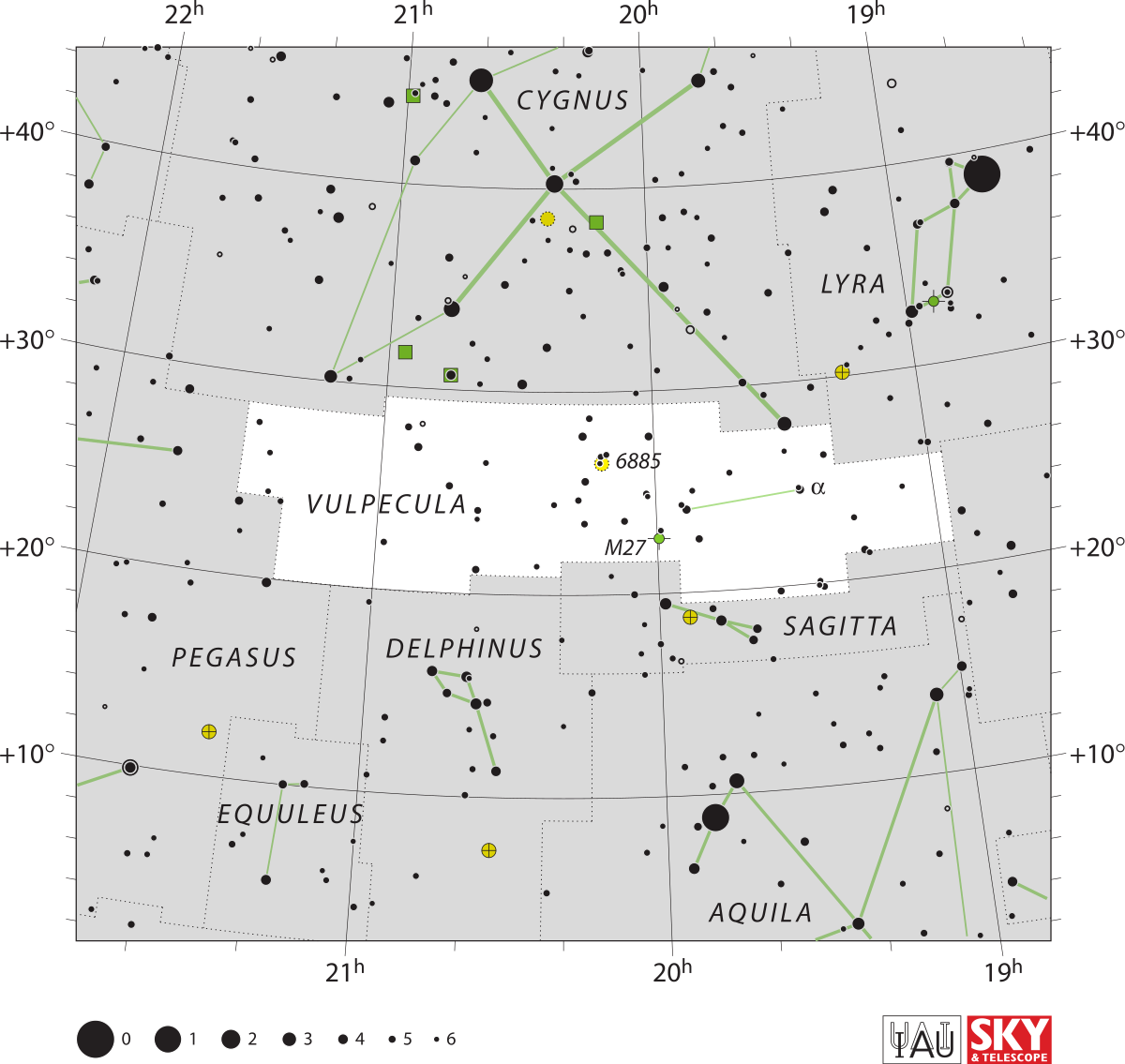
(Click the map above for a large view.)
oooo
oooo
More Information
| Abbreviation: Vul (Vulpecula) |
| English Name: The Fox |
| Genitive: Vulpeculae |
| Hemisphere: Northern Hemisphere |
| Location: Between the constellations of Cygnus and Sagitta. |
| Visible between latitudes: +90 and -55 degrees |
| Best season: Summer |
| Seen in three seasons: Spring, Summer, and Autumn |
| Best seen in: August (map) |
| Seen between: March and November |
| Right Ascension (RA): 20 hour |
| Declination (DEC): +25 degrees |
| Area (square degrees): 268 (55th) |
oooo
oooo
Did you know?
o
- It was the very first planetary nebula ever discovered in human history, by Charles Messier in 1764.
oooo
oooo
oooo
oooo
oooo
oooo