
- NGC 7380 is a young open cluster of stars in the northern circumpolar constellation of Cepheus.
o - The surrounding emission nebulosity is known colloquially as the Wizard Nebula, which spans an angle of 25′.
o
Telescope:
Mount:
Accessory:
Sky-Watcher Esprint 80ED Triplet
Sky-Watcher AZ-EQ6 GT
ZWO ASIair Plus
Camera:
Guiding:
Filter:
ZWO ASI585MC Pro cooling
ZWO ASI585MM
2″ Optolong eNchance
Bortle Scale: Saxmundham, Suffolk (Bortle 4.2)
oooo
oooo
Integration
o
Filter
Optolong eNchance
Total
40 subs x 180″ = 2 hours
Date
Wed 22nd Apr 2026
Moonlit
67%
oooo
Object :-
oooo
Object :-
Other name :-
Type :–
Magnitude :–
Distance :-
Constellation :-
Right Ascension :-
Declination :-
oooo
oooo
NGC 7380
Wizard Nebula
BNe & Open Cluster
n/a
7,000 light years / 100 light years
Cep (Cepheus/The Housel)
22h 47m 00s
+58° 06′
Enlarge on click the map.
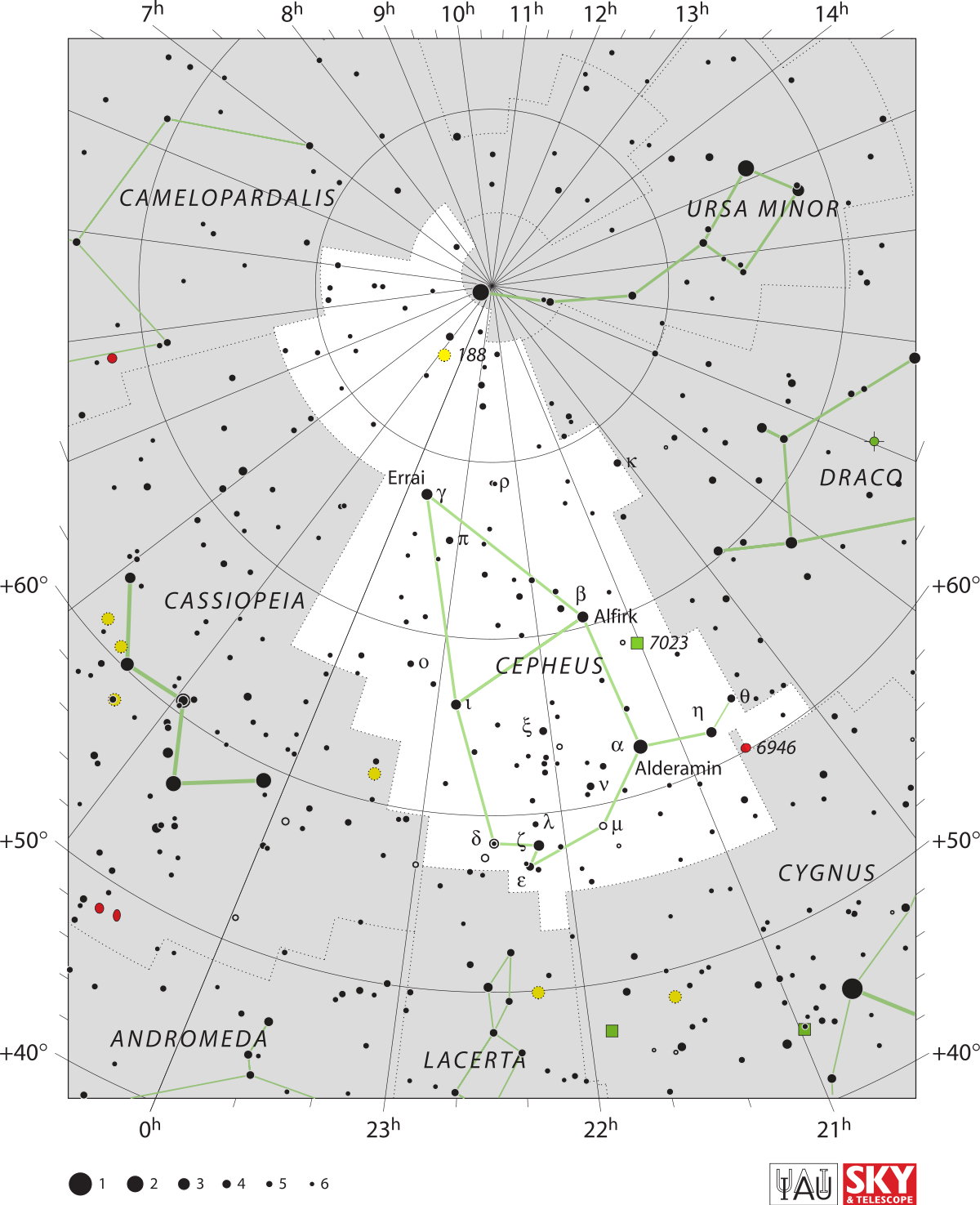
(Click the map above for a large view.)
oooo
oooo
Constellation :- Cepheus (The Cepheus King)
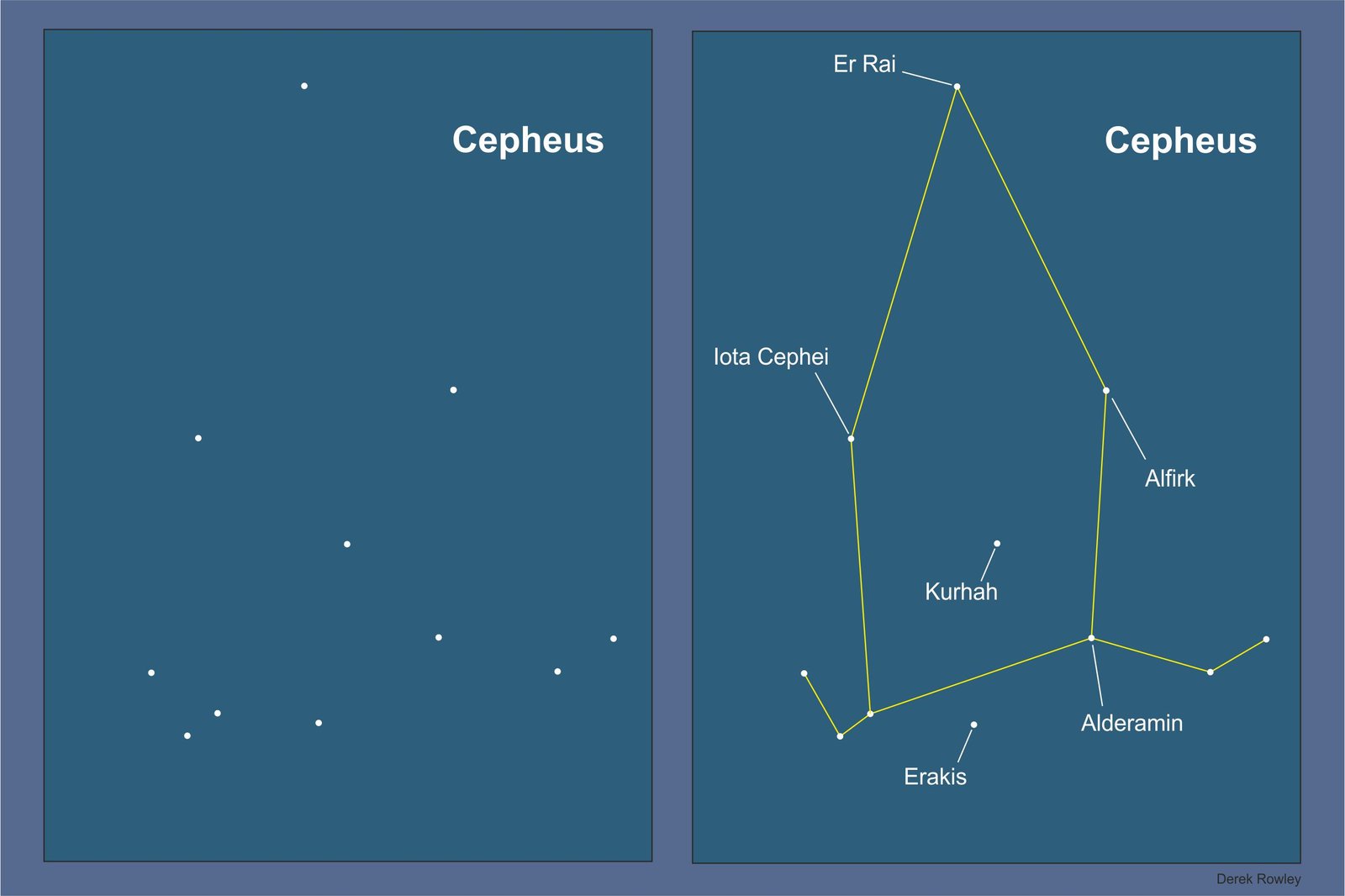
- This far northern constellation, almost to the North Celestial Pole (NCP), represents a King but its helping shape makes easy to locate as a house pattern.
o - In the sky, a northward always means toward the sky north pole, or toward Polaris. So on the right of the roof of the house in Cepheus is pointing mostly north.
| Abbreviation: Cep |
| English Name: The Cepheus King |
| Genitive: Alderamin, sometimes spelt Al Deramin. |
| Hemisphere: Northern Hemisphere |
| Location: Between the constellations of Cassiopeia and Draco. |
| Visible between latitudes: +90 and -10 degrees |
| Best season: Autumn |
| Seen in three seasons: Summer, Autumn & Winter |
| Best seen in: October (This constellation of Cepheus stays in the sky all the year.) |
| Seen between: August and December |
| Right Ascension (RA): 22 hour |
| Declination (DEC): +70 degrees |
| Area (square degrees): 588 (27th) |
oooo
Cepheus (The Cepheus King)
oooo
Addition information
oooo
- Messier 1 (Crab Nebula) – new light on the supernova from the year 1054.
o - In the year 1054 people around the world spotted a strange new light that
shined during the daytime, what they were observing was a supernova.
o - The Crab Nebula was visible during the day for 23 days, in particular, a very long-lasting glow that made it visible at night for nearly two years.
oooo
oooo
oooo
oooo
oooo
oooo