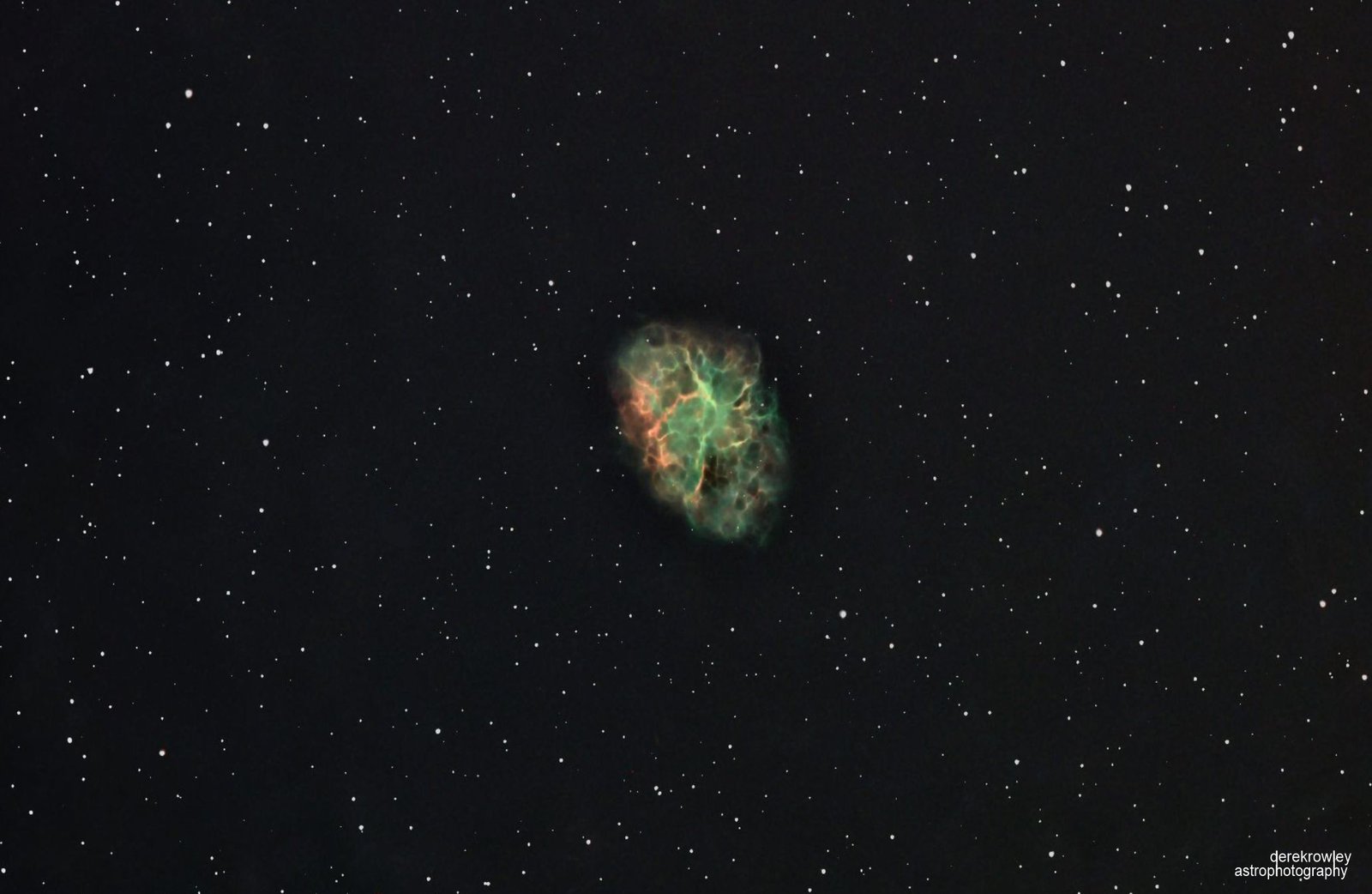
M1 (Crab Nebula) / NGC 1952
- The Crab Nebula (often called M1) is the expanding cloud of gas and dust left behind by a massive star that exploded in a supernova nearly 1,000 years ago.
o - Even though the explosion happened in 1054 AD, the light took about 6,500 years to reach Earth, that’s meaning the actual explosion occurred around 4500 BC from the nebula’s own perspective.
- Object Name
M1
- Object Type
Supernova remnant
- Constellation
Taurus
- Magnitude
+8.4
- Distance
6,500 light-years
- Age
7,500 years
oooo
Equipment
Telescope:
Mount:
Accessory:
Sky-Watcher Esprint 80ED Triplet
Sky-Watcher AZ-EQ6 GT
ZWO ASIair Plus
Camera:
Guiding:
Filter:
ZWO ASI2600MC Pro cooling
ZWO ASI1290MM
2″ Optolong eNchance
Bortle Scale: Milton Keynes, Buckinghamshire (Bortle 7.3)
oooo
Integration
- Date:
Wednesday 5th November 2025
- Moonlit:
67%
- Total:
180″ x 65 = 3 hours & 25 minutes
oooo
oooo
Constellation :- Taurus (The Bull)
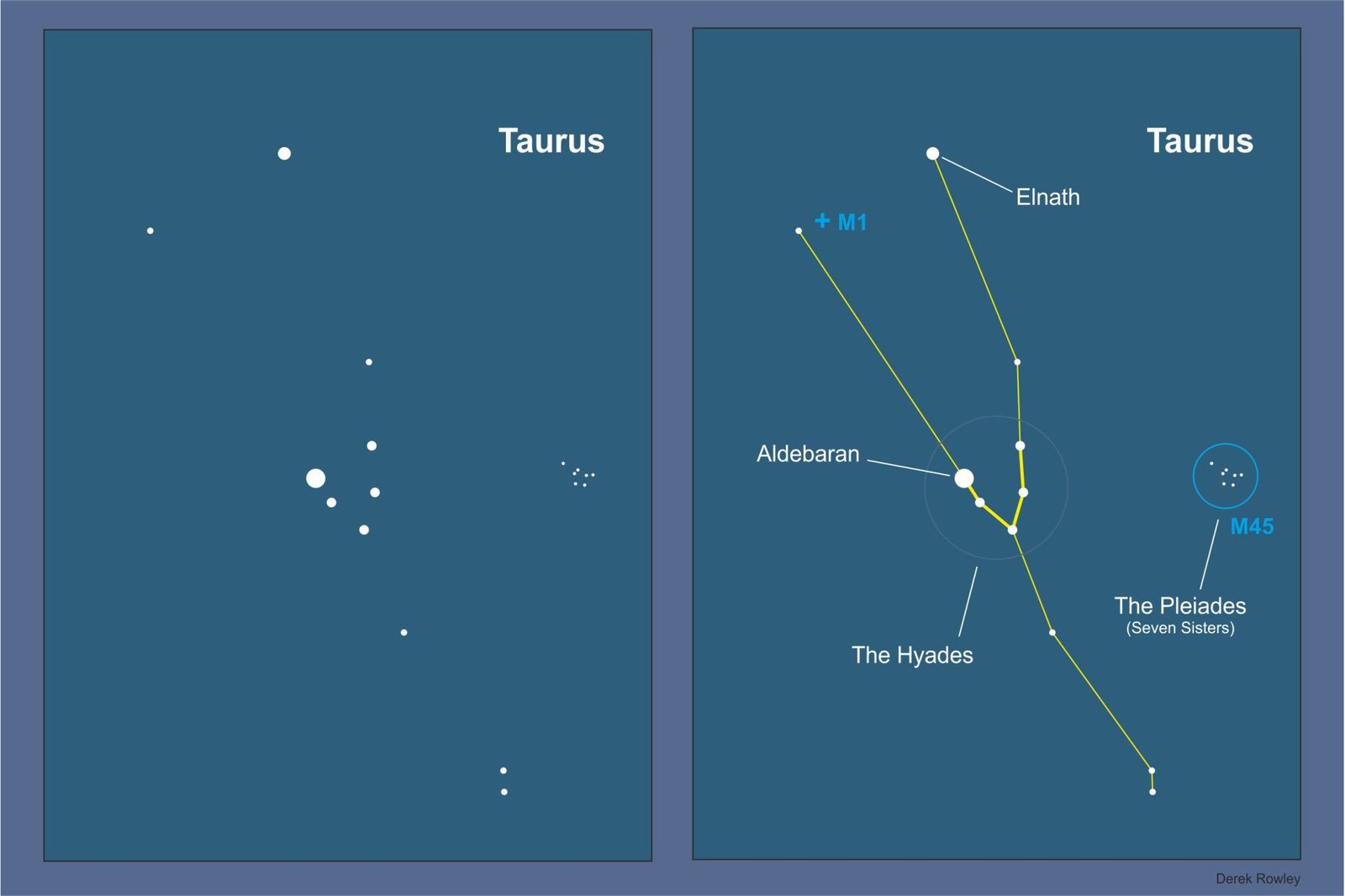
Object :-
oooo
Object :-
Other name :-
Type :–
Magnitude :–
Distance :-
Constellation :-
Right Ascension :-
Declination :-
oooo
oooo
M1
NGC 1952 / Crab Nebula
Supernova remnant
+8.4
7,500 light years / 11 light years across
Tau (Taurus / The Bull)
05h 34m 31s
+22° 00′ 52″
Enlarge on click the map.

(Click the map above for a large view.)
| Abbreviation: Tau |
| English Name: The Bull |
| Genitive: Aldebaran |
| Hemisphere: Northern and Southern Hemisphere. |
| Location: Between the constellations of Orion and Aries. |
| Visible between latitudes: +90 and -65 degrees |
| Best season: Winter |
| Seen in three seasons: Autumn, Winter and Spring |
| Best seen in: January (map) |
| Seen between: October and March |
| Right Ascension (RA): 04 hour |
| Declination (DEC): +15 degrees |
| Area (square degrees): 797 (17th) |
oooo
oooo
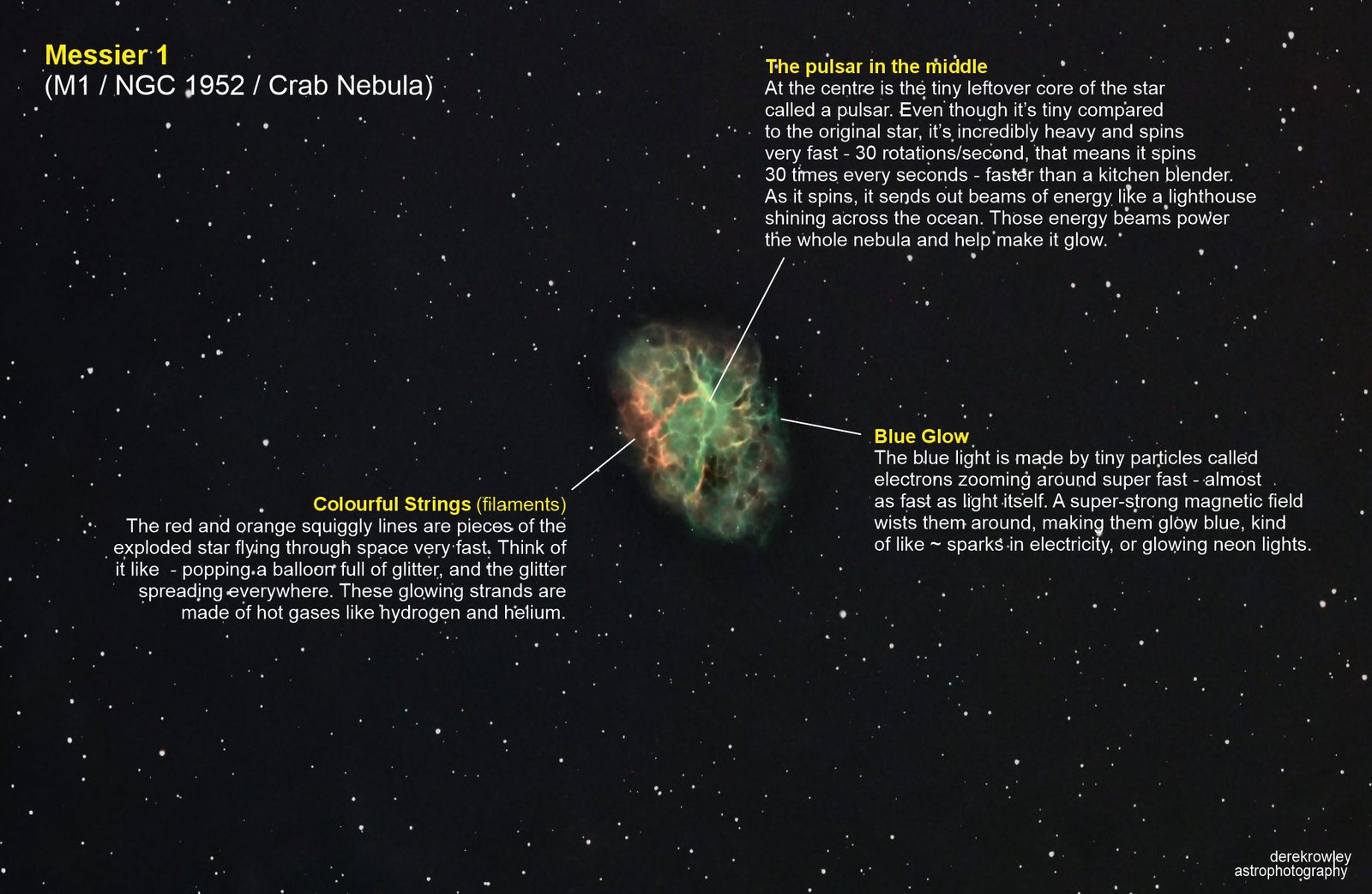
Facts about Messier 1 (M1)
oooo
- Messier 1, also called the Crab Nebula, is a huge cloud in space made of gas and dust – it’s what’s left after a giant star exploded.
o - It’s called the Crab Nebula because early astronomers thought its cloudy shape looked a bit like a crab with legs.
o - Star exploded ~ a long time ago, in the year 1054, people on Earth saw a bright “guest star” in the sky that was actually a star exploding in space called a supernova.
o - At the centre is a super tiny, super heavy star called a pulsar (a spinning neutron star) ~ it spins very fast about 30 times every second!
o - It was also the first object catalogued by French astronomer Charles Messier, which is why it’s called M1 (“Messier 1”).
oooo
oooo
oooo
oooo
oooo
oooo