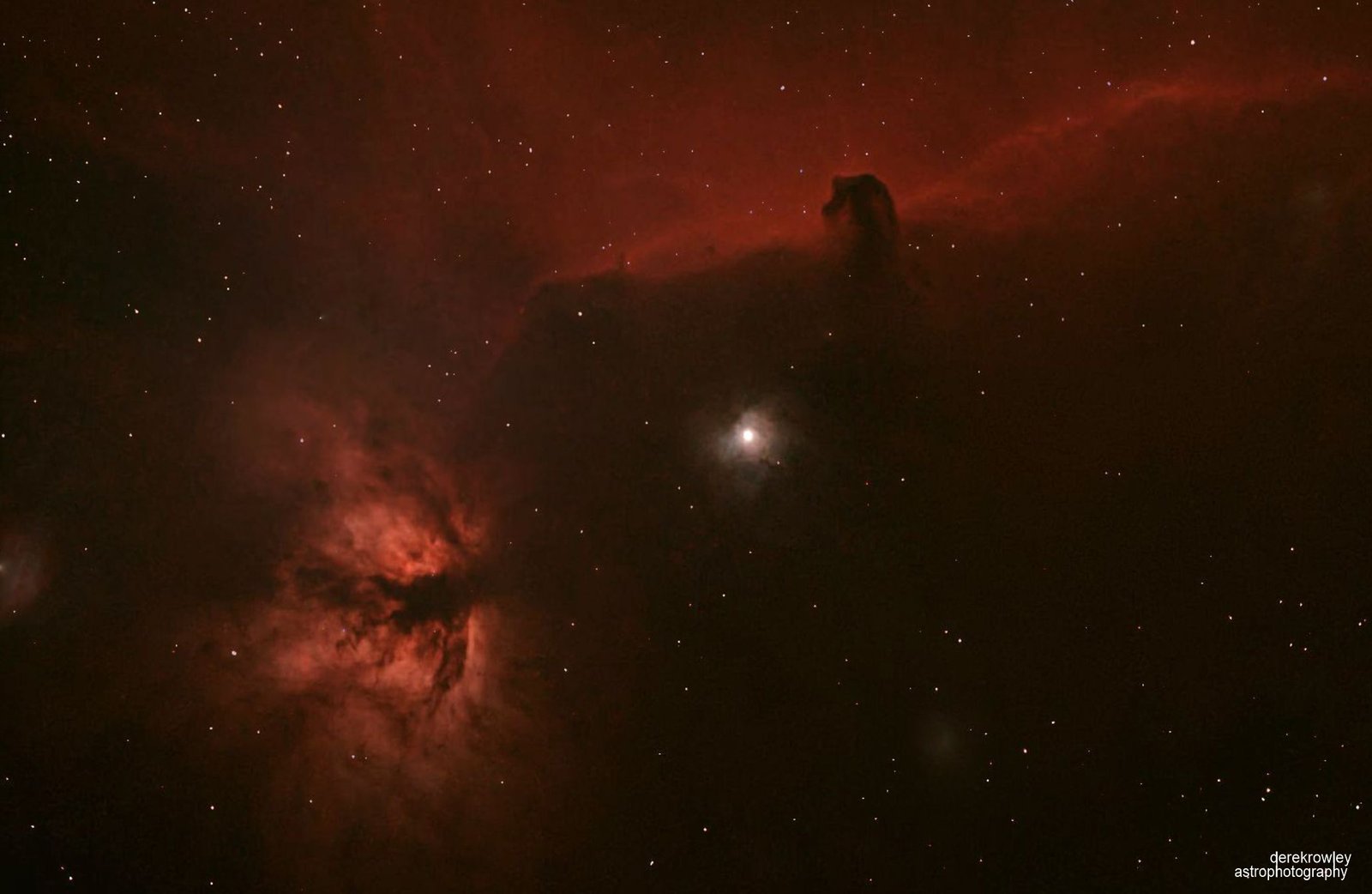
NGC 2024 (The Flame Nebula)
- NGC 2024, better known as the Flame Nebula, is one of the most famous star-forming regions in the winter sky.
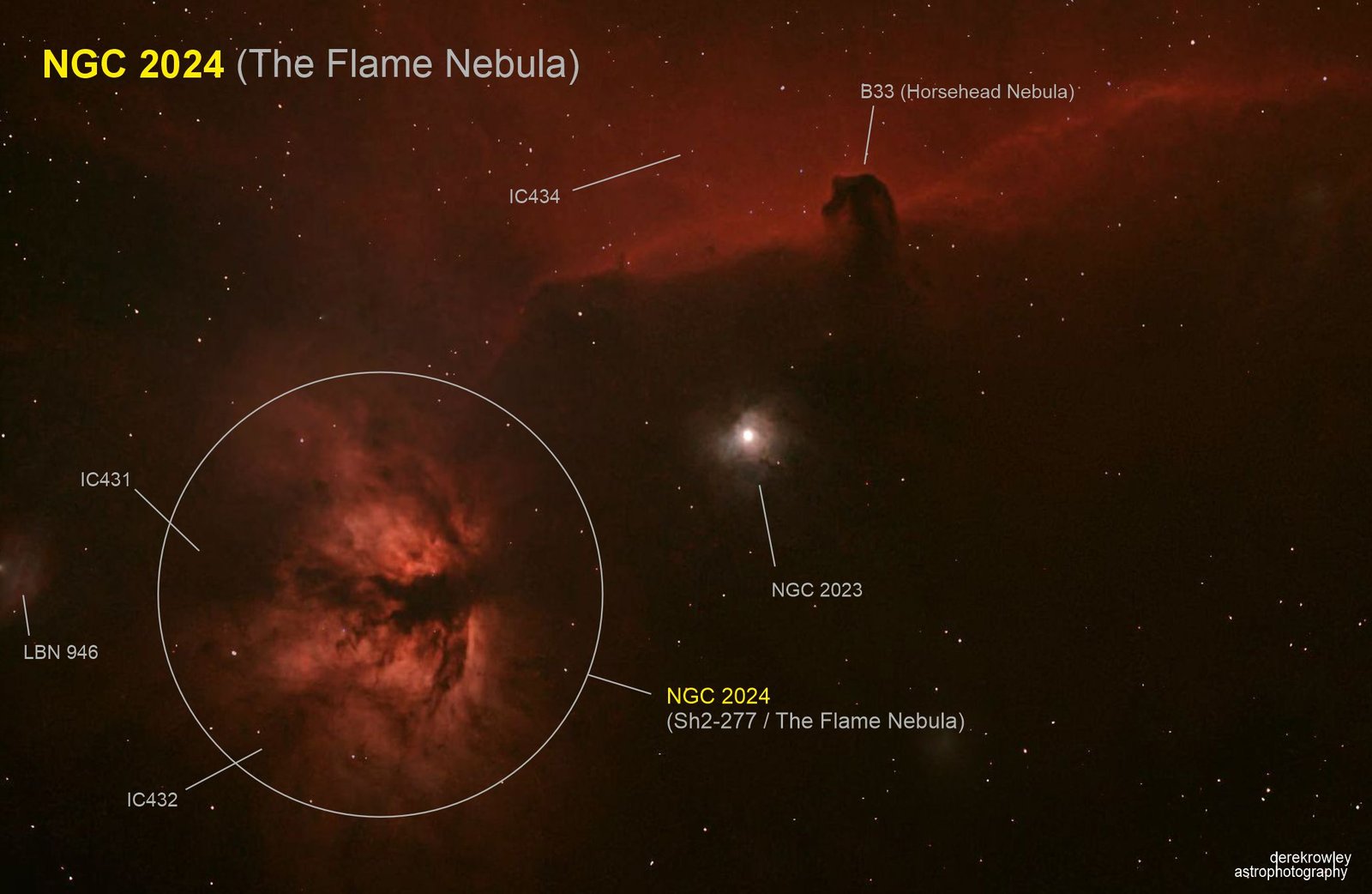
o - NGC 2024 is a favourite target for astrophotographers because it lies close to the famous Horsehead Nebula, allowing both objects to be photographed in the same field of view.
o
- Object Name
NGC 2024
- Object Type
Emission Nebula
- Constellation
Orion
- Magnitude
+2.0
- Distance
1,400 ly
- Annotated
oooo
Equipment
Telescope:
Mount:
Accessories:
Sky-Watcher Esprint 80ED Triplet
Sky-Watcher AZ-EQ6 GT
ZWO ASIair Plus / PixInsight
Camera:
Guiding:
Filter:
ZWO ASI585MC Pro cooling
ZWO ASI1200MM
2″ Optolong eNchance
Bortle Scale: Milton Keynes, Buckinghamshire (Bortle 6.6)
oooo
Integration
- Date:
Wednesday 22nd October 2025
- Moonlit:
Waxing Crescent 5 days old
Magnitude: -11.2
Moonlit: 24%
- Total:
180’s x 50 subs = 2 hours 30 minutes
oooo
oooo
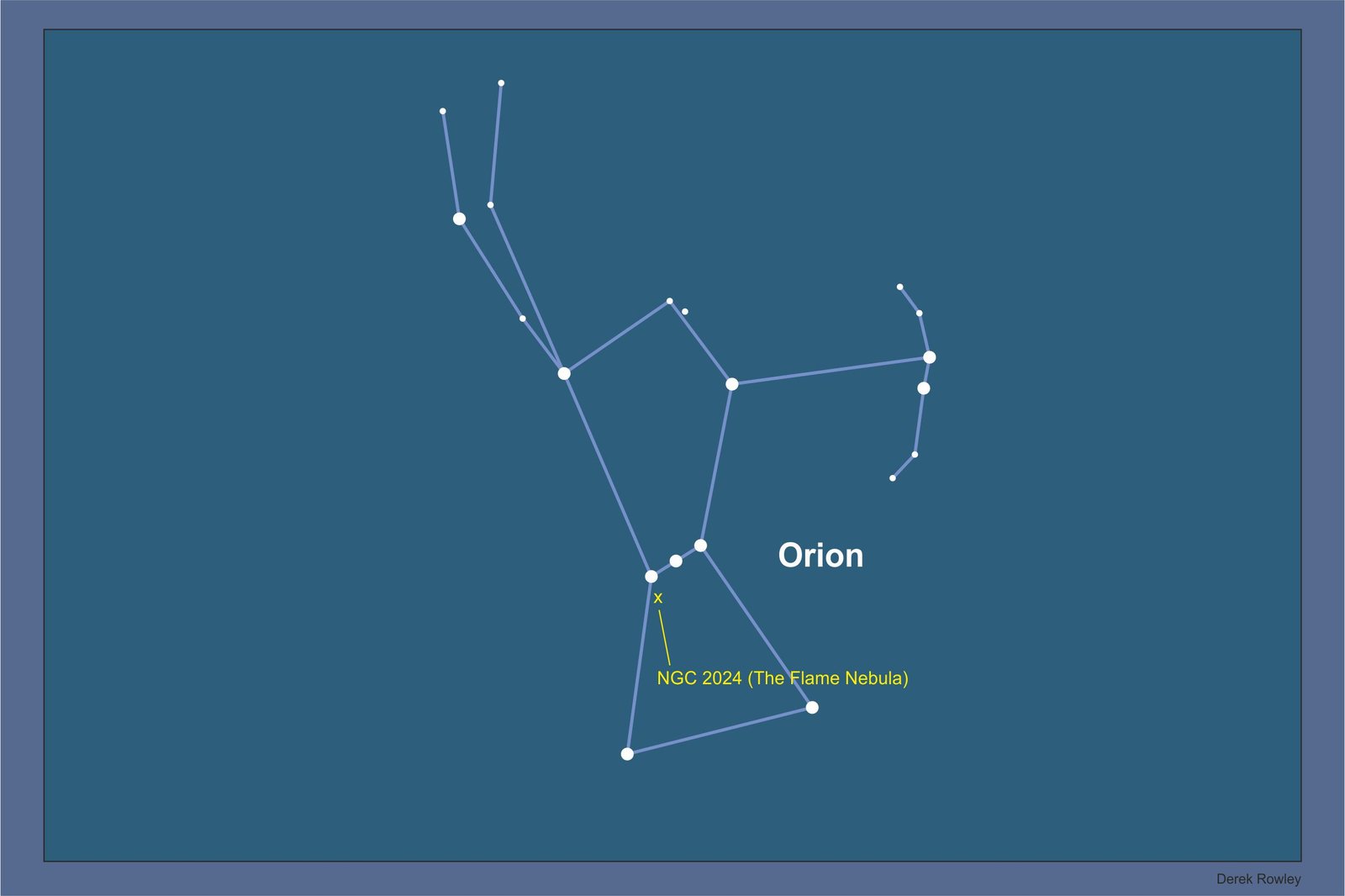
Constellation :- Orion (The Hunter)
Object :-
oooo
Object :-
Other name :-
Type :-
Magnitude :–
Distance :-
Constellation :-
Right Ascension :-
Declination :-
oooo
oooo
NGC 2024
Sh2-227 / The Flame Nebula / Tank Trap Nebula
Emission Nebula
+2.0
1,400 light years / 6 light years across
Ori (Orion / The Hunter)
05h 41m 54s
-01° 51′ 01″
Enlarge on click the map.

(Click the map above for a large view.)
| Abbreviation: Ori |
| English Name: The Hunter |
| Genitive: Betelgeuse |
| Hemisphere: Northern and Southern Hemisphere. (Bold means the more area in square feet in Southern Hemisphere.) |
| Location: Between the constellations of Monoceros and Eridanus. |
| Visible between latitudes: +90 and -40 degrees |
| Best season: Winter |
| Seen in three seasons: Autumn, Winter and Spring |
| Best seen in: January (map) and February (map) |
| Seen between: November and early March |
| Right Ascension (RA): 05 hour |
| Declination (DEC): +05 degrees |
| Area (square degrees): 594 (26th) |
oooo
Facts about NGC 2025 ( The Flame Nebula)
- Hidden within the dust is a young cluster of several hundred newly formed stars.
o - Many are best seen in infrared or X-ray light because visible light cannot easily penetrate the dust.
o
oooo
oooo
oooo
oooo
oooo
oooo