oooo
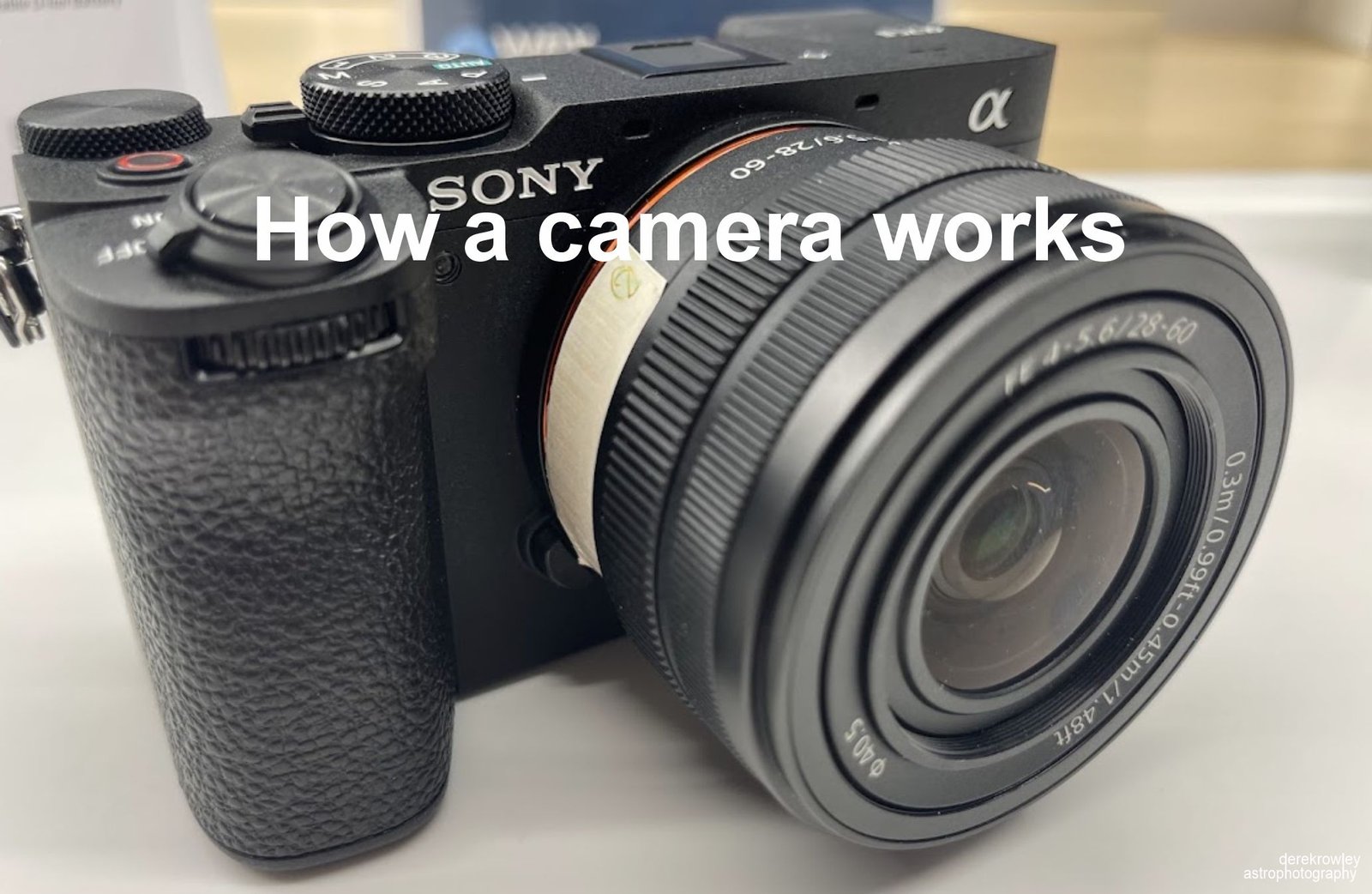
Cameras capture images by controlling how light enters through a lens and strikes a light-sensitive surface (either digital sensors or traditional photographic film).
oooo
oooo
oooo
oooo
oooo
oooo
Lens & Apertures:
o
Light reflects off a subject and passes through the camera lens.
o
Inside the lens, an adjustable opening called the aperture acts like the pupil of an eye, expanding or contracting to control the total volume of light entering the camera.
o

BSL Version

oooo
oooo
oooo
oooo
oooo
Shutter:
o
Behind the aperture sits the shutter, a barrier that acts like an eyelid.
o
When you press the shutter button, it opens for a set duration (shutter speed) -ranging from a fraction of a millisecond to several seconds (allowing light to reach the light-gathering element).
oooo
oooo
oooo
oooo
oooo
oooo
oooo
Sensor / Film:
o
In modern digital cameras, light hits an electronic image sensor (such as a CMOS or CCD chip) covered in millions of microscopic light sensors called pixels.
o
These pixels convert the incoming light energy (photons) into electrical signals.
oooo
oooo
oooo
oooo
oooo
oooo
Processing & Storage:
o
An internal image processor converts these electrical signals into digital data (numbers representing colour and brightness levels) and writes the resulting file to a memory card.
oooo
oooo
oooo
oooo
oooo
oooo
Back to
oooo
Back to page 2
Next to page 4
oooo
Page 3 – How a camera works?  Derek Rowley – Derekscope’s BSL Guide to Deep-Sky Imaging
oooo
oooo