oooo
Large aperture…vs…Small aperture
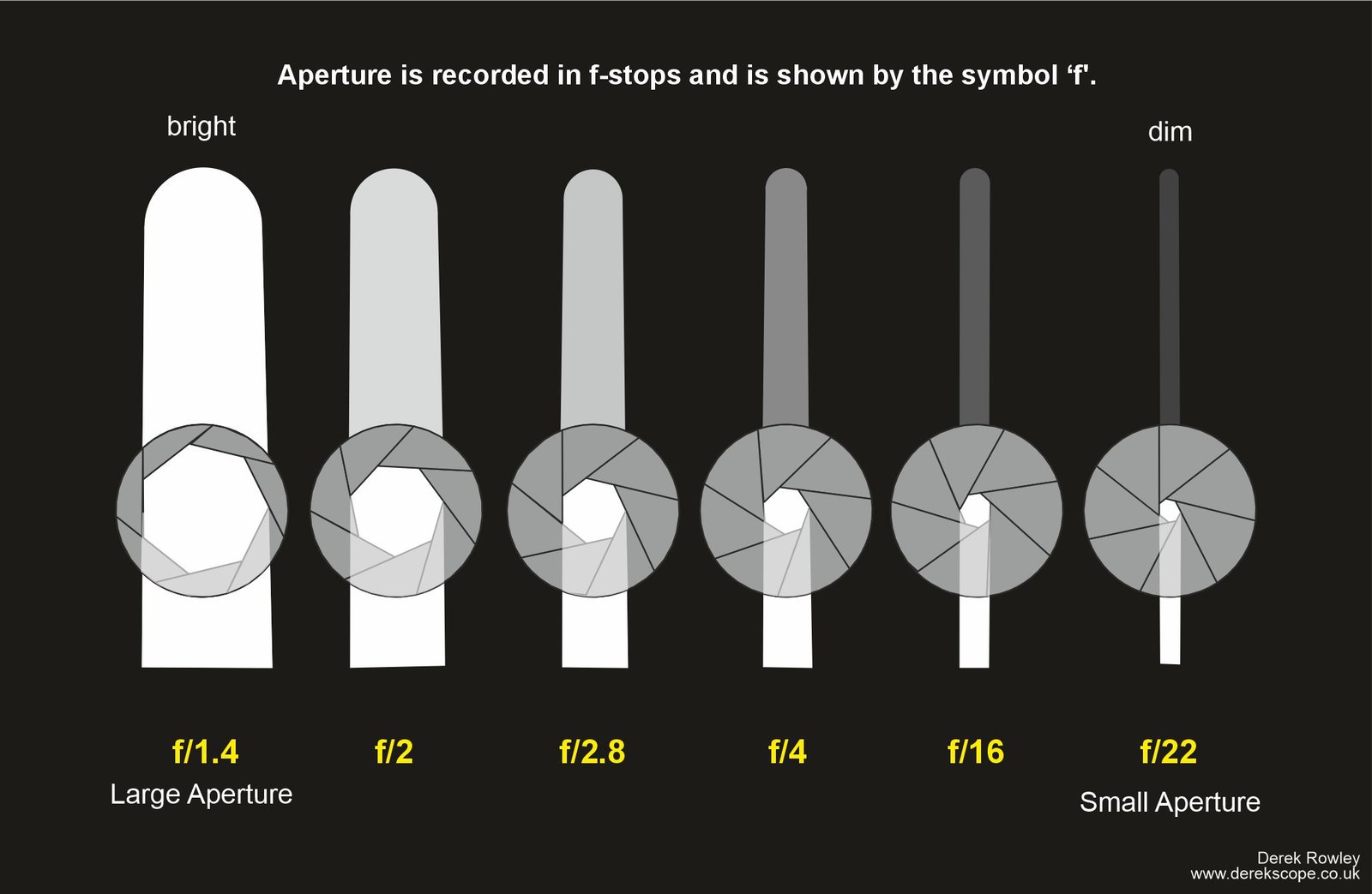
Aperture can be quite confusing at first,
but it’s important to understand the difference
between large and small apertures.
In deep-sky astrophotography, aperture and f-ratio (focal ratio)
are two of the most critical optical properties determining
how your camera captures light from faint celestial objects.
oooo
oooo
oooo
Core Concepts
oooo
oooo
1) Aperture (D):
oooo
Diameter:
The physical diameter of the telescope or camera lens’s main light-collecting opening (usually measured in millimetres or inches).
o
Role:
Determines total light-gathering power and theoretical resolving power (fine detail).
o
A larger aperture collects exponentially more photons.
o
o

oooo
oooo
2) Focal Length (f):
oooo
Distance:
The distance light travels from the primary lens/mirror to the point where it comes to focus.
Role:
Determines image scale and field of view. Longer focal lengths zoom in closer to small targets (like distant galaxies), while shorter focal lengths yield wider views (like vast nebula complexes).
o
o
oooo
oooo
oooo
3) F-ratio / Focal Ratio (N):
oooo
N = f /D
oooo
How F-ratio Affects Deep-Sky Imaging:
In astrophotography, the focal ratio determines the photographic speed of your setup.
o
How long you must expose to achieve a given signal-to-noise ratio (SNR) on faint background details.
o
o
oooo
oooo
oooo
4) Fast Optics (Low F-ratio):
oooo
oooo
Low F-ratio (f/2 to f/4):
Concentrates light onto a smaller area on the camera sensor.
Advantage:
Requires significantly shorter exposure times to capture faint nebulosity.
o
Trade-off:
Harder to achieve precise focus, narrower depth of focus, and more prone to optical aberrations at the frame edges (requiring field flatteners/reducers).
oooo
oooo
oooo
Key Comparison
oooo
| Feature | Large Aperture | Small Aperture |
| Light Collection | High (Captures faint details faster) | Moderate to low |
| Resolution | Fine details / Smaller star points | Broader details |
| Physical Size & Weight | Heavy, larger mount requirements | Portable, easier tracking |
| Setup Sensitivity | High sensitivity to atmospheric seeing & focus | More forgiving of small errors |
oooo
oooo
oooo
oooo
oooo
oooo
oooo
Back to
oooo
Back to page 12
Next to page 14
oooo
Page 13 – Aperture / F-ratio Derek Rowley – Derekscope’s BSL Guide to Deep-Sky Imaging
oooo
oooo