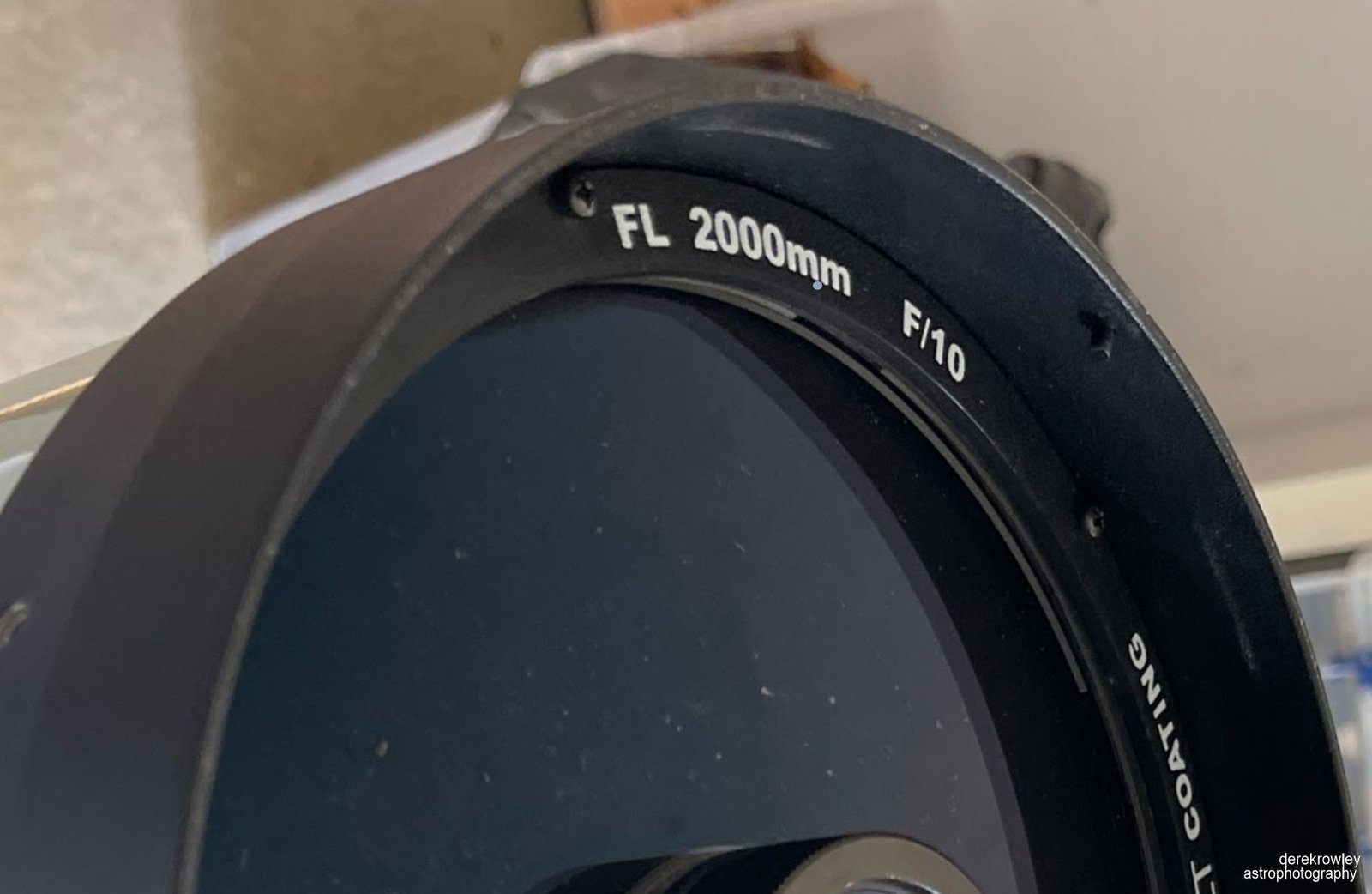
Aperture, Focal Length, and Focal Ratio
Understanding these three core optical specifications
is essential for choosing the right telescope
for deep-sky imaging and astrophotography.
oooo
oooo
Three core optical specification
Aperture, Focal Length, and Focal Ratio form the fundamental optical triangle
oooo
o
1) Aperture
o
What it is:
The diameter of the telescope’s primary mirror or lens (usually measured in millimetres or inches).
Why it matters:
Aperture determines the telescope’s light-gathering power and maximum resolving resolution.
A larger aperture collects more photons in a given timeframe, revealing fainter deep-sky targets and finer details.
Key Takeaway:
Aperture is king for gathering light, but larger apertures mean heavier telescopes requiring sturdier mounts.
o
o
oooo
oooo
oooo

oooo
o
2) Focal Length
o
What it is:
The distance (in millimeters) from the primary mirror/lens to the point where light rays come together to form a sharp focus.
Why it matters:
Focal length determines magnification and field of view (FOV):
o
Short Focal Length
(250mm – 500mm)
Provides a wide field of view, perfect for large targets
like the Andromeda Galaxy, North America Nebula, or Pleiades.
o
Long Focal Length
(1000mm – 2000mm+)
Provides high magnification for small targets
like planetary nebulae, distant galaxies,
and lunar/planetary detail.
o
o
oooo
oooo
oooo
oooo
oooo
oooo
o
3) Focal Ratio (f-number)
o
What it is:
The ratio of the telescope’s focal length divided by its aperture:
Focal Ratio..=..Focal length…÷…Aperture
oooo
Fast vs Slow
o
Fast Telescopes (f/2 to f/5):
Require shorter exposure times to capture deep-sky details, making them ideal for faint nebulae and forgiving on mount tracking errors.
o
Aperture determines the telescope’s light-gathering power and maximum resolving resolution.
o
O
Slow Telescopes (f/8 to f/10+):
Require longer exposure times to capture the same amount of light signal, but provide narrower fields of view for small targets.
o
o
oooo
oooo
oooo
oooo
oooo
oooo
oooo
Quick Comparison Matrix
Specification
Focal Length (short / long)…/…Focal Ratio (fast / slow)
oooo
Focal Length
There are 4 focal lengths defined under short focal length,
starting from 1000mm up to 2500mm are categorised as long focal length.
Short focal length: 400mm / 500mm / 600mm / 800mm
Long focal length: 1000mm / 1200mm / 1500mm / 1800mm / 2000mm / 2500mm
oooo
Focal Ratio
There are 7 listed ratios defined under “fast”,
ratios from f/10 to f/20 are categorised as “slow”.
oooo
Fast Focal Ratio: .. f/1.4, f/1.8, f/2.0, f/2.4, .f/3.0, f/4.0, f/5.0
Short Focal Ratio:....f/10, f/12, f/15, f/18, f/20
oooo
o
Short/Fast
For example:
Short – Focal Length: 400mm
Fast – Focal Ratio: f/4
Primary Targets:
Large nebulae / star clusters / wide Milky Way regions
o
Field of View:
Wide
o
Mount Requirements:
Forgiving tracking tolerances
o
Subs (exposure time):
Shorter
o
o
oooo
oooo
oooo
o
Long/Slow
For example:
Long – Focal Length: 1500mm
Slow – Focal Ratio: f/10
o
Primary Targets:
Small galaxies / planetary nebulae / planets
o
Field of View:
Narrow
o
Mount Requirements:
Strict tracking / guiding tolerances
o
Subs (exposure time):
Longer
o
o
oooo
oooo
oooo
oooo
oooo
oooo
Back to
oooo
Back to page 20
Next to page 22
oooo
Page 21 – Aperture / Focal Length / Focal Ratio Derek Rowley – Derekscope’s BSL Guide to Deep-Sky Imaging
oooo
oooo