oooo
o
oooo
oooo
Amp Glow
o
Amp Glow (amplifier glow):
It is a specific type of thermal and electrical noise visible in CCD and CMOS camera sensors during long-exposure astrophotography.
o
o
Modern Camera:
Now all modern cameras do not have significant amp glow.
o
o
Calibration Frames:
If some cameras have amp glow, this can be removed using calibration frames.
o
o
oooo
oooo
oooo
oooo

oooo
oooo
oooo
What causes Amp Glow?
oooo
Heat & Electrical Radiation:
On-sensor electronics – such as circuitry, analogue-to-digital converters (ADCs), or amplifier components located near the sensor edge – emit heat and faint infrared light when active during an exposure.
o
o
Pixel Sensitivity:
The nearby pixels on the sensor pick up this thermal radiation, registering it as light.
o
Visual Appearance:
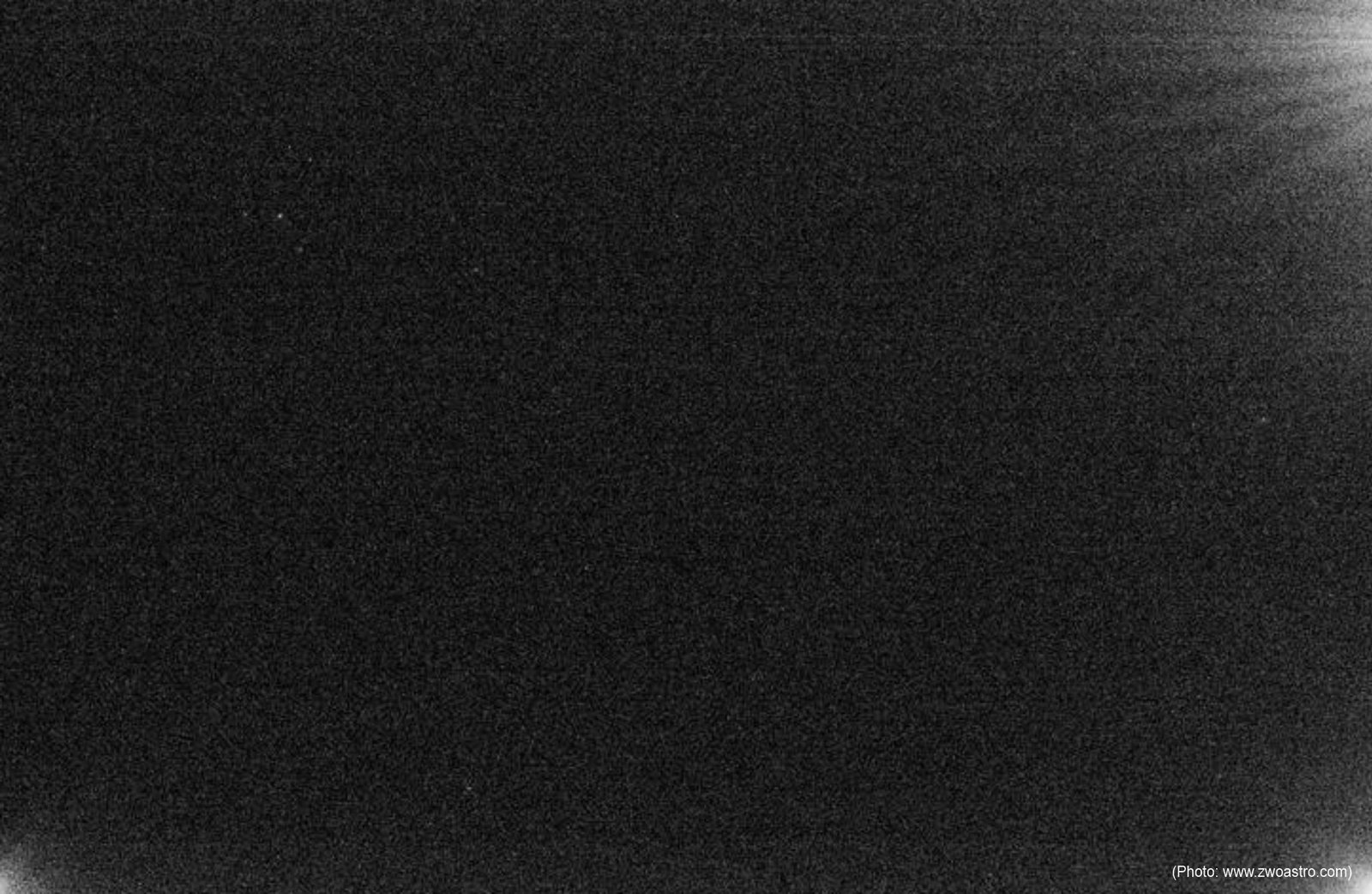
It typically appears in raw images as a bright, fan-shaped, starburst, or uneven glowing streak along one or more edges or corners of the frame (most commonly visible when stretching long exposures in post-processing).
oooo
oooo
oooo
oooo
oooo
oooo
How to mitigate or Remove Amp Glow
oooo
oooo
o
1) Dark Frame Calibration (Primary Fix)
oooo
Repeatable and Predictable:
Amp glow is repeatable and predictable for a given sensor temperature, exposure time, and gain/ISO setting.
o
Dark Frames:
Subtracting matching Dark Frames (images taken with the telescope capped at the same exposure time and temperature) using calibration software (for example: DeepSkyStacker, PixInsight, Siril) almost entirely removes the glow from your final stacked image.
oooo
oooo
oooo
o
2) Camera Hardware Features
o
Zero Amp-Glow Sensors:
Modern modern back-illuminated CMOS sensors (such as Sony’s IMX571, IMX455, or IMX533) feature built-in hardware circuitry design that virtually eliminates amp glow.
o
Sensor Cooling:
Thermoelectrically cooled (TEC) cameras lower sensor temperatures, which reduces overall thermal noise and minimizes the intensity of amp glow.
oooo
oooo
oooo
o
3) High-Speed Offloading & USB Settings
o
USB 3.0 cables:
On older sensors, enabling high-speed readout, using USB 3.0 cables, or increasing DDR memory buffers reduces the amount of time the amplifier circuitry remains active near the sensor.
oooo
oooo
oooo
oooo
Back to
oooo
Back to page 29
Next to page 31
oooo
Page 30 – Amp Glow Derek Rowley – Derekscope’s BSL Guide to Deep-Sky Imaging
oooo
oooo