signWOW opensthe night sky forDeaf beginners withclear,visual, & hands‑onlearning,made possiblethroughsignWOW kindlygesture in contributing two iPads.
Two signWOW iPads fordiscovering how to capturethe Moon, planets, andstars using simple tools,step‑by‑step guidance,and the support of acommunity that signs,shares, and shinestogether.
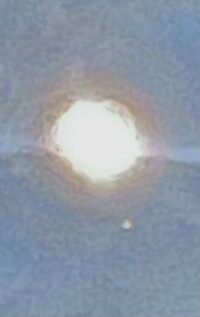
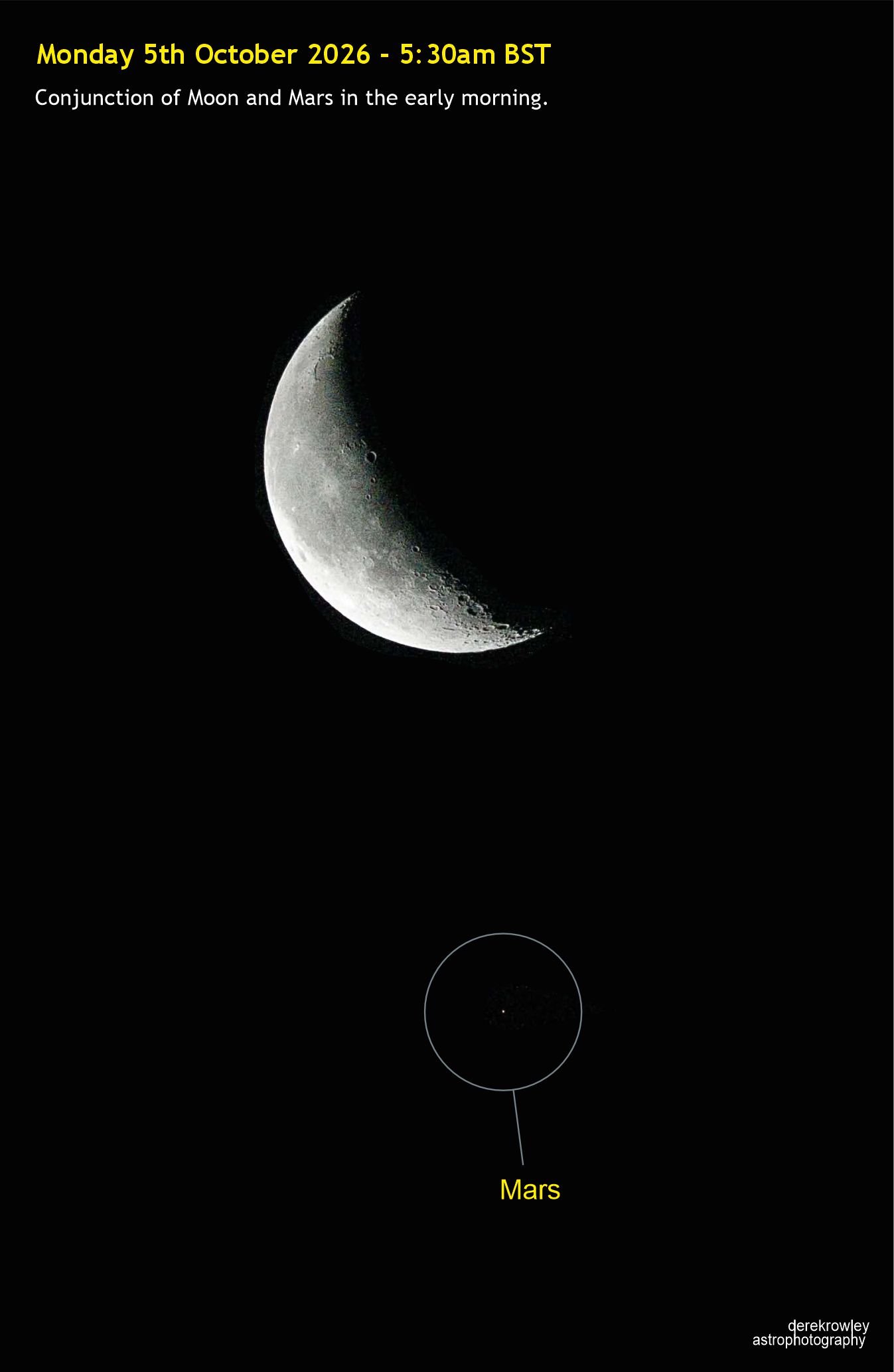
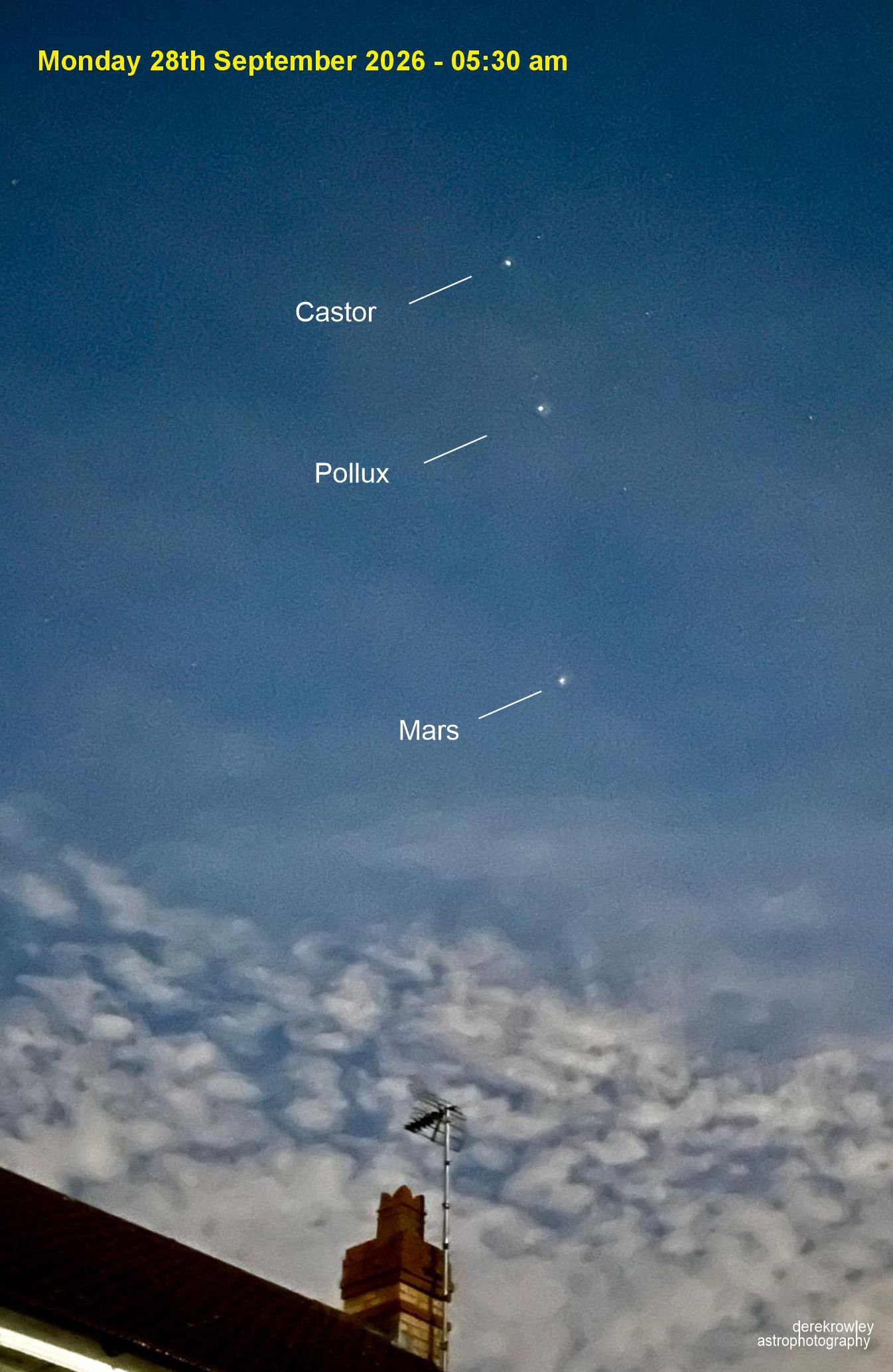
Photo Left First, I captured the Moon close to Mars with my smartphone. At this zoom level, Mars was easy to spot, but the Moon was too bright and overexposed, so the photo didn’t turn out great.
oooo
Photo Below I then used Sylvia Simmonds’s telescope to capture them again. This time, I was able to bring out much more detail on the Moon, although Mars became much dimmer.
Something amazing is happening in the night sky – the Moon and Mars are going to pass right next to each other in what astronomers call a conjunction. o
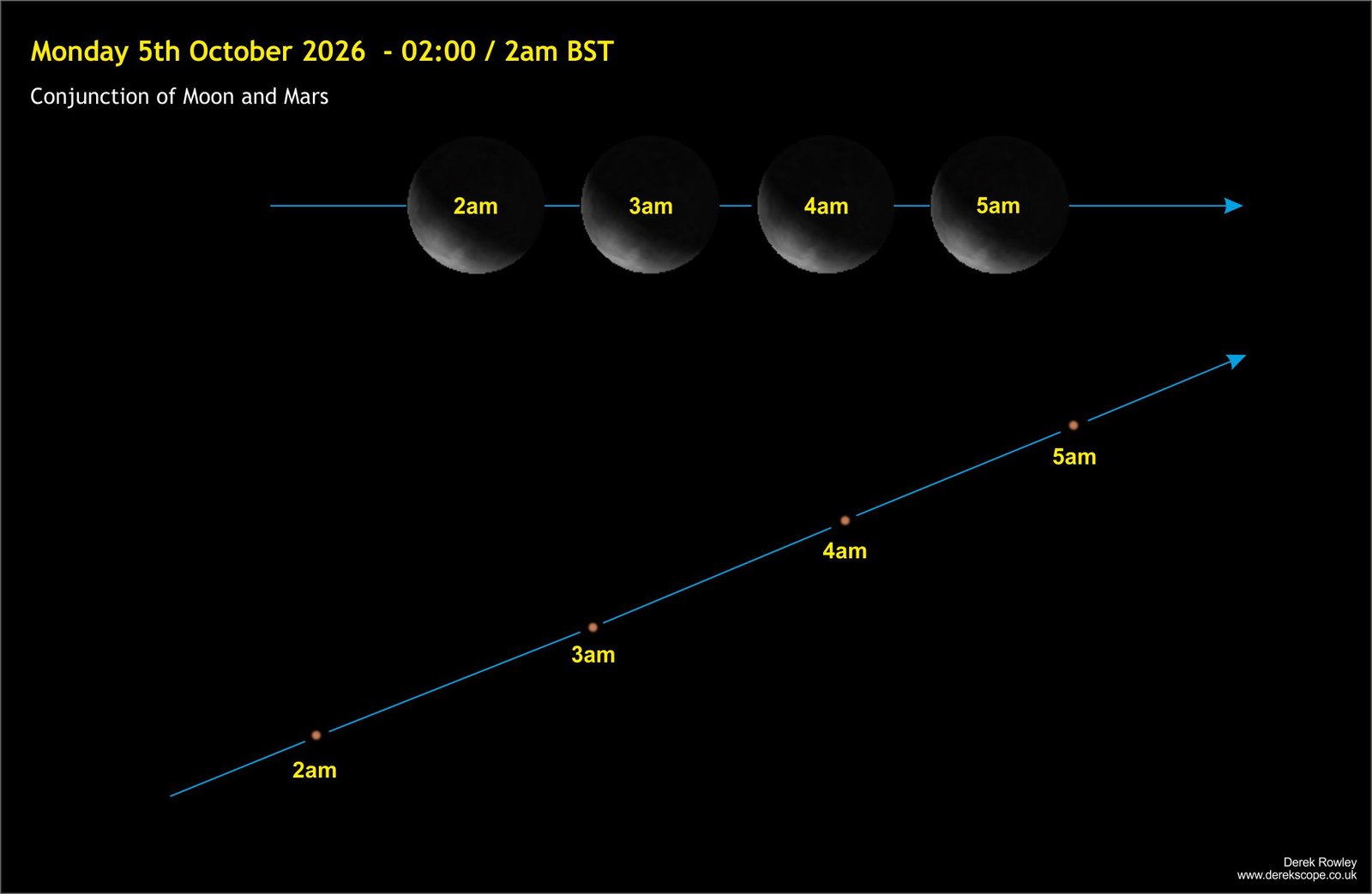
Here is your hourly guide to watching the action:
2am – Look up! The bright, orange planet Mars will be trailing closely behind the Moon. o 3am – Mars is speeding up and getting closer to the Moon. o 4am – They are side-by-side! This is the closest they will look all night. o 5am – Mars zooms past the Moon and takes the lead as they both head toward the horizon.
Mars is actually millions of miles behind the Moon in deep space! It just looks close from where we are standing on Earth. o
Posted inHomepage (Posts)|Comments Off on Monday 5th October 2026
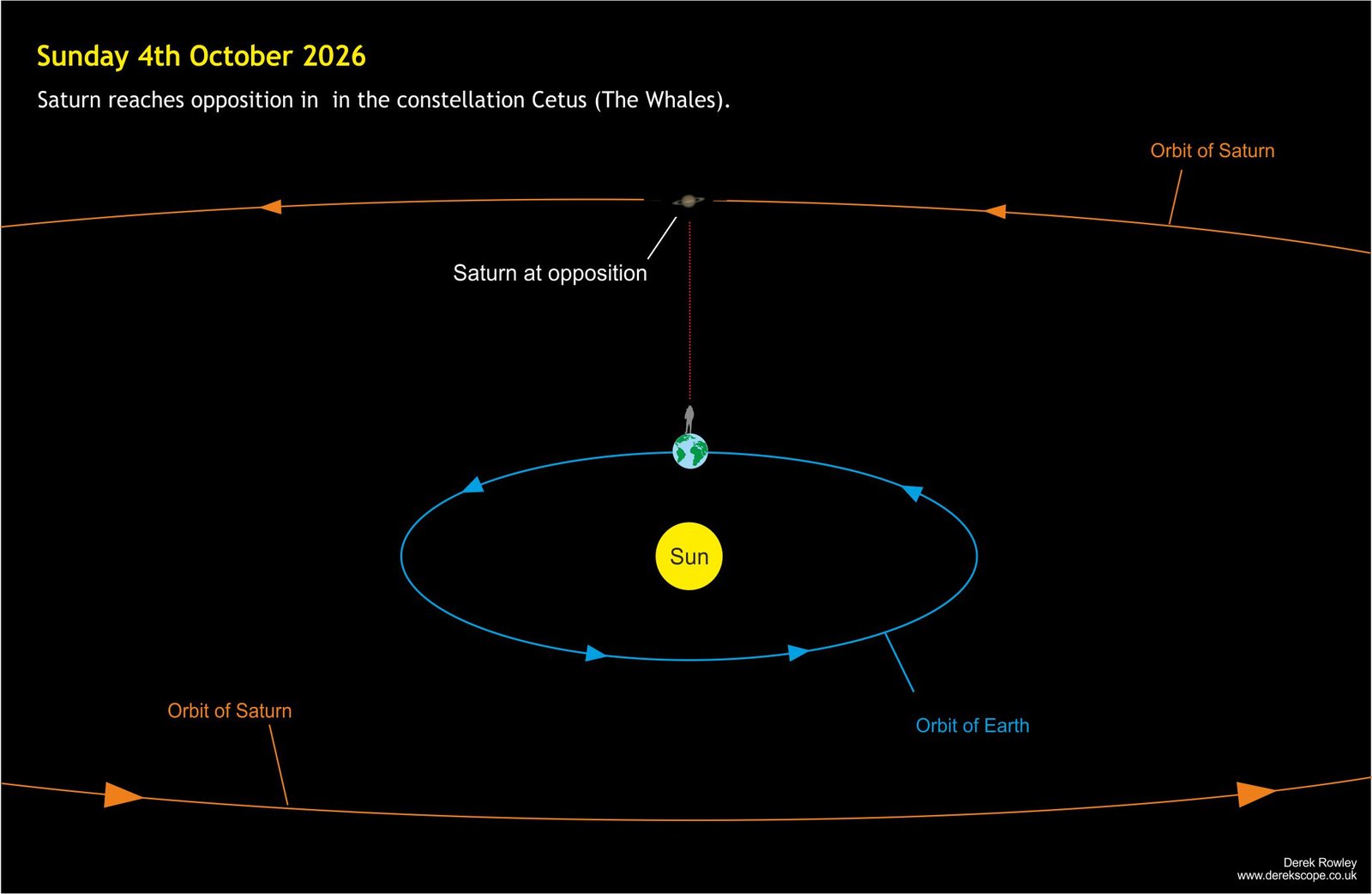
On Sunday 4 October 2026, Earth will pass directly between the Sun and Saturn. o
Saturn is opposite the Sun in our sky, so it rises at sunset (18:45 / 6.45pm) and remains visible through the night. o
Saturn is at approximately its closest point to Earth for the year, about 782 million miles away, and reaches its brightest apparent magnitude +0.3 for 2026. o
Through a small telescope, the rings should be visible, although they remain relatively narrow because of their current tilt. o
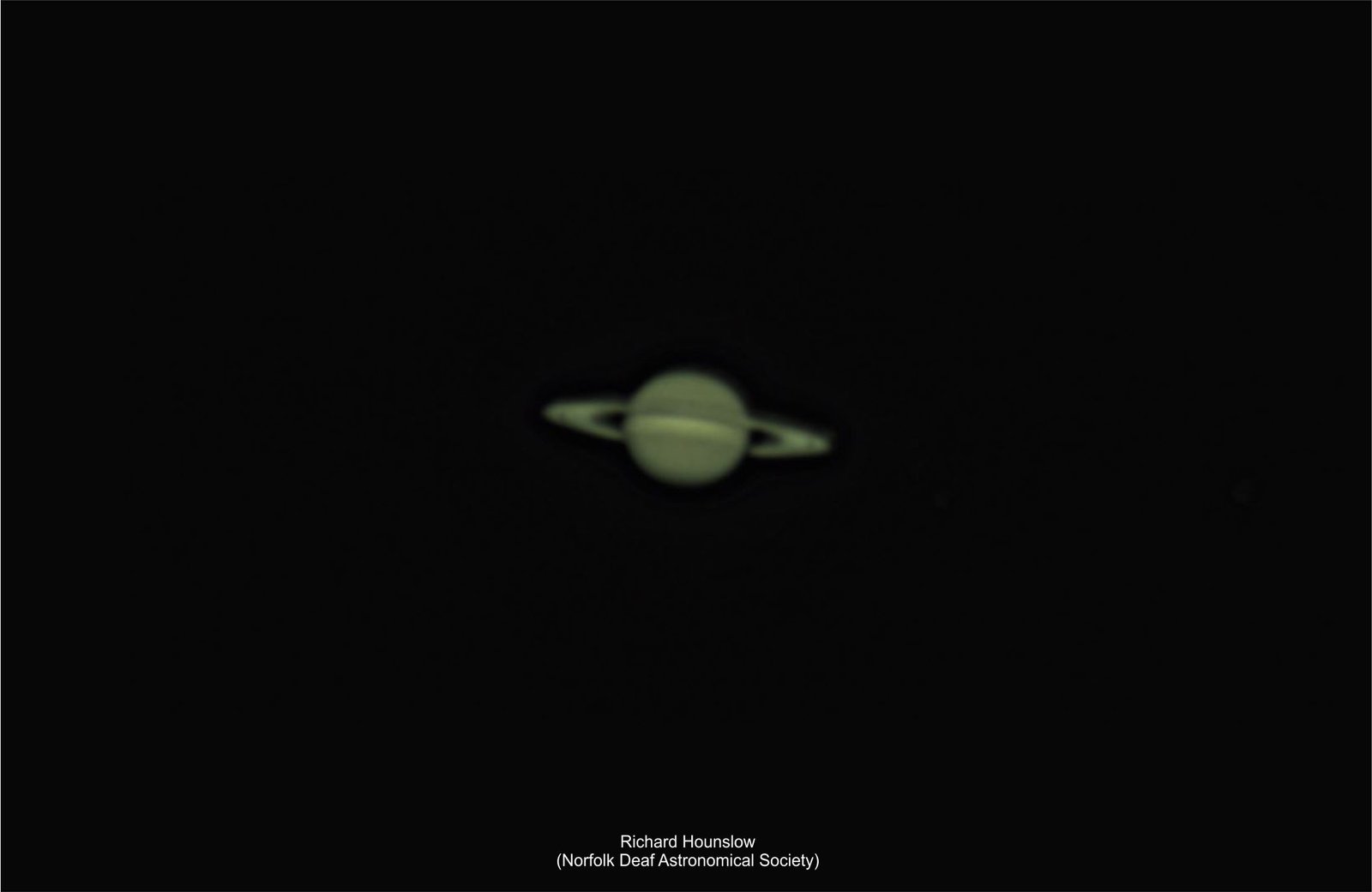
Saturn’s rings in visible light
On the left, this photo was captured by Richard Houston at Norfolk Deaf Astronomical Society. o
His photograph beautifully shows Saturn’s rings in visible.
Richard mentioned that following the edge-on ring plane crossing last year (2025), Saturn’s rings are opening back up. This will offer a much clearer view through telescopes during this opposition.
oooo
Posted inHomepage (Posts)|Comments Off on Sunday 4th October 2026
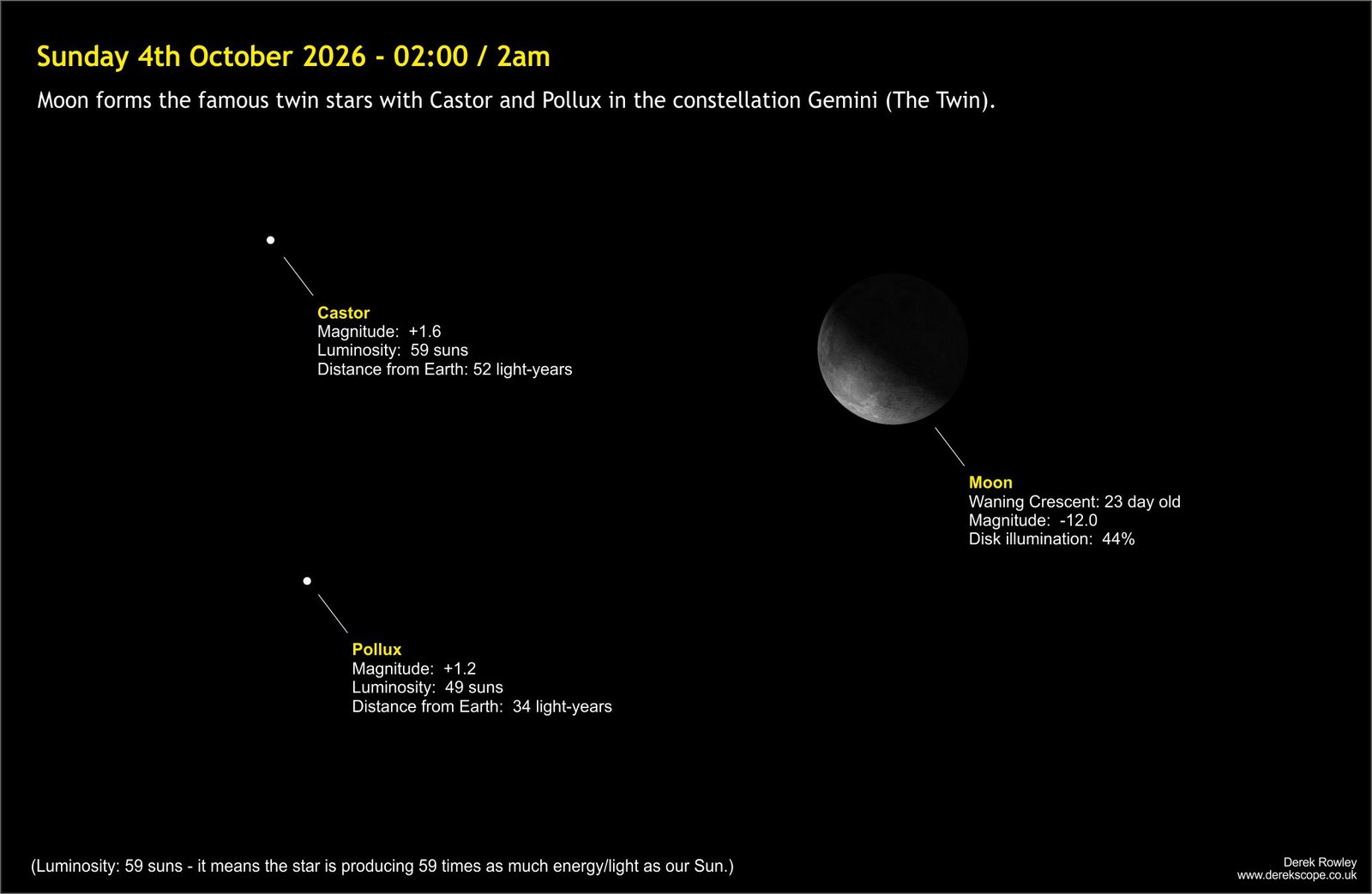
The waning crescent Moon will serve as the bottom anchor of the triangle, with the pure white star Castor to the upper left and the brighter, golden-hued giant star Pollux to its right. o
The triangle will be beautifully positioned in the early morning sky around 2am – look toward the east-northeast horizon. o
oooo oooo
Posted inHomepage (Posts)|Comments Off on Sunday 4th October 2026
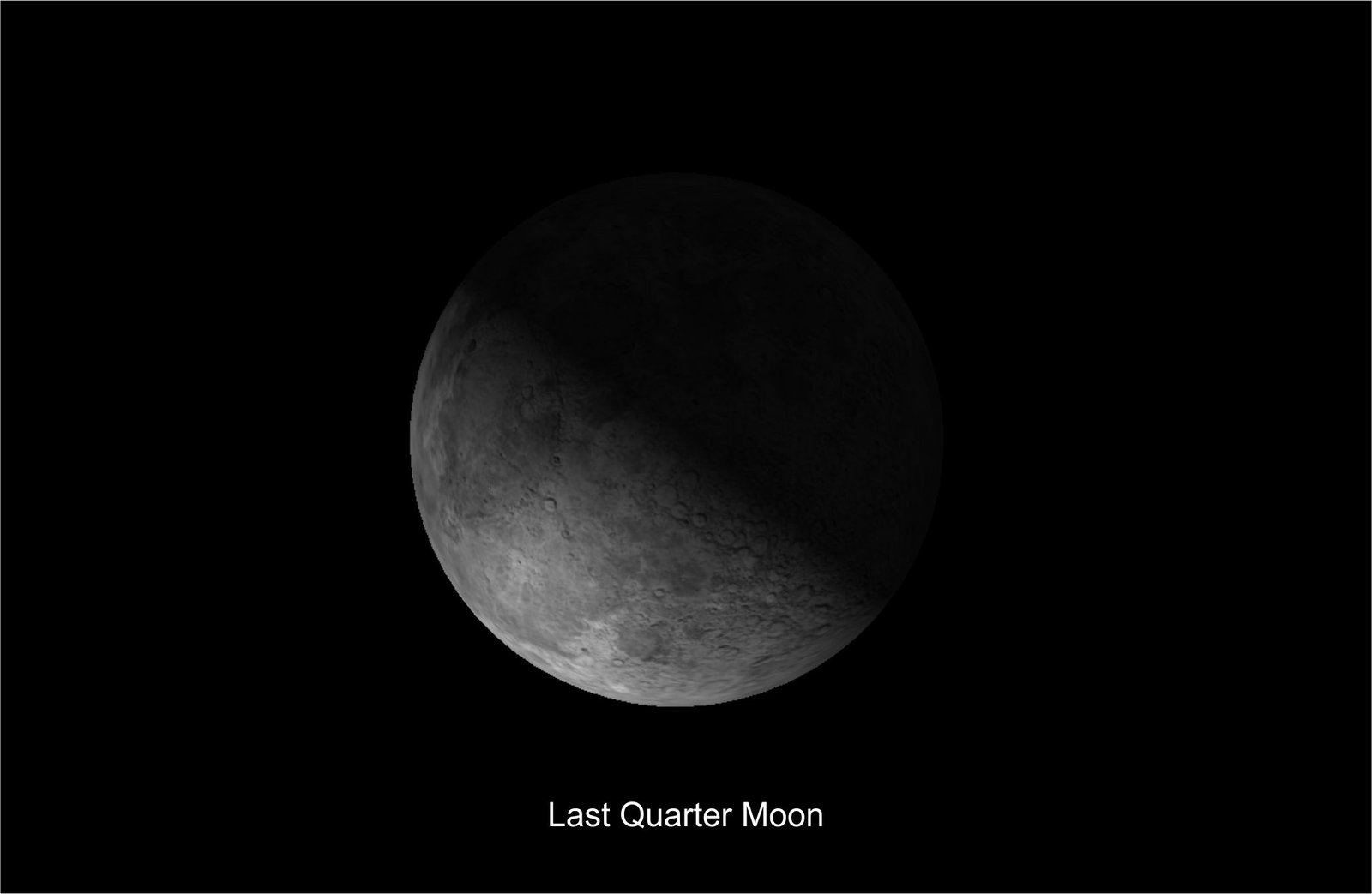
At the exact moment of Last Quarter, the Moon is in the constellation Taurus. o
This is an excellent time to observe the 22 days old Moon (map) through binoculars or a telescope because the line between lunar night and day (the terminator) highlights craters and mountains with dramatic shadows.
Posted inHomepage (Posts)|Comments Off on Saturday 3rd October 2026
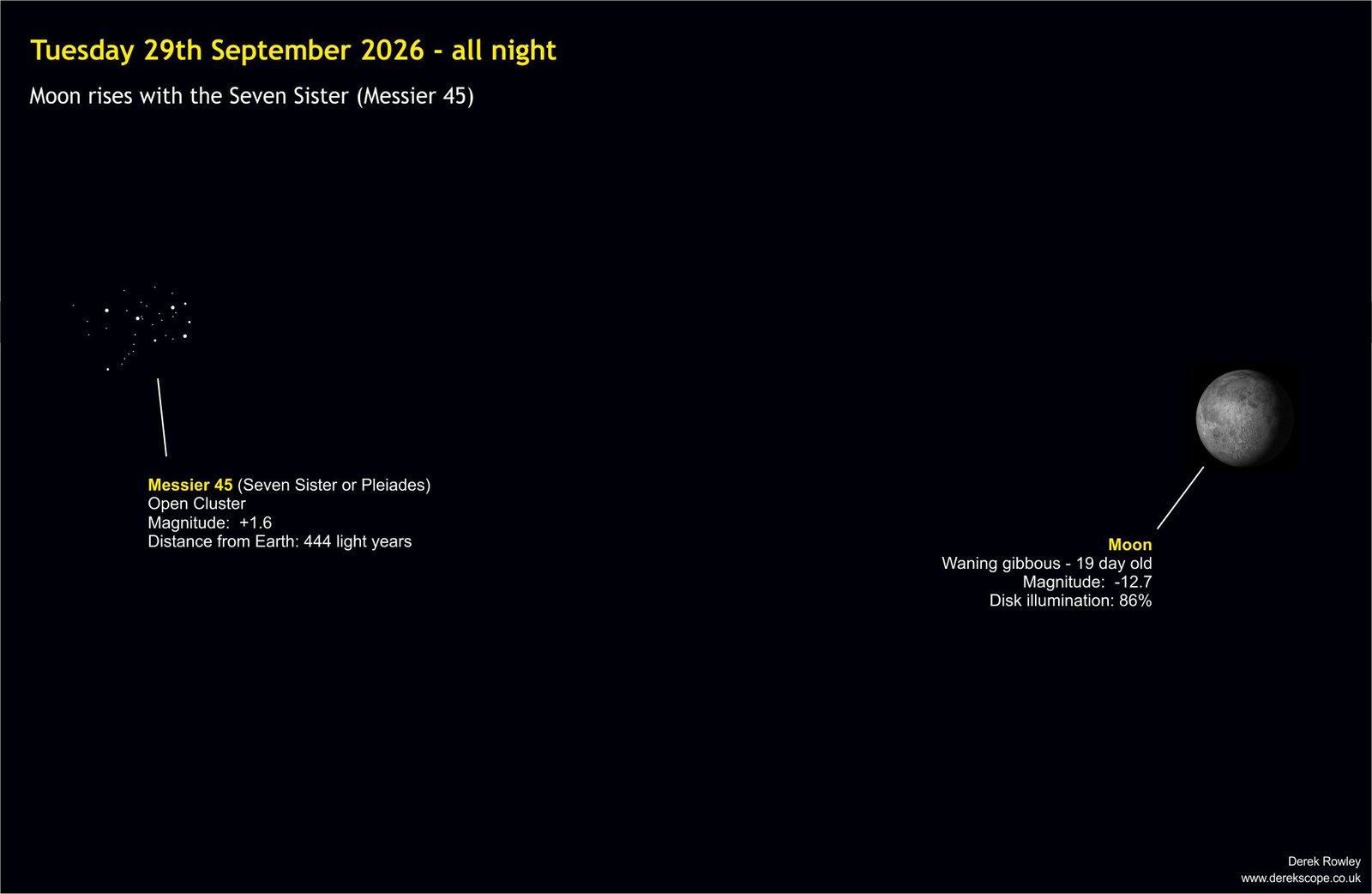
The Moon will be in a waning gibbous phase (86% illuminated), meaning its intense glare will wash out some of the faintest stars in the cluster. o
Binoculars will help you cut through the moonglow to reveal dozens of additional blue-white stars in the group. o
For observers in the UK and Europe, the pair will clear the horizon in the late evening of Tuesday 29th and put on their best display high in the sky through the early morning hours of Wednesday 30th September. o
Posted inHomepage (Posts)|Comments Off on Tuesday 29th September 2026
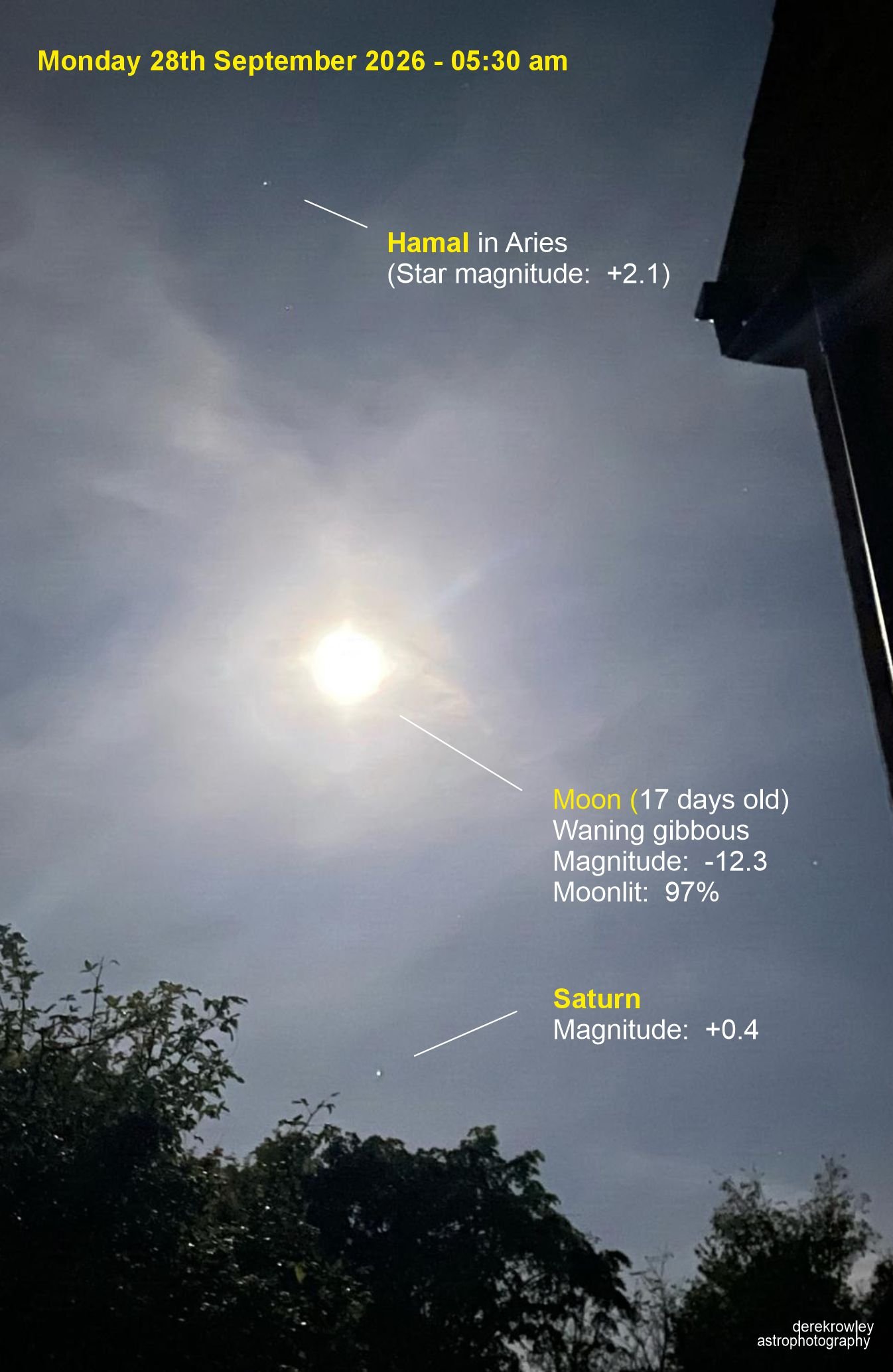
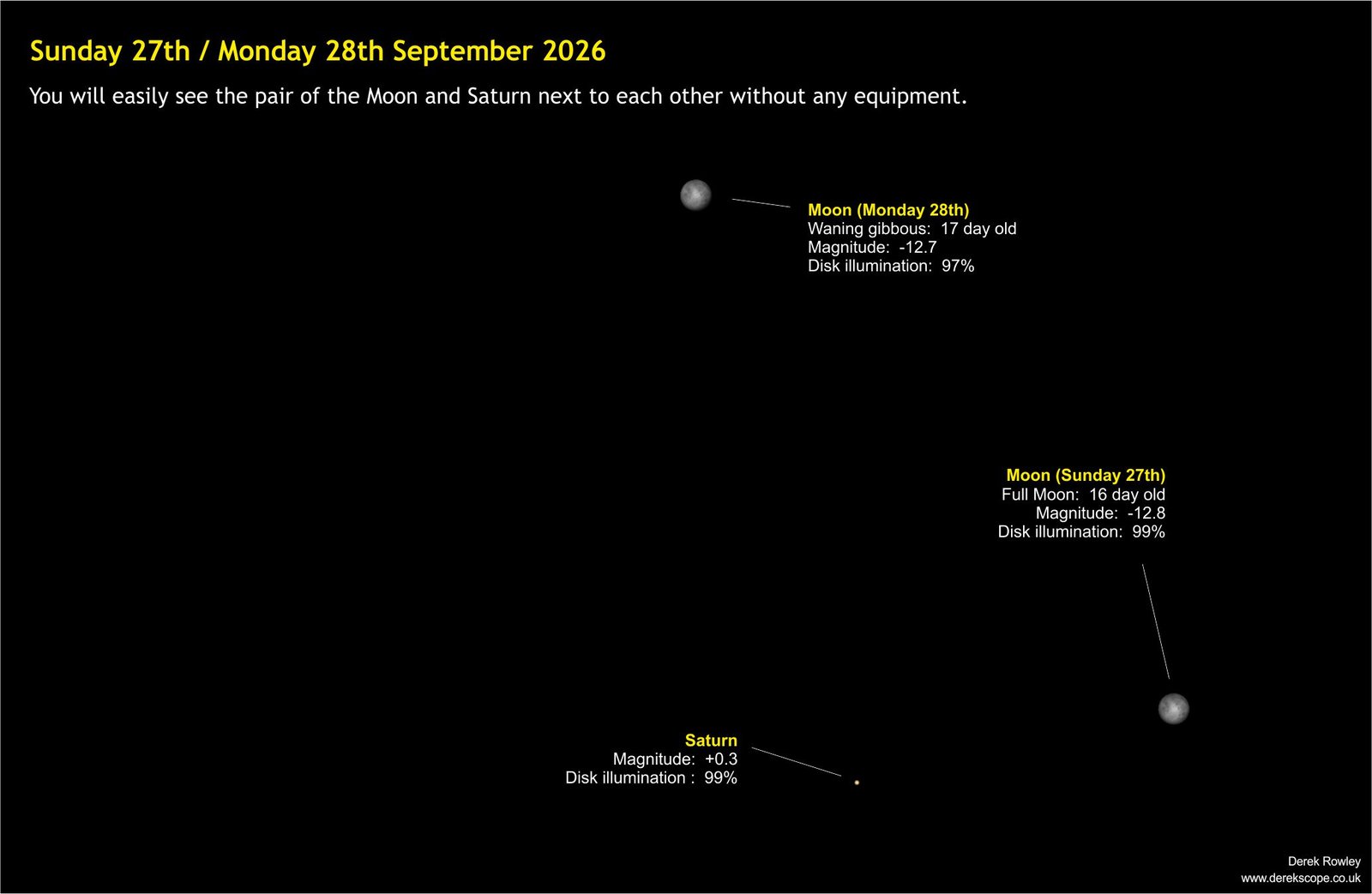
The Moon will pass very close to Saturn on Sunday 27th September 2026. o
The two celestial bodies will share a close conjunction in the constellation Cetus, which will be highly visible in the night sky over both on Sunday 27th and Monday 28th of September. o
Posted inHomepage (Posts)|Comments Off on Sun 27th / Mon 28th Sept 2026