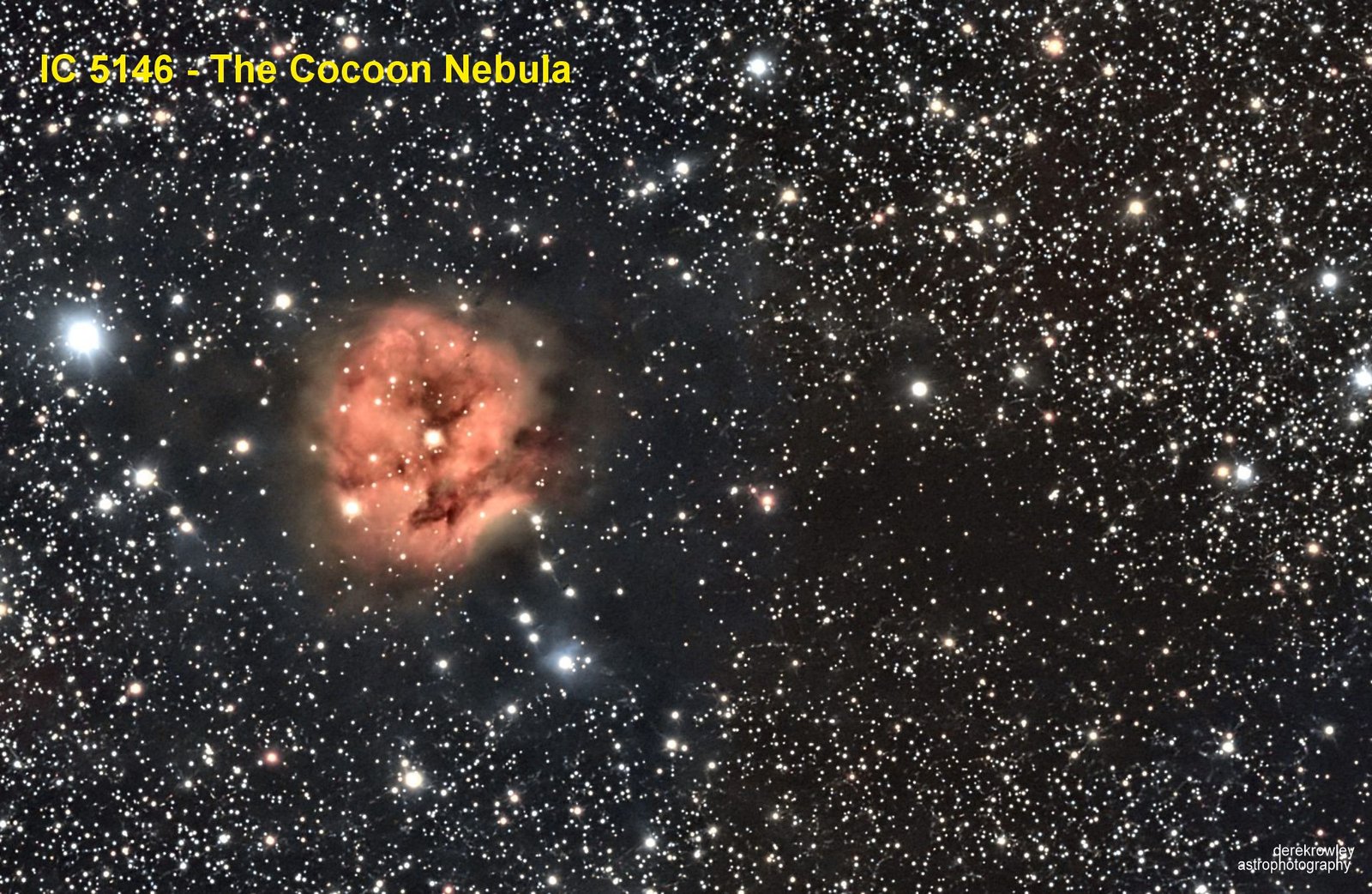
IC 5146 (Cocoon Nebula)
- This is IC 5146, also known as the Cocoon Nebula, Caldwell 19, Sh2-125 and Cr470.
o - It is a reflection and emission nebula about 3,250 light years away in the constellation Cygnus.
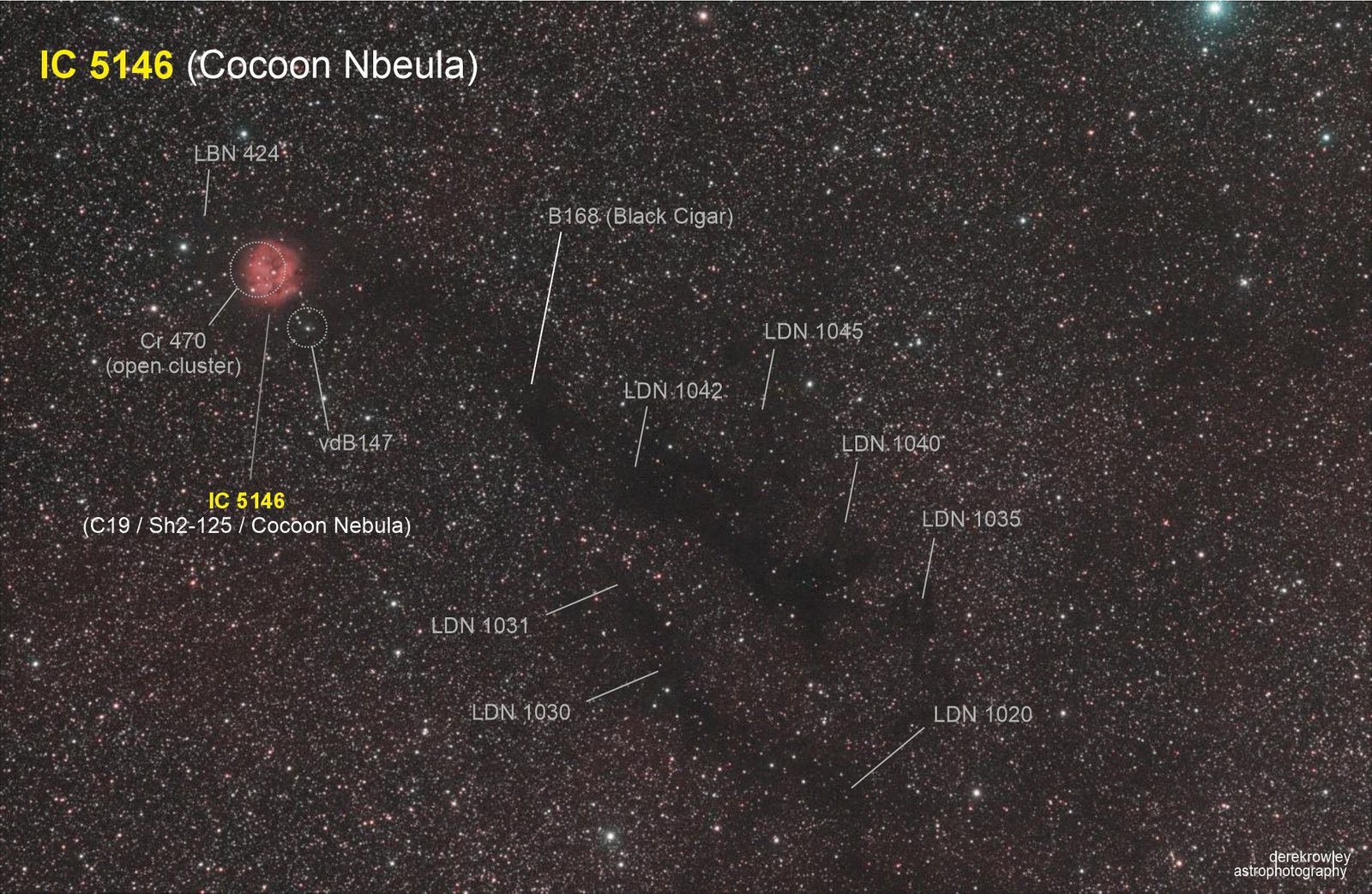
o - When viewing IC 5146, dark nebula Barnard 168 (B168) is an inseparable part of the experience, forming a dark lane that surrounds the cluster and projects westward forming the appearance of a trail behind the Cocoon.
- Object Name
IC 5146
- Object Type
Reflection & Emission Nebula
- Constellation
Cygnus
- Magnitude
+9.3
- Distance
3,250 light-years
- Annotated
oooo
Equipment
Telescope:
Mount:
Accessory:
Celestron 8-inch Edge HD
Sky-Watcher AZ-EQ6 GT
ZWO ASIair Plus / PixInsight
Camera:
Guiding:
Filter:
ZWO ASI2600MC Pro cooling
ZWO ASI1200MM
2″ Optolong eNchance
oooo
Bortle Scale: Kelling Heath, North Norfolk (Bortle: 4.2)
oooo
oooo
Integration
- Date:
Saturday 14th October 2023
o - Time:
01: 30 / 1.30 am (BST)
- Moonlit:
Waxing Crescent 0.8 days old
Magnitude: -3.0
Moonlit: 5%
- Total:
180’s x 21 = 1 hour 5 minutes
oooo
oooo
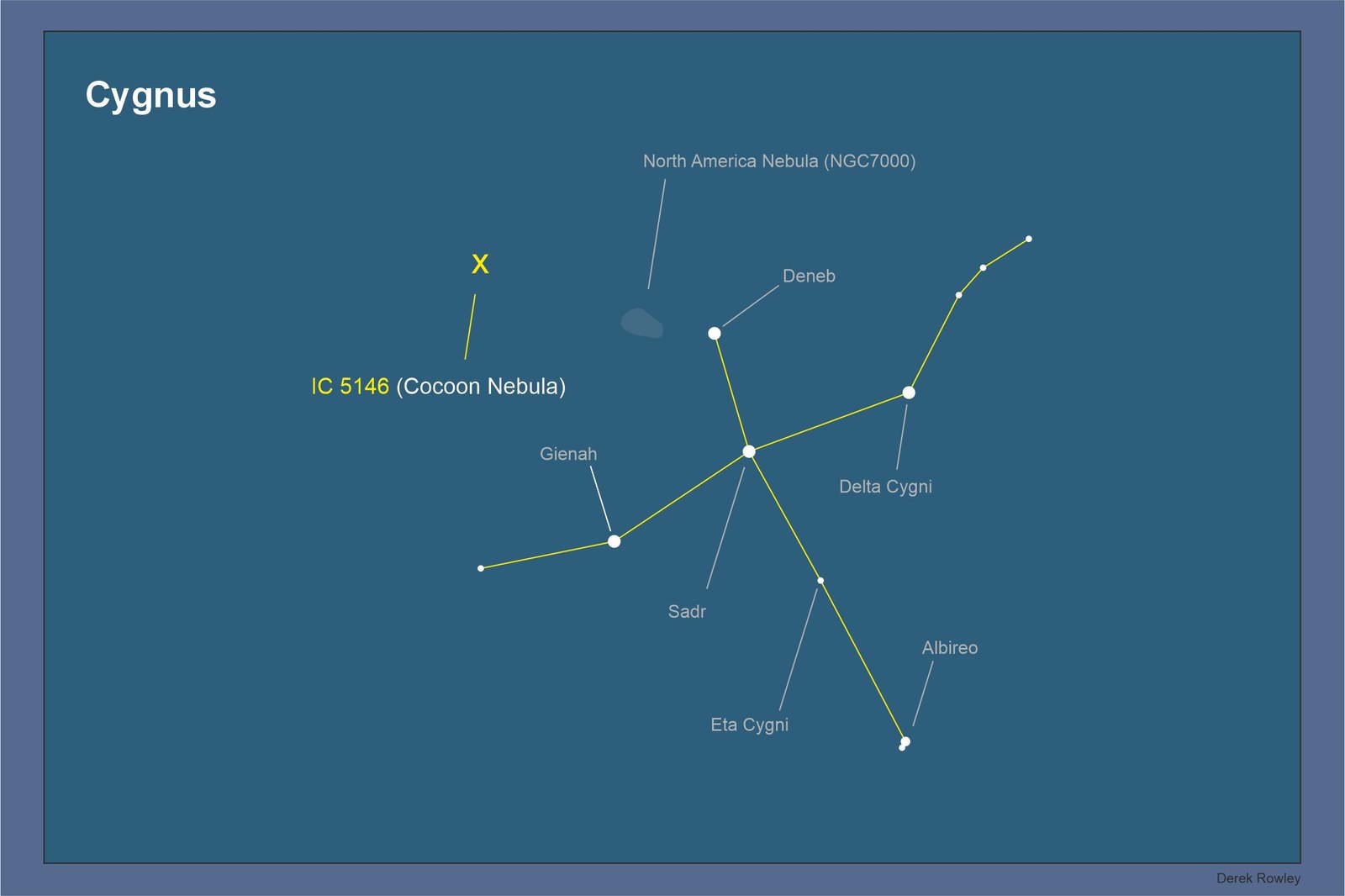
Constellation :- Cygnus (The Swan)
Object :-
oooo
Object :-
Other name :-
o
Type :–
Magnitude :–
Distance :-
Constellation :-
Right Ascension :-
Declination :-
oooo
oooo
IC 5146
Cocoon Nebula / C19 / Sh2-125 / Cr470
Barnard 168 (dark lane)
Emission & reflection Nebulae
+9.3
3,250 light years / 15 light years across
Cyg (Cygnus / The Swan)
21h 53m 29s
+47°14′ 46″
Enlarge on click the map.

(Click the map above for a large view.)
| Abbreviation: Cyg |
| English Name: The Swan |
| Genitive: Deneb |
| Hemisphere: Northern Hemisphere |
| Location: Between the constellations of Cephus and Draco. |
| Visible between latitudes: +90 and -40 degrees |
| Best season: Autumn |
| Seen in three seasons: Summer, Autumn & Winter |
| Best seen in: August (map) and September (map) |
| Seen between: May and November |
| Right Ascension (RA): 21 hour |
| Declination (DEC): +40 degrees |
| Area (square degrees): 804 (16th) |
oooo
oooo
Facts about IC 5146
oooo
- IC 5146 is a glowing cloud in space where baby stars are being born. It sits in the constellation Cygnus and looks like a soft, red‑pink “cocoon” wrapped in dark space dust.
oooo
oooo
oooo
oooo
oooo
oooo