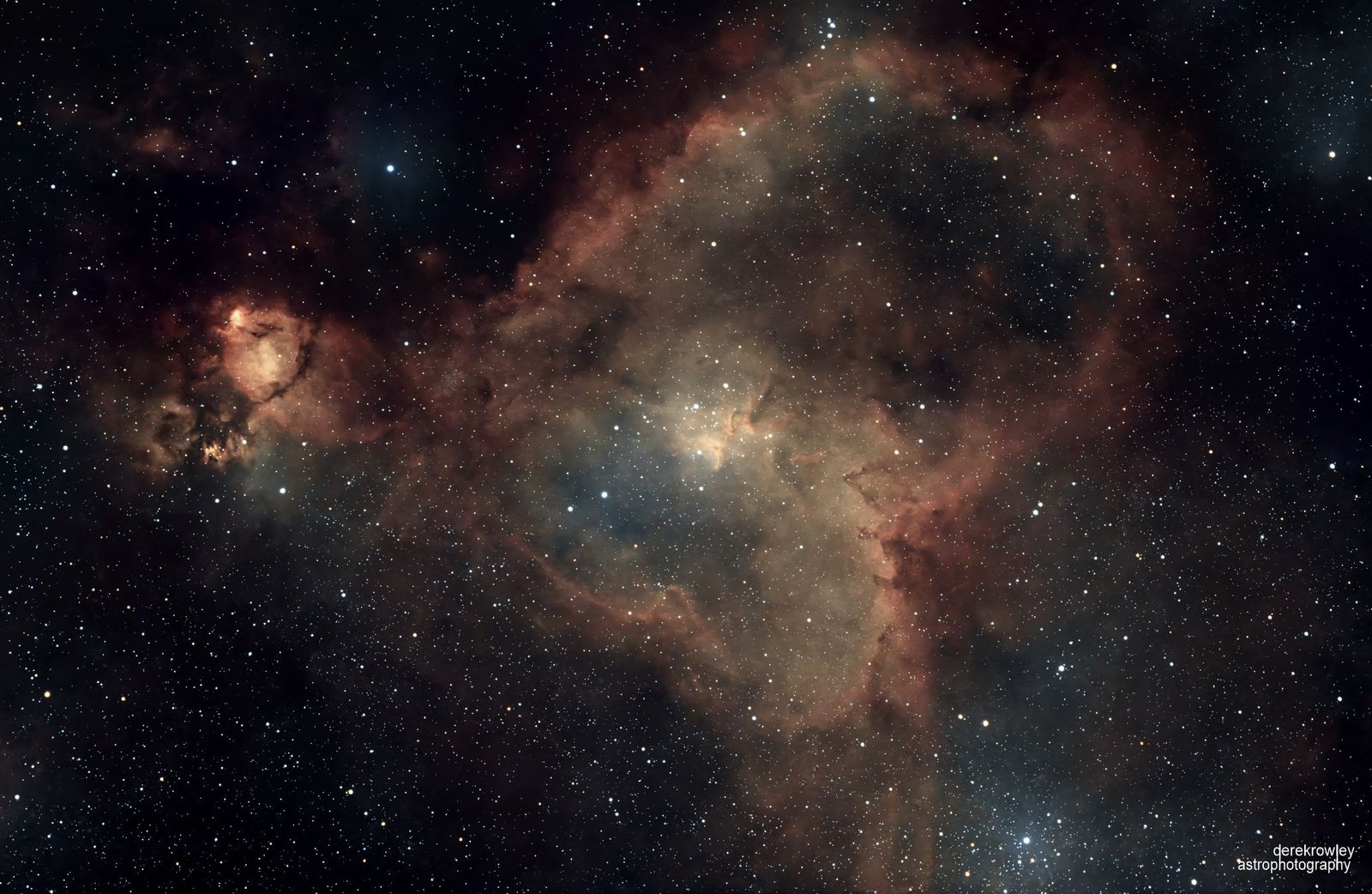
IC 1805 (Heart Nebula)
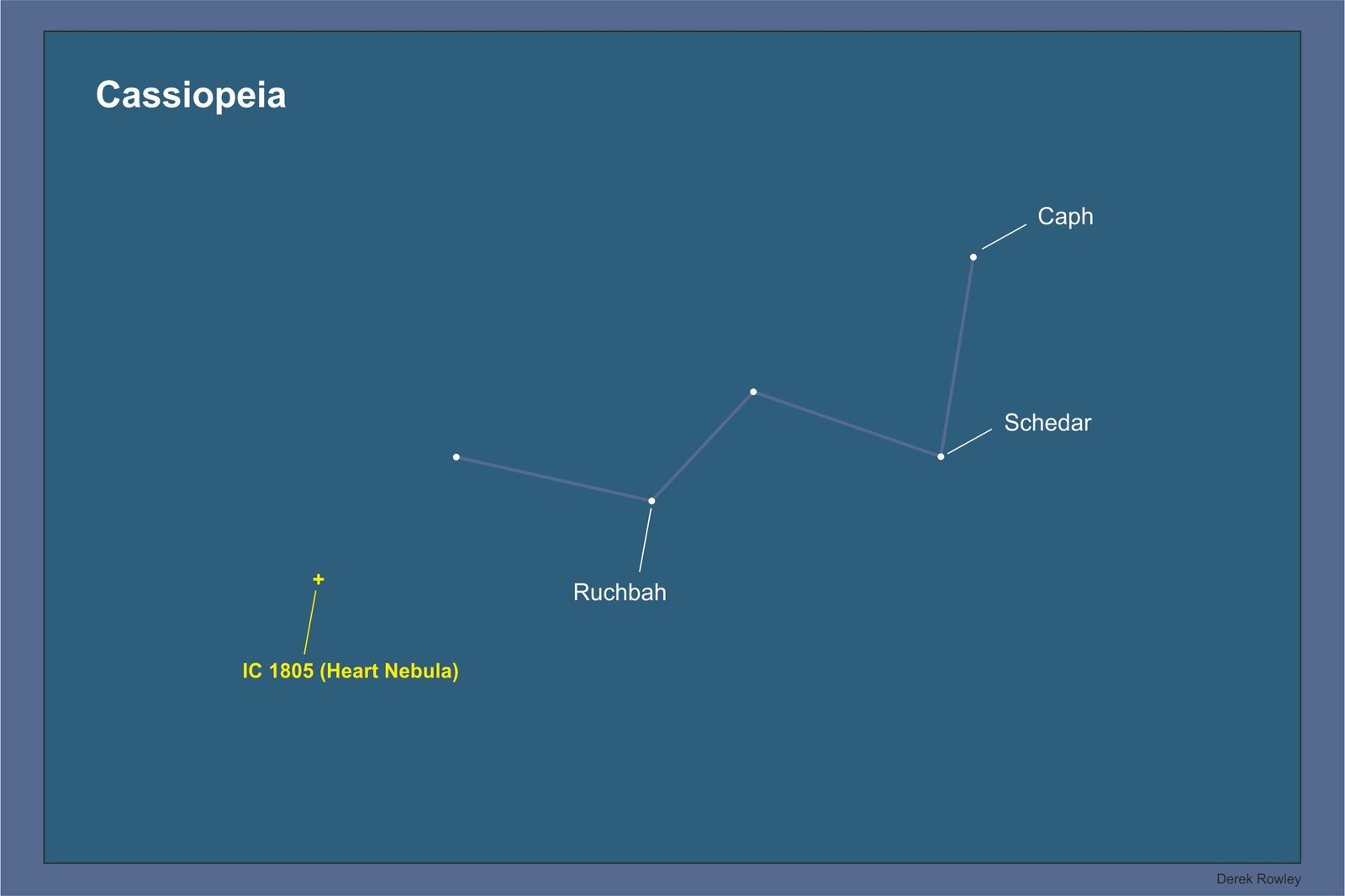
- Cassiopeia is the distinctive “W”-shaped constellation in the northern sky, and the Heart Nebula lies within the Perseus Arm of our galaxy in that region of the sky.
o - Its striking “heart” shape in wide-field images it clearly resembles a heart.
o - It contains the young open cluster Melotte 15 (Mel 15) ~ massive young stars are shaping the nebula with strong radiation and stellar winds.
o
- Object Name
IC 1805
- Object Type
Emission Nebula
- Constellation
Cassiopiea
- Magnitude
+6.8
- Distance
7,500 light-years
- Annotate
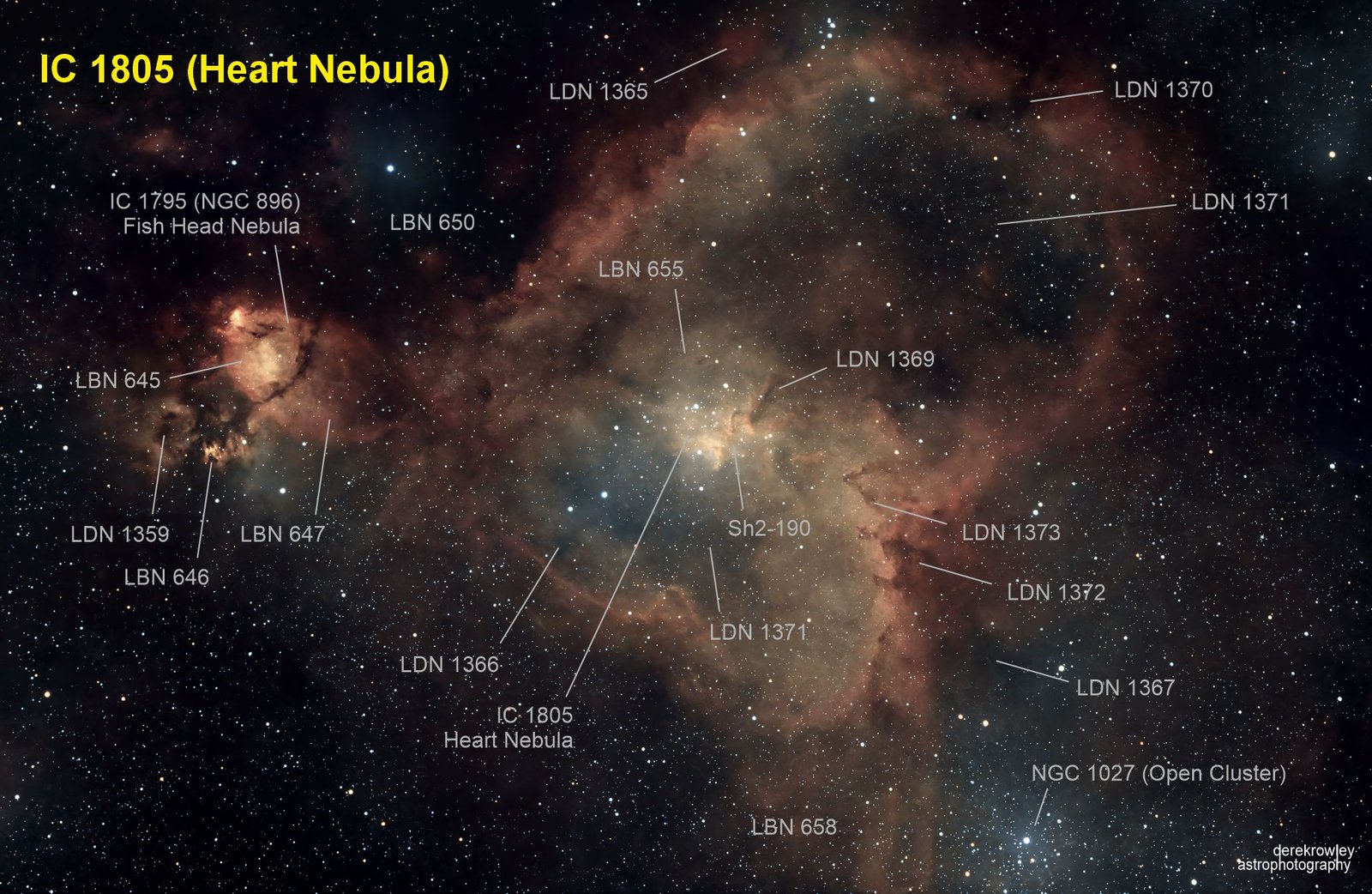
oooo
Equipment
Telescope:
Mount:
Accessory:
Sky-Watcher Esprint 80ED Triplet
Sky-Watcher AZ-EQ6 GT
ZWO ASIair Plus
Camera:
Guiding:
Filter:
ZWO ASI2600MC Pro cooling
ZWO ASI1200MM
2″ Optolong eNchance
Bortle Scale: Milton Keynes, Buckinghamshire (Bortle 6.6)
oooo
Integration
Date:
Moonlit:
Total:
oooo
oooo
Constellation :- Cassiopeia (The Cassiopeia Queen)
Object :-
oooo
Object :-
Other name :-
o
Type :–
Magnitude :–
Distance :-
Constellation :-
Right Ascension :-
Declination :-
oooo
oooo
IC 1805
Heart Nebula or Running Dog Nebula /
Mel 15 / Sh2-190
Emission Nebula
+6.8
7,500 light years / 330 light years across
Cas (Cassiopeia / The Queen)
02h 32m 42s
+61° 27′ 00″
Enlarge on click the map.

(Click the map above for a large view.)
| Abbreviation: Cas |
| English Name: The Cassiopeia Queen |
| Genitive: Schedar, sometimes spelt Shedar or Shedir. |
| Hemisphere: Northern Hemisphere |
| Location: Between the constellations of Andromeda and Cephus. |
| Visible between latitudes: +90 and -20 degrees |
| Best season: Autumn |
| Seen in three seasons: Summer, Autumn and Winter |
| Best seen in: November |
| Seen between: Circumpolar (This constellation of Cassiopeia stays in the sky all the year.) |
| Right Ascension (RA): 01 hour |
| Declination (DEC): +60 degrees |
| Area (square degrees): 598 (25th) |
oooo
oooo
Facts about IC 1805
oooo
- Astrophotography showcase object – its large size and rich structure make it ideal for long-exposure imaging.
o - It is often imaged together with the IC 1848, forming the well-known “Heart and Soul Nebulae” region.
oooo
oooo
oooo
oooo
oooo
oooo