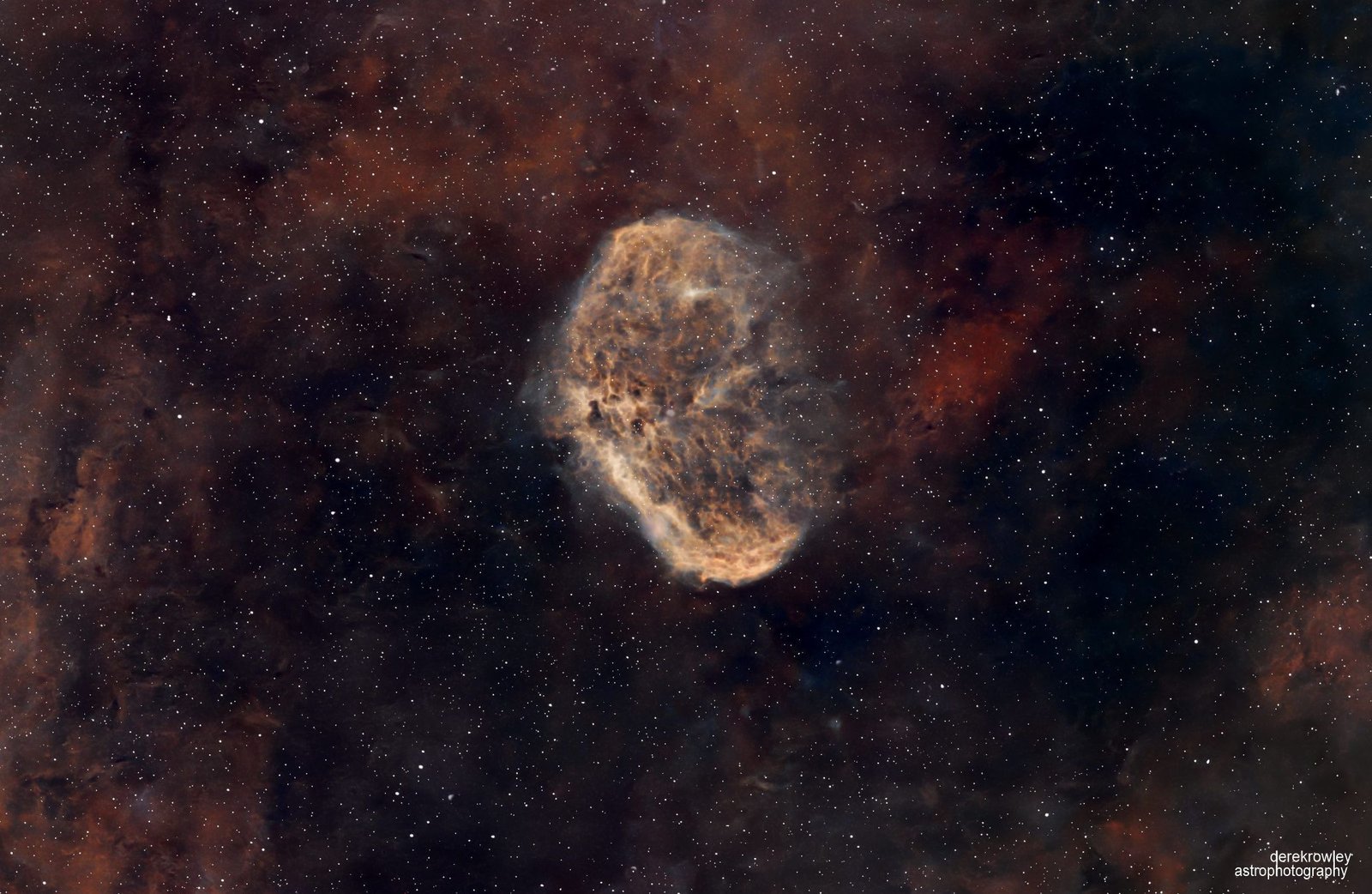
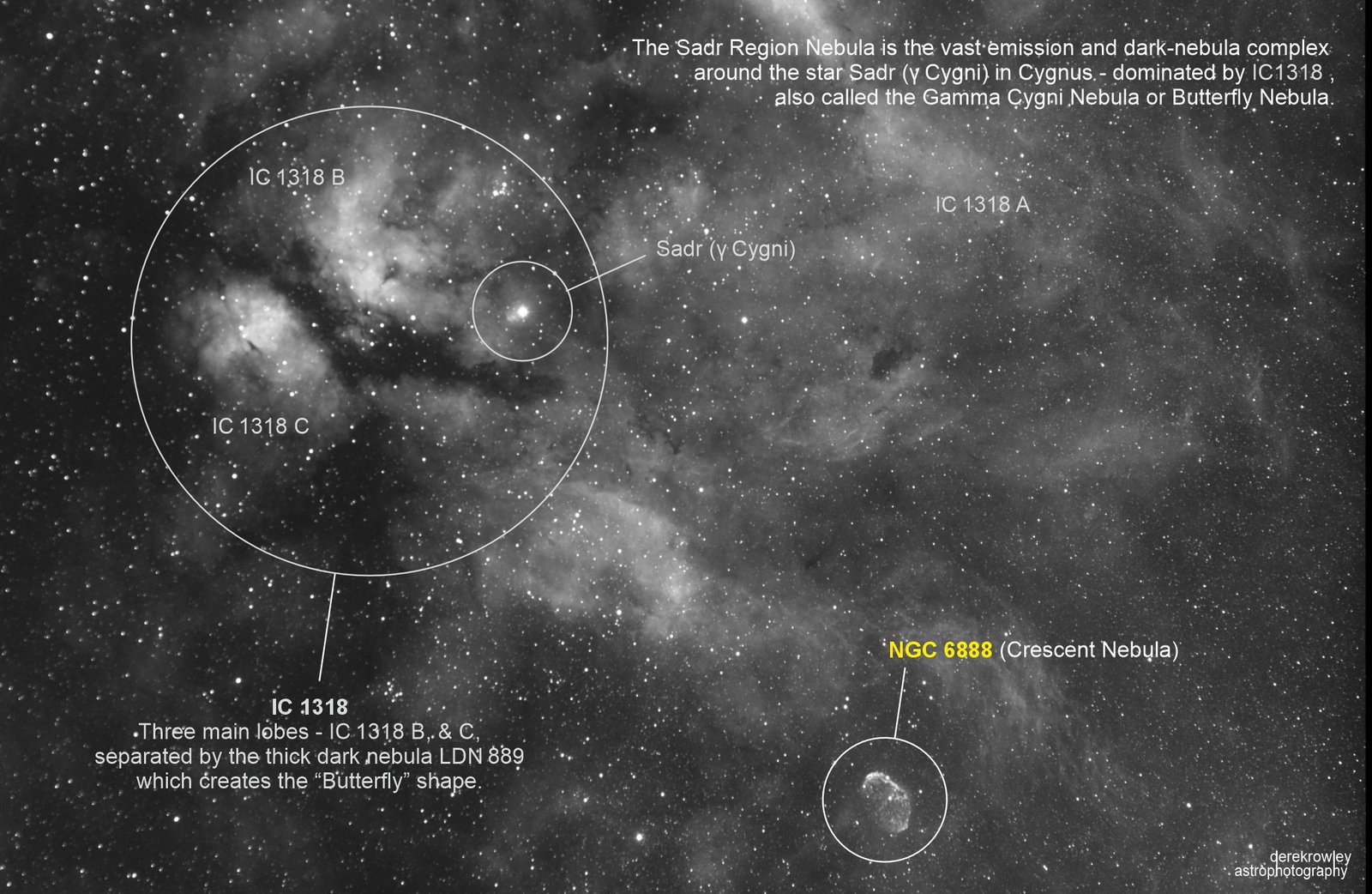
NGC 6888 (The Crescent Nebula)
- It is an emission nebula associated with a Wolf-Rayet star, not a planetary nebula ~ it is located in the constellation of Cygnus.
o - Created when fast stellar winds collide with slower gas ejected during the star’s earlier red giant phase. (Photo: IC 1318 – Butterfly Nebula)
o - The central star is near the end of its life and is expected to end in a supernova explosion.
o
o
- Object Name
NGC 6888
- Object Type
Emission Nebula
- Constellation
Cygnus
- Magnitude
+7.4
- Distance
5,000 light-years
- Age
30,000 years old
- Field of View
(widefield)
oooo
Equipment
Telescope:
Mount:
Accessories:
Sky-Watcher Esprint 80ED Triplet
Sky-Watcher AZ-EQ6 GT
ZWO ASIair Plus / PixInsight
Camera:
Guiding:
Filter:
ZWO ASI2600MC Pro cooling
ZWO ASI1200MM
2″ Optolong L-eXtreme
Bortle Scale: Milton Keynes, Buckinghamshire (Bortle 6)
oooo
oooo
Integration
- Date:
Monday 24th August 2026
o - Time
00:15 / 12.15 am (BST)
- Moonlit:
Waxing gibbous 12 days old
Magnitude: -12.4
Moonlit: 83%
- Total:
180’s x 12 subs = 36 minutes
o
(Just a 30‑minute test run, yet the image turned out surprisingly impressive)
oooo
oooo
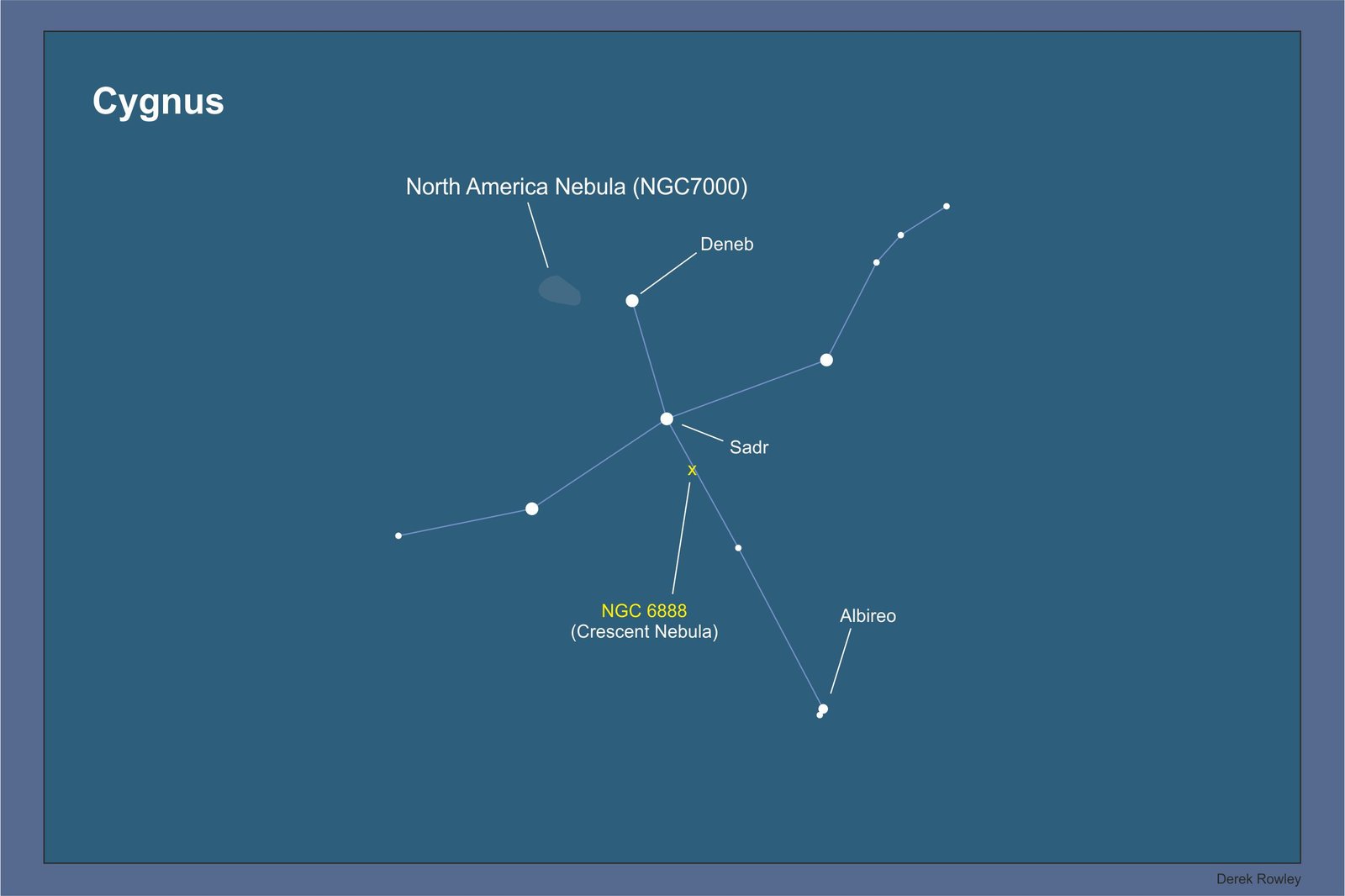
Constellation :- Cygnus (The Swan)
Object :-
oooo
Object :-
Other name :-
Type :-
Magnitude :–
Distance :-
Constellation :-
Right Ascension :-
Declination :-
oooo
oooo
NGC 6888
C27 / Sh2-105 / The Crescent Nebula
Emission Nebula
+7.4
5,000 light years / 26 light years across
Cyg (Cygnus / The Swan)
20h 12m 03s
+38° 21′ 17″
Enlarge on click the map.

(Click the map above for a large view.)
oooo
| Abbreviation: Cyg |
| English Name: The Swan |
| Genitive: Deneb |
| Hemisphere: Northern Hemisphere |
| Location: Between the constellations of Cephus and Draco. |
| Visible between latitudes: +90 and -40 degrees |
| Best season: Autumn |
| Seen in three seasons: Summer, Autumn & Winter |
| Best seen in: August (map) and September (map) |
| Seen between: May and November |
| Right Ascension (RA): 21 hour |
| Declination (DEC): +40 degrees |
| Area (square degrees): 804 (16th) |
oooo
oooo
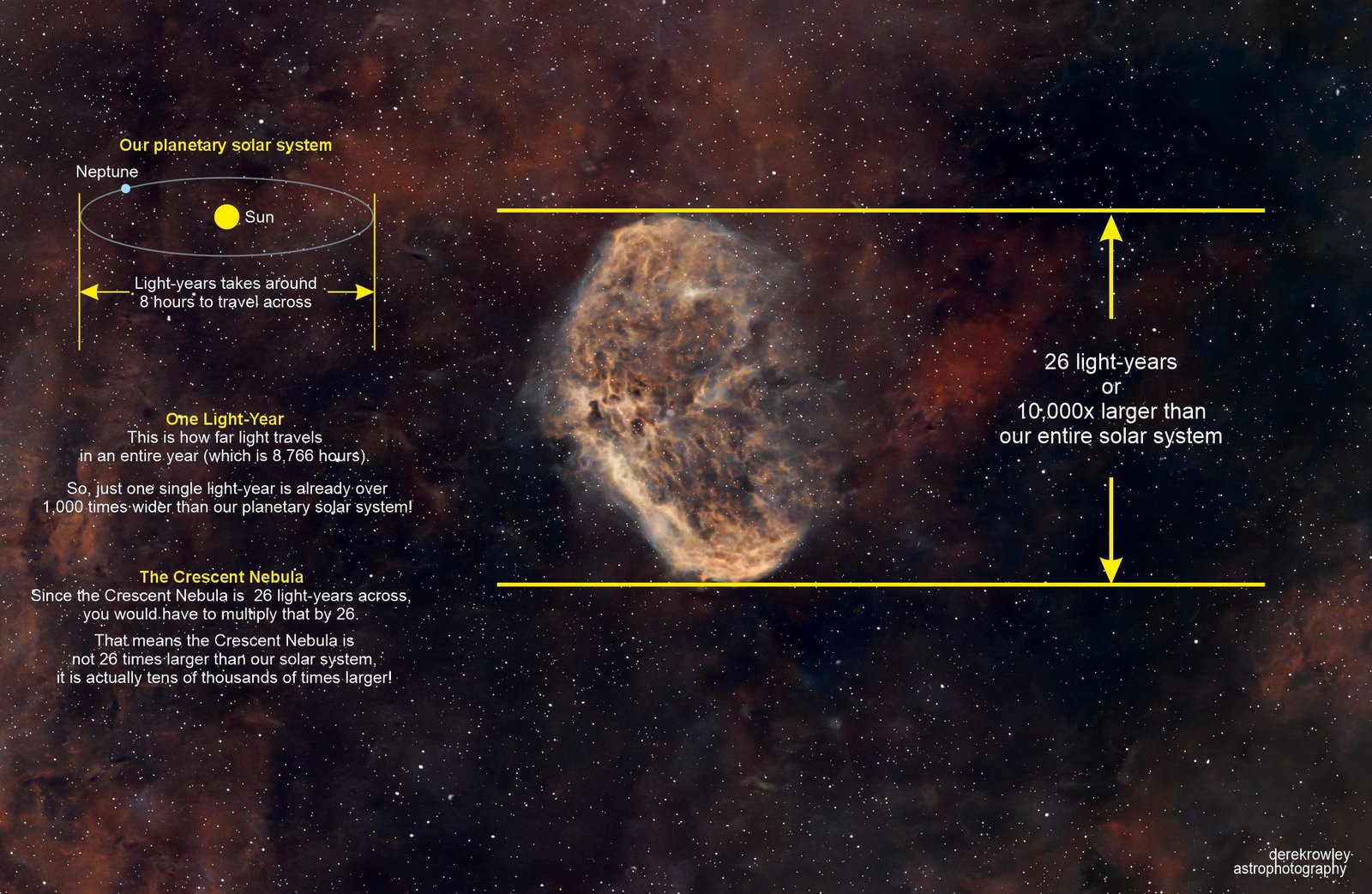
How Big is the Crescent Nebula?
10,000x larger than our entire solar system!
o
oooo
- Our Solar System
If we measure across the main part of our solar system (from the Sun out to Pluto), it only takes light about 8 hours to travel across it.
o - One Light-Year
This is how far light travels in an entire year (which is 8,766 hours). So, just one single light-year is already over 1,000 times wider than our planetary solar system!
o - The Crescent Nebula
Since the Crescent Nebula is 26 light-years across, you would have to multiply that by 26 that means the Crescent Nebula isn’t 26 times larger than our solar system ~ it is actually tens of thousands of times larger!
o
o
oooo
oooo
oooo
oooo
oooo