









oooo
oooo
oooo
oooo

BSL Version
o
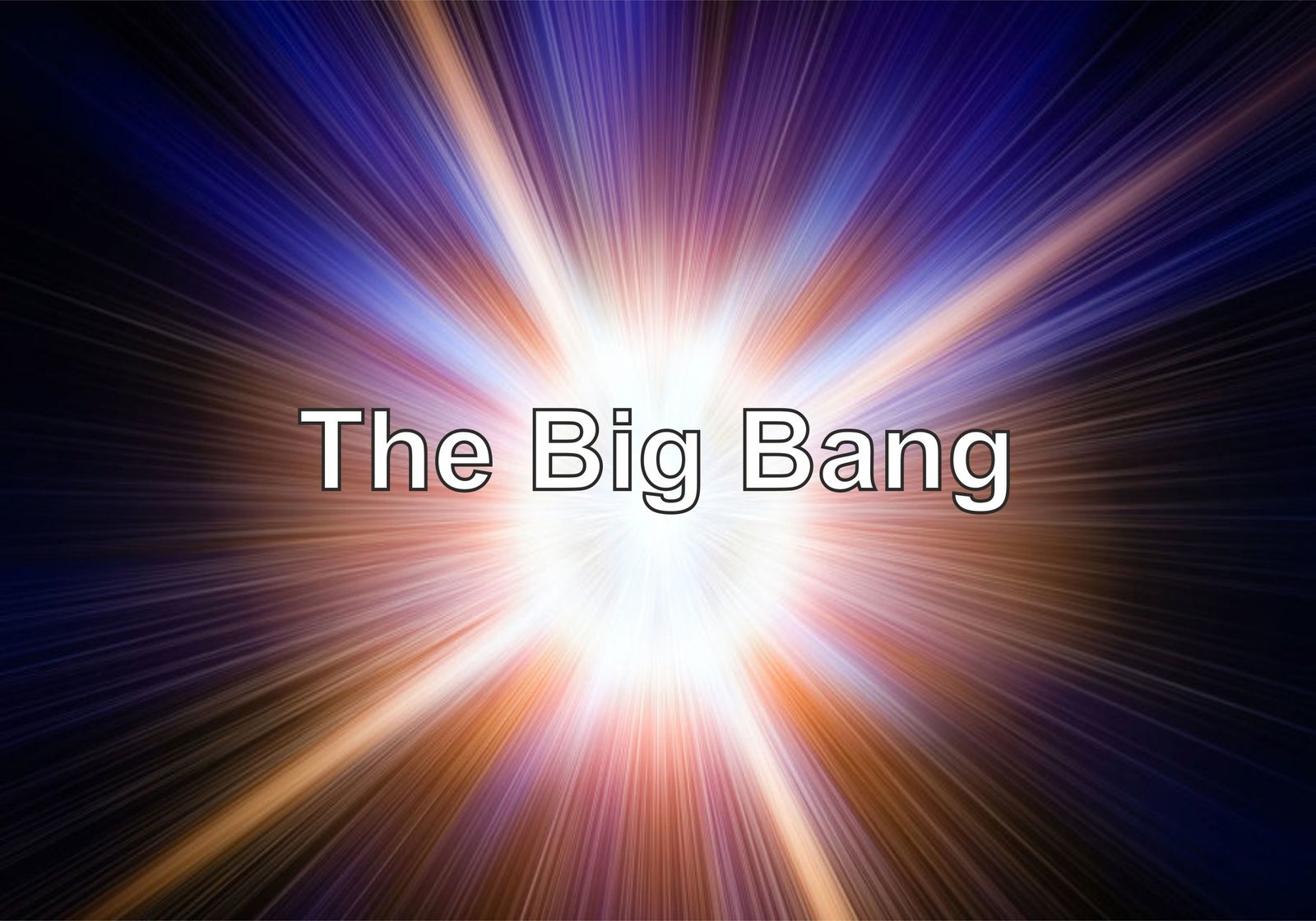
- The Big Bang is the idea that the universe began as just a single point, then expanded and stretched to grow as large as it is right now and it is still stretching.
o
o
o
oooo
oooo
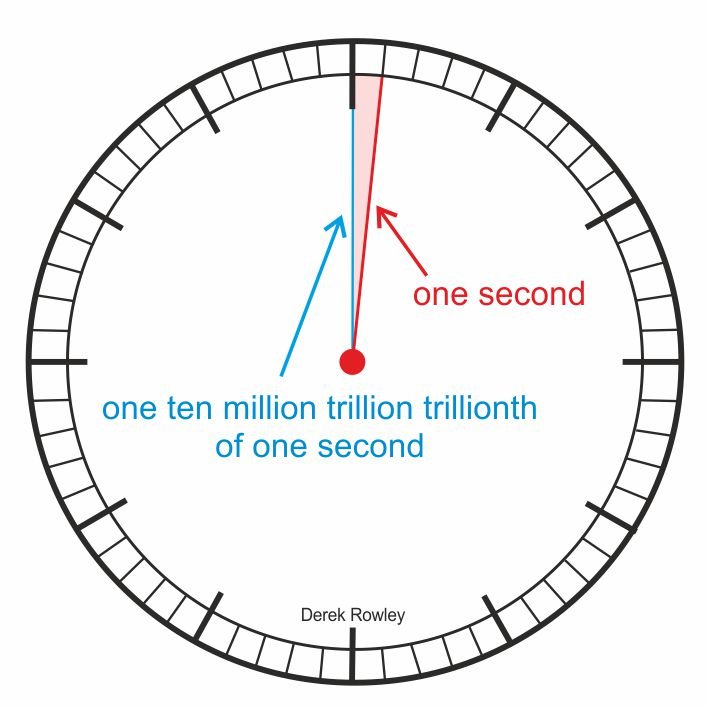
One ten million trillion trillion trillionth of a second…
oooo
oooo
oooo
oooo
- One ten million trillion trillion trillionth of a second
In order to explain what happened scientists use measurements of time that are very small.
o
- At first…
The Universe was unspeakably small and hot – getting larger and cooler ever since.
o
o
Four fundamental forces
oooo
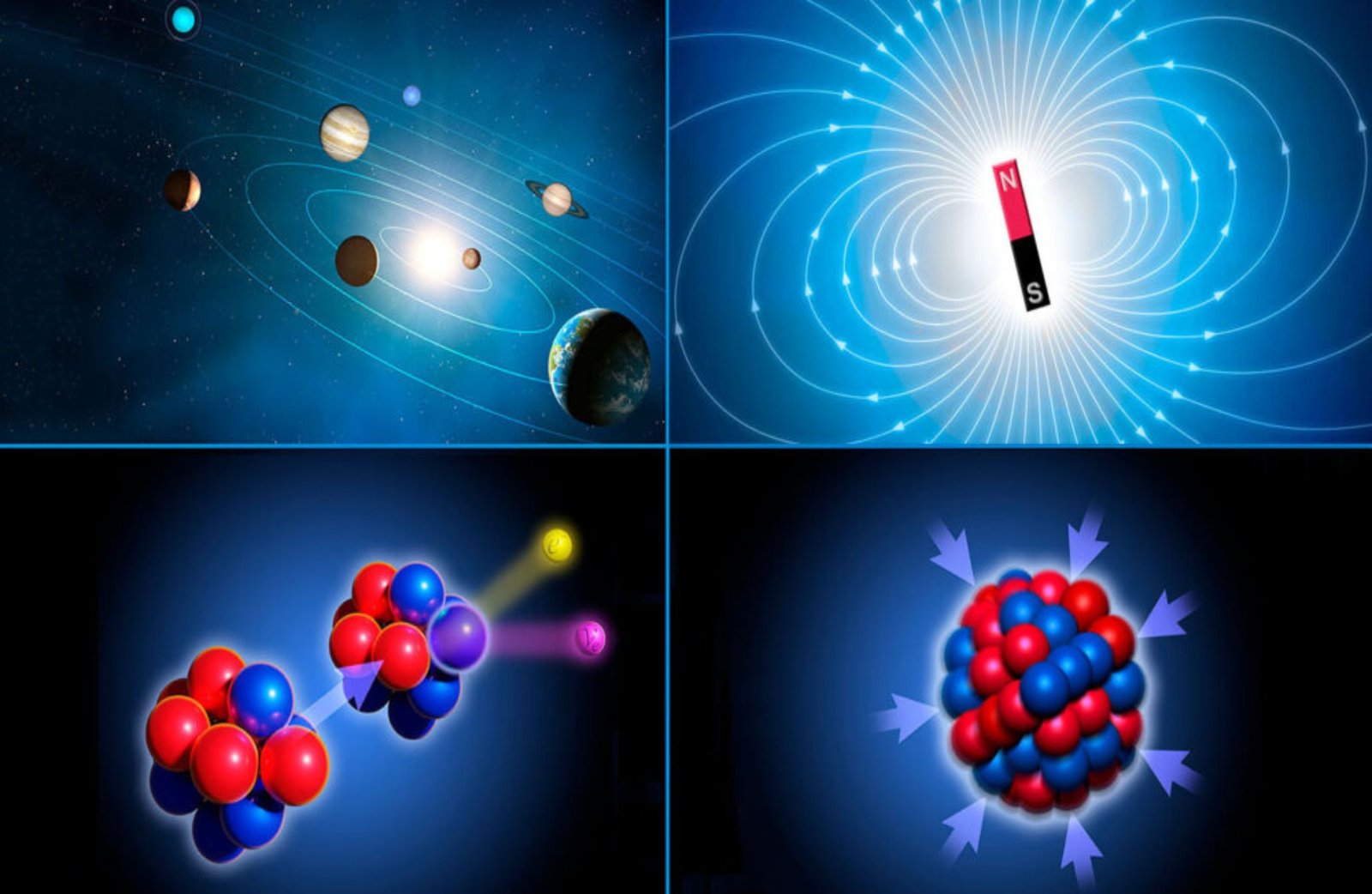
- Four fundamental forces govern interactions between all objects in the universe.
o - This illustration shows above the four fundamental forces of the universe (clockwise from top left):
o
– gravity
– electromagnetism
– weak forces
– strong forces
o
(Above Science photo Library/Getty Images: Mark Garlick – Science photo, plus: adapted by L. Steenblik Hwang.)
o
oooo
oooo
About one-billionth of one second…
oooo
oooo
oooo
oooo
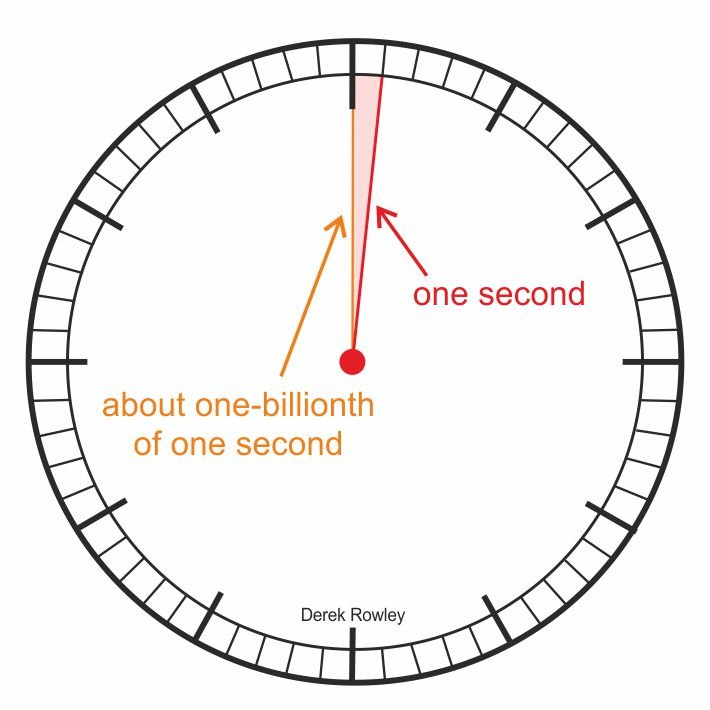
- About one-billionth of one second after the Big Bang.
o - The Universe lay in a dense sea of quarks, where the first particles (neutrons and protons) were beginning to form.
o
o
Dense sea of quarks
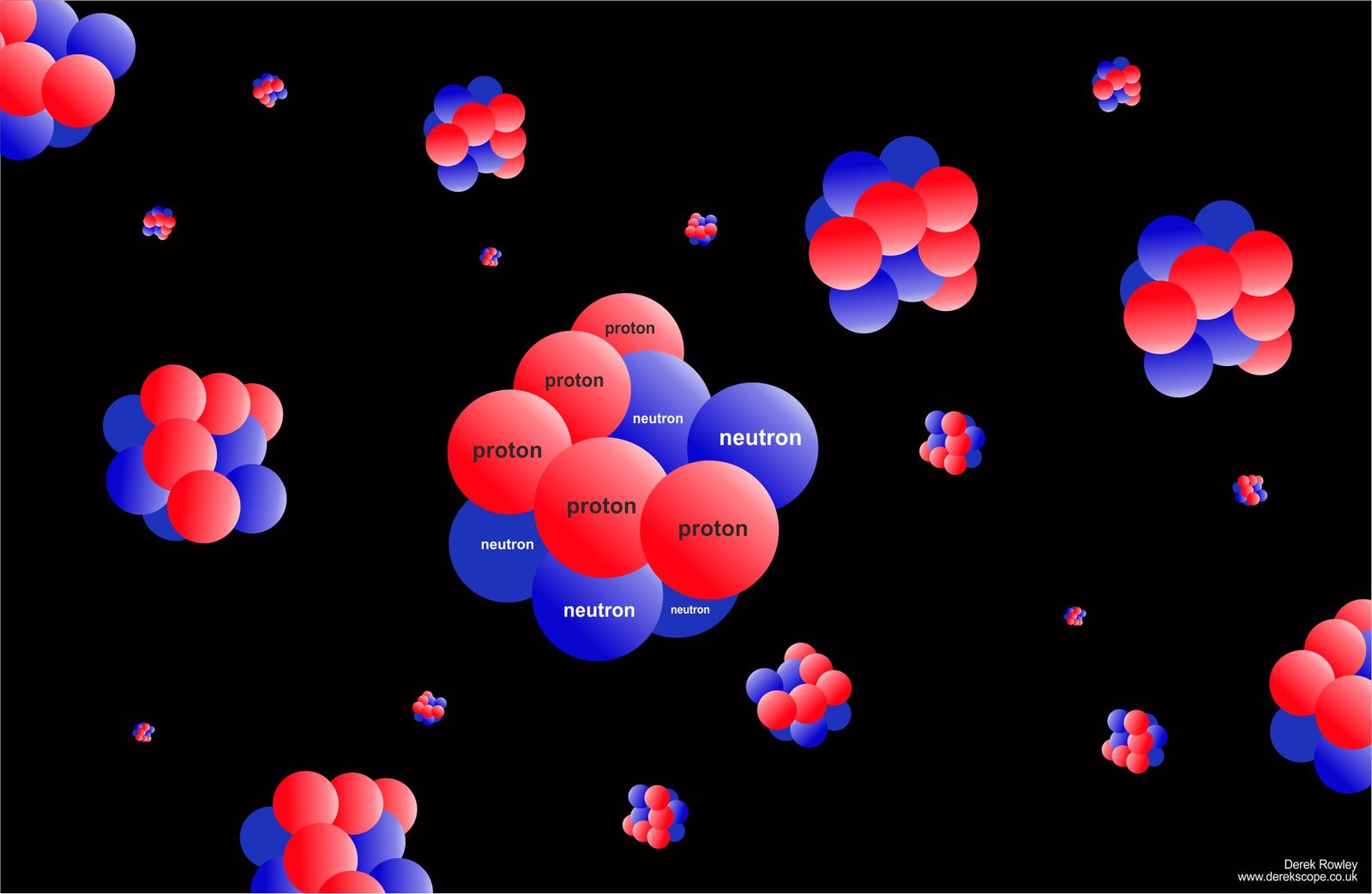
- A quark is a tiny particle which makes up protons (postive +) and neutrons (negative -).
o
o
oooo
oooo
oooo
About three minutes…
oooo
oooo
oooo
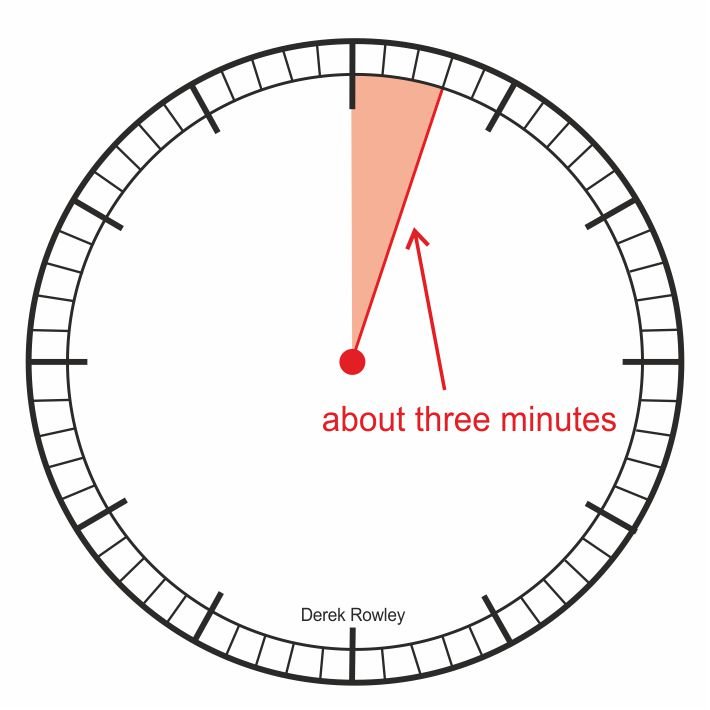
- About three minutes after the Big Bang there was a brief period of nucleosynthesis when quarks joined together to form protons (+), and neutrons (-).
o - First nuclei – Hydrogen and helium formed.
o
o
oooo
For the first 380,000 years after the Big Bang
oooo
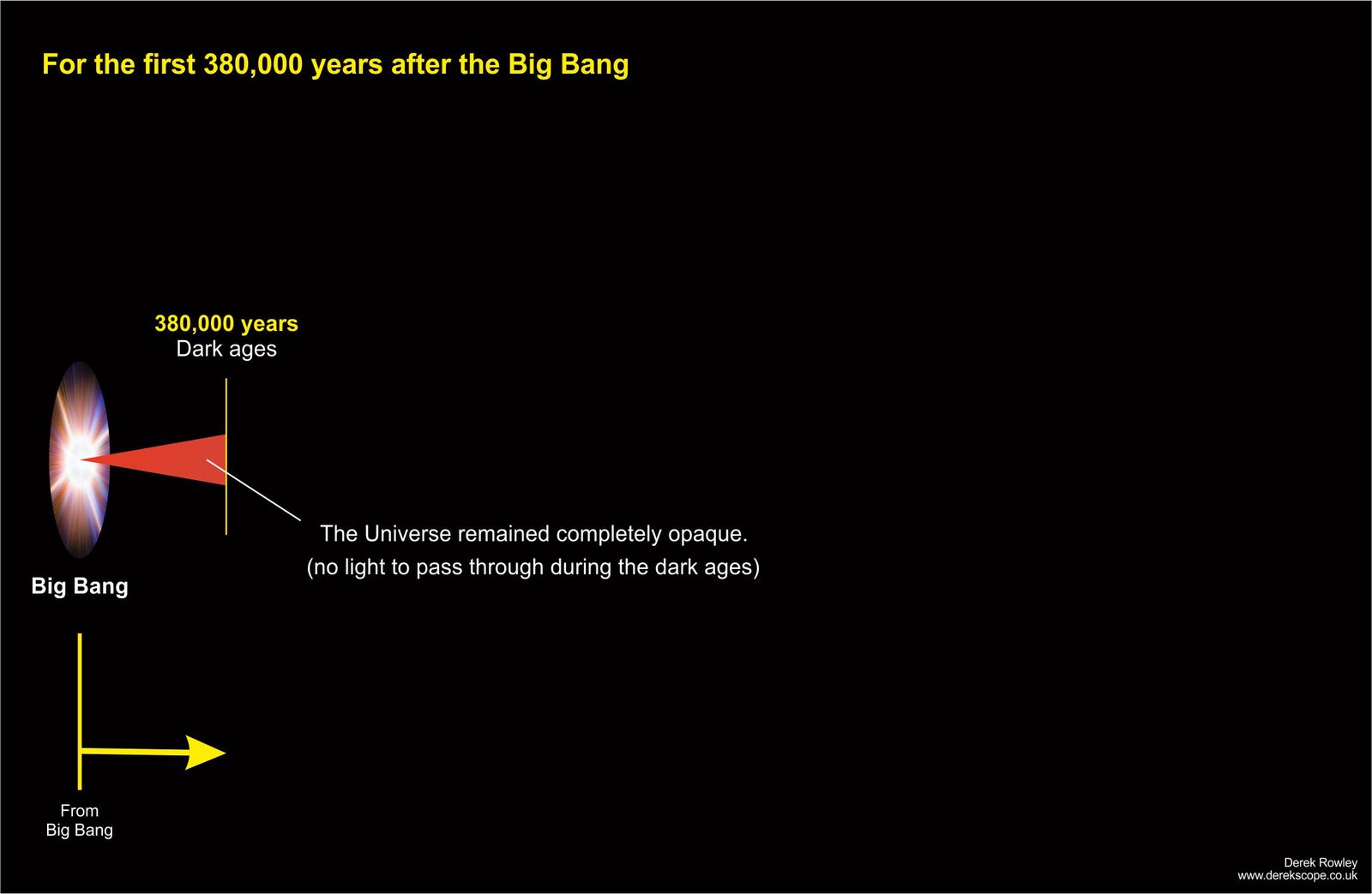
- The early Universe after the Bang Big completely opaque (like a thick fog ~ no light to pass through during the dark ages).
o - Because the super-hot plasma where the light (photons) constantly scattered off free electrons and protons, preventing it from travelling far.
o - During this period, the temperature was so high that electrons and protons could not combine to form neutral atoms.
o - This “cosmic fog” cleared as the universe expanded and cooled enough for electrons and protons to form neutral atoms (recombination), allowing light to travel freely.
o
After 380,000 years…
oooo
- The Universe cooled enough for electrons and nuclei to combine, forming neutral atoms (mostly hydrogen and helium), making the universe transparent and releasing the Cosmic Microwave Background (CMB) radiation.
o - Then it become cool enough for protons (+) and neutrons (-) to capture electrons.
o - The first atoms form.
o
o
oooo
200 million years after the Big Bang
oooo
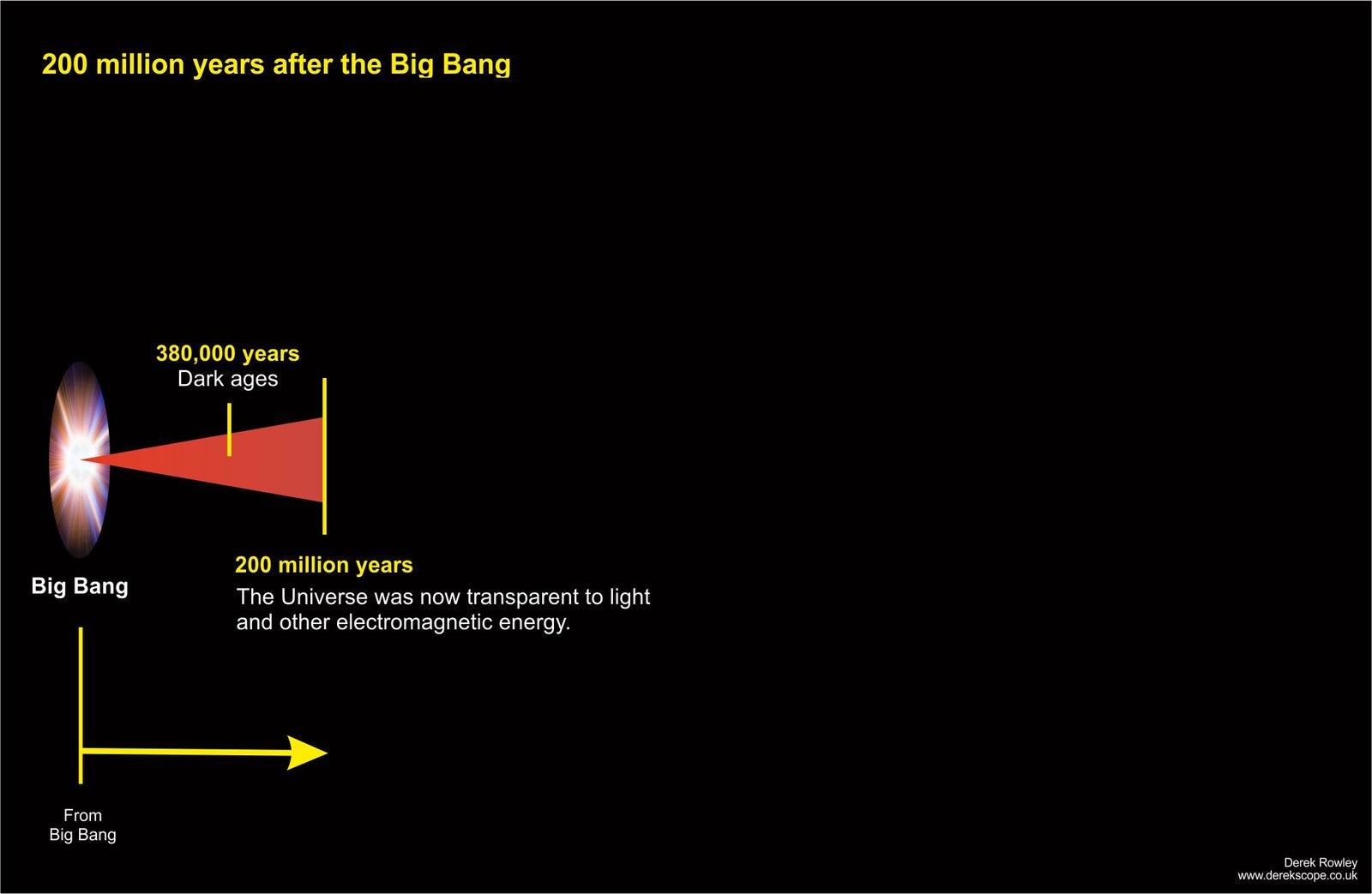
- After recombination, the universe was filled with neutral gas (mostly hydrogen and helium), but no stars or galaxies yet existed, so it was dark.
o - Gravity pulled gas and dark matter together, forming dense clouds that ignited into the first massive stars (Population III stars) and the first small galaxies, ending the Dark Ages.
o - The Universe remained completely opaque.
o - Then it become cool enough for protons (+) and neutrons (-) to capture electrons and form atoms.
oooo
oooo
oooo
About 300 million years after the Big Bang
oooo
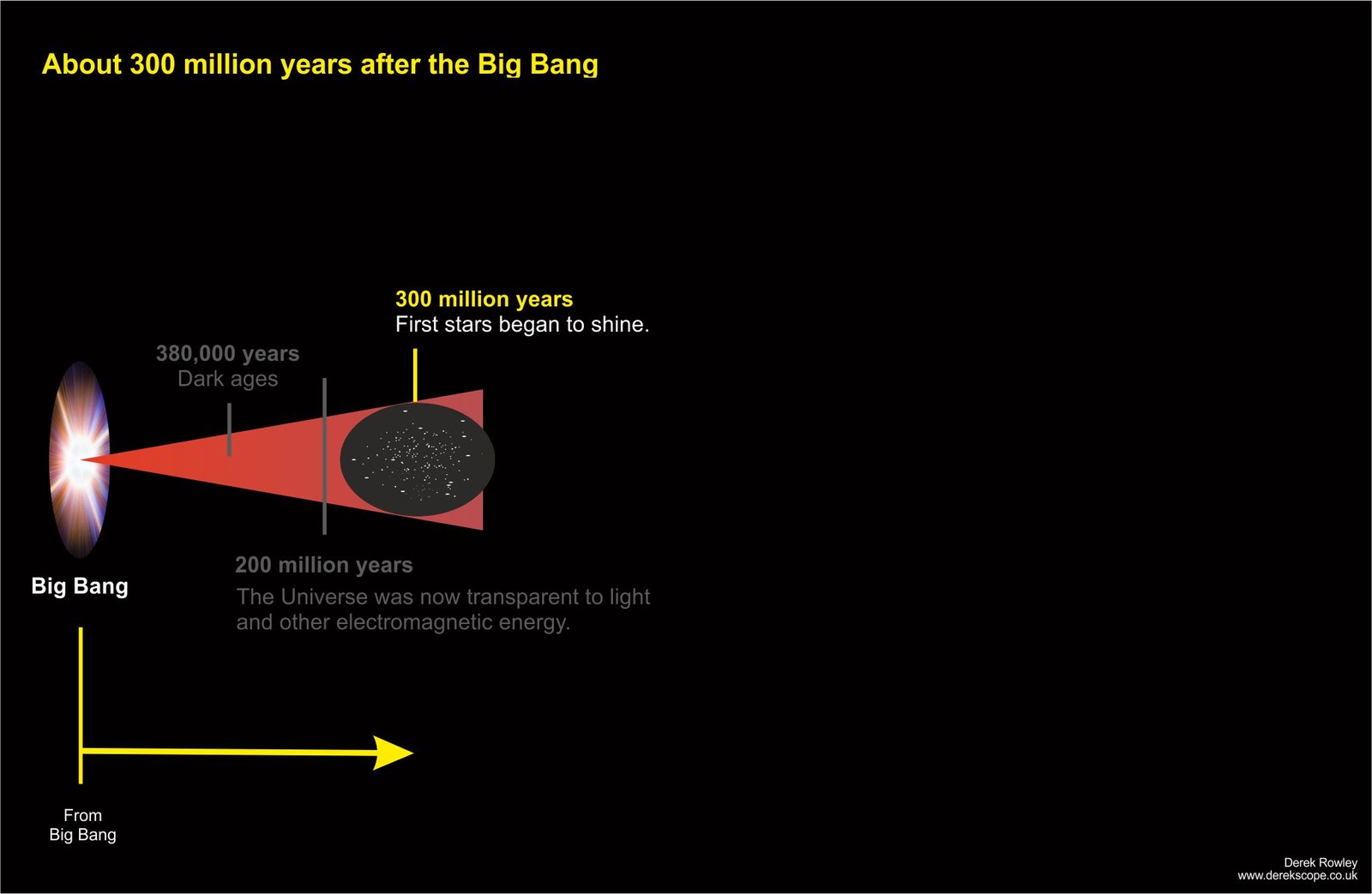
- The first stars began to shine.
oooo
oooo
oo
500 million years after the Big Bang
oooo
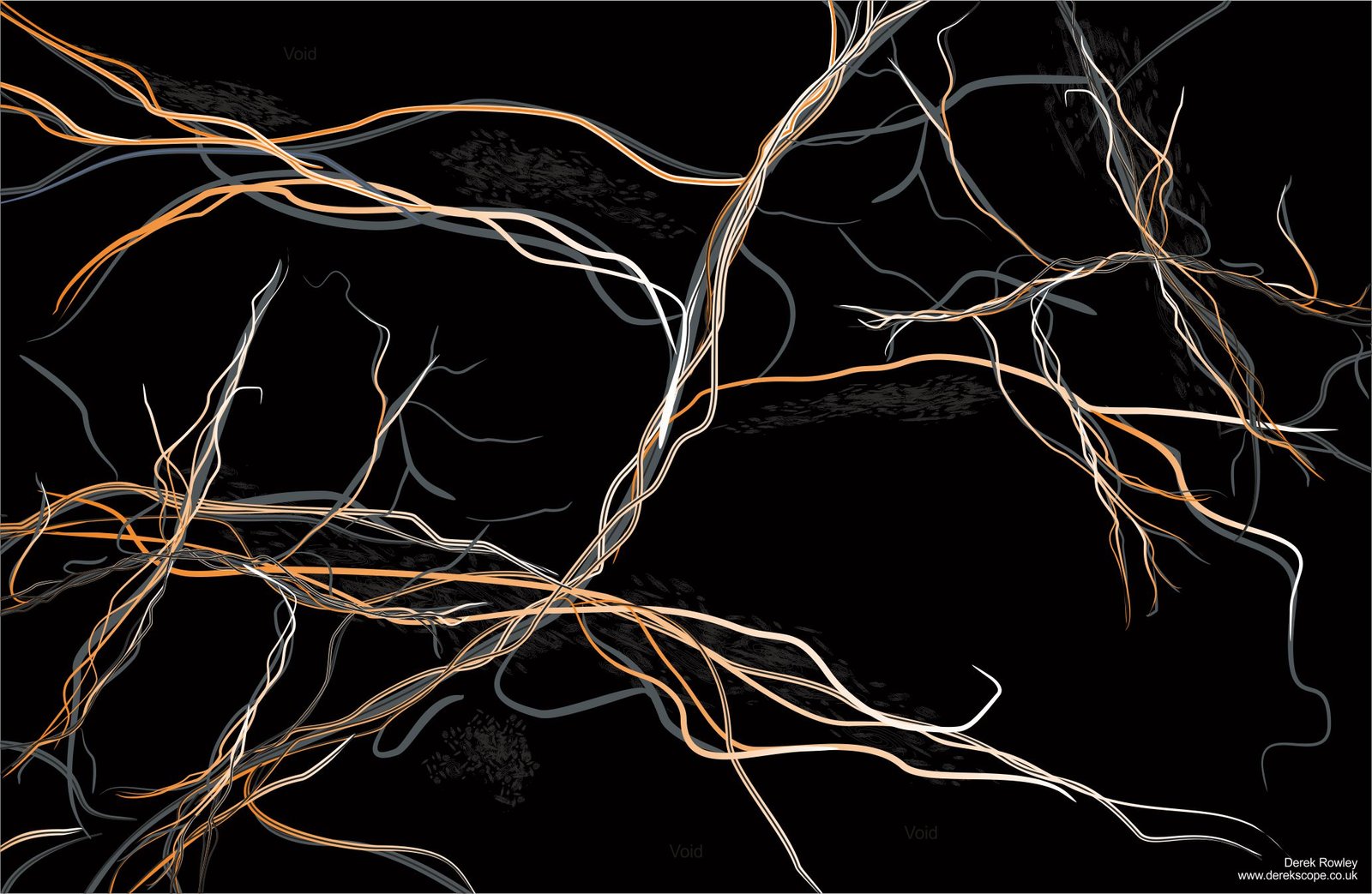
- Dark matter forms a scaffolding or filamentary strands across the universe, and galaxies appear along these strands.
o - Gas falls into the halo ~ ordinary matter (hydrogen, helium) is pulled into these halos as it cools and condenses, it forms: stars, star clusters and full galaxies.
o
o
( More information about The filamentary Comic Web)
oooo
1 billion years after the Big Bang
oooo
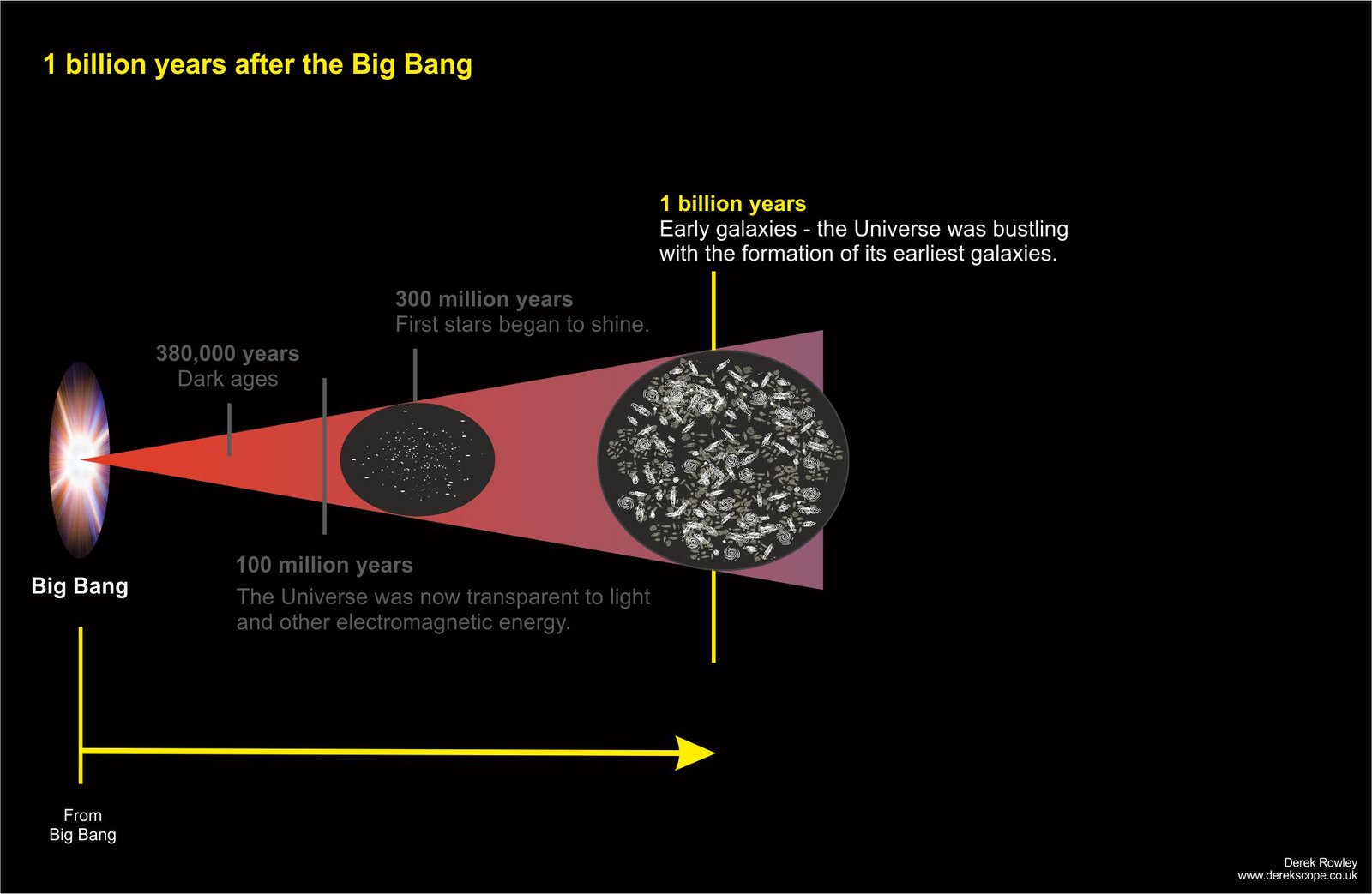
- Galaxies and Dark Matter ~ galaxies form in dark matter cradles on cosmic structure.
o - Dark matter collapes first ~ after the Big Bang, dark matter began clumping under gravity. Because it doesn’t interact with light or radiation, it could collapse earlier.
o - Without dark matter’s stabilising gravitational pull, galaxies would not have formed or held together in the shapes.
o - These clumps become “halos” ~ each halo is a gravitational bubble (a region where dark matter density is high.)
o
oooo
13.8 billion years after the Big Bang
oooo
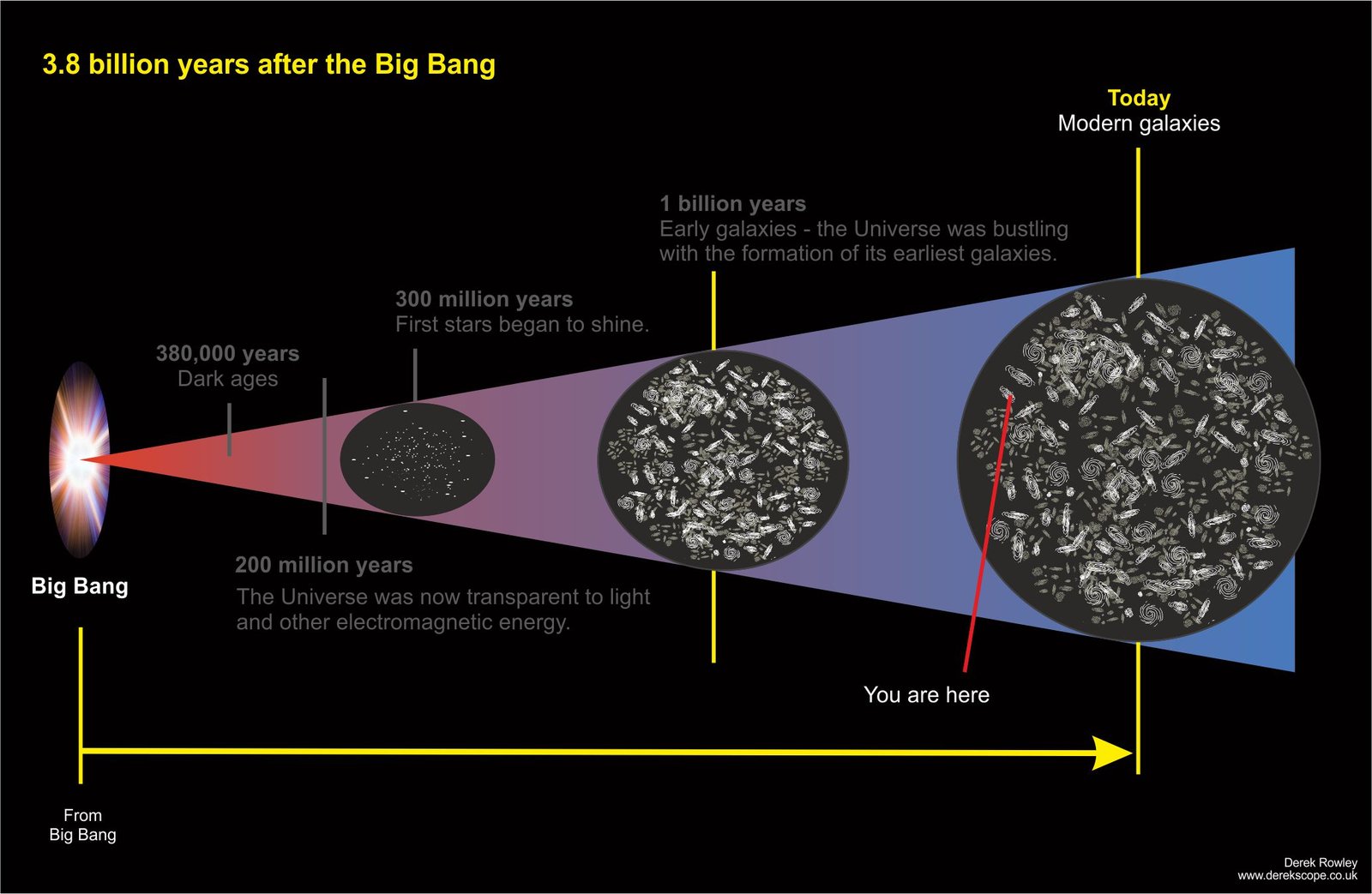
- Today Universe is epanding faster than ever ~ driven by dark energy.
o - Cooling slowly, now around -274°C.
o - Growing more structured, with galaxies clustering into filaments and voids.
o - There is still much to be discovered about the Universe and the Big Bang.
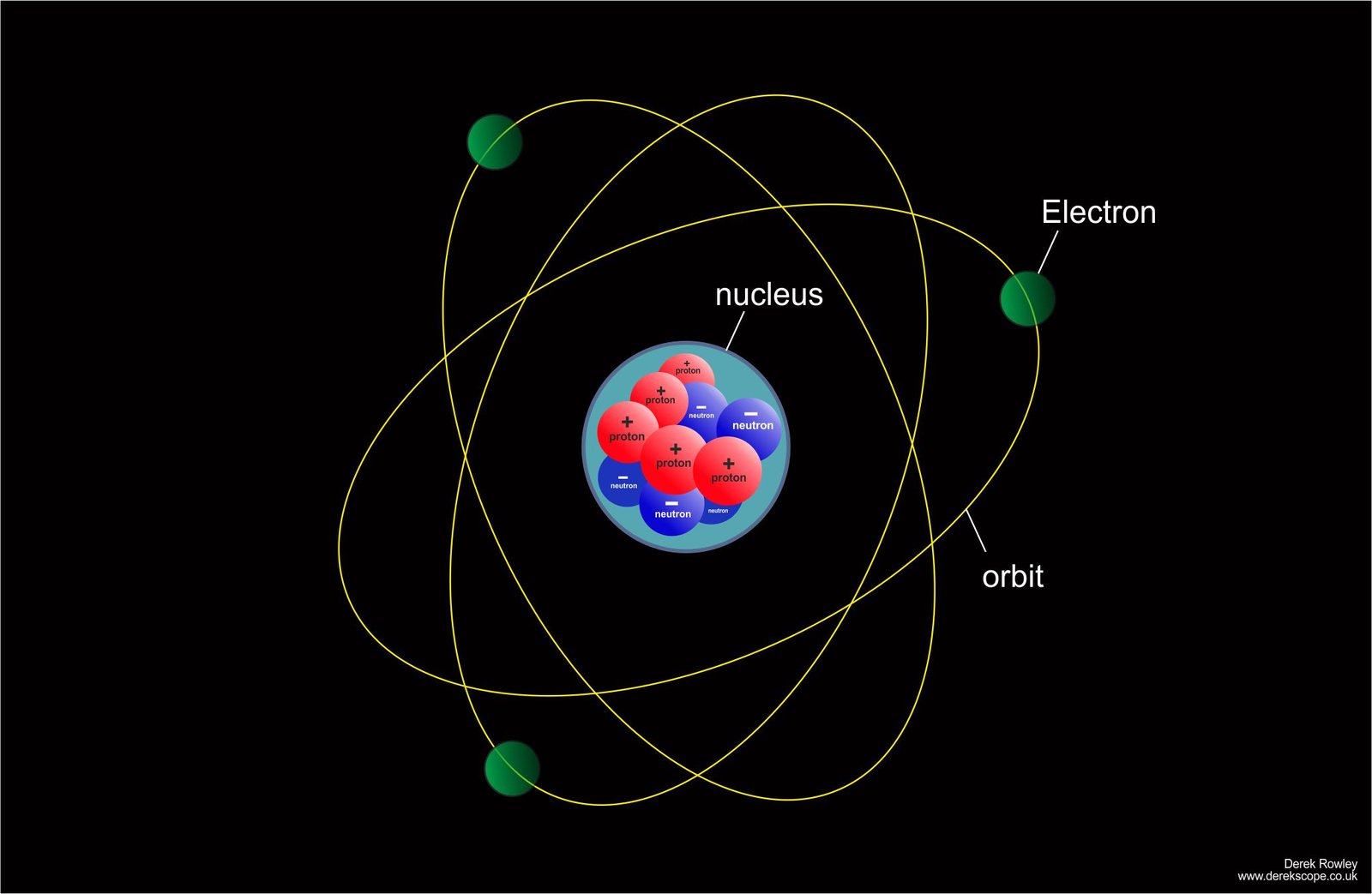
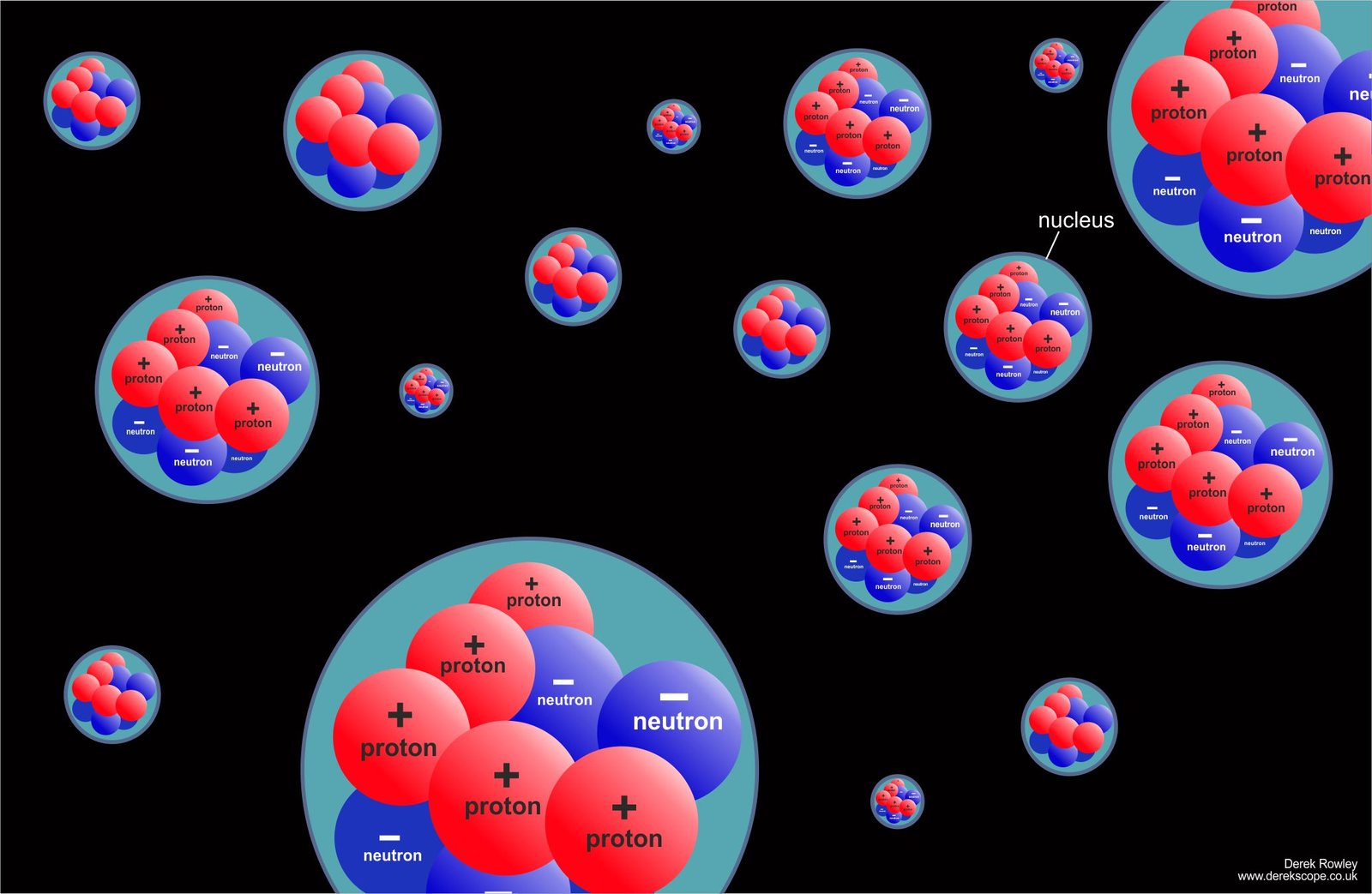
Nucleus
- In a nutshell, atoms are the tiny bits that make up everything we see and touch, from the air to the stars. They’re made of protons, neutrons, and electrons.
o - Protons and neutrons are in the centre of each atom is a dense core called the nucleus.
o - Despite being incredibly tiny, the nucleus contains almost all of an atom’s mass. This is because the nucleus is home to two types of particles: protons and neutrons.
o - Protons – these are positively (+) charged particles found within the nucleus. The number of protons in an atom determines what element it is. (For example, an atom with one proton is hydrogen, an atom with two protons is helium, and so on.)
o - Neutrons – these are particles that have no charge (negative), hence the name ‘neutron’, which means ‘neutral’. They contribute to the mass of an atom and help to hold the nucleus together by counteracting the positive charge of the protons.
o - In a nutshell, atoms are the tiny bits that make up everything we see and touch, from the air to the stars; they’re made of protons, neutrons, and electrons.
o
o
o
o
oooo
Electrons
- Electrons are tiny particles that orbit the nucleus, similar to how planets orbit the sun.
electrons are involved in chemical reactions and the formation of chemical bonds. They also determine the electrical and thermal conductivity of materials.
o - The arrangement of electrons in an atom can change, moving to higher energy levels or lower energy levels or even jumping from one atom to another.
o - These changes can result in the absorption or emission of light, leading to the colours we see in fireworks, neon lights, and even the rainbow!
o
oooo
Cosmology
o
The study of the nature of the universe on a large scale
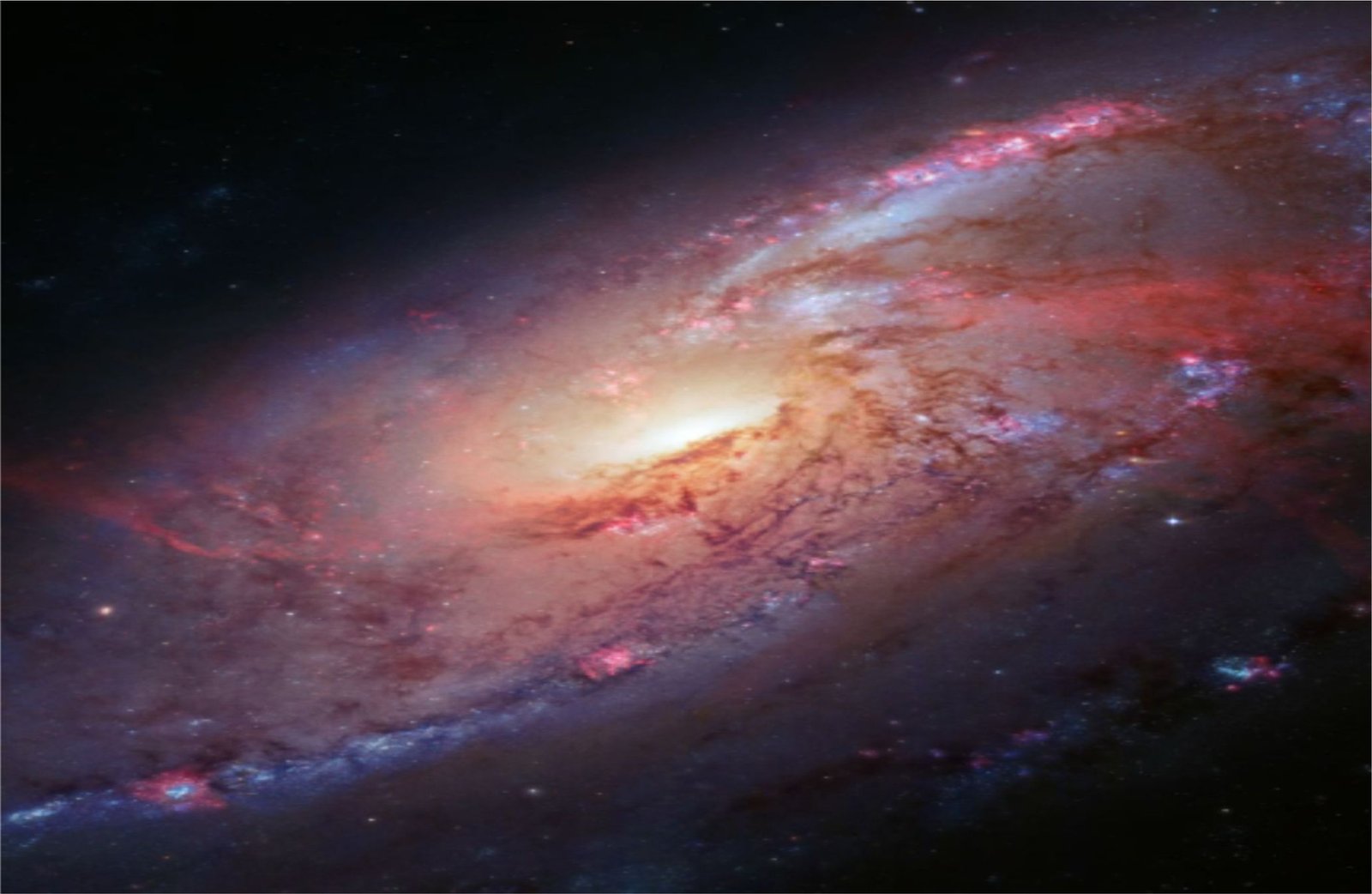
- Cosmology is a branch of astronomy that involves the origin and evolution of the universe, from the Big Bang to today and on into the future.
o
o
Cosmology asks for the biggest questions:
- How did the universe begin?
- What is it made of?
- How is it changing over time?
- What will happen to it in the far furture?
o
o
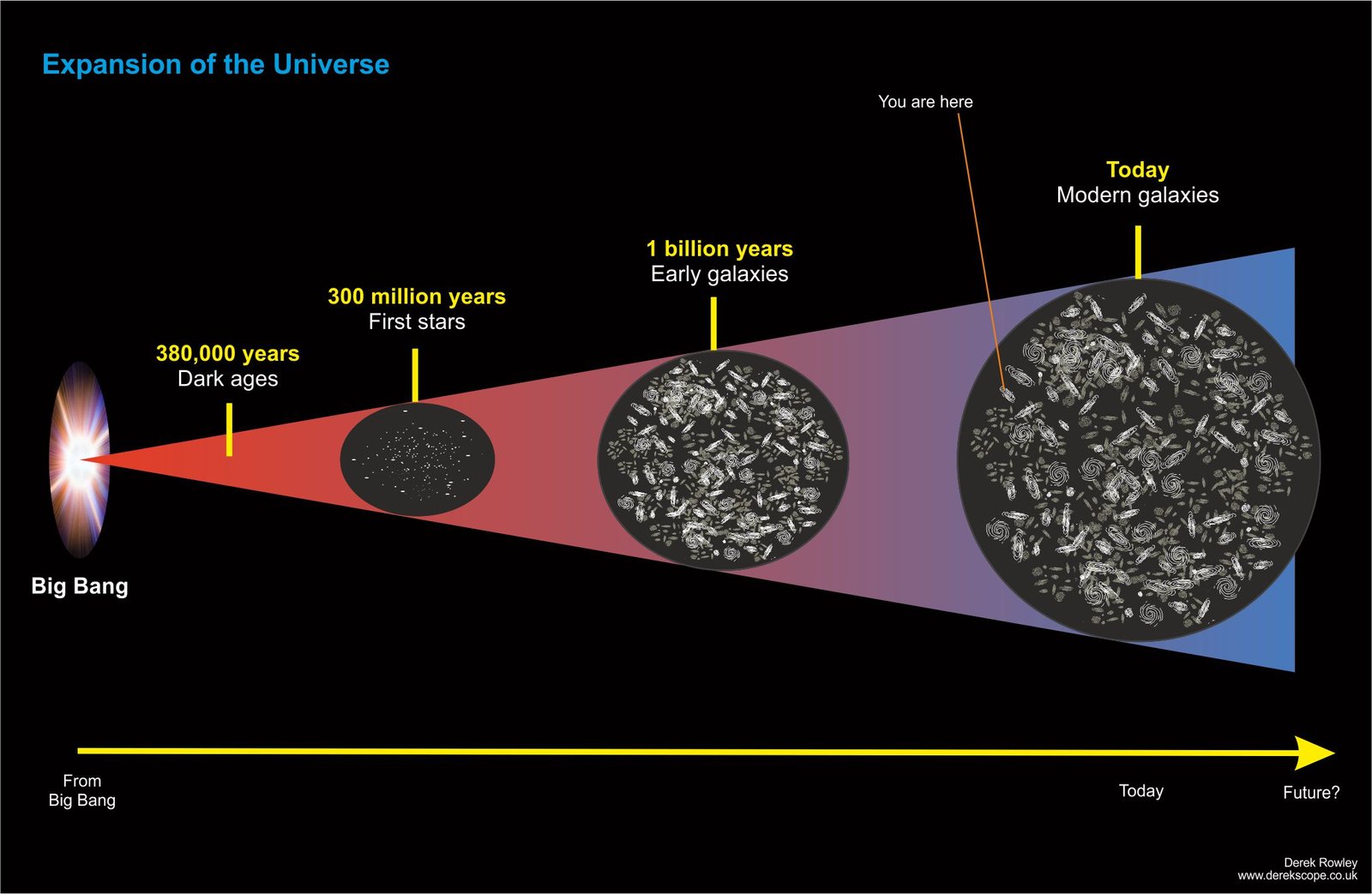
Expansion in the Universe
- future and large-scale (features are known as Cosmology.)
o - expanding and continuing getting bigger all the time.
o - most distant galaxies rush outwards in all directions – moving away from us at about 90% of the speed of light.
o - recent theories suggest that our Universe may just be one of countless bubbles of space-time – multiverses shows a cluster of interesting universes that happens to be neighbours. (See BizleyArt)
o
o
o
Temperatures in the Universe
oooo
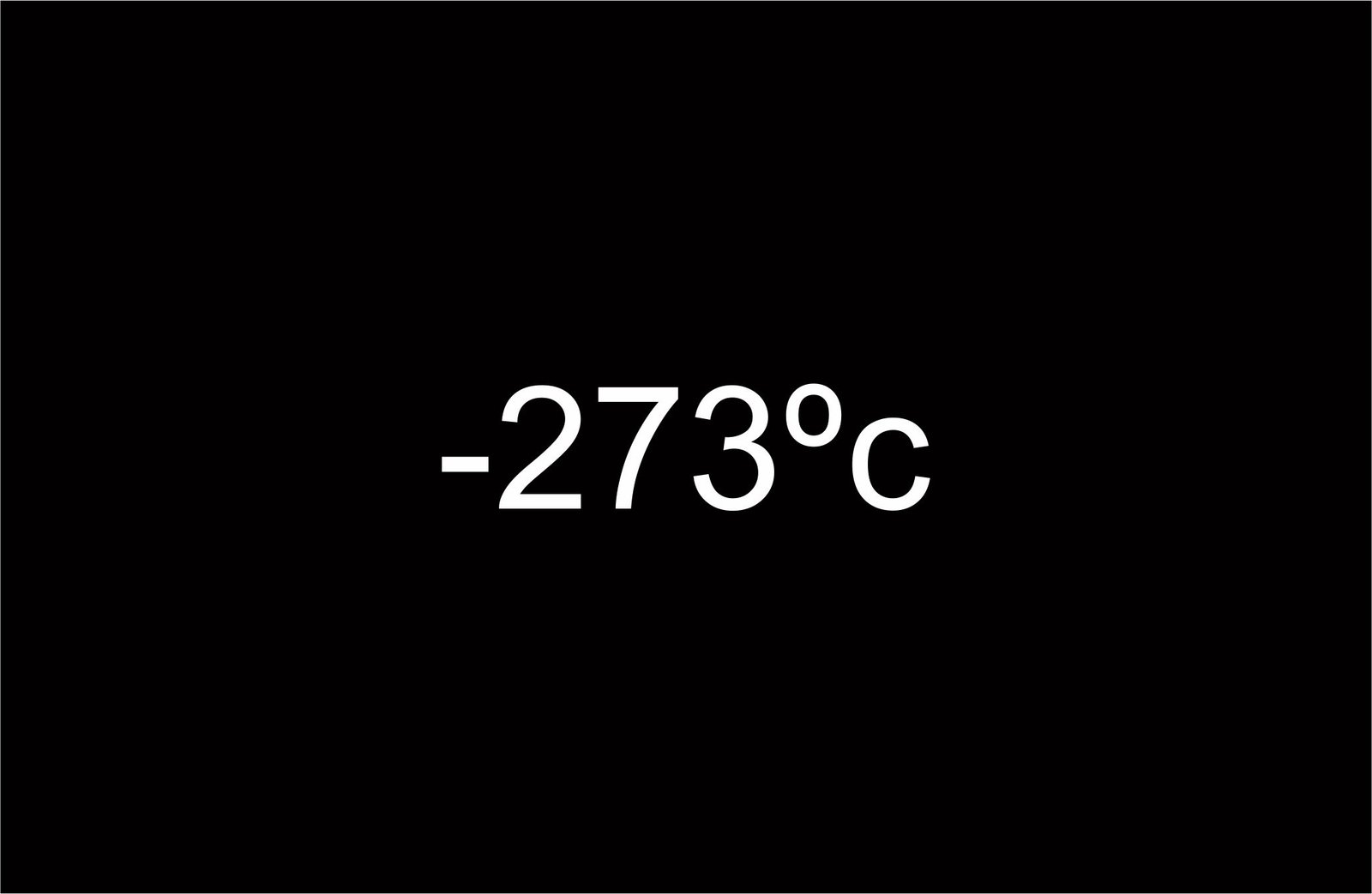
- no maximum possible temperature in the Universe.
- accurate minimum possible temperature of -273ºc.
- working in specialised laboratories, they cannot achieve this ultimate low temperature than -273ºc.
- matter is not spread out evenly throughout the Universe.
o
o
o
The Comic Web
oooo
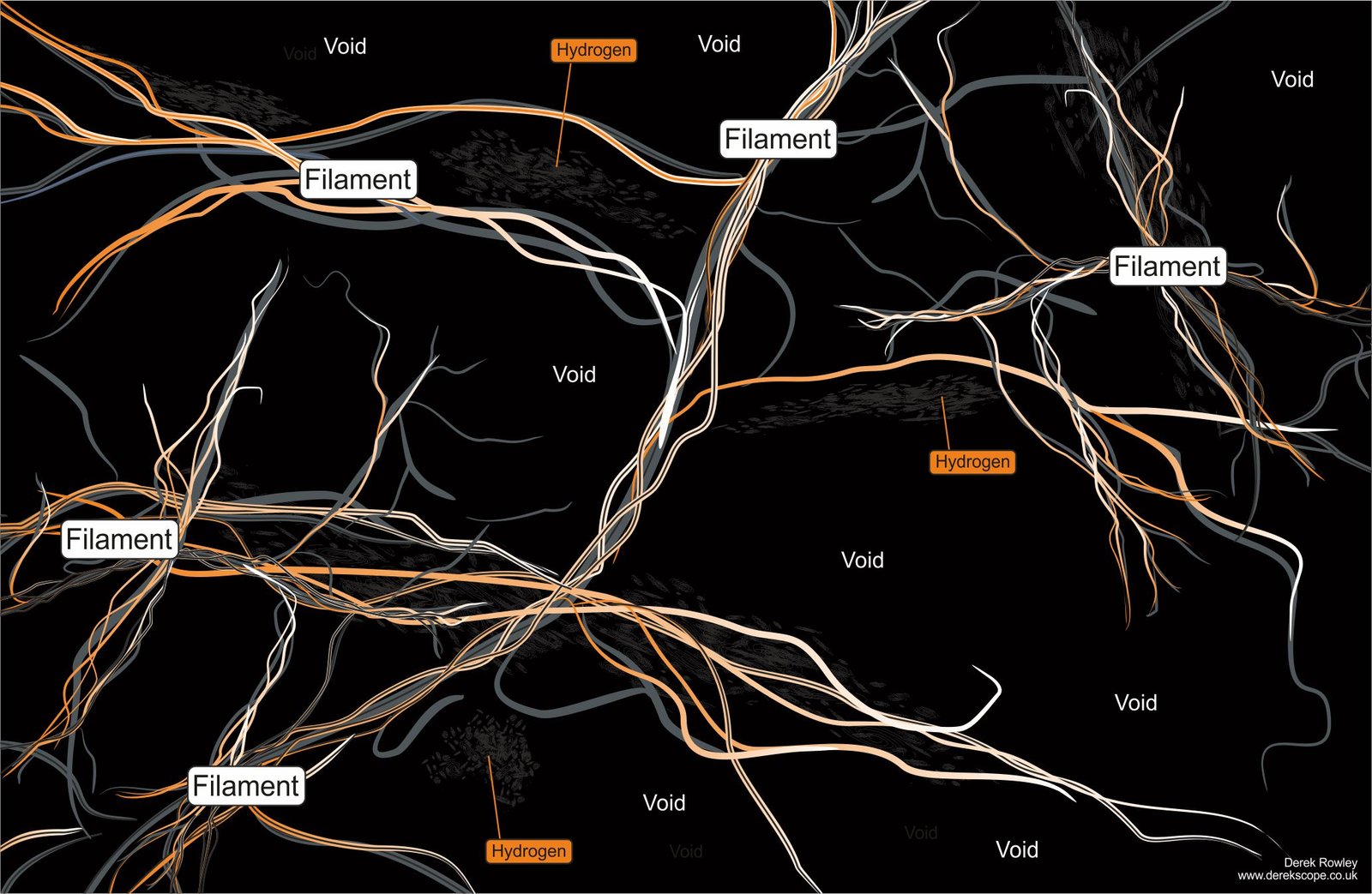
- Comic Web refers to the largest-scale structure of the Universe.
o - The Universe lies up of thin filaments (fibre), each one made of millions of galaxies and hot gas that surround huge empty space that contain nothing but clouds of hydrogen (gas) between galaxies.
o - A Comic Web-like pattern formed by gravity pulling matter into strands and nodes;
….– Filaments contain clusters of galaxies and hot gas.
….– Voids are huge, empty regions with very little matter.
o
o
o
oooo
oooo
oooo
Back to The Universe / next to The Big Bang page.
oooo
- The Big Bang is the idea that the universe began as just a single point, then expanded and stretched to grow as large as it is right now and it is still stretching.
o
One ten million trillion trillion trillionth
of a second
- In order to explain what happened scientists use measurements of time that are very small.
oooo
oooo
oooo
BSL Version
The Big Bang
o
oooo
At first…
- the Universe was unspeakably small and hot – getting larger and cooler ever since.
o
Four fundamental forces
- Four fundamental forces govern interactions between all objects in the universe.
o
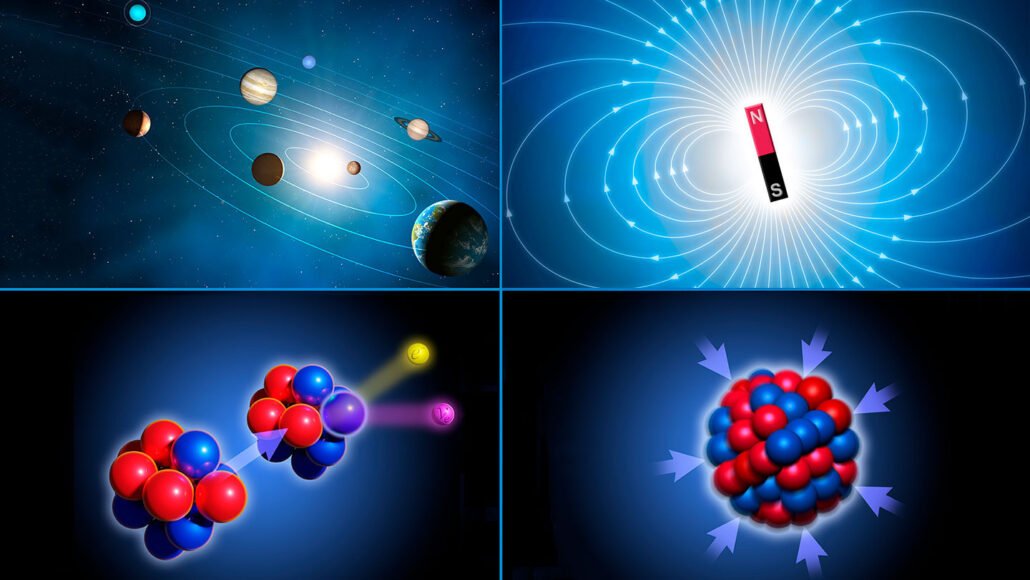
- This illustration shows above the four fundamental forces of the universe (clockwise from top left):
– gravity
– electromagnetism
– weak forces
– strong forces
o
Science photo Library/Getty Images: Mark Garlick – Science photo, plus: adapted by L. Steenblik Hwang.
oooo
oooo
BSL Version
oooo
oooo
About one-billionth of one second…
- about one-billionth of one second after the Big Bang
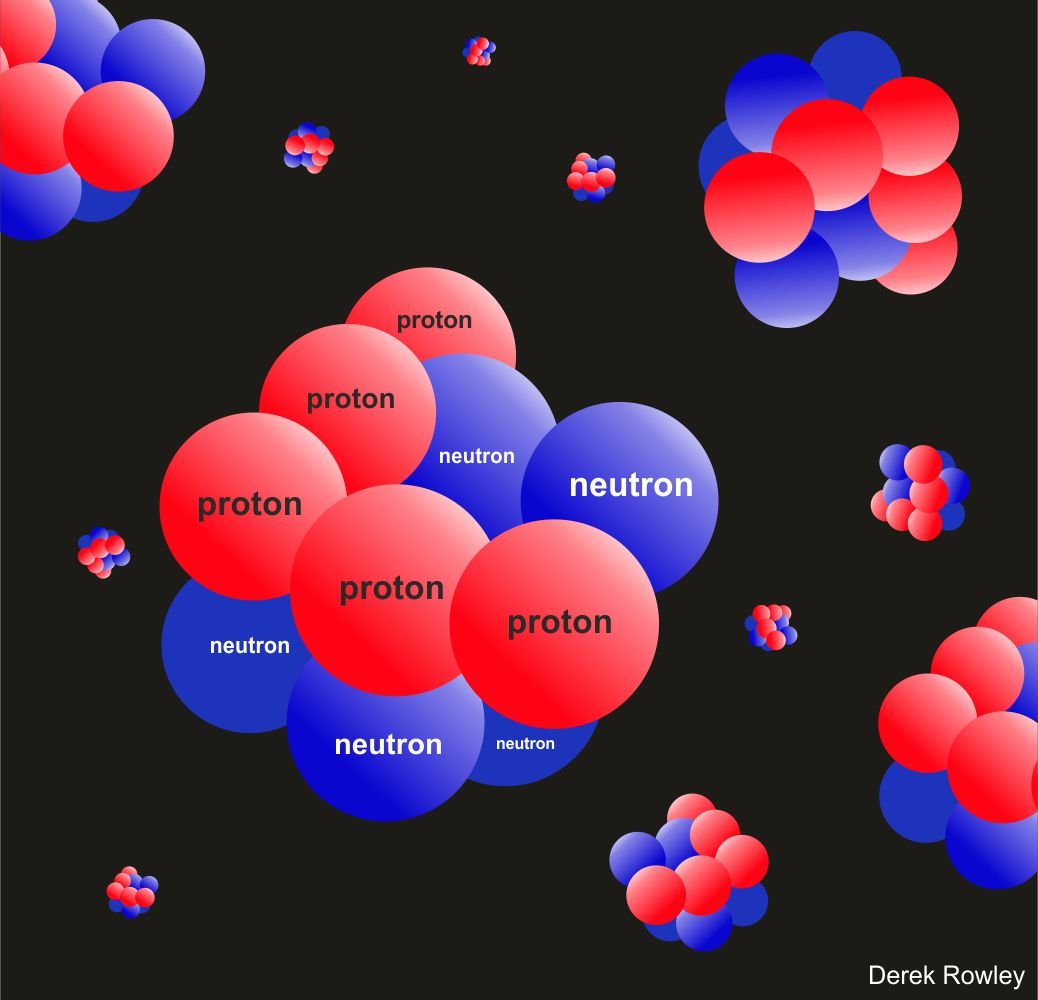
o - the Universe lay in a dense sea of quarks and other particles – tiny pieces of anything; atoms, molecules, etc).
o
Dense sea of quarks
- A quark is a tiny particle which makes up protons and neutrons.
oooo
oooo
oooo
BSL Version
oooo
About three minutes…
oooo
- about three minutes after the Big Bang there was a brief period of nucleosynthesis when quarks joined together to form neutrons and protons.
o
o
Atoms
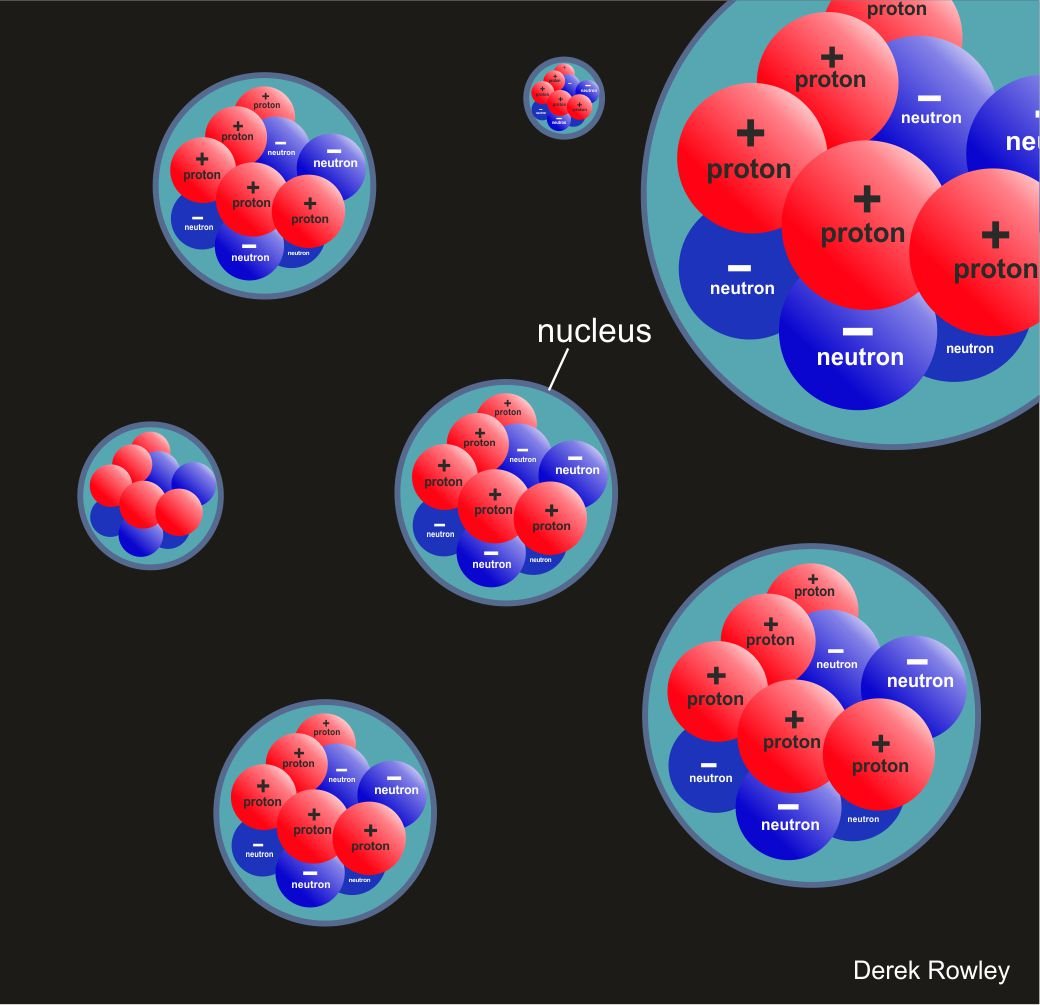
- Atoms are the smallest units of an element that still retain the properties of that element.
oooo
Nucleus
- In a nutshell, atoms are the tiny bits that make up everything we see and touch, from the air to the stars. They’re made of protons, neutrons, and electrons.
- protons and neutrons are in the centre of each atom is a dense core called the nucleus.
o - despite being incredibly tiny, the nucleus contains almost all of an atom’s mass. This is because the nucleus is home to two types of particles: protons and neutrons.
o - protons – these are positively (+) charged particles found within the nucleus. The number of protons in an atom determines what element it is. (For example, an atom with one proton is hydrogen, an atom with two protons is helium, and so on.)
o - neutrons – these are particles that have no charge (negative), hence the name ‘neutron’, which means ‘neutral’. They contribute to the mass of an atom and help to hold the nucleus together by counteracting the positive charge of the protons.
o - in a nutshell, atoms are the tiny bits that make up everything we see and touch, from the air to the stars; they’re made of protons, neutrons, and electrons.
o
oooo
oooo
oooo
oooo
oooo
oooo
BSL Version
- explaining about three minutes…
oooo
oooo
oooo
oooo
BSL Version
- explaining about nucleus
oooo
oooo
Electrons
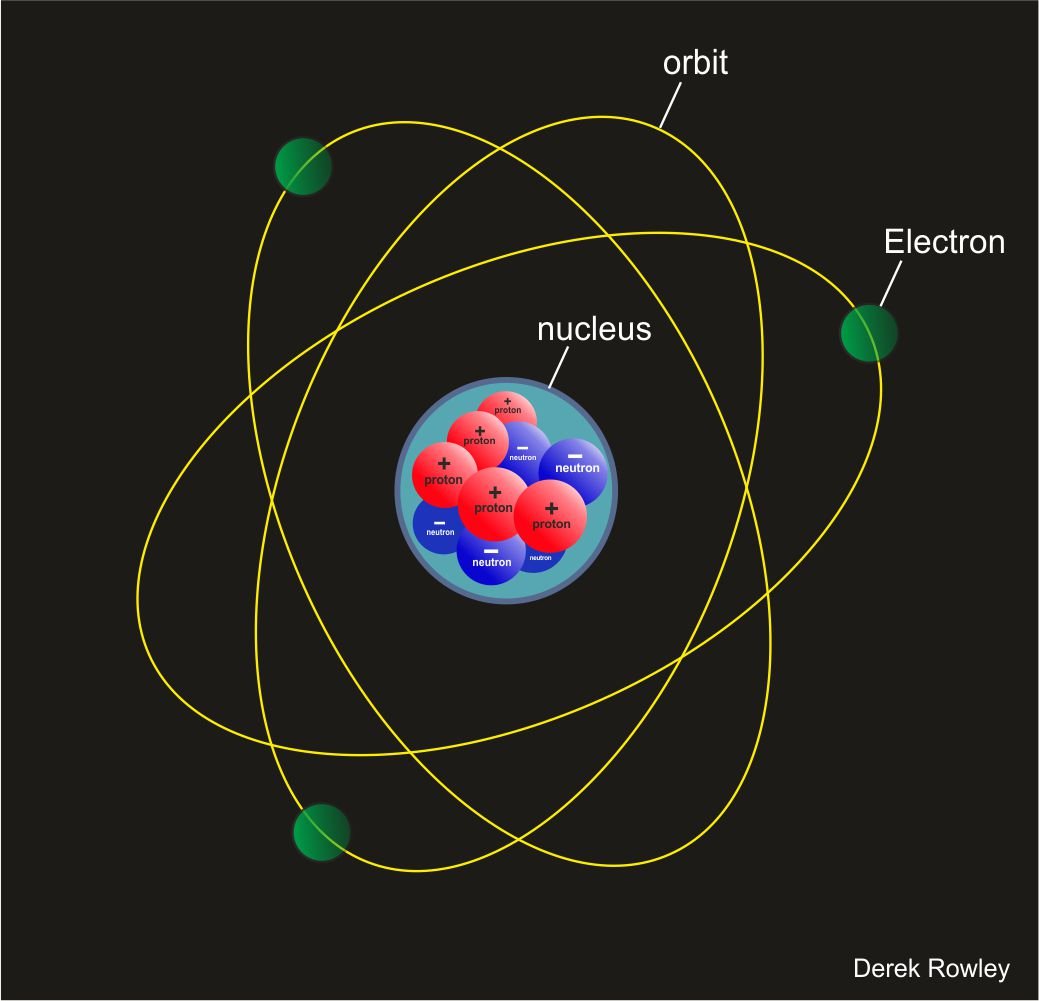
Electrons are tiny particles that orbit the nucleus, similar to how planets orbit the sun.
o
- they carry a negative charge, which balances the positive charge of the protons in the nucleus.
o - electrons are involved in chemical reactions and the formation of chemical bonds. They also determine the electrical and thermal conductivity of materials.
o - The arrangement of electrons in an atom can change, moving to higher energy levels or lower energy levels or even jumping from one atom to another.
o - These changes can result in the absorption or emission of light, leading to the colours we see in fireworks, neon lights, and even the rainbow!
oooo
oooo
oooo
BSL Version
- explaining about electrons
oooo
oooo
oooo
Back to The Universe / next to The Cosmic Microwave Background page.