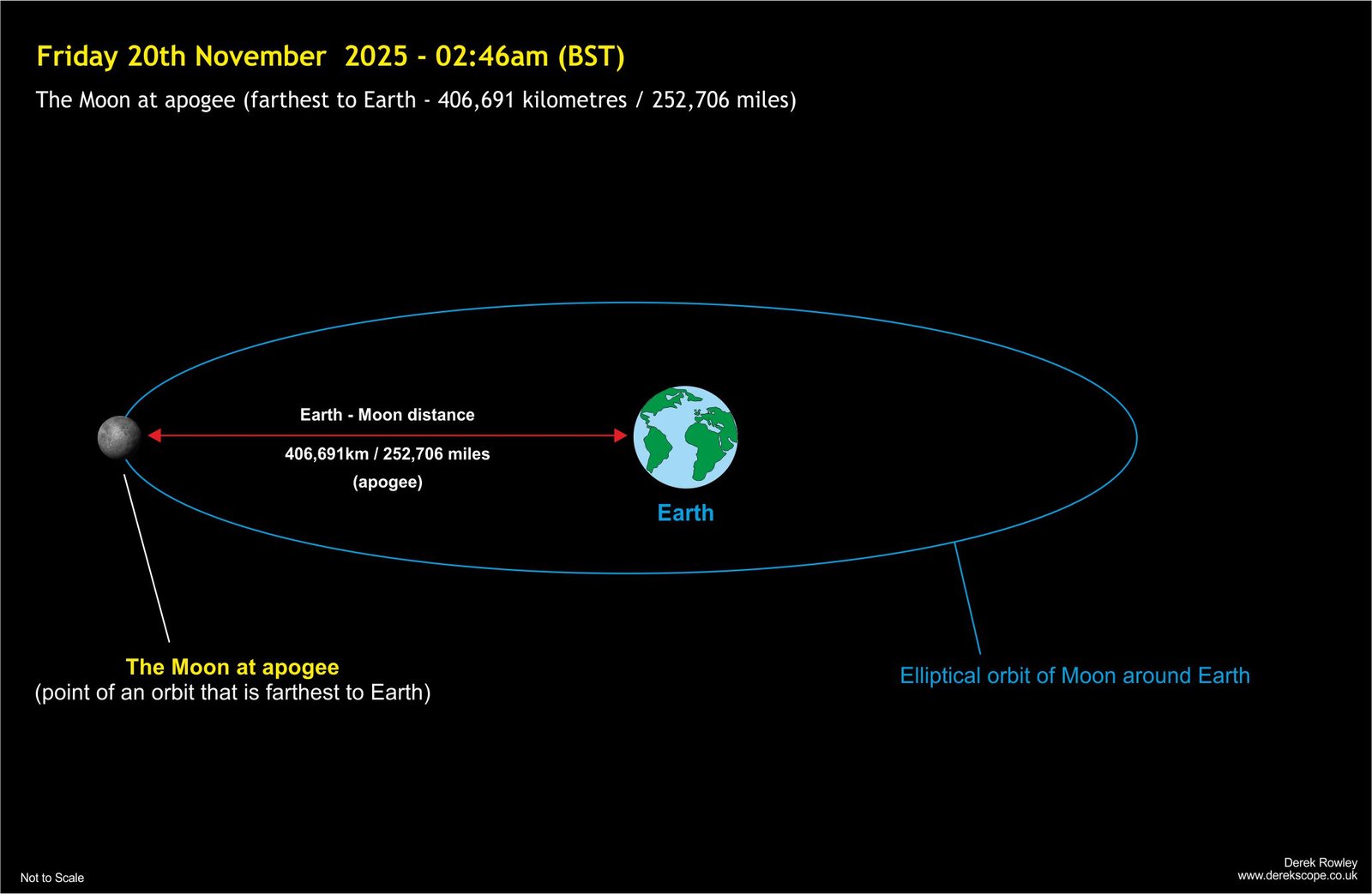
Closest point to Earth

  • The timing is favorable because of close approach the comet may reach a brightness that allows visibility with binoculars (e.g. ~ 7×50, 10×50, 15×70 or more to increase your chances) – maybe even the naked eye under dark skies.
    o
  • Look after sunset, toward the northwest horizon, the comet moves into the constellation Bootes and near the bright star Arcturus.
    o
  • The comet is described as having a greenish coma and potentially showing a tail making it visually interesting ~ however it can be unpredictable, actual brightness and tail length can vary and local conditions (horizon, light pollution, weather matter, etc).
    o

Posted in Homepage (Posts) | Comments Off on Closest point to Earth

Wednesday 22nd October 2025

Look out for Comet Lemmon (C/2025 A6)

  • It is easy to find this evening located the star Izar, after the sunset.
    o
  • Find Izar is a star in the constellation Boötes is home to the bright orange star Arcturus.
    o
  • Comet Lemmon will be positioned about 2 degrees to the left of Izar.
    o
  • It may be bright enough to see without optical aid under dark, light-pollution-free conditions, but binoculars are recommended for the best view.
    o
  • Even if visible to the naked eye, expect to see a fuzzy, white or bluish glow rather than a distinct point of light in the dark location.
    o
    o

Posted in Homepage (Posts) | Comments Off on Wednesday 22nd October 2025

Monday 20th October 2025

Look out for earthshine

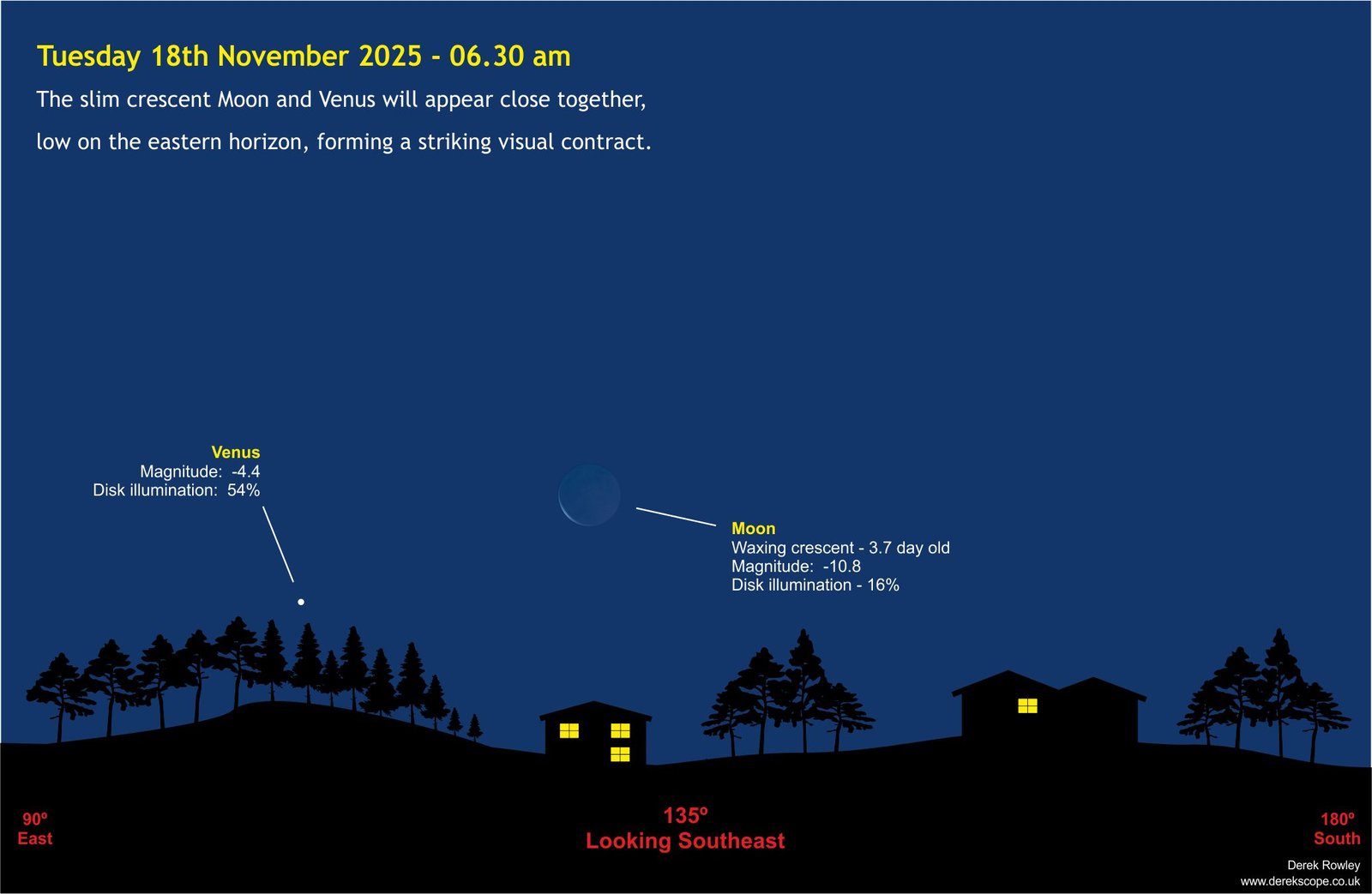
  • This celestial alignment, a conjunction of the Moon and Venus, is a treat visible to the naked eye and can be framed with a scenic backdrop for photos.
    o
  • Binoculars can enhance the view of the faint glow on the Moon’s dark side, known as earthshine.
    o
    o


Posted in Homepage (Posts) | Comments Off on Monday 20th October 2025

Sunday 19th October 2025

Moon & Venus

  • See the bright planet Venus alongside a very thin, crescent-shaped Moon, with both objects relatively close together.
    o
  • The Moon will be a waning crescent, meaning it will be a thin, sliver-like shape, just days away from its New Moon phase.
    o

Posted in Homepage (Posts) | Comments Off on Sunday 19th October 2025

Bright comet this morning

Comet Lemmon (C/2025 A6) is your pick this month

  • It is brightening fast and now (mid-October) is becoming a binocular ~ possibly naked-eye object in the dark skies.
    o
  • Its closest approach to Earth occurs on Tuesday 21st October 2025.
    o
  • It will move from being a pre-dawn object to being visible after sunset in the western sky in late October.
    o
  • Use a star chart or astronomy app in explaining BSL that can show you where Lemmon C/2025 A6 is.
    o

Posted in Homepage (Posts) | Comments Off on Bright comet this morning

Wednesday 15th October 2025

Algol
(bright variable Star Beta Persei)

oooo


oooo

Posted in Homepage (Posts) | Comments Off on Wednesday 15th October 2025

Wednesday 15th October 2025

Moon near the Beehive Cluster

  • Messier 44 (The Beehive Cluster) is one of the most famous deep-sky objects.
    o
  • The moon and cluster will be visible low in the east-northeastern sky just before sunrise, though binoculars will greatly help to spot the faint Beehive.
    o

Posted in Homepage (Posts) | Comments Off on Wednesday 15th October 2025

Tuesday 14th October 2025 – 1am

To observe Jupiter and the Moon together

  • Jupiter is a large and bright planet, so you can find it by looking to the right of the crescent Moon.
    o
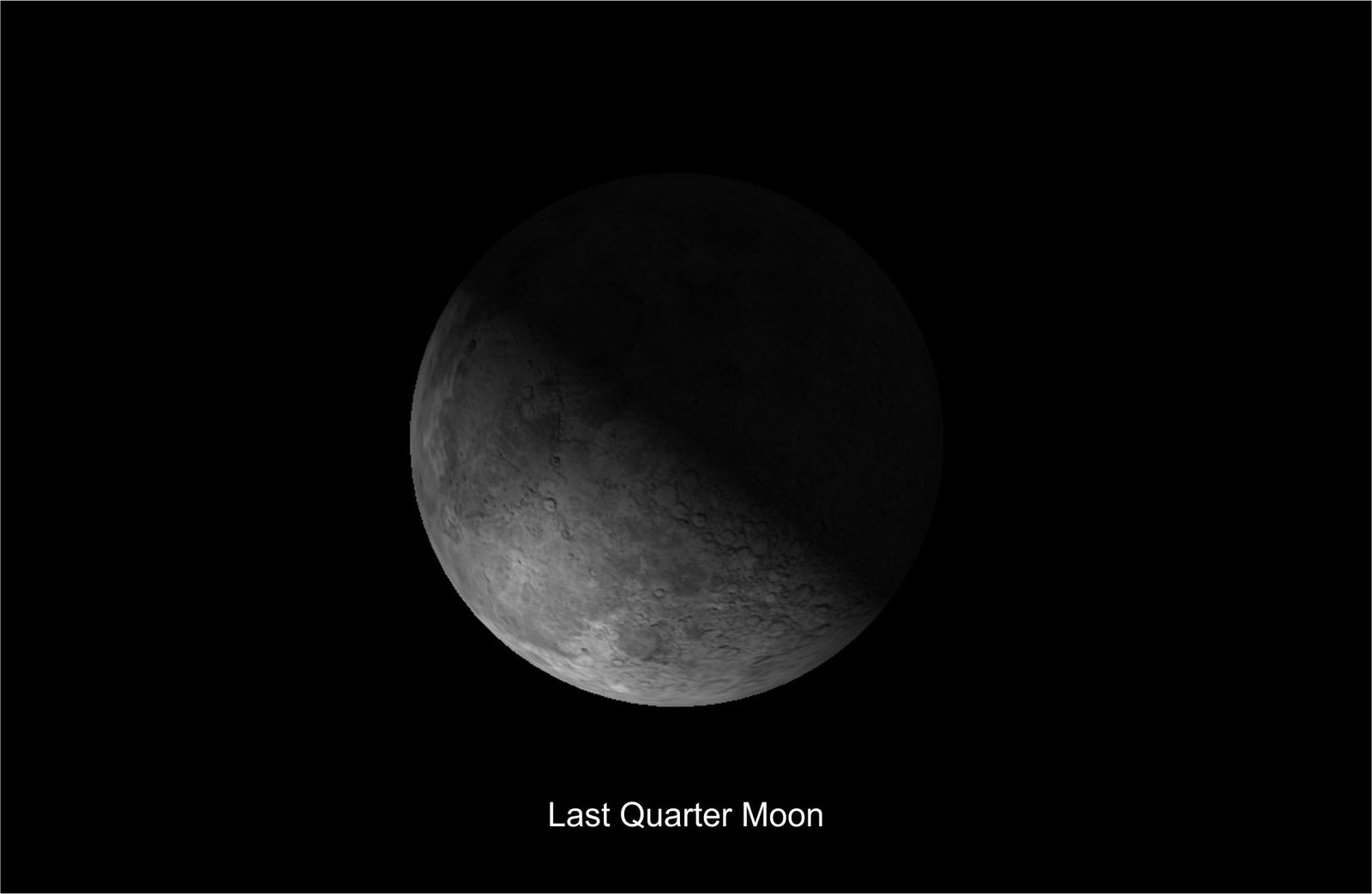
  • Jupiter will be visible next to the Last Quarter Moon from just before midnight until sunrise.
    o
  • Even without any equipment, you can see both the Moon and the planet Jupiter with your naked eyes.
    o
  • With binoculars, you can see Jovian systems (Jupiter’s moons) but they will appear as tiny, star-like points of light, and you may only see some of the four largest moons, the Galilean moons (Io, Europa, Ganymede & Callisto).
    o

Posted in Homepage (Posts) | Comments Off on Tuesday 14th October 2025 – 1am

Monday 13th October 2025

To observe Saturn’s moon – Titan
(Be preparing yourself at 23:45pm)

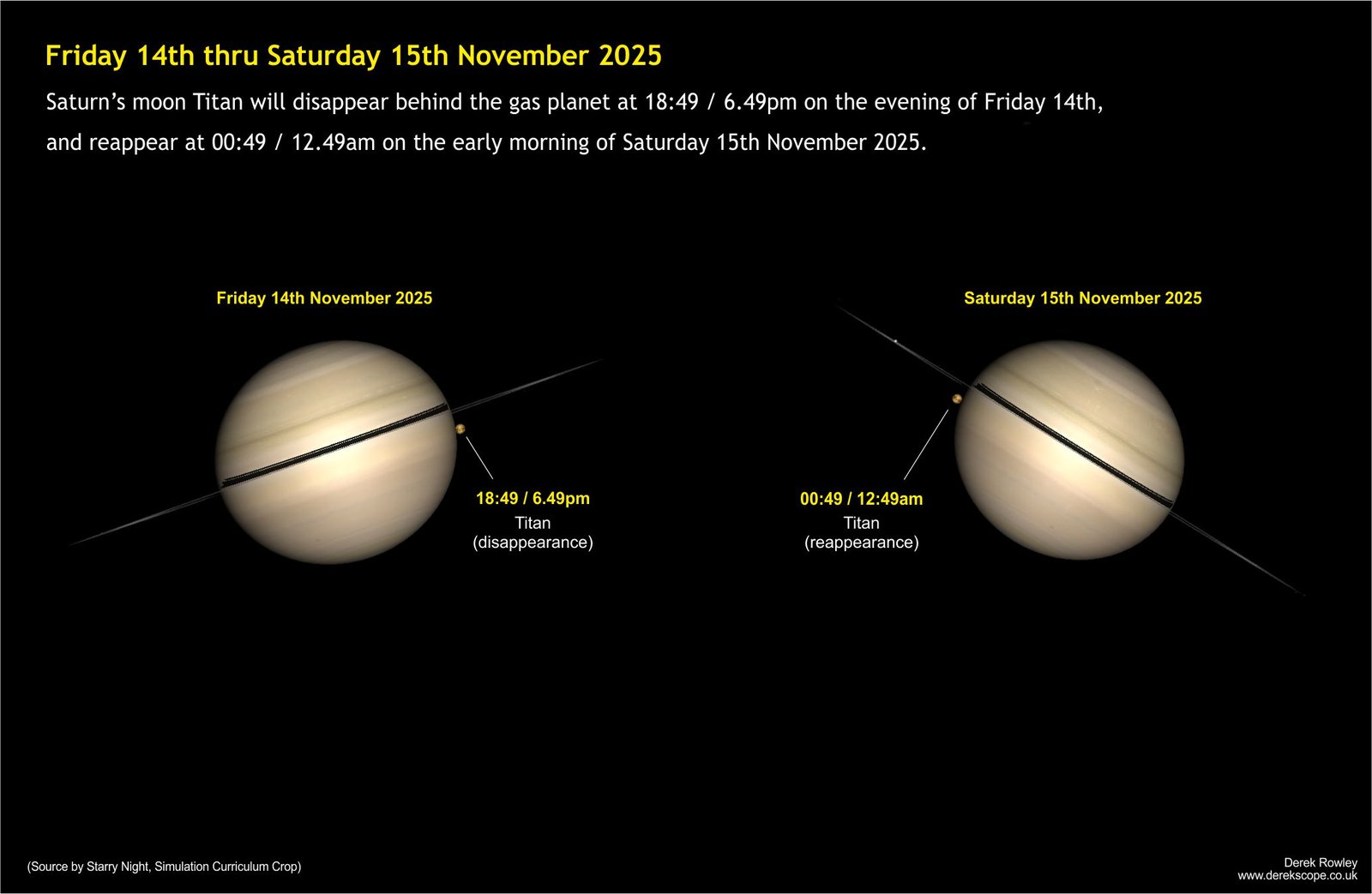
  • You can see Titan, Saturn’s largest moon, with a telescope or powerful binocular, will appear as a small, orangish point of light near Saturn.
    o
  • You may see Titan disappear behind the Saturn – be preparing yourself from 23:45 / 11.45pm just before midnight on 13th October, Titan will disappear around 00:12am behind the Saturn on the early morning of 14th October.
    o

Posted in Homepage (Posts) | Comments Off on Monday 13th October 2025

Friday 10th October 2025

The Moon & M45 (Seven Sisters)

  • A close approach between the Moon and the M45 (Pleiades) star cluster on Friday 10th early morning but the Moon’s glare will make it difficult to see the cluster with the naked eye.
    o
  • Though binoculars or a telescope should reveal the brightest stars of the cluster.
    o
  • The Moon will appear less than one degree away from the Pleiades and will be 87% illuminated, appearing as a waning gibbous moon.
    o

oooo
Back

Posted in Homepage (Posts) | Comments Off on Friday 10th October 2025