





Friday 23rd January 2026

  • The crescent Moon meets Saturn in the evening sky.
    o
  • At around the same time, the two objects will also make a close approach, technically called an appulse.
    o
  • Appulse
    This meaning two bodies appear very near each other in the sky – usually the planets or the Moon – appear close to one another in the sky.
    o

Posted in Homepage (Posts) | Comments Off on Friday 23rd January 2026

Friday 23rd January 2026

  • Dwarf planet Pluto is in solar conjunction with the Sun at 10:20am today.
    o
  • This means Pluto lies on the far side of the solar system, directly behind the Sun from Earth’s perspective, and is completely hidden in the Sun’s glare.
    o
  • About 3.38 billion miles away from Earth to Pluto.
    o
  • Light travel time roughly 5 hours for the light cross that gap.
    o
  • Never look at the Sun directly that the eye can be permanently damaged.
    o
  • BSL Version

oooo


Posted in Homepage (Posts) | Comments Off on Friday 23rd January 2026

Thurs 22nd / Fri 23rd Jan 2026

  • On the evening of Thursday 22nd January, the Moon and Saturn will be visible low in the southwest sky after sunset.
    o
  • On Friday 23rd January, the Moon & Saturn become visible after dusk, around 17:30pm, about 30–35° above the horizon, and setting by 21:30pm.
    o

Posted in Homepage (Posts) | Comments Off on Thurs 22nd / Fri 23rd Jan 2026

Wednesday 21st January 2026

Algol Minima

o

  • The bright variable star Beta Persei (Algol) will reach its minimum brightness at 20:10 / 8.10pm in the evening on Wednesday 21st January and will be visible from the UK.
    o
  • Here’s a list of upcoming minimum brightness times for Algol – read more.
    o

Posted in Homepage (Posts) | Comments Off on Wednesday 21st January 2026

Wednesday 21st January 2026

  • At this point, Mercury is hidden in the Sun’s glare and completely unobservable from Earth.
    o
  • It’s also the moment when Mercury is farthest from Earth in its orbit, about 130 million miles (210 million km) away, hidden behind the Sun.
    o

Posted in Homepage (Posts) | Comments Off on Wednesday 21st January 2026

Northern Lights over Milton Keynes

  • Recently solar activity has been raised the high level (red alert) to over 800 nT (nanotesia) and seen here in Milton Keynes today at 6.30 pm but it’s a shame the clouds eventually rolled in.

oooo


Posted in Homepage (Posts) | Comments Off on Northern Lights over Milton Keynes

Wed 14th – Wed 28th Jan 2026

  • Comet 24P/Schaumasse made its closest approach to the Sun on Thursday 8th January.
    o
  • The period between Thursday 15th – Wednesday 28th January 2026, will have a less intrusive moon, improving chances to see fainter comets (best seen before dawn roughly 02:30am – 5:30am).
    o
  • Binoculars are often essential – a small telescope helps for fainter objects or better detail.
    o
  • It is predicted to reach maximum brightness of magnitude +10.
    o

Posted in Homepage (Posts) | Comments Off on Wed 14th – Wed 28th Jan 2026

Wednesday 14th January 2026

  • It wasn’t Mars, it was Antares, the red giant star in Scorpius.
    o
  • Antares can easily be mistaken for Mars, the red planet, because it shines as a bright red star in the constellation Scorpius.
    o
  • Binoculars
    By magnifying the view and reducing glare, binoculars make the red hue stand out more strongly.
    o
  • Small telescope
    Even better — you’ll see Antares glowing with a deep orange‑red tint, contrasting beautifully against nearby stars.
    o
  • BSL Version

oooo


Posted in Homepage (Posts) | Comments Off on Wednesday 14th January 2026

Tuesday 13th January 2026

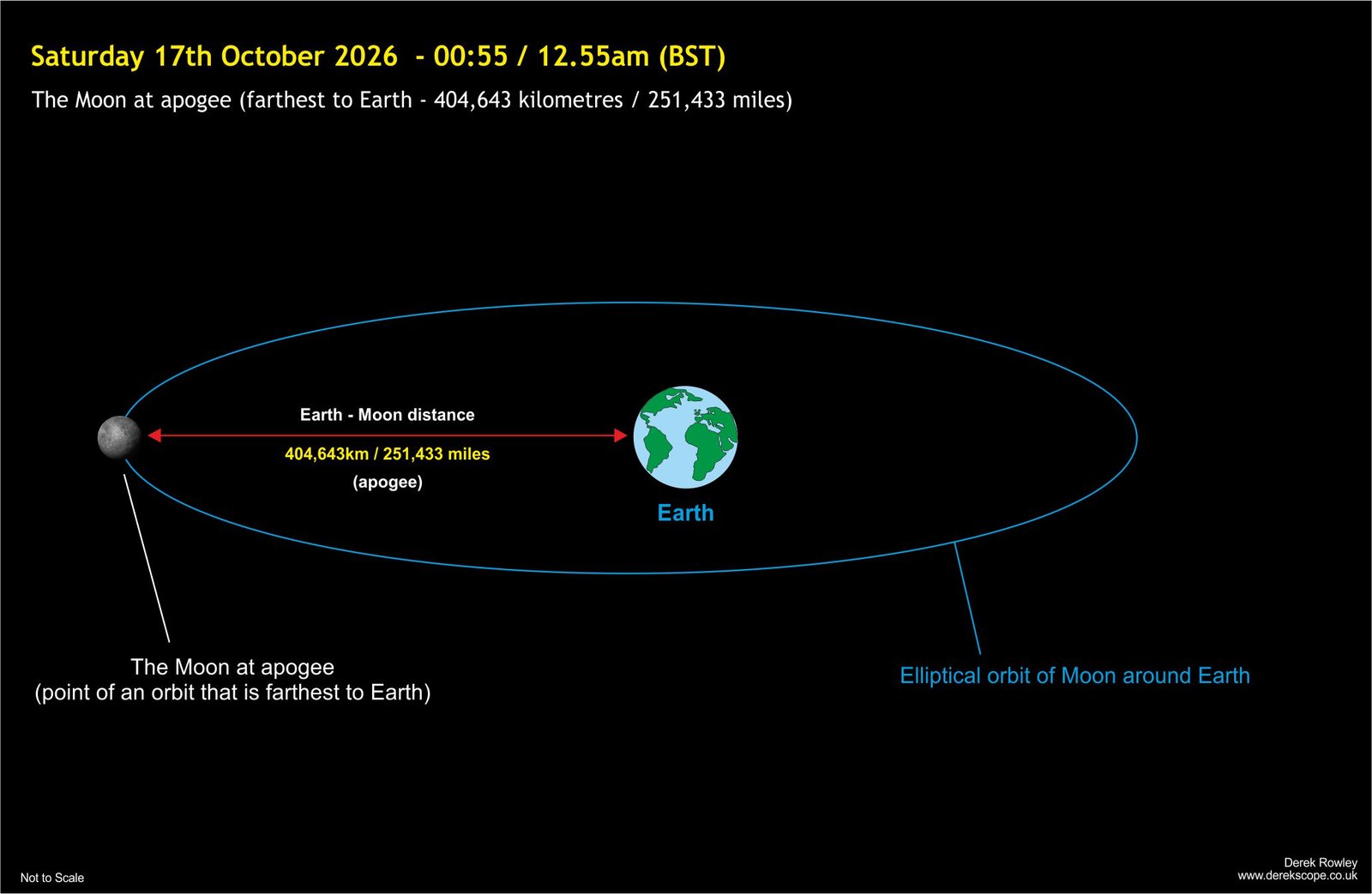
  • The Moon reaches apogee ~ the farthest point in its orbit from Earth.
    o
  • The Moon appears slightly smaller and dimmer in the sky compared to perigee.
    o

2026 Apogee Dates
(Moon Furthest from Earth)

  • Tuesday 13th January
  • Tuesday 10th February
  • Tuesday 10th March
  • Tuesday 7th April
  • Monday 4th May
  • Monday 1st June
  • Thursday 28th June
  • Saturday 25th July
  • Saturday 22nd August
  • Saturday 19th September
  • Friday 16th October
  • Thursday 13th November
  • Friday 11th December

2026 Perigee Dates
(Moon Closest to Earth)

  • Thursday 1st January
  • Thursday 29th January
  • Monday 24th February
  • Saturday 22nd March
  • Sunday 30th March
  • Sunday 19th April
  • Sunday 17th May
  • Monday 15th June
  • Monday 13th July
  • Monday 10th August
  • Sunday 6th September
  • Thursday 1st October
  • Wednesday 28th October
  • Wednesday 25th November
  • Thursday 24th December
    oooo

Posted in Homepage (Posts) | Comments Off on Tuesday 13th January 2026

Monday 12th January 2026

  • Zubenelgenubi is visible to the naked eye under clear, dark sky conditions and can be easily observed with binoculars.
    o
  • Zubenelgenubi (Alpha Librae) is a wide double star: one component shines pale yellow, while the other appears light gray‑white.
    o
  • It is located in the constellation of Libra, the Scales.
  • Naked Eye Visibility
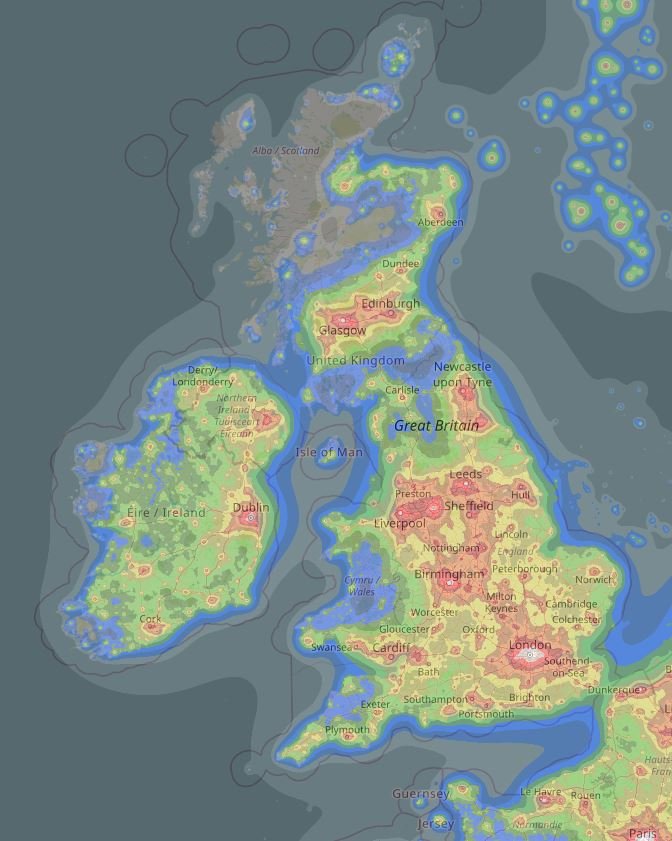
    Zubenelgenubi has an apparent magnitude of 2.75, making it a modestly bright star that is visible without optical aid, even from light-polluted areas.
    o
  • Binocular View
    Using binoculars will reveal that Zubenelgenubi is a fascinating double star system, appearing as two separate points of light.
    o

Posted in Homepage (Posts) | Comments Off on Monday 12th January 2026