signWOW opensthe night sky forDeaf beginners withclear,visual, & hands‑onlearning,made possiblethroughsignWOW kindlygesture in contributing two iPads.
Two signWOW iPads fordiscovering how to capturethe Moon, planets, andstars using simple tools,step‑by‑step guidance,and the support of acommunity that signs,shares, and shinestogether.
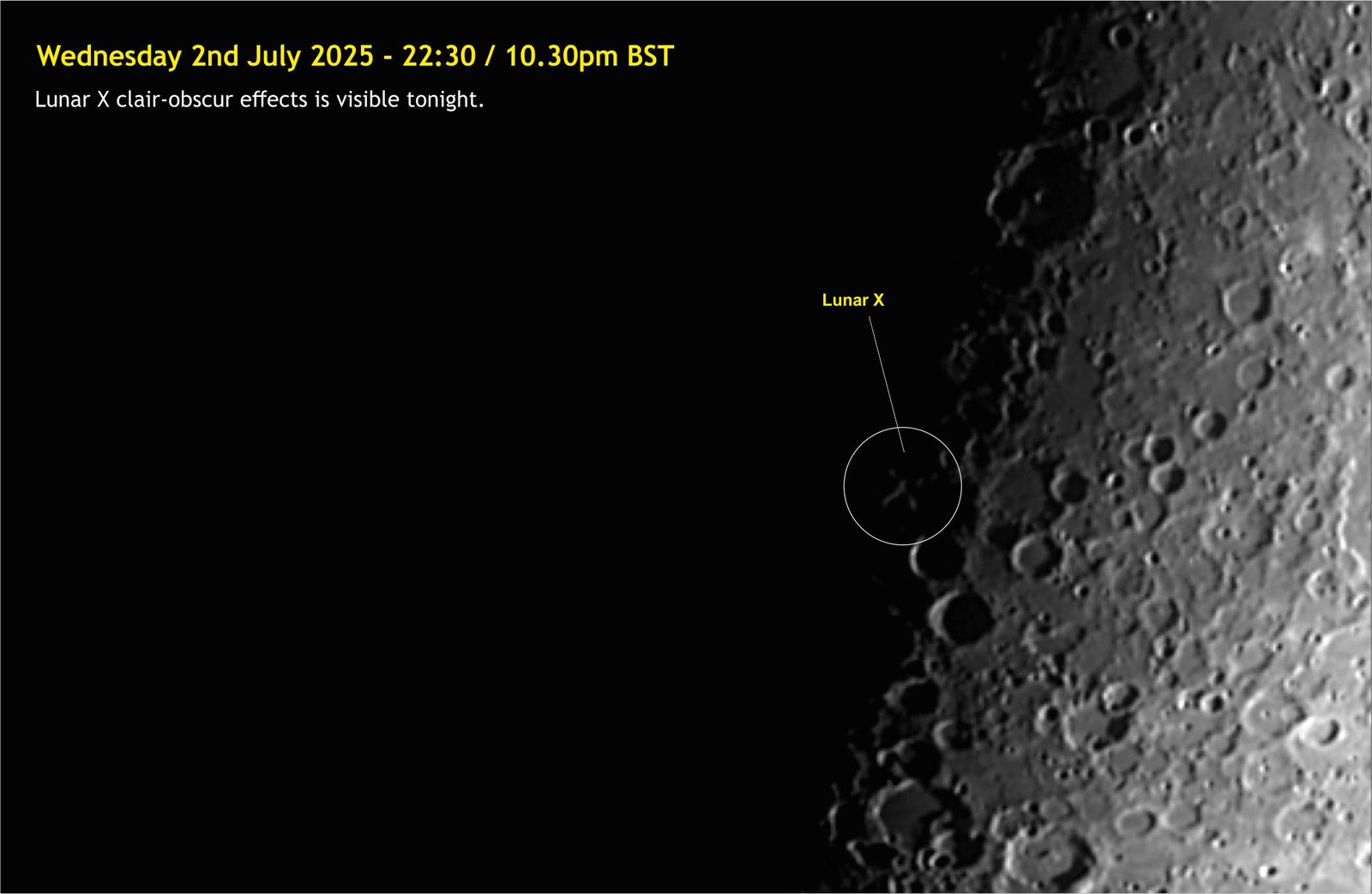
Lunar X is optional features on the moon, visible through a telescope for several hours around the time of the first quarter moon (See my pervious photos of Lunar X).
The next one for Lunar X again will be on Friday 1st August at 10:30 / 10:30am BST.
Posted inHomepage (Posts)|Comments Off on Wednesday 2nd July 2025
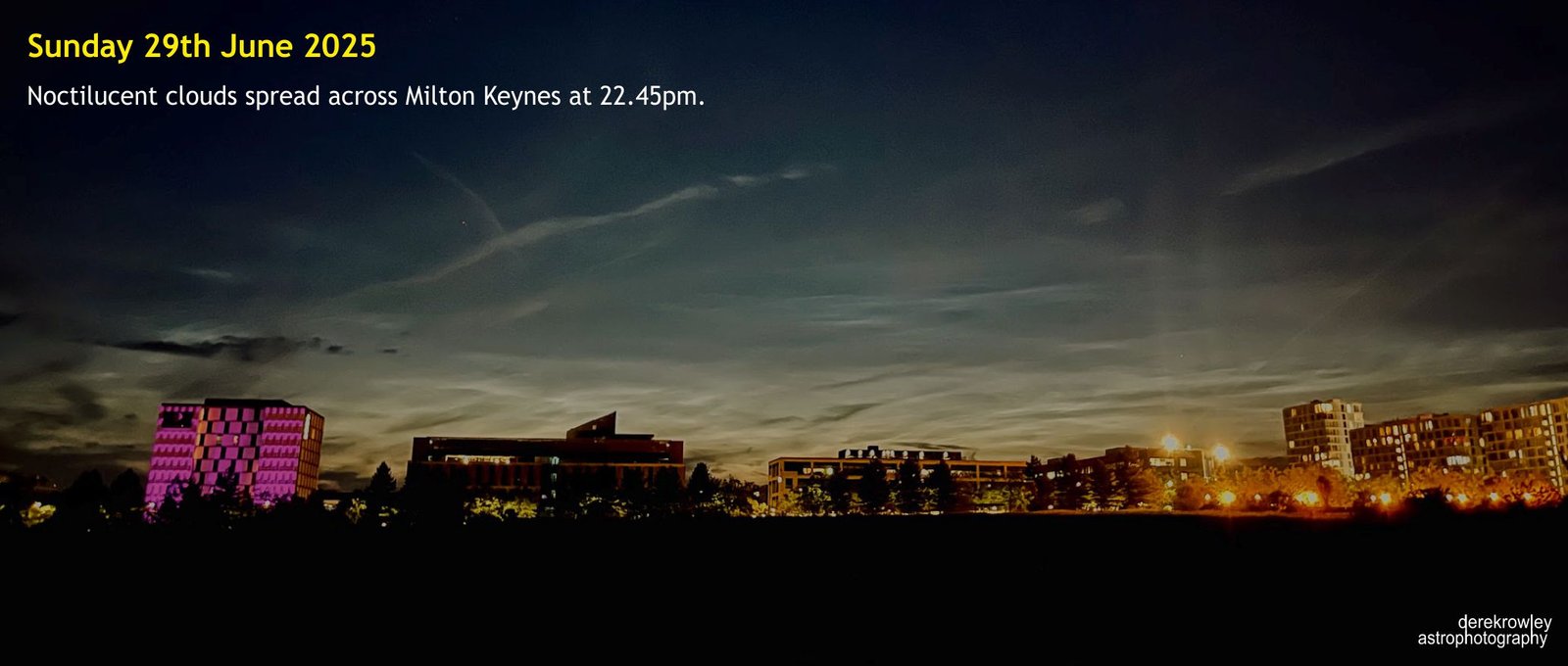
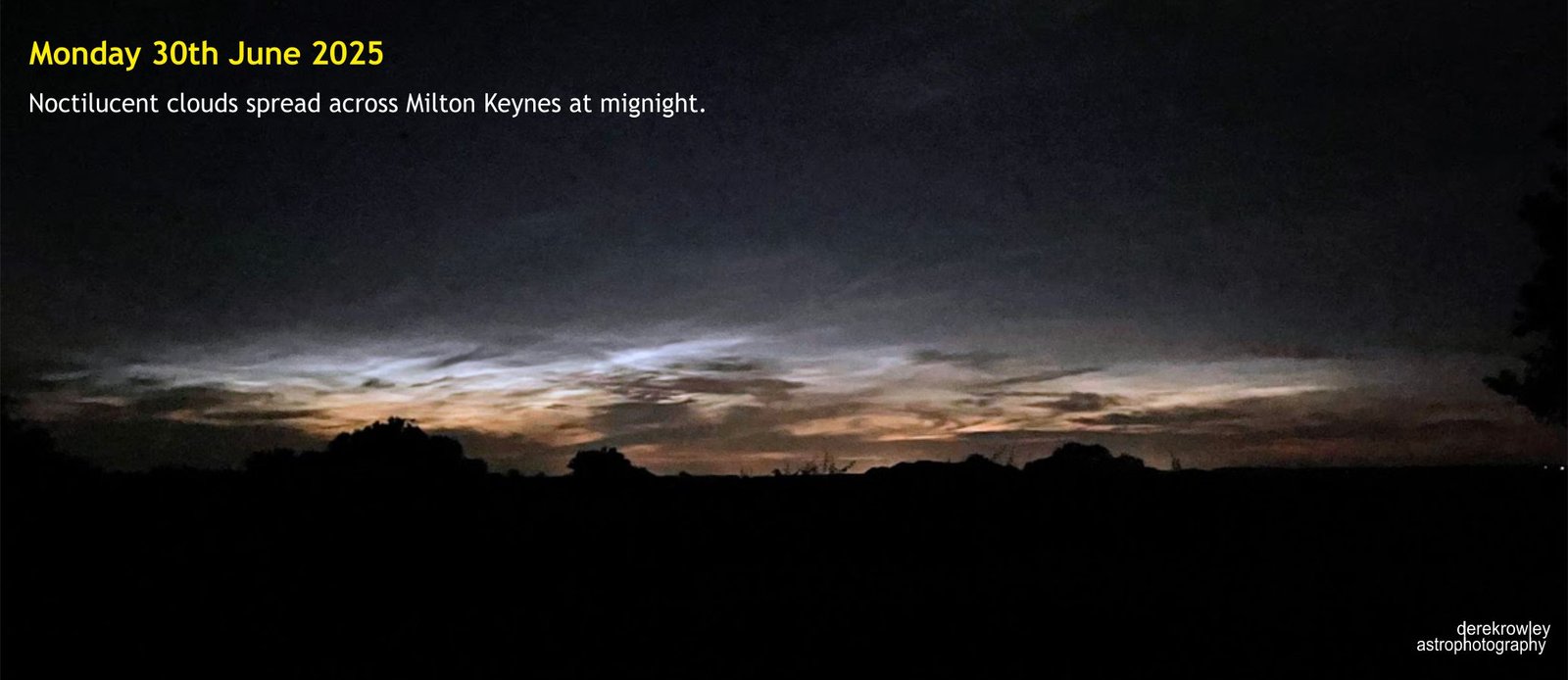
The landscape was illuminated by the noctilucent clouds over the city at Milton Keynes that remained low in the sky between northwest and northeast.
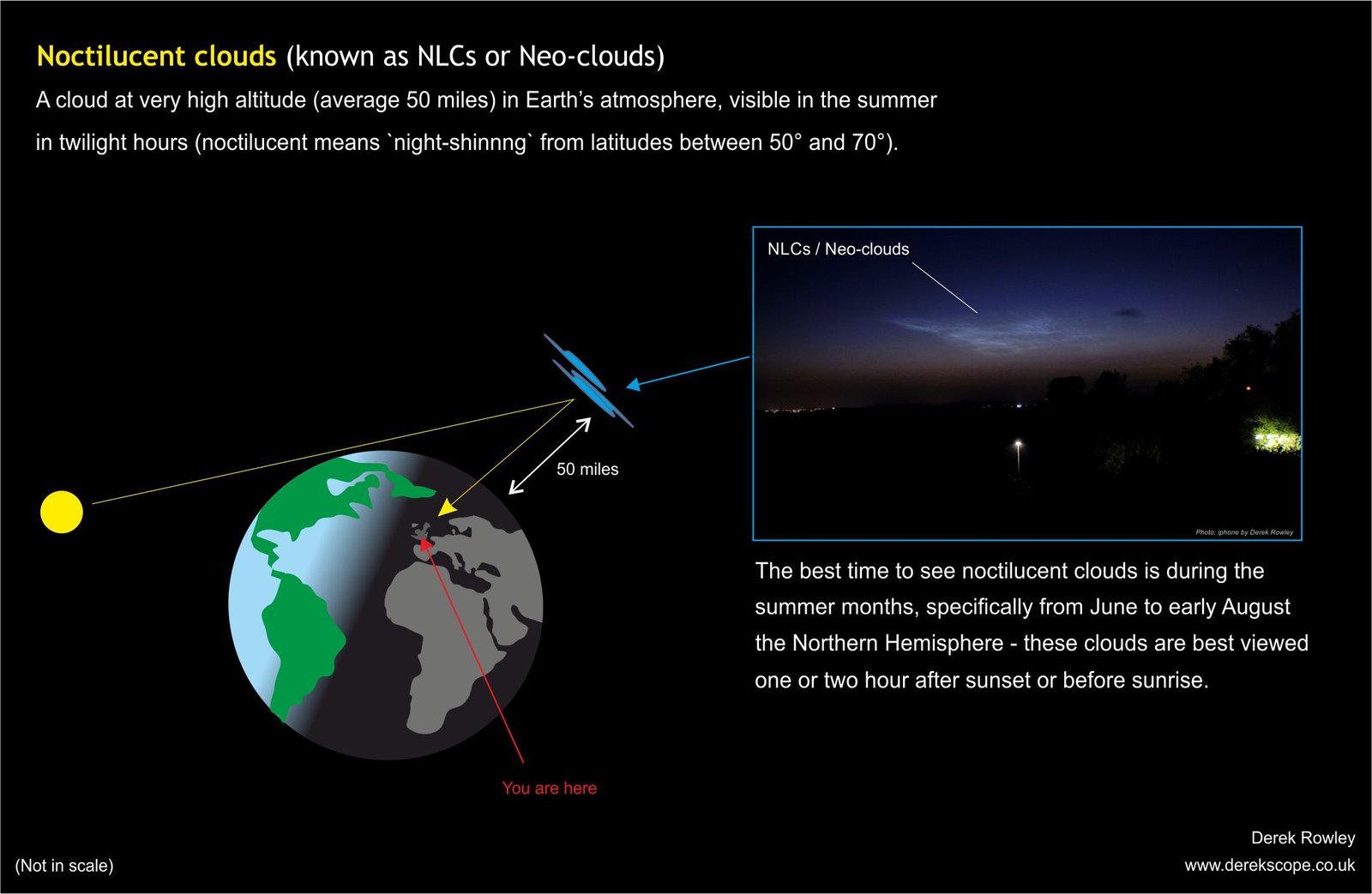
At midnight, Noctilucent clouds are thin, wispy cloudsthat glow with a silvery hue at night when illuminated by sunlight from below the horizon – see diagram below.
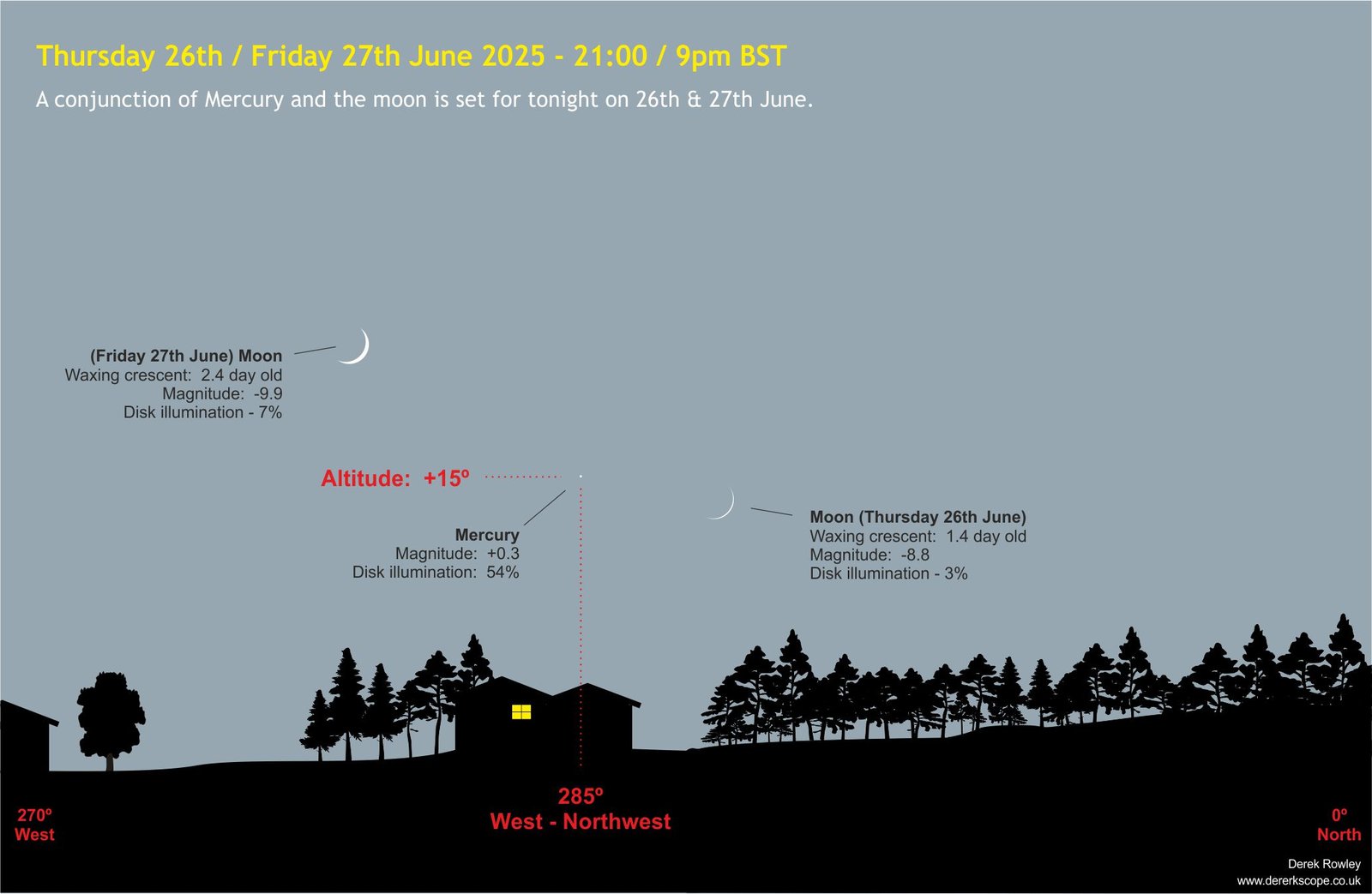
On Thursday 26th The Moon and Mercury will share the same right ascension – the pair will be too widely separated to fit within the field of view of a telescope, but will be visible to the naked eye or through a pair of binoculars, and on Friday 27th, the Moon above left of Mercury.
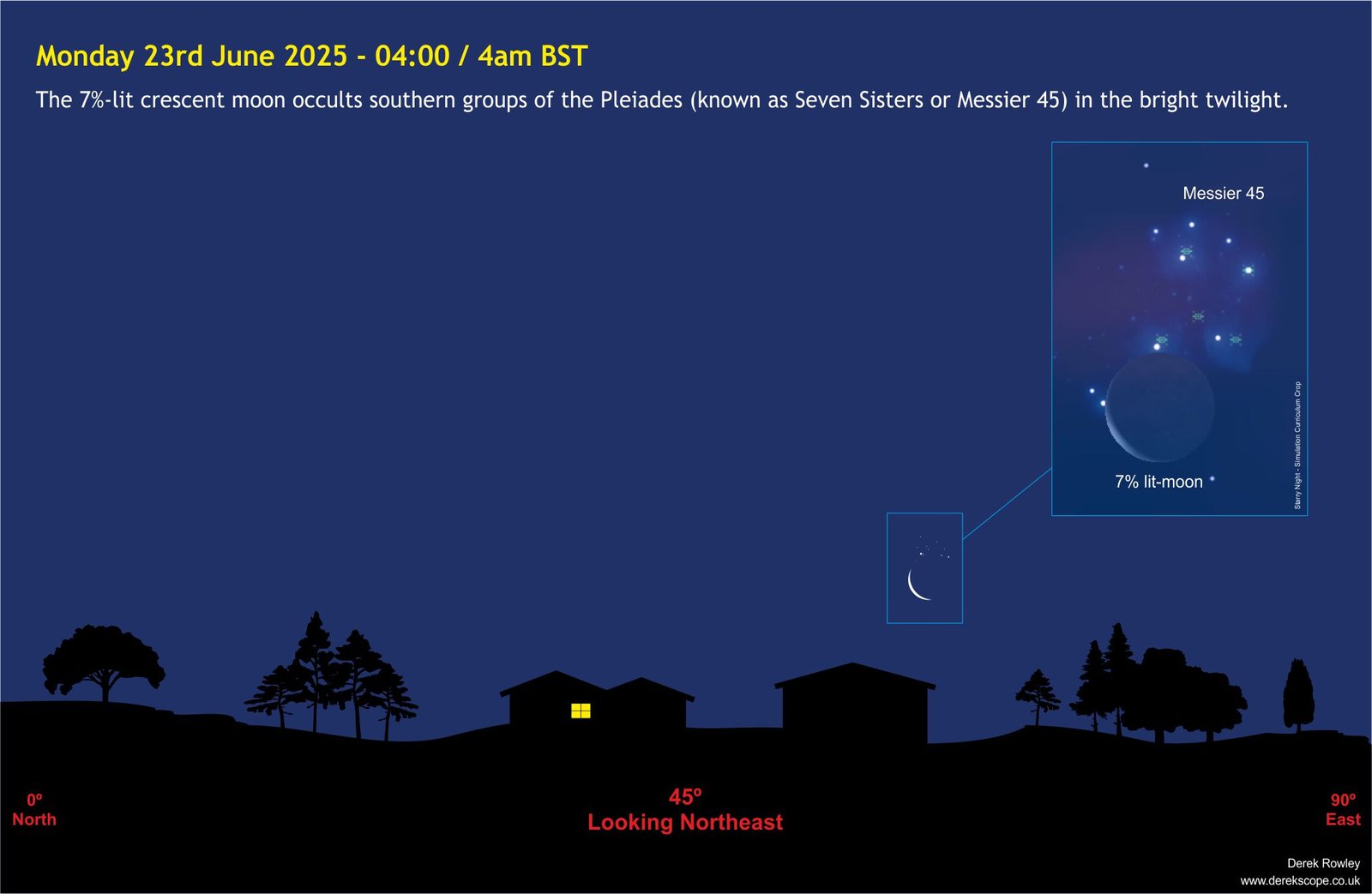
You’ll likely see the Moon and Pleiades very close together in the early morning sky, low on the north-eastern horizon, but not a full occultation – still, it’s a beautiful sight – binoculars will better the view unexpectedly.
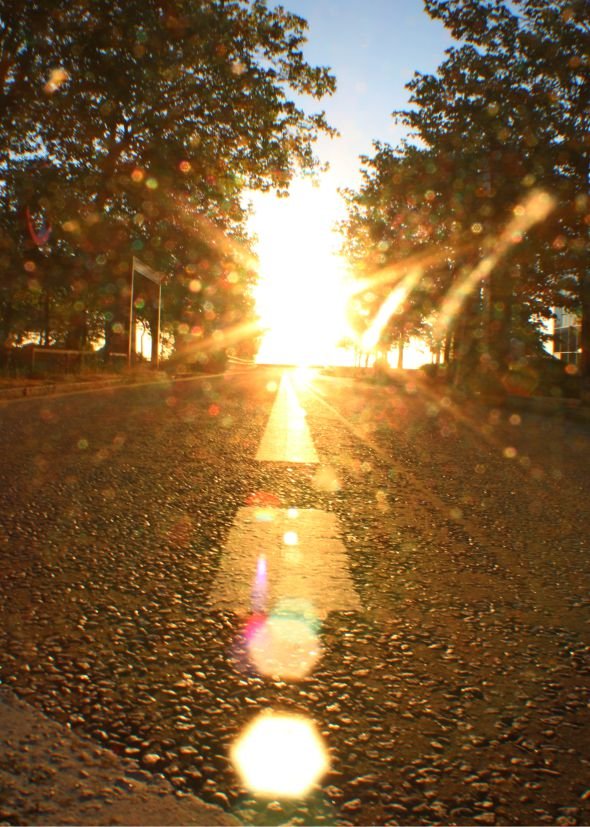
Stonehenge at Milton Keynes Famously, Midsummer Boulevard at the Central Milton Keynes shopping centre, is aligned with the path of the sun at summer solstice every year, so this year 2025 the sunrise will be 04:42am at altitude 48 degree in the east horizon.
This road aligned with the sunrise on the summer solstice conjure echoes of “Stonehenge” where I tracked time with sunlight.
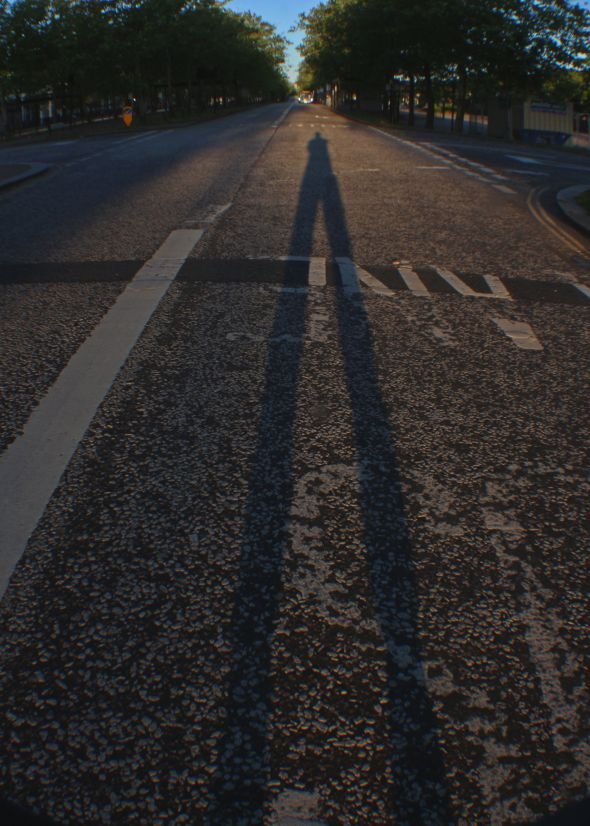
The long shadow stretching behind me as the first light of day peeks over the east horizon.
OOOO
(Enlarge on click above)
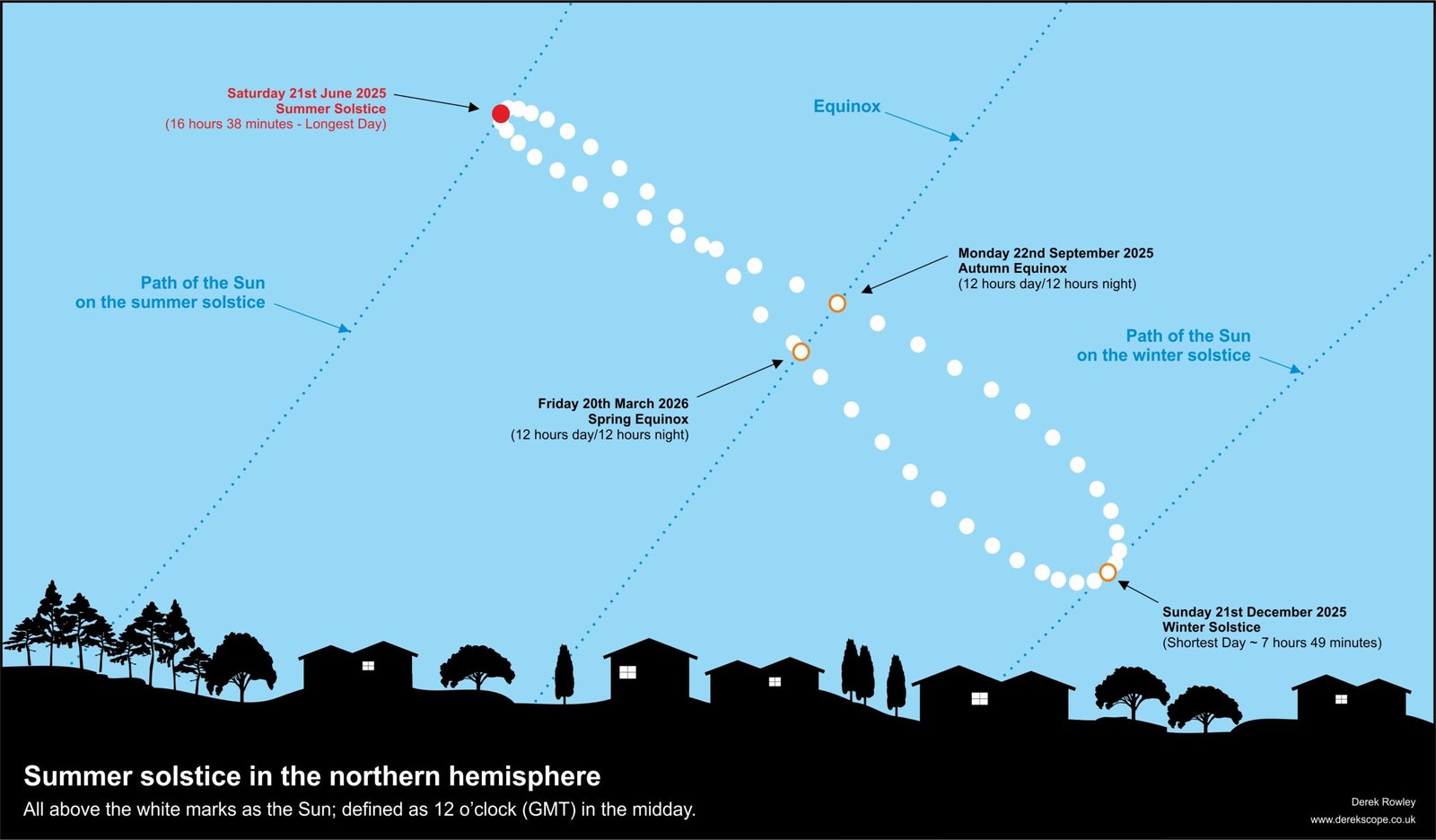
The summer solstice on Saturday, 21st June 2025 marks the longest day of the year in the Northern Hemisphere, when the Sun reaches its highest point in the sky.
This astronomical event occurs because Earth’s axis is tilted 23.44°, causing the Northern Hemisphere to receive the most direct sunlight for around 16 hours 38 minutes to compare in the winter solstice for a whopping 7 hours and 50 minutes. oooo
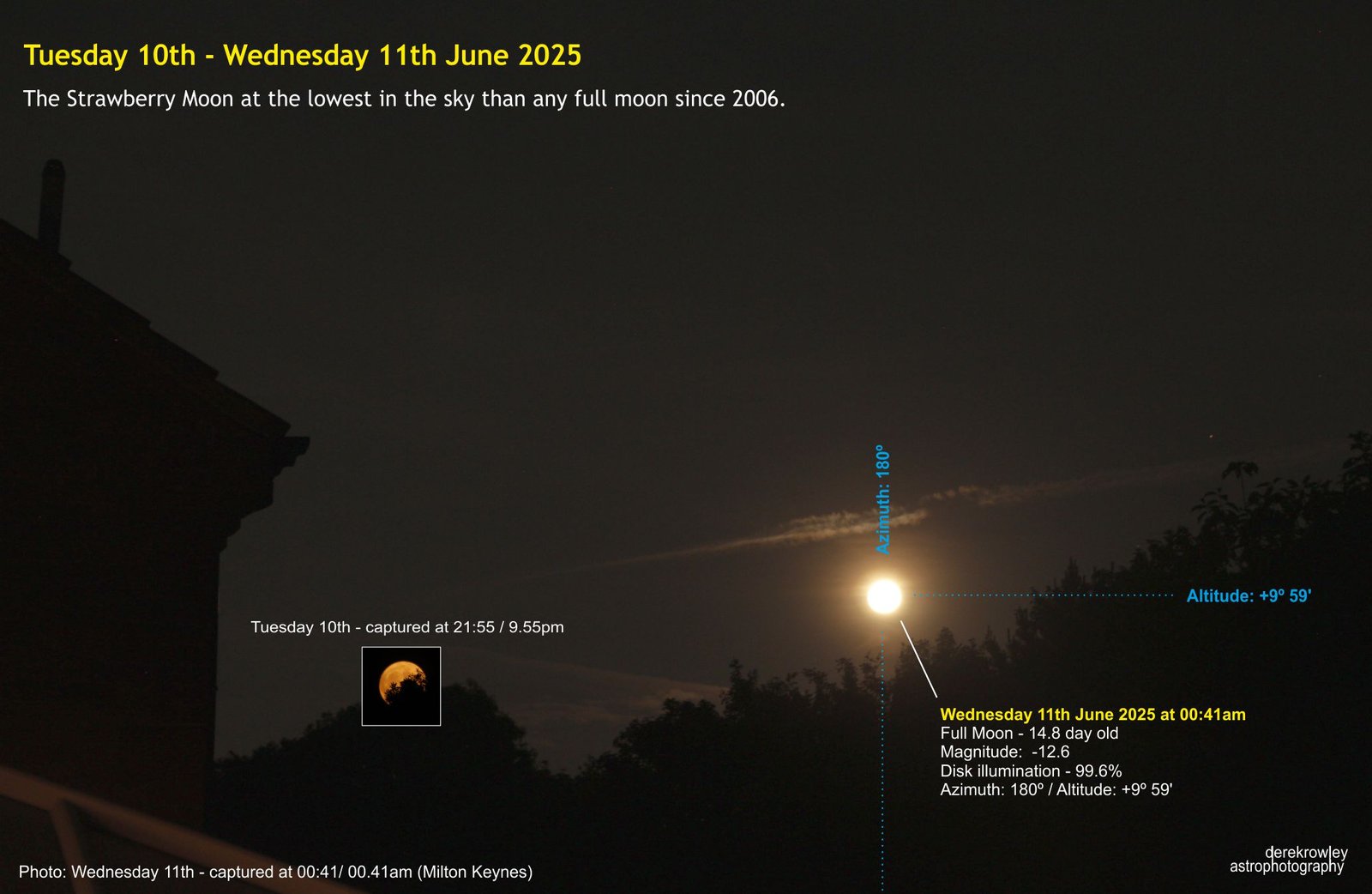
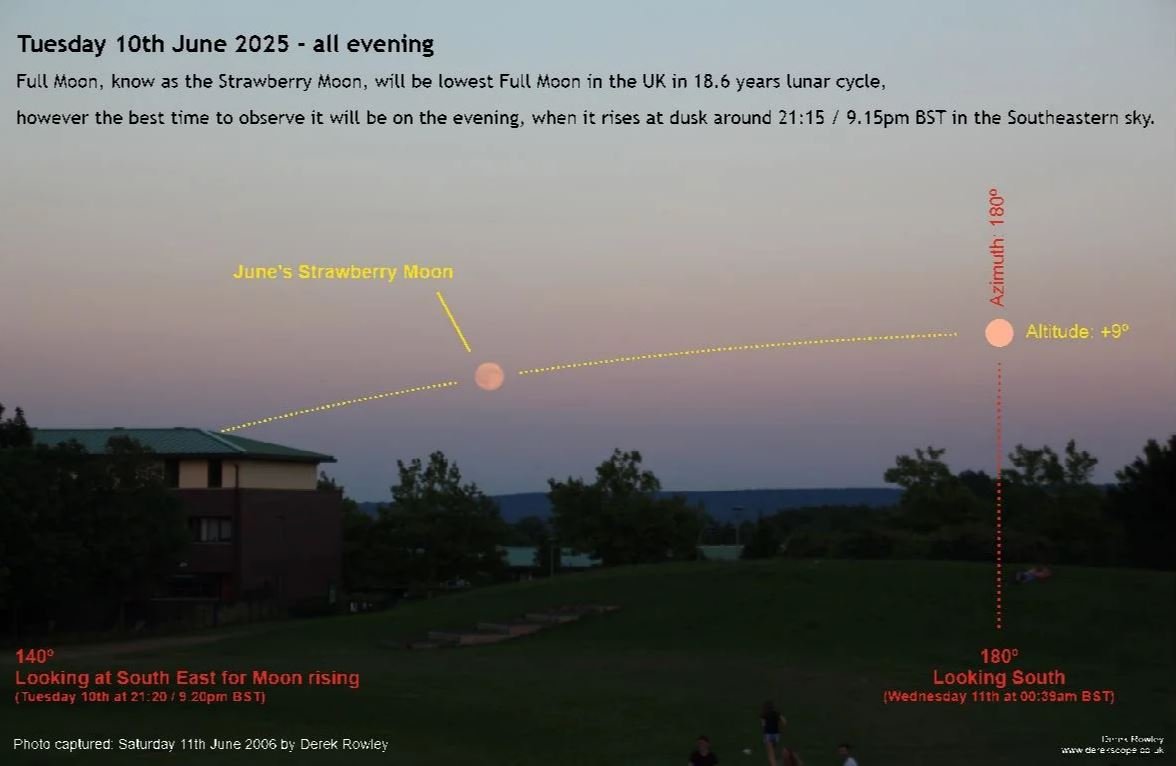
Why the Strawberry Moon is so special this year? The Strawberry Full Moon will be very low in the southern sky ~ making it the lowest Moon in its 18.6-year lunar cycle, and it will appear bigger than it because it is near the horizon.
The last time the full Moon sat this low in the sky was nearly 19 years ago, in 2006 (see my photo above), won’t happen again until 2043.
Posted inHomepage (Posts)|Comments Off on Tuesday 10th June 2025
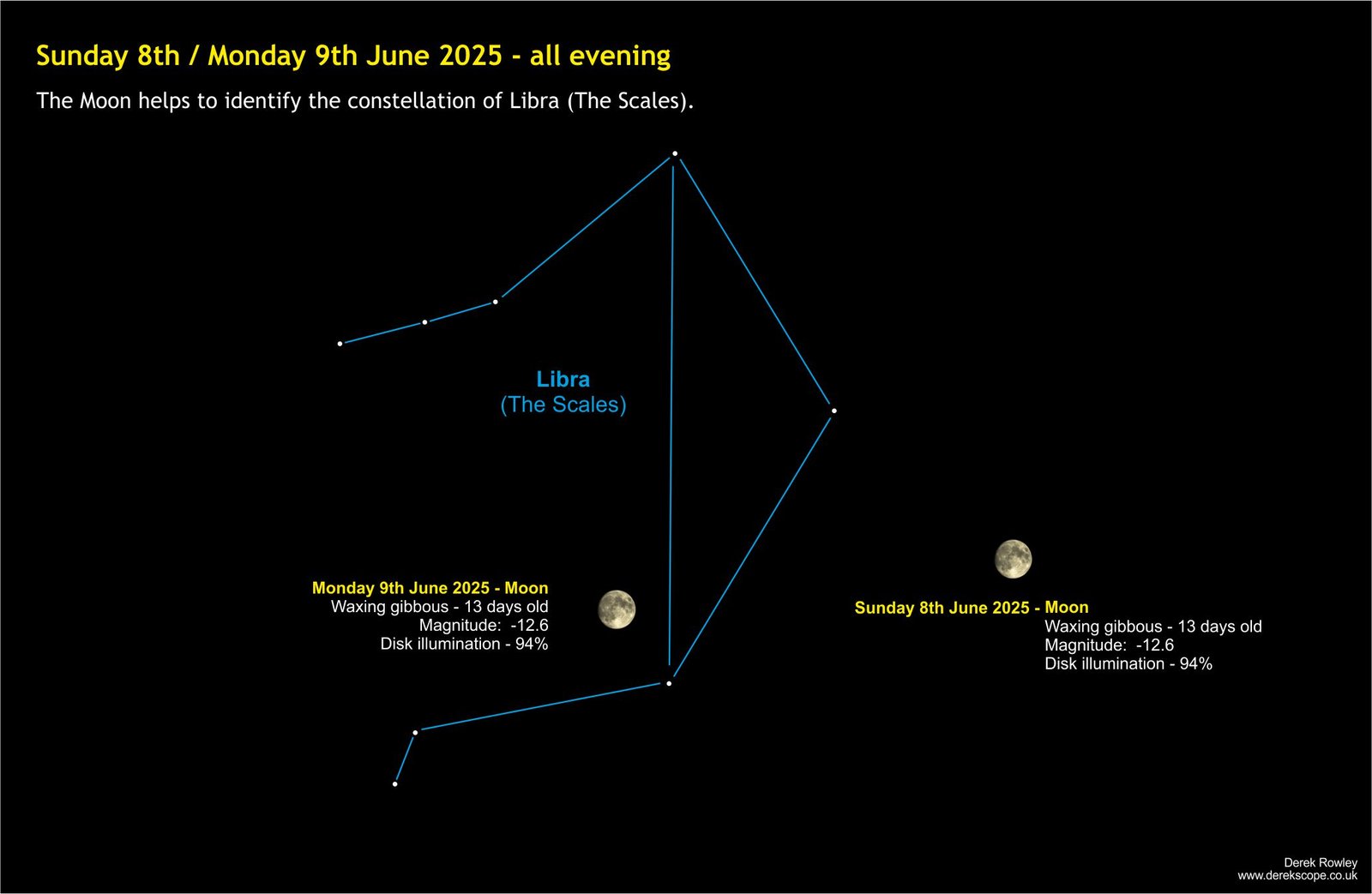
The Moon can indeed help in identifying the constellation Libra (The Scales) – its brilliance makes it easier to locate Libra, especially in the early evening, but the moonlight also makes it harder to see the faint constellation’s stars.
Posted inHomepage (Posts)|Comments Off on Sun 8th / Mon 9th June 2025
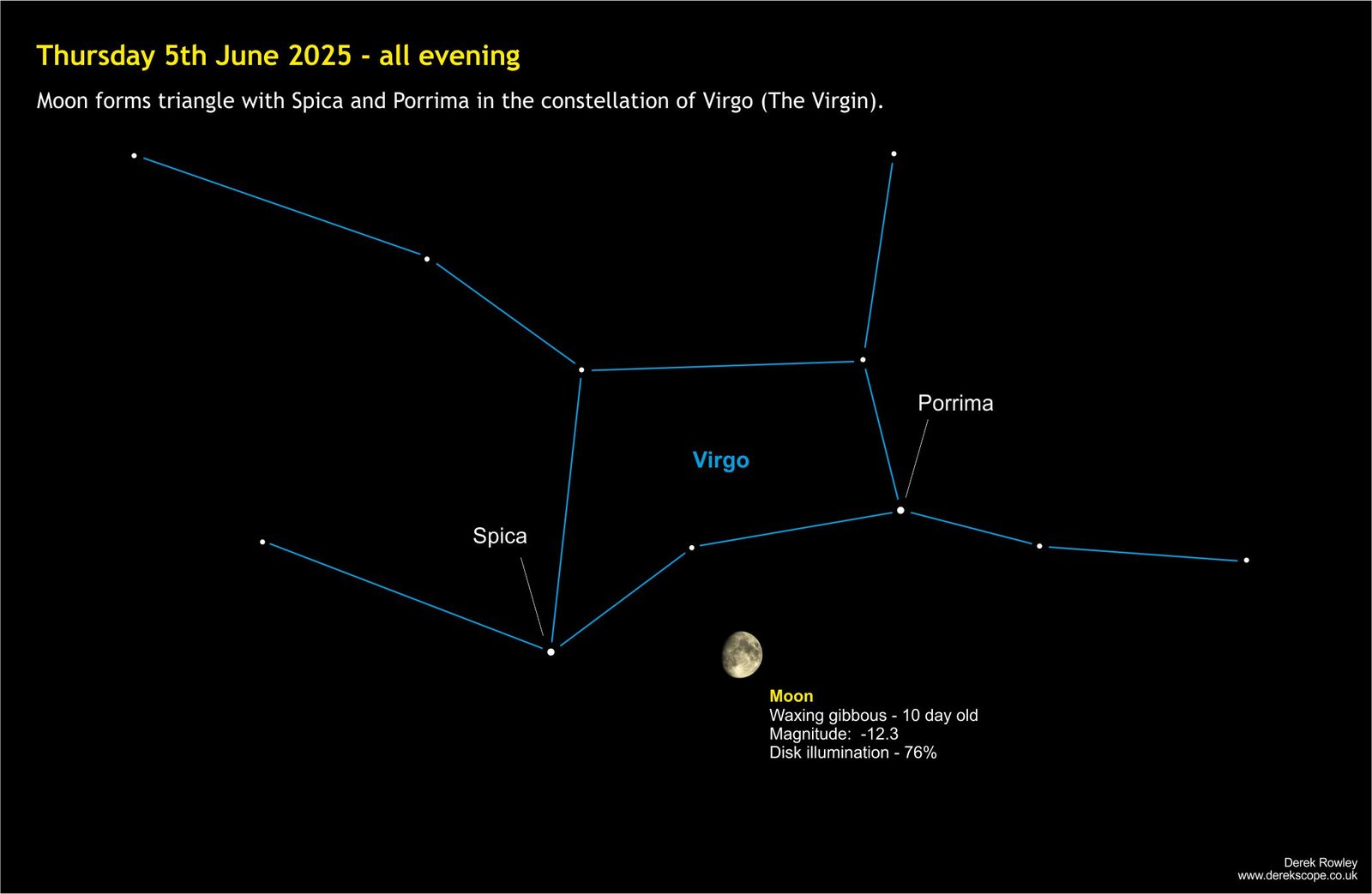
Virgo is a prominent constellation during this summer month in June and is located in the southern sky – tonight the Moon forms triangle with Spica and Porrima making it easier to identify Virgo in the night sky.
Posted inHomepage (Posts)|Comments Off on Thursday 5th June 2025