
- The full moon on Saturday 3 January 2026 is widely classified as a “Moon After Yule”. (Wolf Moon as US moon folklore name ~ In the UK, we call it – Moon After Yule.)
o - The first supermoon of the year, meaning the Moon is nearly at its closest point to Earth (perigee) when it becomes full, so it can appear slightly larger and brighter than a typical full moon.
o
Today’s Full Moon – Video Clip
Saturday 3rd January 2026

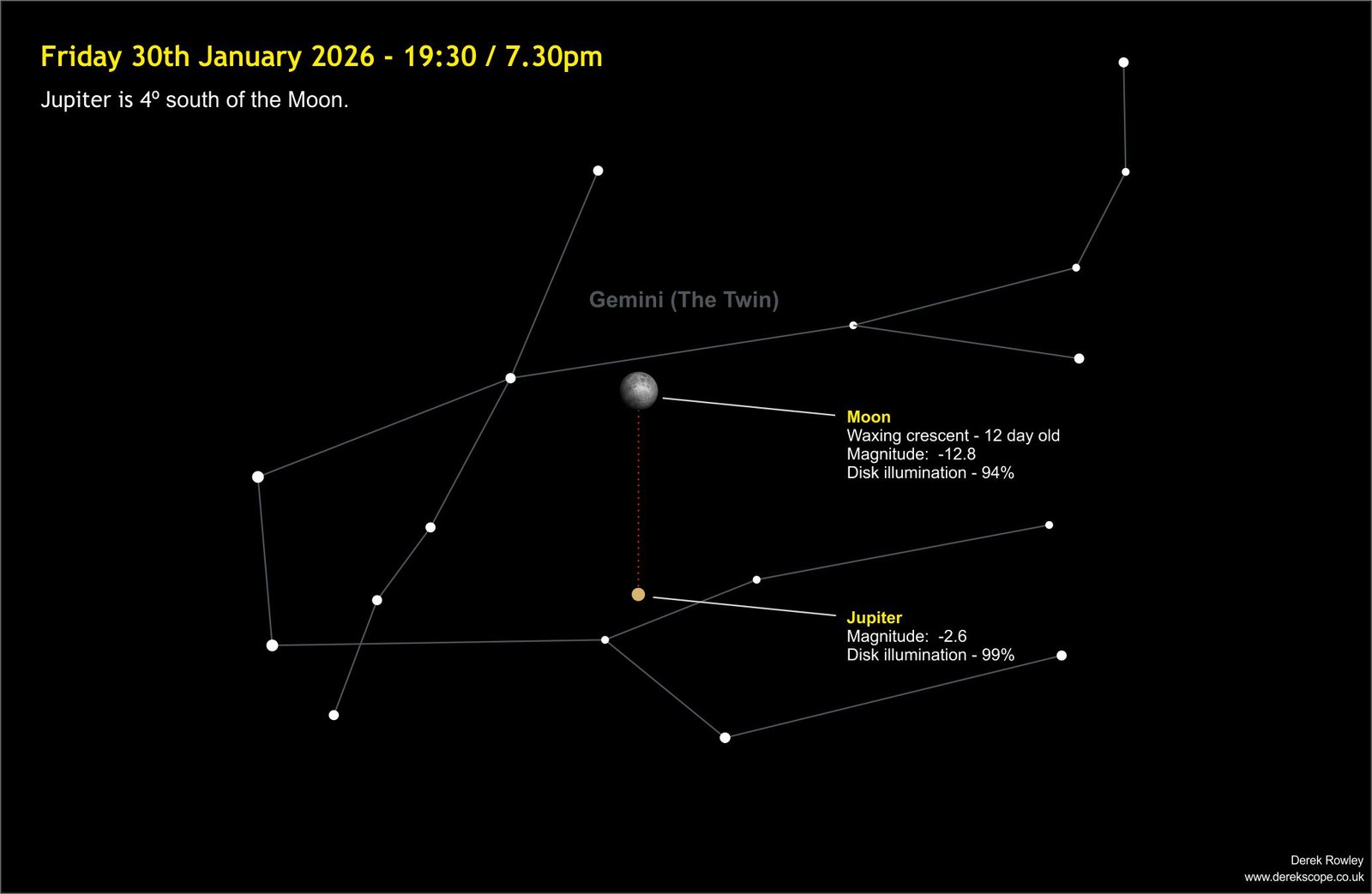
- With binoculars, look for the Moon near Jupiter, you’ll spot all four of Jupiter’s moons.
o
Sunday 4th January 2026
Algol Minima
o


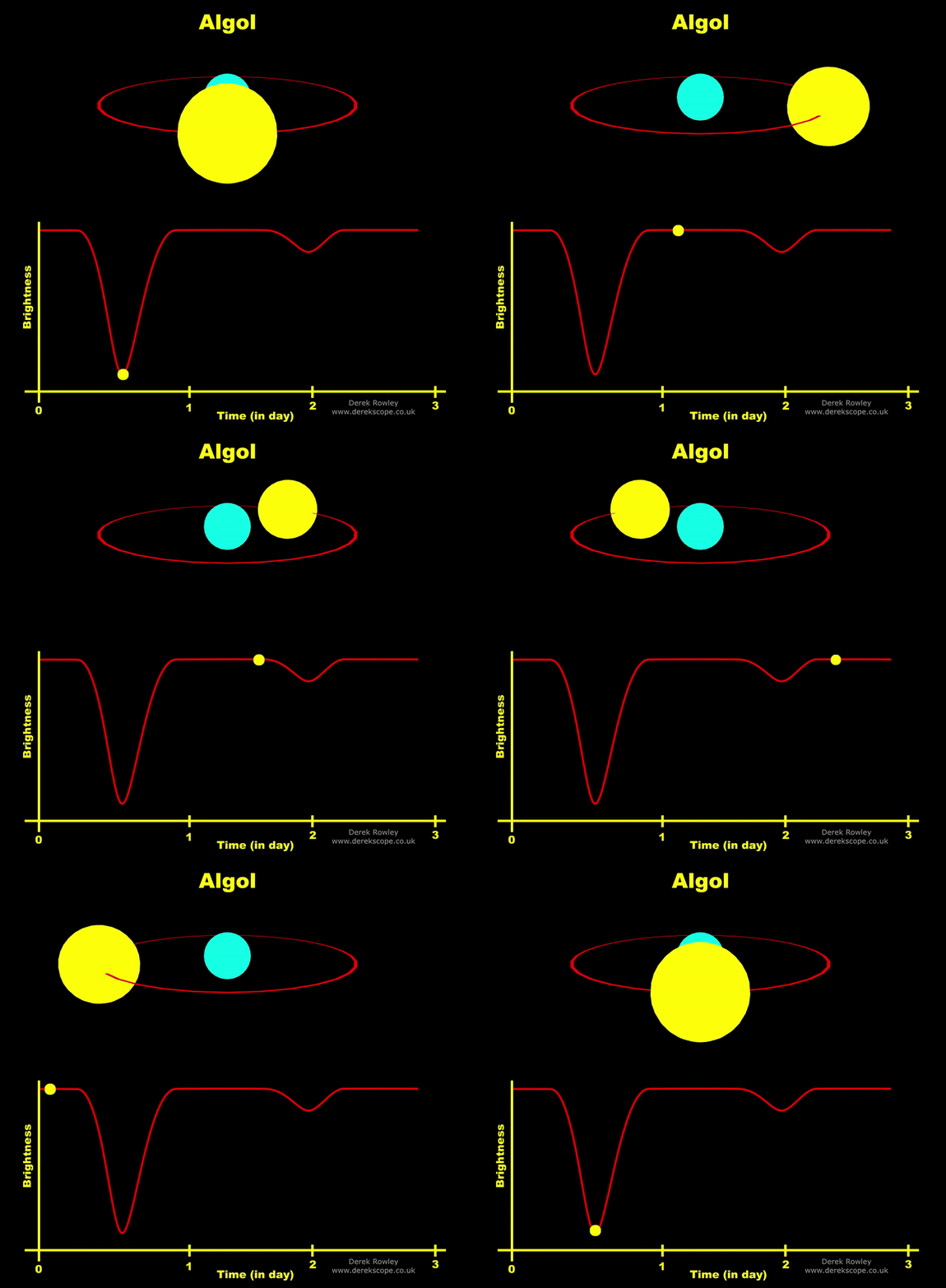
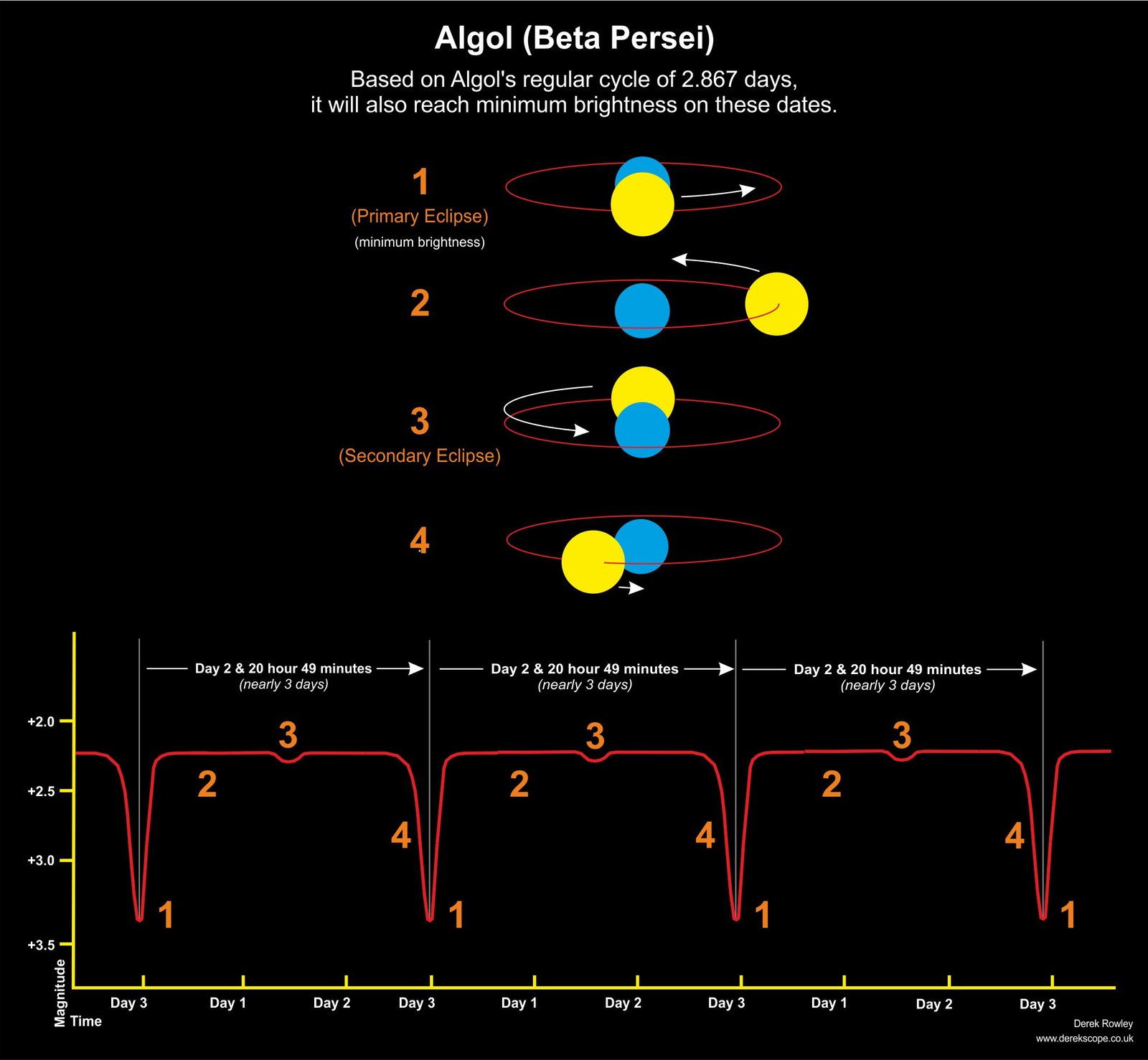
- The bright variable star Beta Persei (Algol) will reach its minimum brightness at 05:13 am in the early morning on Sunday 4th January and will be visible from the UK.
o - Here’s a list of upcoming minimum brightness times for Algol – read more.
oooo
Sat 3rd thru Sun 4th January 2026

- The Quadrantid meteor shower will peak on the night of Saturday 3rd January 2026, with the sharp maximum expected in the early hours of Sunday 4th January.
o - It is one of the strongest annual showers, but its peak lasts only a few hours.
o - Up to 80–120 meteors per hour under ideal dark-sky conditions.
o - Unfortunately, a bright full Moon occurs on 3rd January, which will wash out many fainter meteors ~ Observers should block the Moon from view and focus on the brighter Quadrantids.
o - The Quadrantids are visible across the entire Northern Hemisphere, including the UK, and they radiate from a point in the sky near the constellation Boötes, close to the Ursa Major (the Plough).
o
BSL Version
oooo
Saturday 3rd January 2026
Moon After Yule

- Moon After Yule
– The Moon After Yule is simply the first full moon after the Yule festival (winter solstice).
– Bright midwinter moon, rising in Gemini.
o - It reminds us that although nights are still long, daylight is slowly returning after Yule.
o
- Traditional Full Moon Names and their Meanings
– Full Moon names reflect seasonal changes and natural rhythms observed by early cultures, particularly those influenced by UK colonial traditions and Native American heritage.
o
– Learn more about traditional Full Moon Names and their Meanings ~ Read more.
o
Thursday 1st January 2026

- Jupiter’s largest moon, Callisto will slip into Jupiter’s shadow at midnight, disappearing from view in telescopes.
o - Callisto, being the outermost Galilean moon, experiences fewer eclipses than Io, Europa, or Ganymede.
o
BSL Version
oooo
Thursday 1st January 2026
The Moon at perigee

- The Moon will reach perigee, its closest point to Earth, at 21:44 / 9.44pm today.
o - Already quite large and bright in the constellation Taurus , as it’s approaching full phase and perigee.
o
o
2026 Perigee Dates
(Moon Closest to Earth)
- Thursday 1st January
- Thursday 29th January
- Monday 24th February
- Saturday 22nd March
- Sunday 30th March
- Sunday 19th April
- Sunday 17th May
- Monday 15th June
- Monday 13th July
- Monday 10th August
- Sunday 6th September
- Thursday 1st October
- Wednesday 28th October
- Wednesday 25th November
- Thursday 24th December
2026 Apogee Dates
(Moon Furthest from Earth)
- Tuesday 13th January
- Tuesday 10th February
- Tuesday 10th March
- Tuesday 7th April
- Monday 4th May
- Monday 1st June
- Thursday 28th June
- Saturday 25th July
- Saturday 22nd August
- Saturday 19th September
- Friday 16th October
- Thursday 13th November
- Friday 11th December
oooo
Wishing you all the best for 2026

(This photo of Northern Lights was captured
in Milton Keynes on Friday 10th May 2024.)
oooo
Stay up-to-date with all of our most interesting
observational highlights for this month
by following us on social media.
OOOO
Follow me on
Instagram / Facebook
oooo
Feedback
- We’d love your feedback on how our website and infographics help you enjoy the night sky.
o - Your thoughts will guide us in making astronomy more accessible and inspiring for everyone.
o
oooo
- Please response – click here for your feedback
oooo
Astronomy Highlights for January 2026
- Your guide to the night sky this month, and a guide for binoculars, and telescope deaf owners, compiled by Derek Rowley.
o - Click the blue link below for more information;
oooo
Astronomy Highlights for January 2026
( BSL
is available to make this event accessible.)
oooo
Sunday 28th December 2025
Quadrantids Meteor Shower starts tonight

- That date marks the beginning of its activity window, which runs from Sunday 28th December 2025 to Monday 12th January 2026, with a sharp peak on Saturday 3rd thru Sunday 4th January 2026.
o - Meteors appear to radiate from the constellation Boötes, near the Big Dipper.
o - The radiant rises late in the evening for UK observers.
o