
OOOO
| Abbreviation: UMa (Ursa Major) |
| English Name: The Great Bear |
| Genitive: Dubhe |
| Hemisphere: Northern Hemisphere |
| Location: Between the constellations of Canes Venatici and Lynx. |
| Visible between latitudes: +90 and -30 degrees |
| Best season: Spring |
| Seen in three seasons: Winter, Spring and Summer |
| Best seen in: Circumpolar, better in April (This constellation of Ursa Minor stays in the sky all the year.) |
| Seen between: October and December |
| Right Ascension (RA): 11 hour |
| Declination (DEC): +50 degrees |
| Area (square degrees): 1,280 (3rd) |
OOOO
Ursa Major (The Great Bear)
- Famous the seven stars forming the asterism known as `The Plough`, sometimes, `The Big Dipper` are known well to nearly everyone living in Northern Hemisphere.
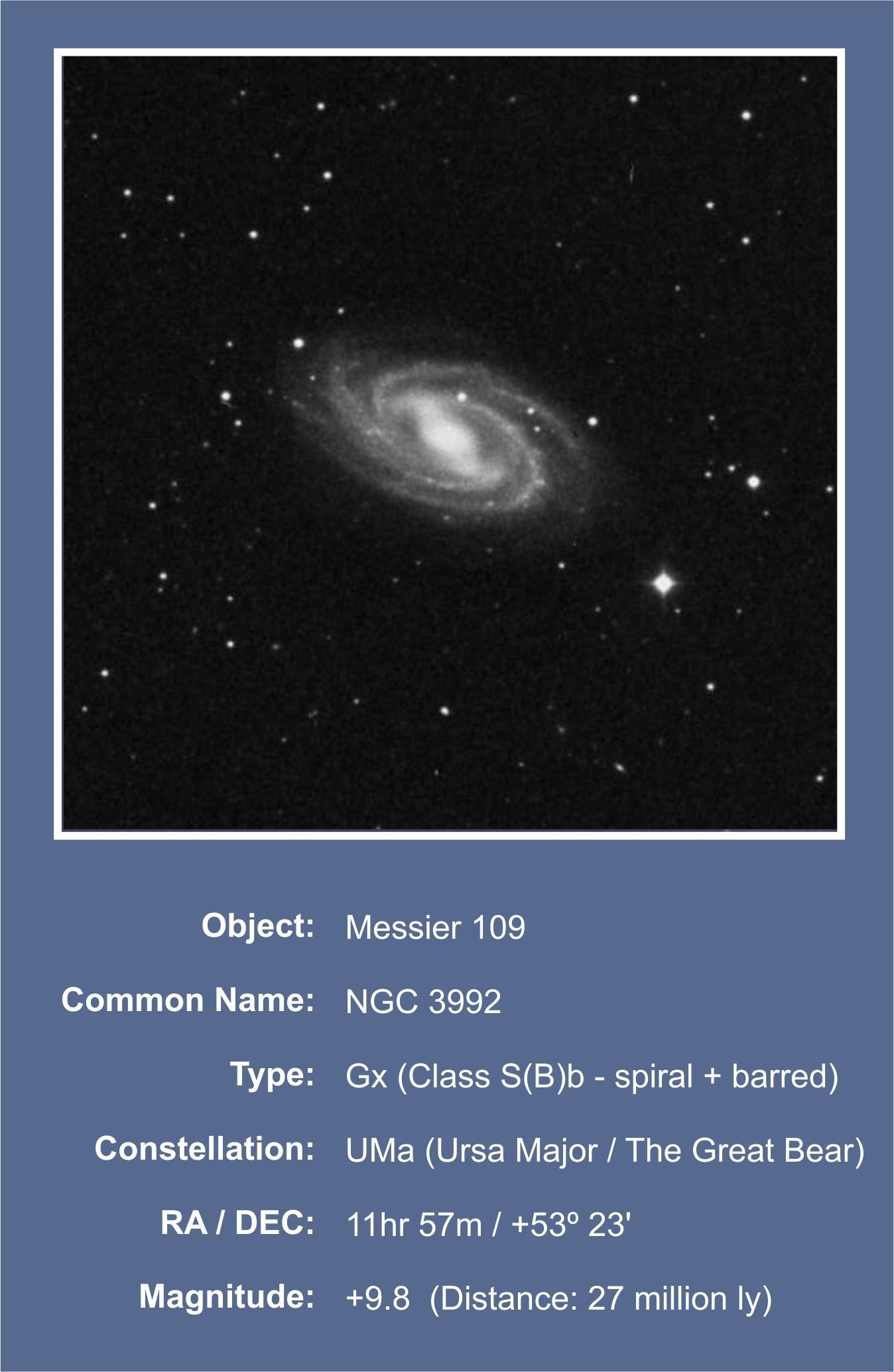
o - It contains no open clusters or diffuse nebula because of far away from the galactic plane, it does have many galaxies (although many of them are faint), including several Messier Objects (M81, M82, M101, M108 and M109) as well as M97 – Owl Nebula (Planetary Nebula).
o - Ursa Major Moving Cluster, also known as Collinder 285 (C285), all stars in Moving Cluster, except for Dubhe and Alkaid, are moving in roughly the same direction at roughly the same speed through the space.
o - Using two stars; Dubhe and Merak, which is useful pointer toward North (Polaris at Ursa Minor).
OOOO
OOOO
Messier Objects in Ursa Major
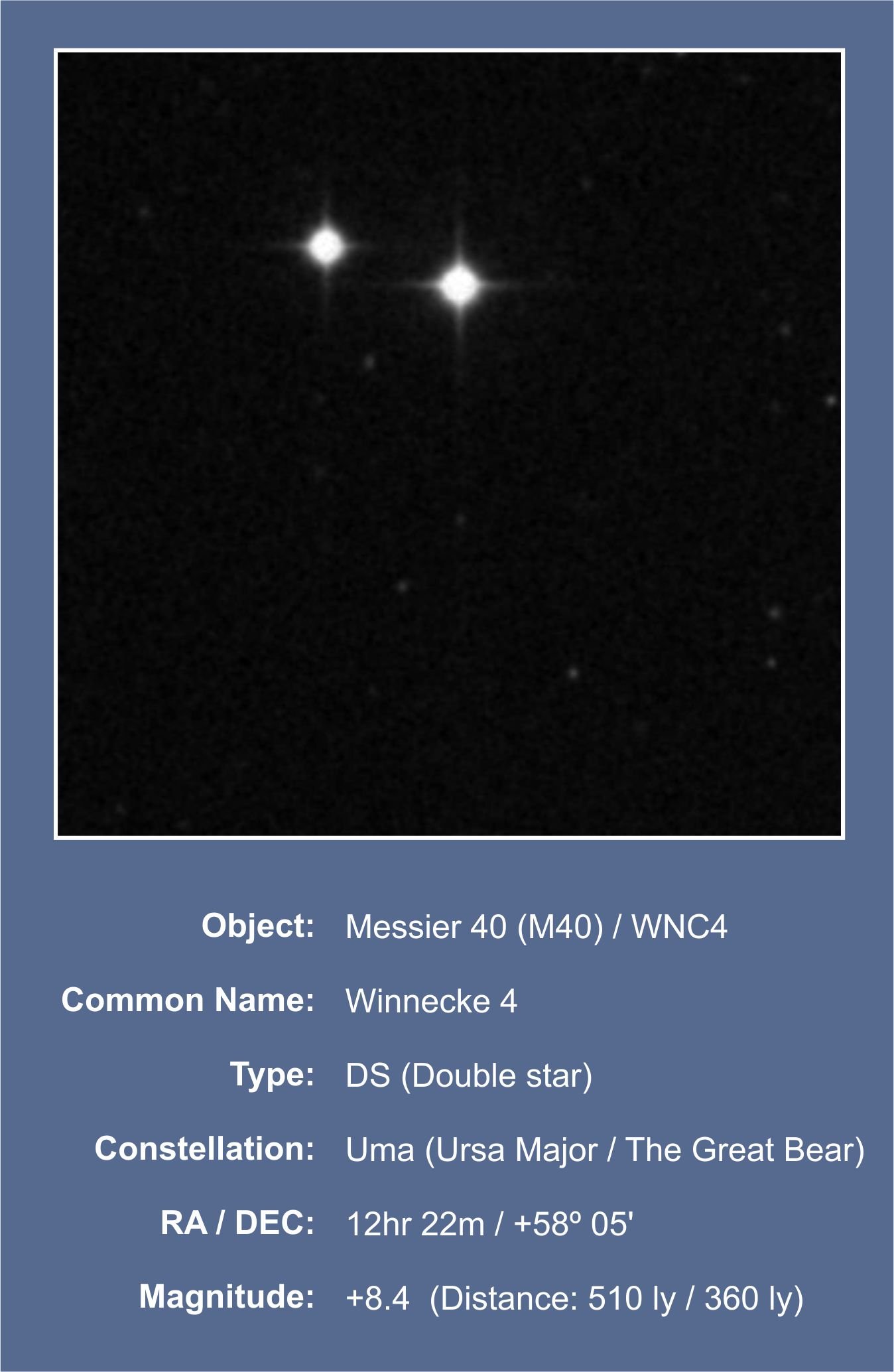
- Messier 40
Two stars; known as Winnecke 4 or WNC 4, Charles Messier was searched for any nebula, he was mistake to spot its as nebula, really he saw was a double star – very near each other and very small. They have always appeared as a wide pair to observers with better telescopes to compare Charlies Messier’s telescope in the past. (Magnitude:- +9.6 and 10.1)
oooo
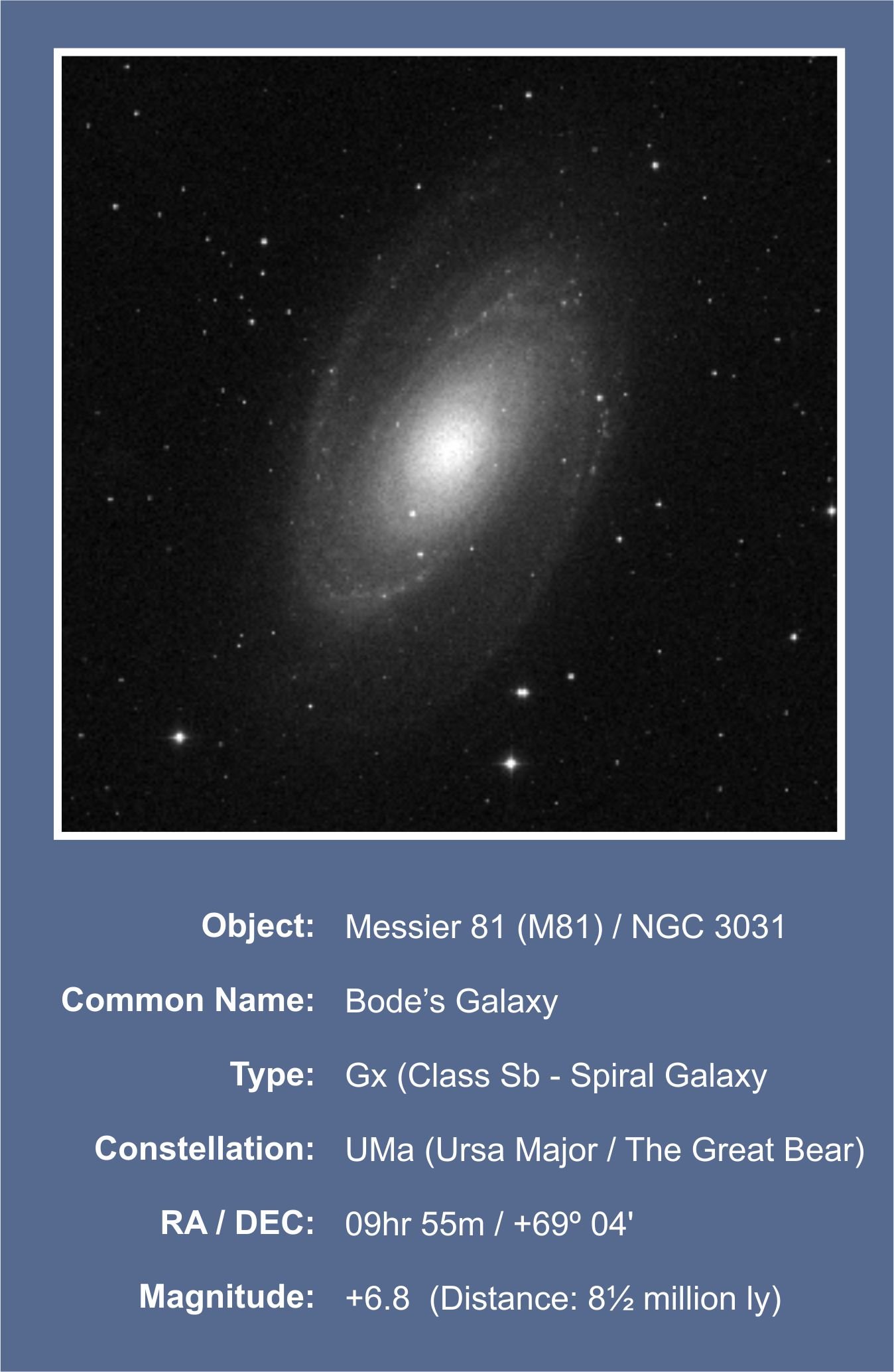
- Messier 81
Also known as Bode’s Galaxy or NGC 3031, visible in binoculars and appearing extremely large, elongated with extremely bright nucleus.
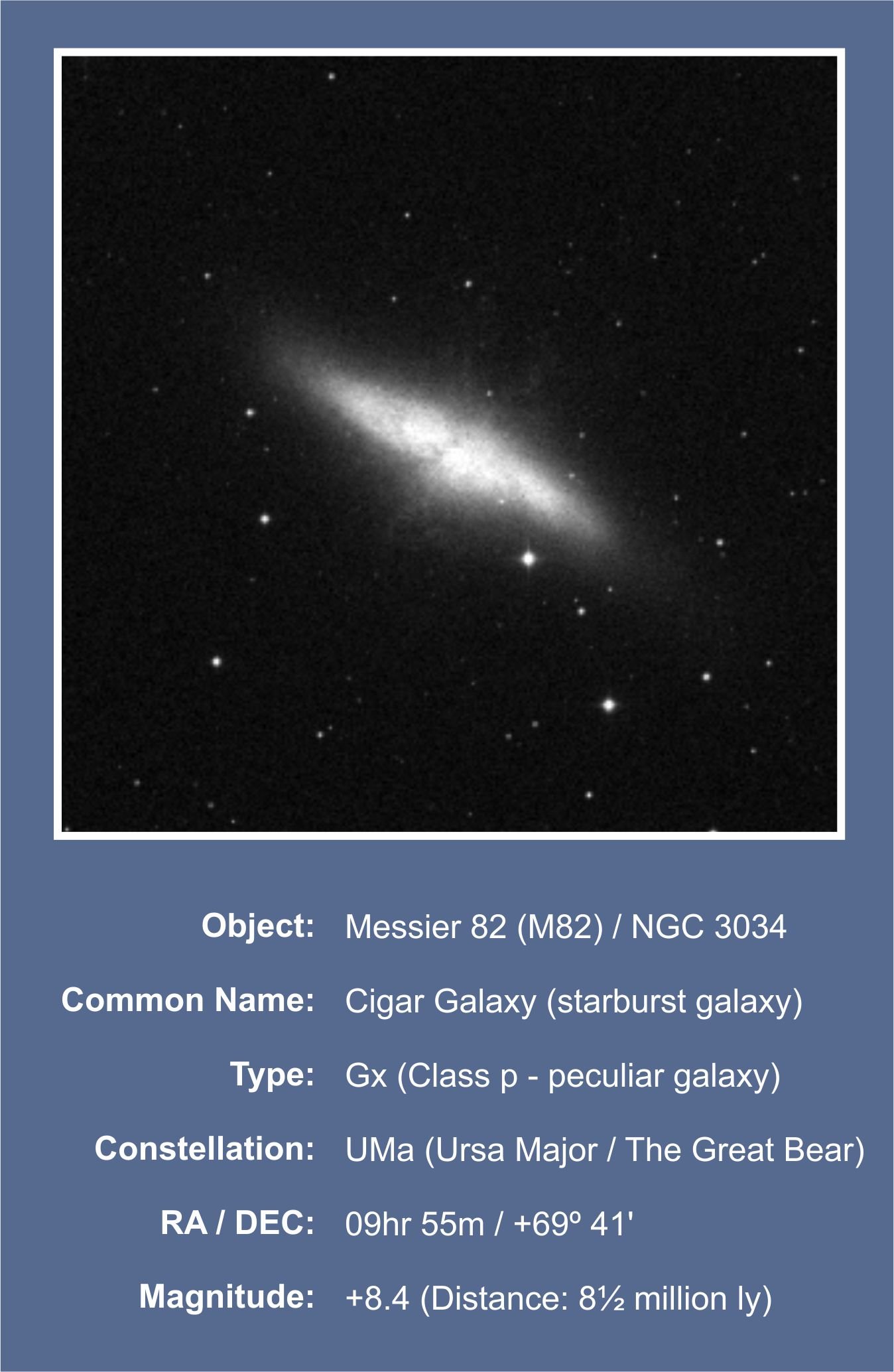
- Messier 82
Slightly fainter than M36, but is larger – sometimes be resolved with binoculars.
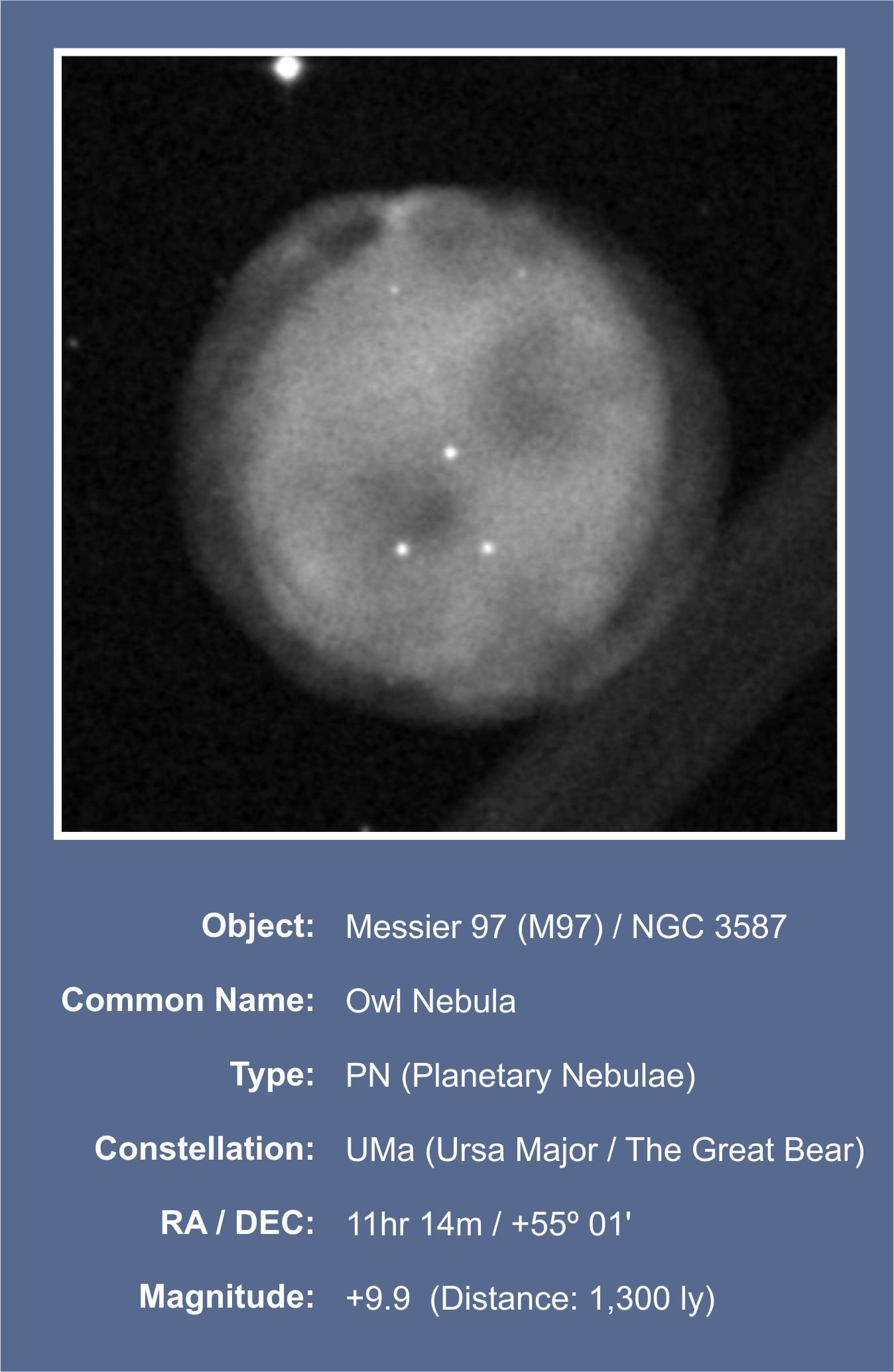
- Messier 97
Planetary Nebula; also known as The Owl Nebula – resembles the face of an owl with two dark “eyes” but not visible in binoculars, appearing as bluish disk with 4-inch telescopes. A telescope of 8-inch or more is required to show some structure.
oooo
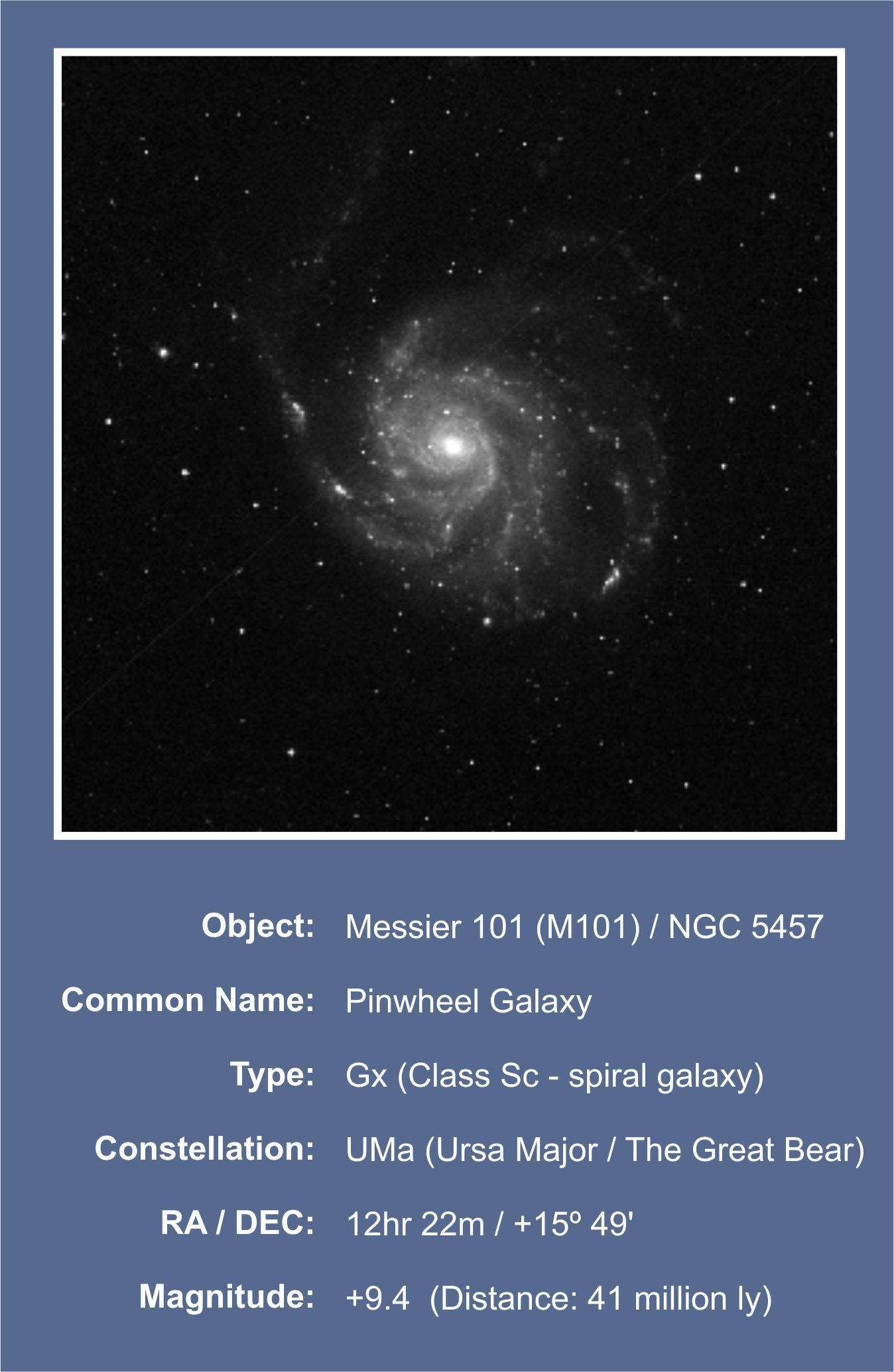
- Messier 101
Very Large Open Cluster, almost the diameter of the Full Moon – hazy spot in binoculars, but resolves into a large numbers of stars by a telescope.
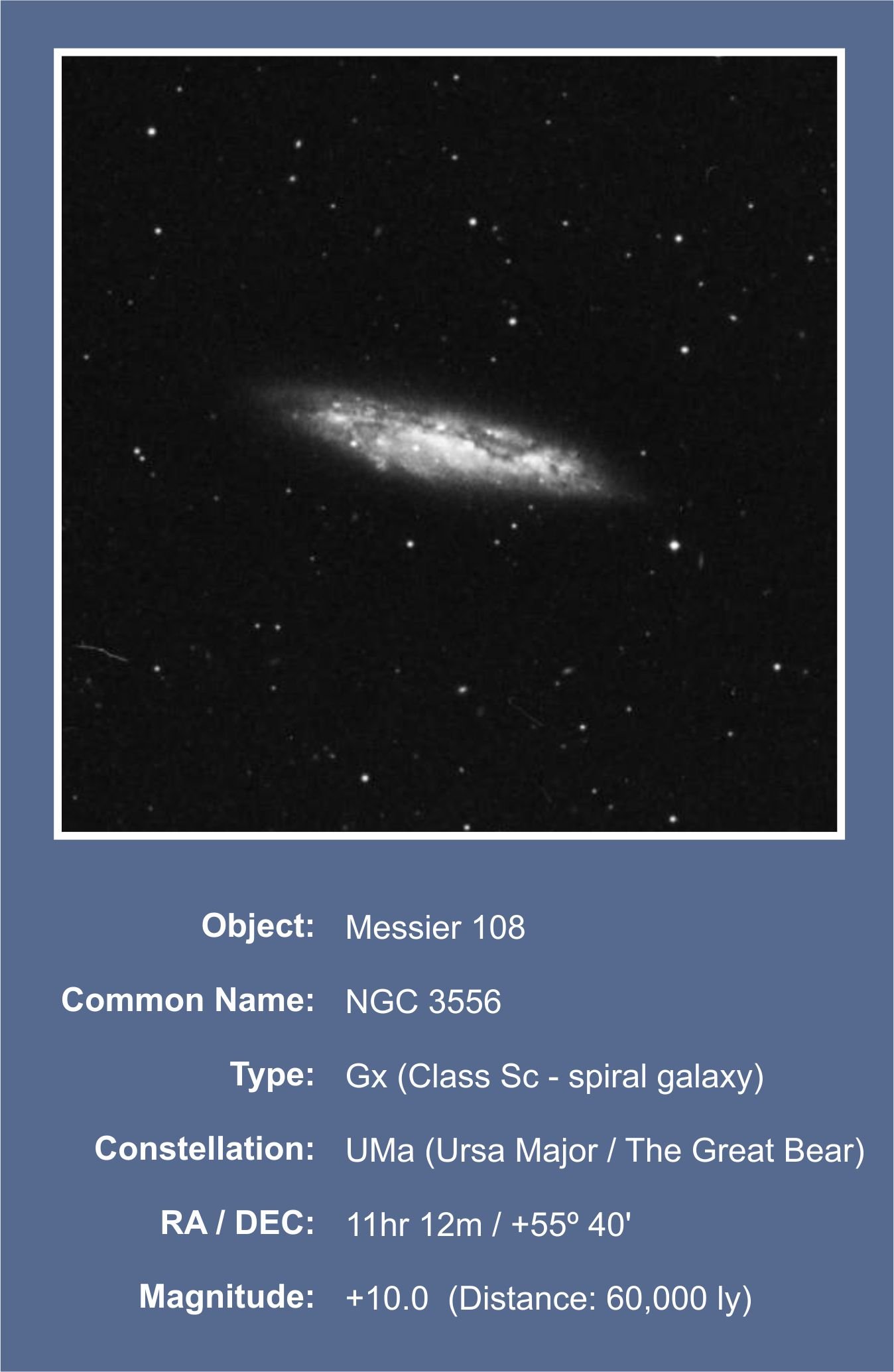
- Messier 108
Barred Spiral Galaxy; bright, very large and very elongated; nearly edge-on but no visible nucleus – easy to mistake for a supernova.
oooo
oooo
More objects in Ursa Major
| Select Catalog | No of Objects |
| Barnard (B) | 0x object |
| Caldwell (C) | 0x object |
| Collinder (Cr) | 2x objects |
| New General Catalogue (NGC) | 409x objects |
| Index Catalogue (IC) | 101x objects |
| Sharpless (Sh2) | 0x objects |
oooo
Features of Interest
- NGC 4501 – Spiral Galaxy; also known as Messier 88 (M88), on the border with Canes Venatici, bright nebulous glow because of the extended spiral arms, only the nucleus is readily detectable with smaller than 8-inch telescopes.
o - NGC 4088 – Spiral Galaxy; the outer regions become visible only with 8-inch or more telescopes.
oooo
OOOO
Named Stars
- Dubhe (Alpha UMa)
- Merak (Beta UMa)
- Phad (Gamma UMa)
- Megrez (Delta UMa)
- Alioth (Epsilon UMa)
- Mizar (Zeta UMa)
- AlkaidL (Eta UMa)
- Talitha (Iota UMa)
- Tania Borealis (Lambda UMa)
- Tania Australis (Mu UMa)
- Alula Borealis (Nu UMa)
- more list of stars in Ursa Major.
oooo
oooo
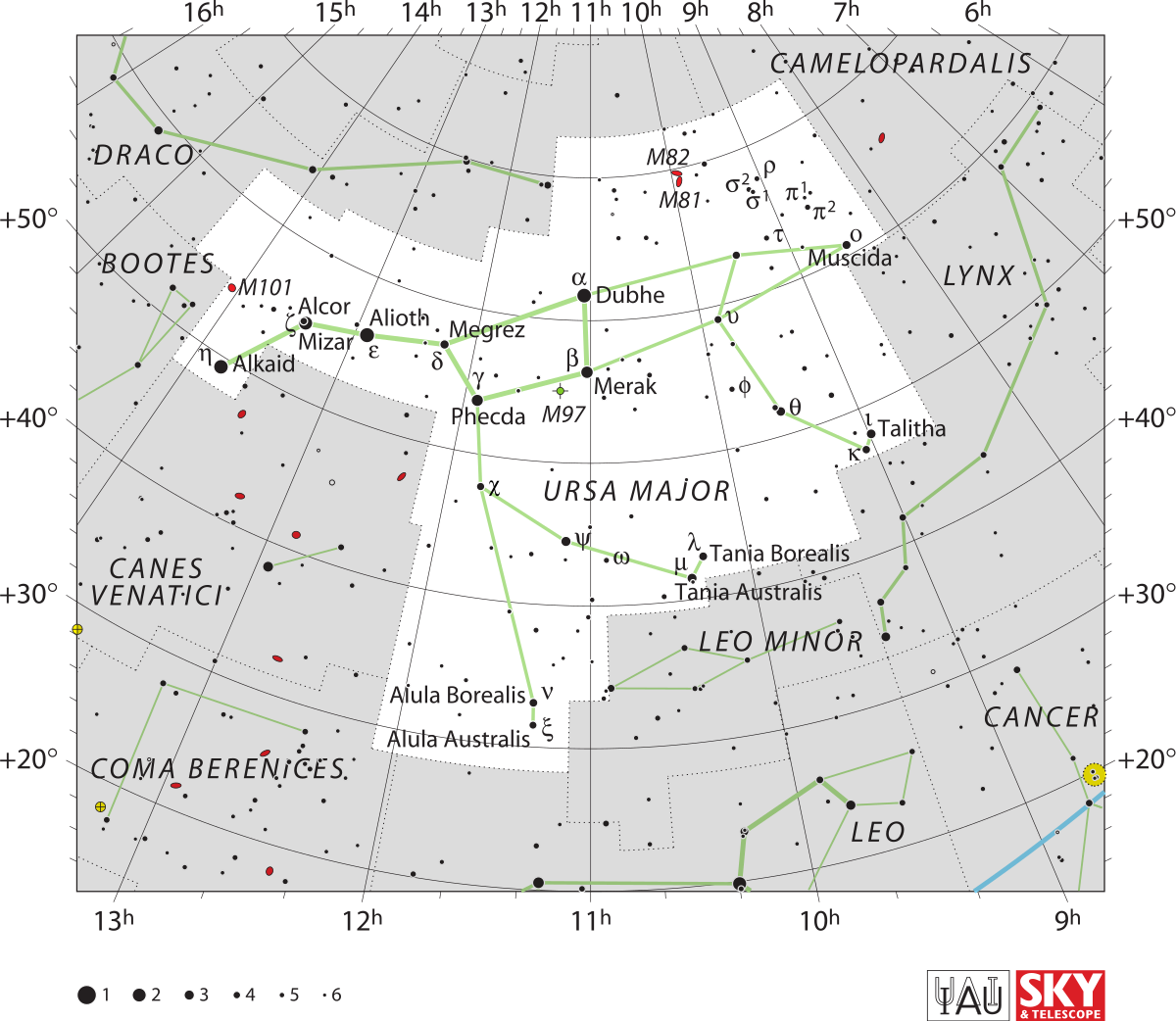
Planetarium / Constellation Map
| Live constellation visible from the UK :- Planetarium (Ursa Major) | Best Seen in: Circumpolar, better in April | Seen between: October and December |
IAU Sky Chart: Ursa Major
OOOO
Constellations – Visible from the UK
OOOO
oooo
Parts visible from the UK
| Antlia | Columba | Eridanus | Fornax | Microscopium | ||
| Piscis Austrinus | Puppis | Pyxis | Sagittarius | Scorpius | ||
| Sculptor |
oooo
oooo
Constellations: Southern Celestial Hemisphere
…..– never seen from the UK
oooo
oooooooo
OOOO