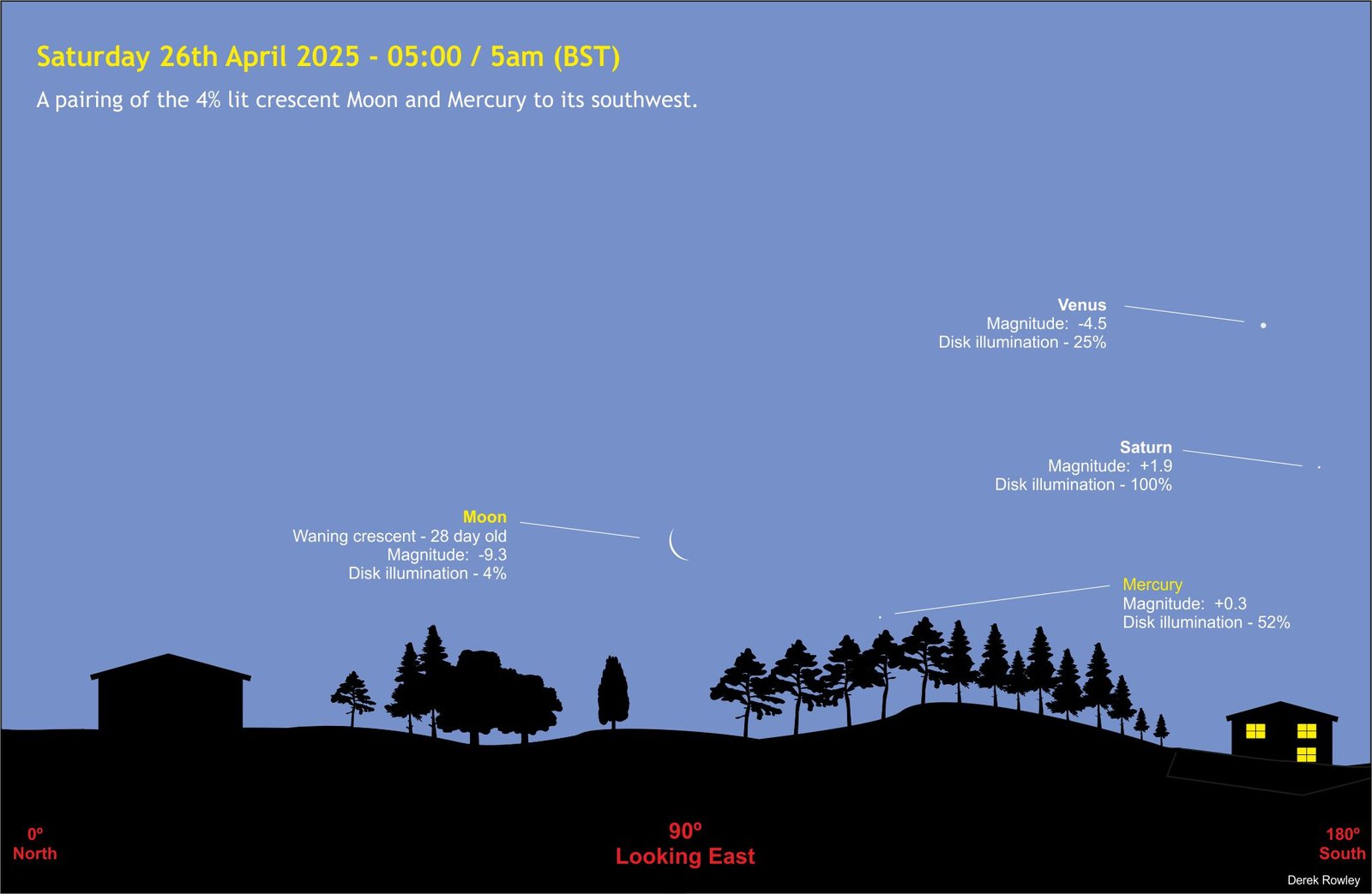
The pair will be too widely separated to fit within the field of view of a telescope, but will be visible to the naked eye or through a pair of binoculars.

BSL
Astronomy
(British Sign Language)




BSL available
at ENS optical
Astronomy Telescope
retailers at Birmingham
Facetime
Derek can help with it.
British Sign Languages
Interest to learn
BSL Basic for fun?
o
More information
for your BSL journey.






BSL available
at Roboscopes
Facetime
Derek can help with it.
The pair will be too widely separated to fit within the field of view of a telescope, but will be visible to the naked eye or through a pair of binoculars.
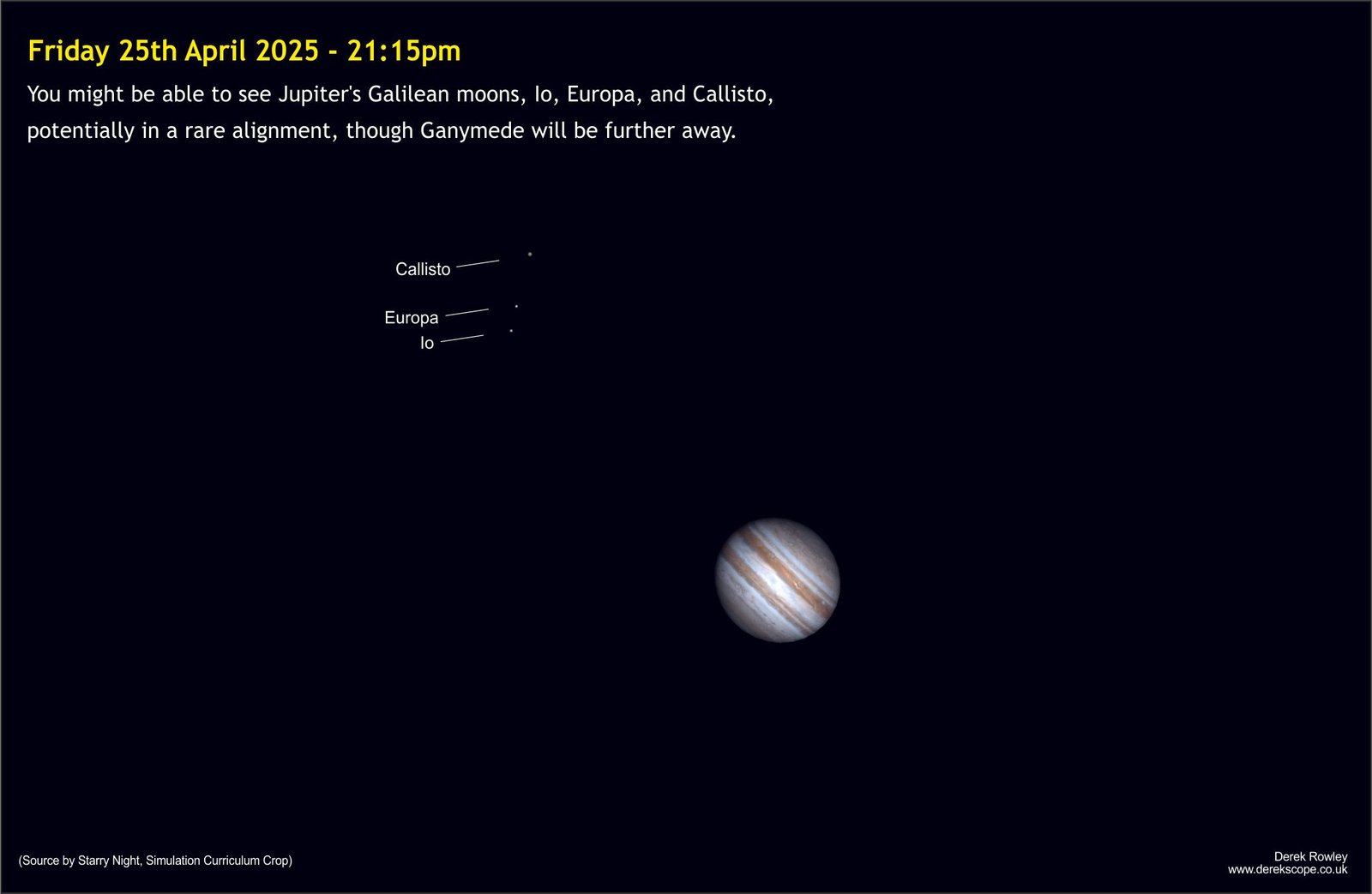
For the Jupiter’s observers, this might be unique – while these moons are often visible, their specific alignment and proximity to Jupiter tonight could make this a particularly interesting viewing opportunity.
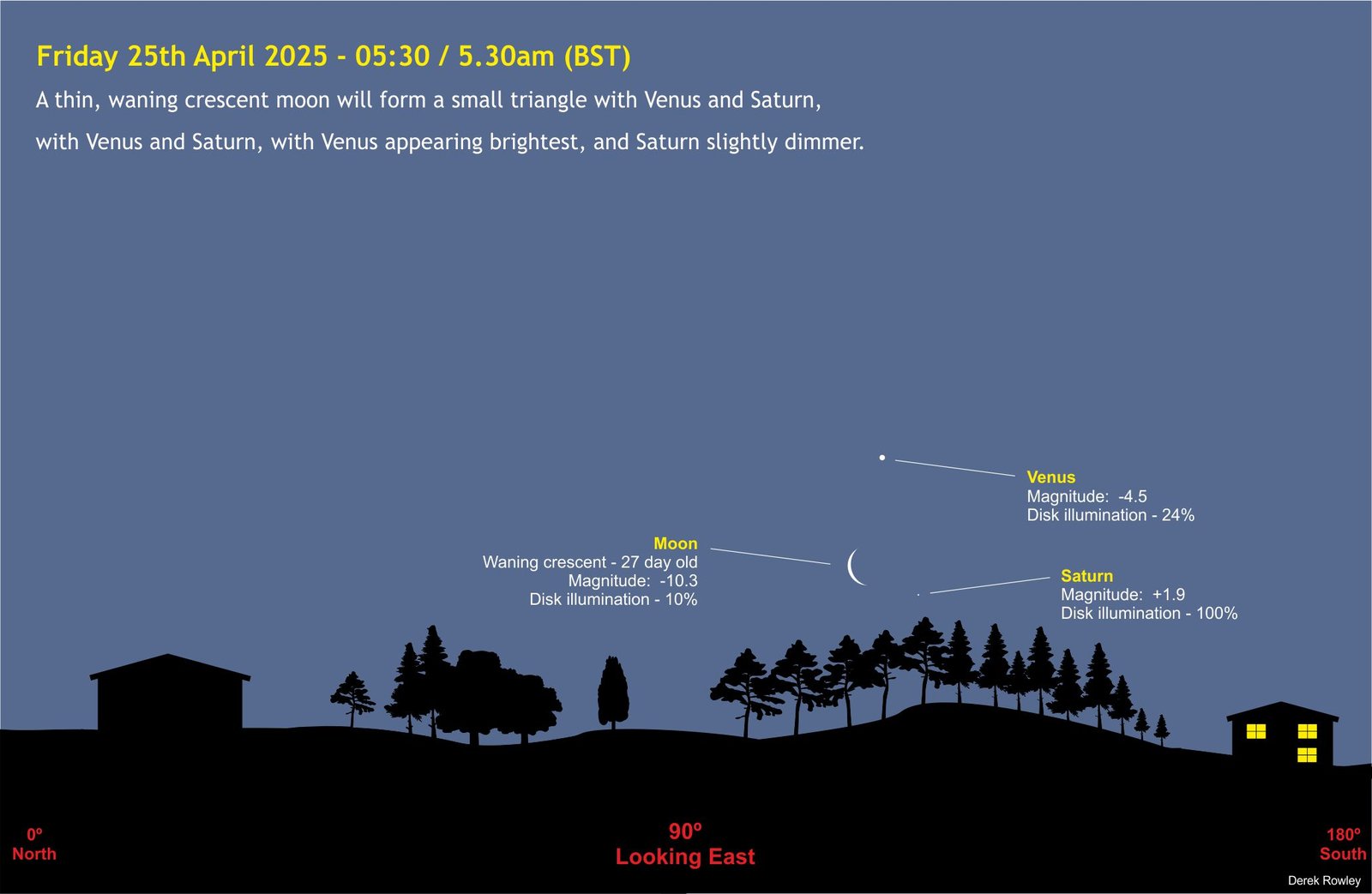
Look towards the eastern horizon as dawn breaks;
O
Venus – the brightest of the three, appearing as a very bright “morning star”.
o
Saturn – it will be noticeably dimmer than Venus, but still visible.
o
Moon – a thin, waning crescent, about 10% illuminated.
o
Consider using binoculars or a telescope for a closer view of Venus and Saturn.
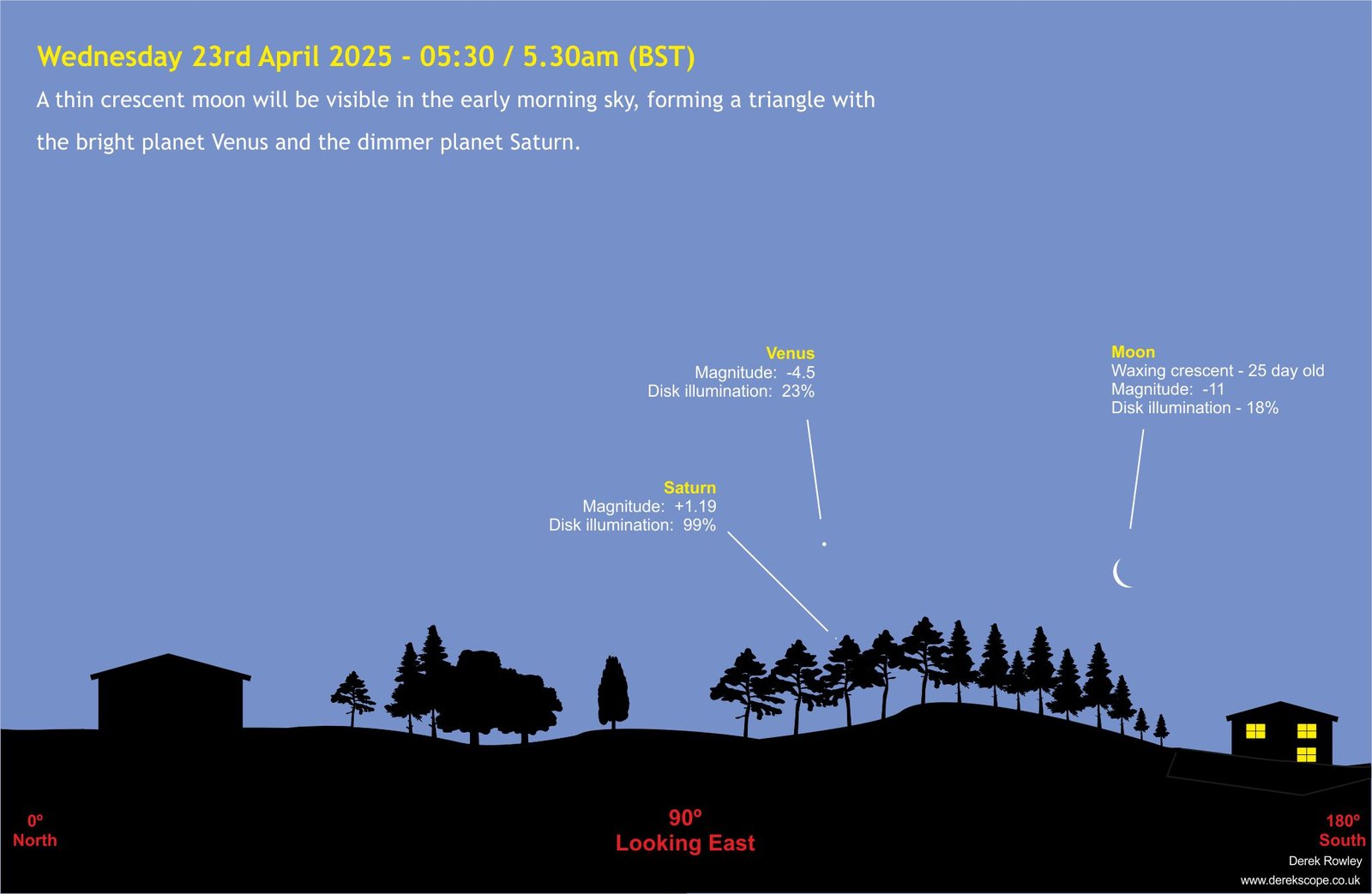
This observation will be possible about 30 minutes before sunrise, if the eastern horizon is unobstructed.
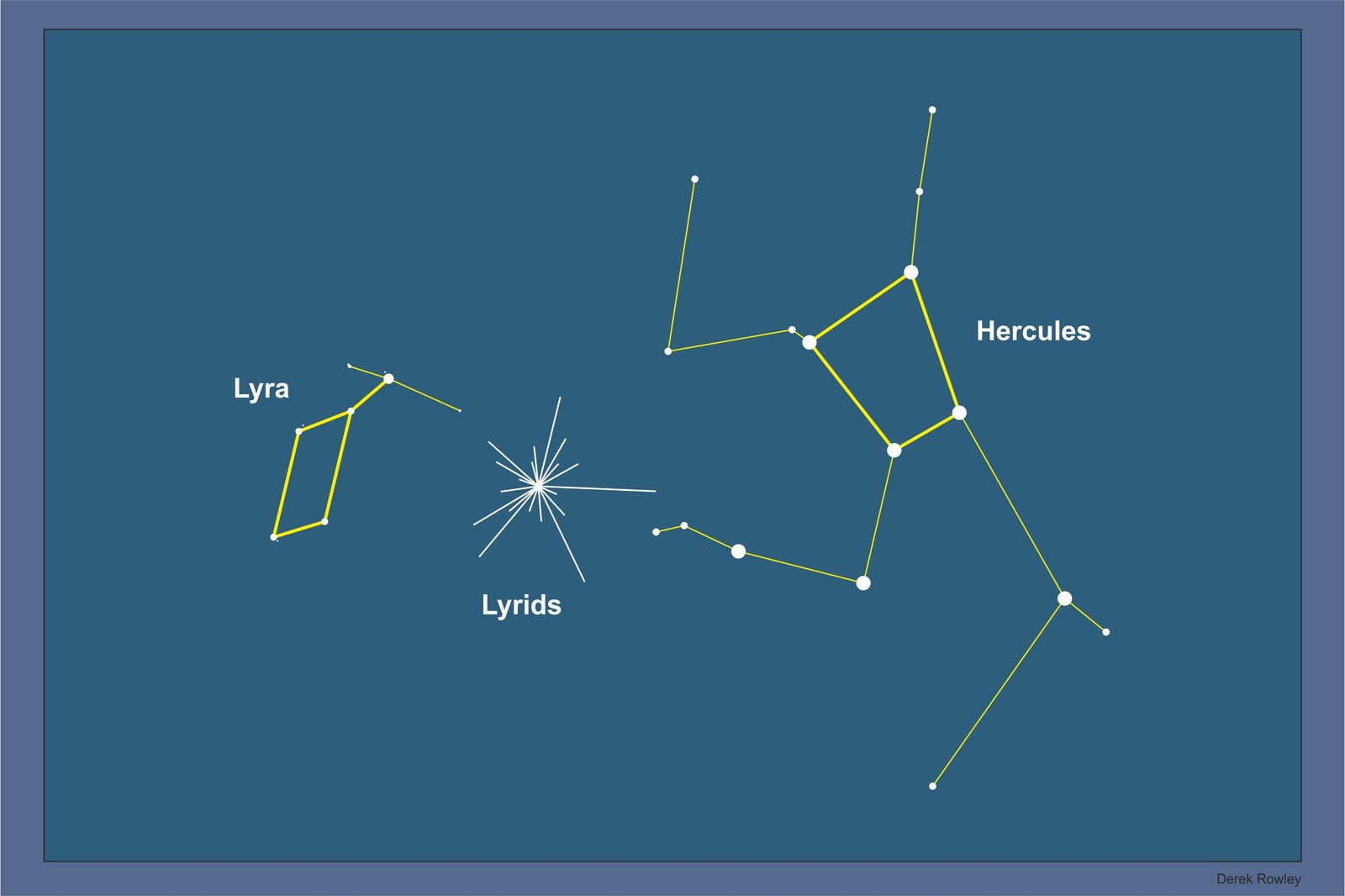
Meteor Showers – Lyrids
Note: Today sees the meteor showers reach its peak at around 14:00 / 2pm (BST), meaning that the best observing times are this morning and from darkness the evening (Tuesday 22nd April) through to dawn on Wednesday 23rd April 2025.
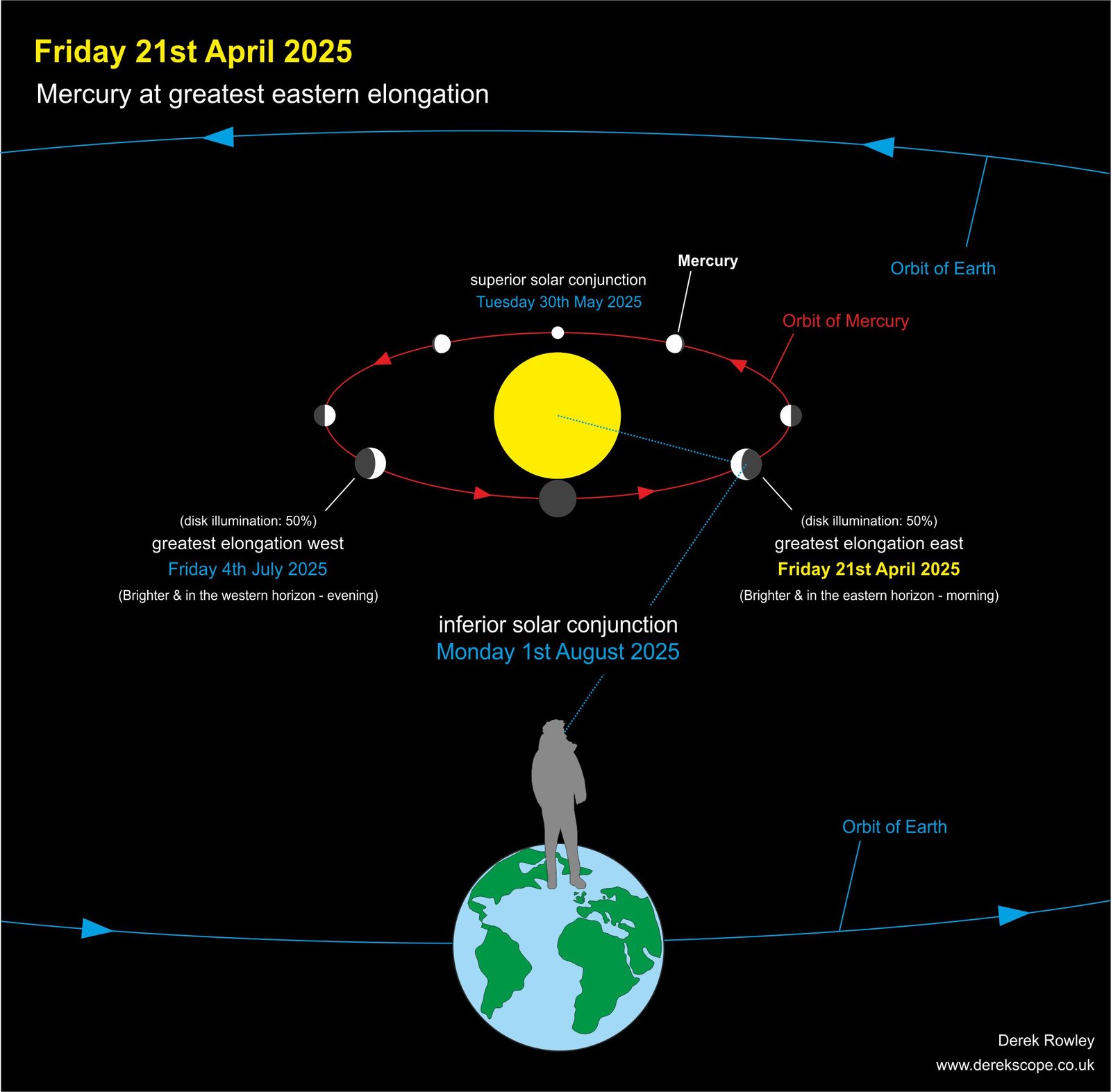
Mercury will reach its greatest elongation east – meaning it will be farthest from the Sun in the morning sky.
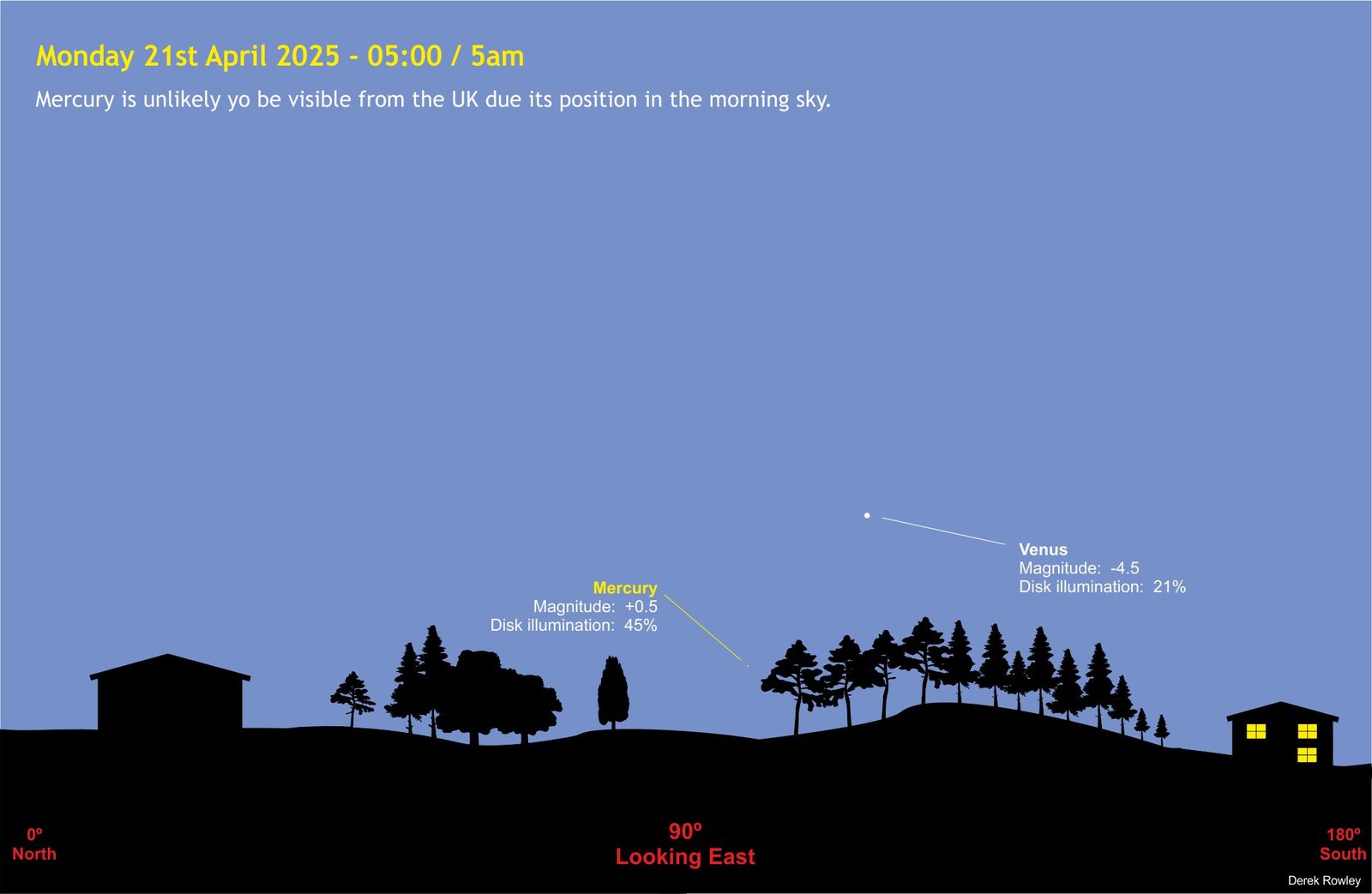
Despite being at its greatest elongation, Mercury will be a morning planet in April 2025, and its position is not outcome likely for viewing from the UK, making it unlikely to be visible.
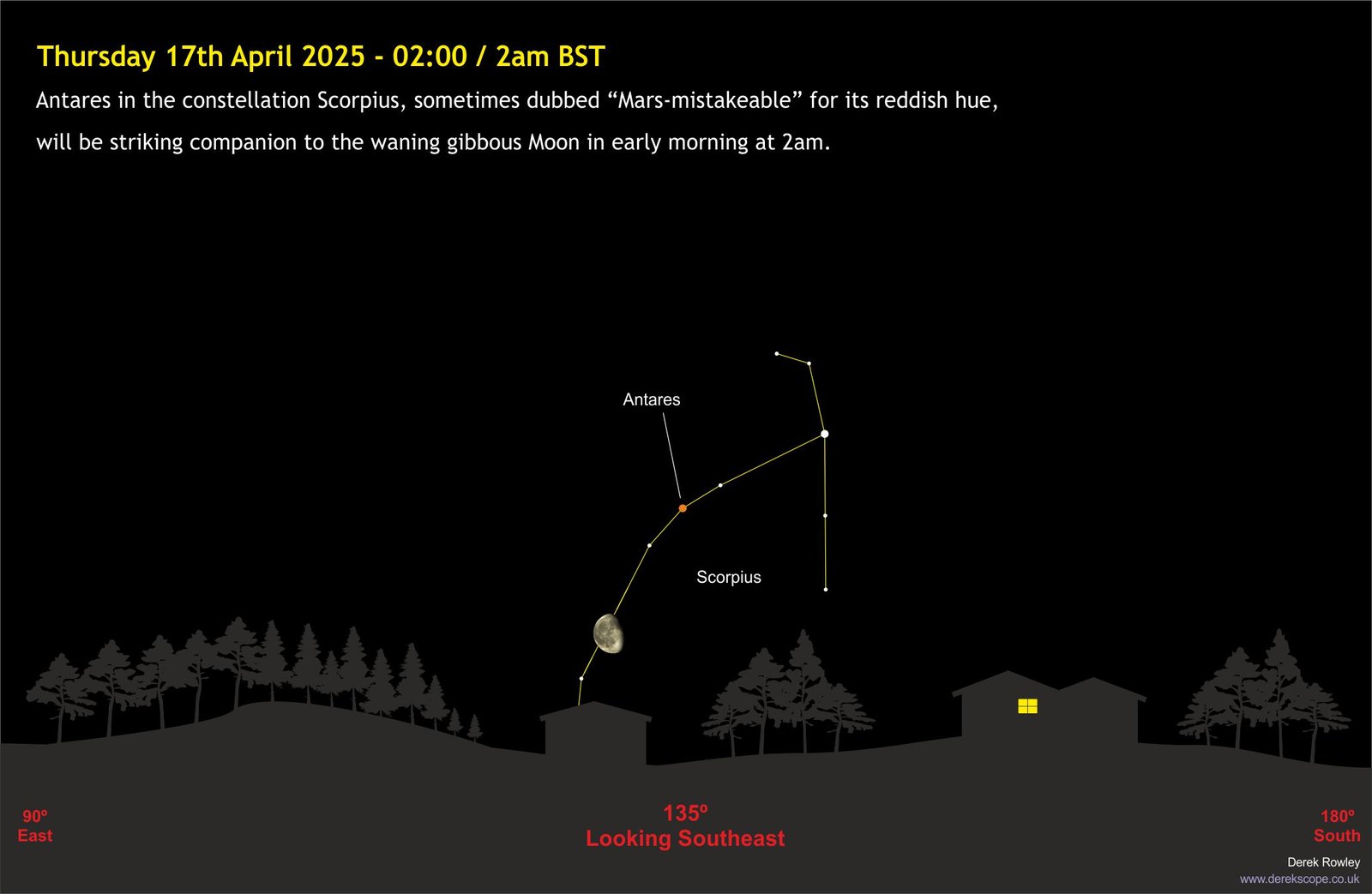
A red supergiant is about 76,000 times more luminous than our Sun that appears as a bright reddish dot to the naked eye; to easily find Antares in the sky in your exact location, use the Moon following upper right to spot the bright reddish dot.

Great opportunity for astrophotography – two of Jupiter’s moons appearing just below the planet’s edge ~ really a fantastic sight in a pair of binoculars or telescope view.
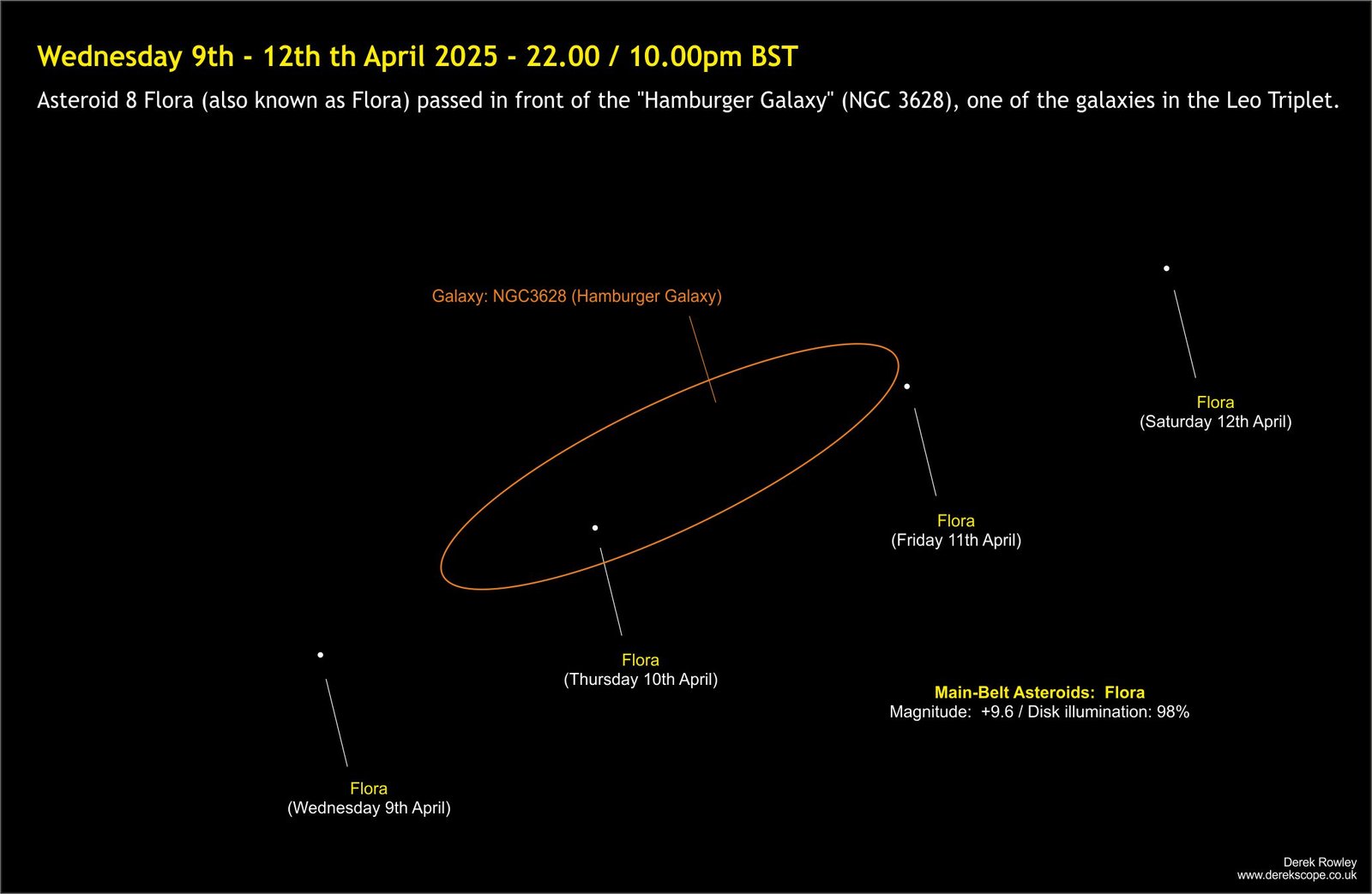
Great opportunity for astrophotography that Main-Belt asteroid, 8 Flora passed in the front of the galaxy, NGC3286 in the constellation Leo.
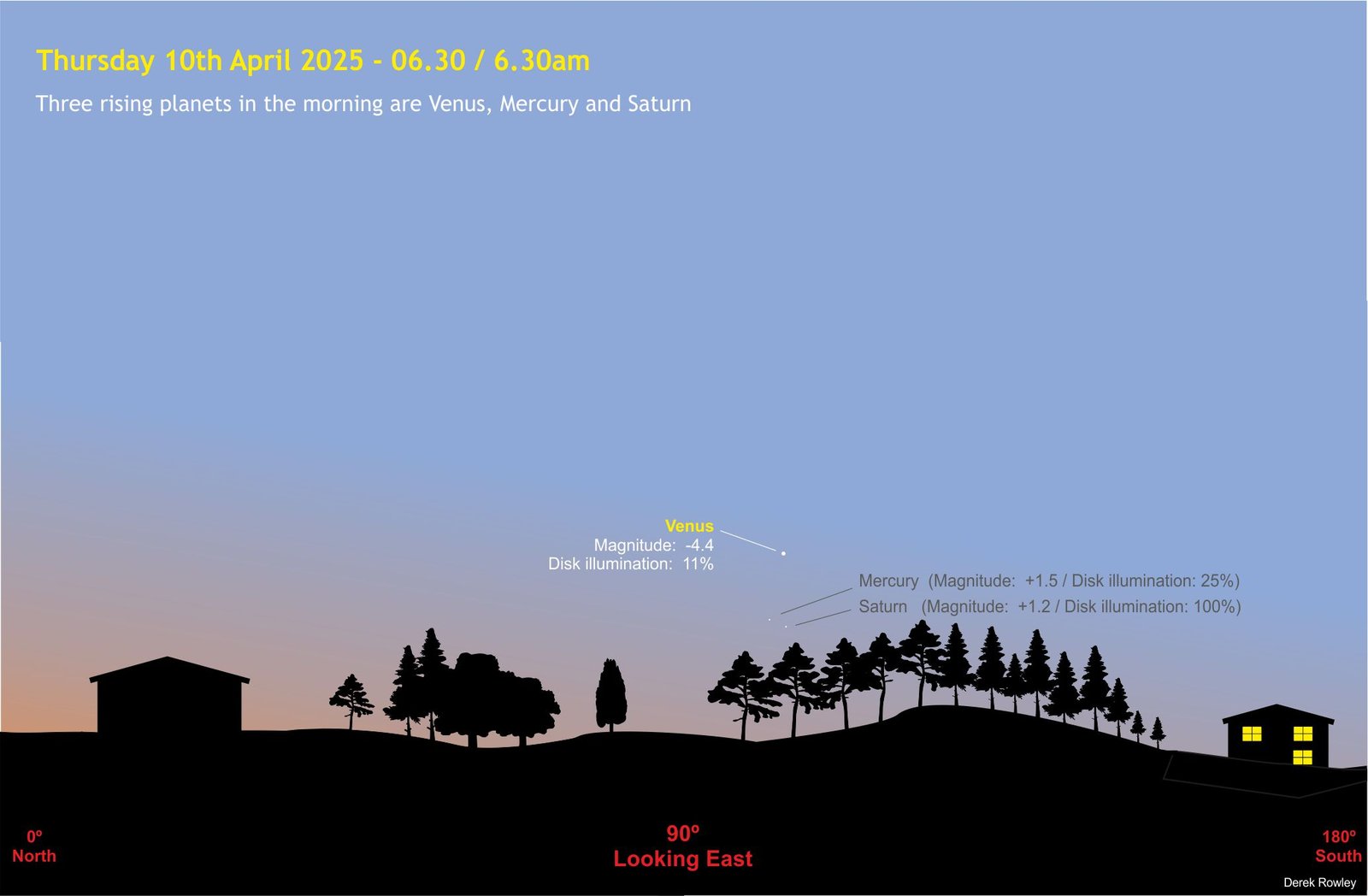
Three rising planets in the twilight morning are Venus, Mercury and Saturn in the eastern sky with Venus being brightest and servicing as a guide to find the dimmer Mercury and Saturn.