Tuesday 24th February 2026

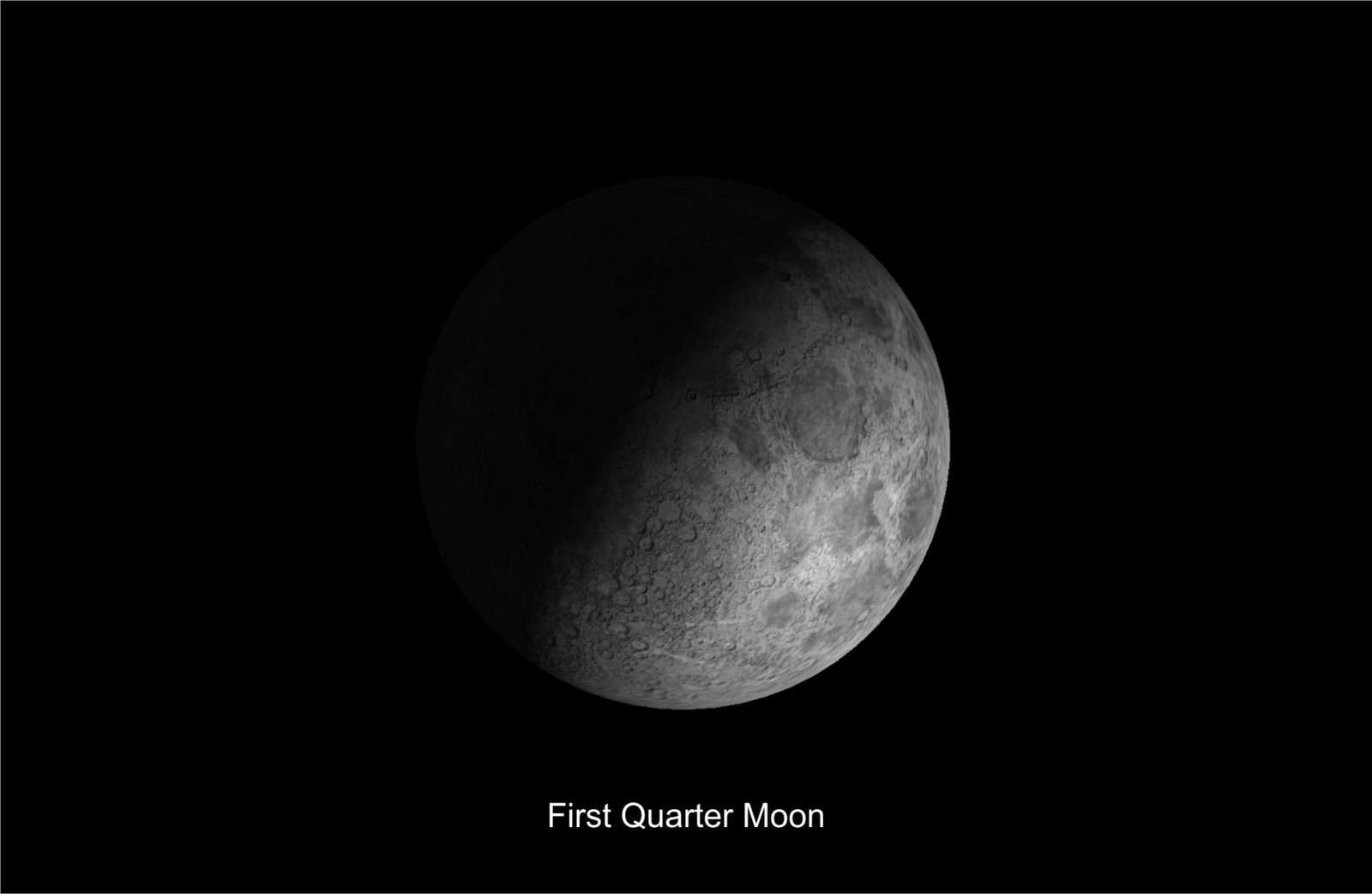
  • The moon will be in its First Quarter phase at 12:28pm.
    o
  • The best time to observe the First Quarter Moon is in the afternoon and early evening, when it’s high in the sky and the surrounding sky is darker than during the middle of the day.
    o
  • The contrast is especially good around sunset.
    o

Posted in Homepage (Posts) | Comments Off on Tuesday 24th February 2026

Tuesday 24th February 2026

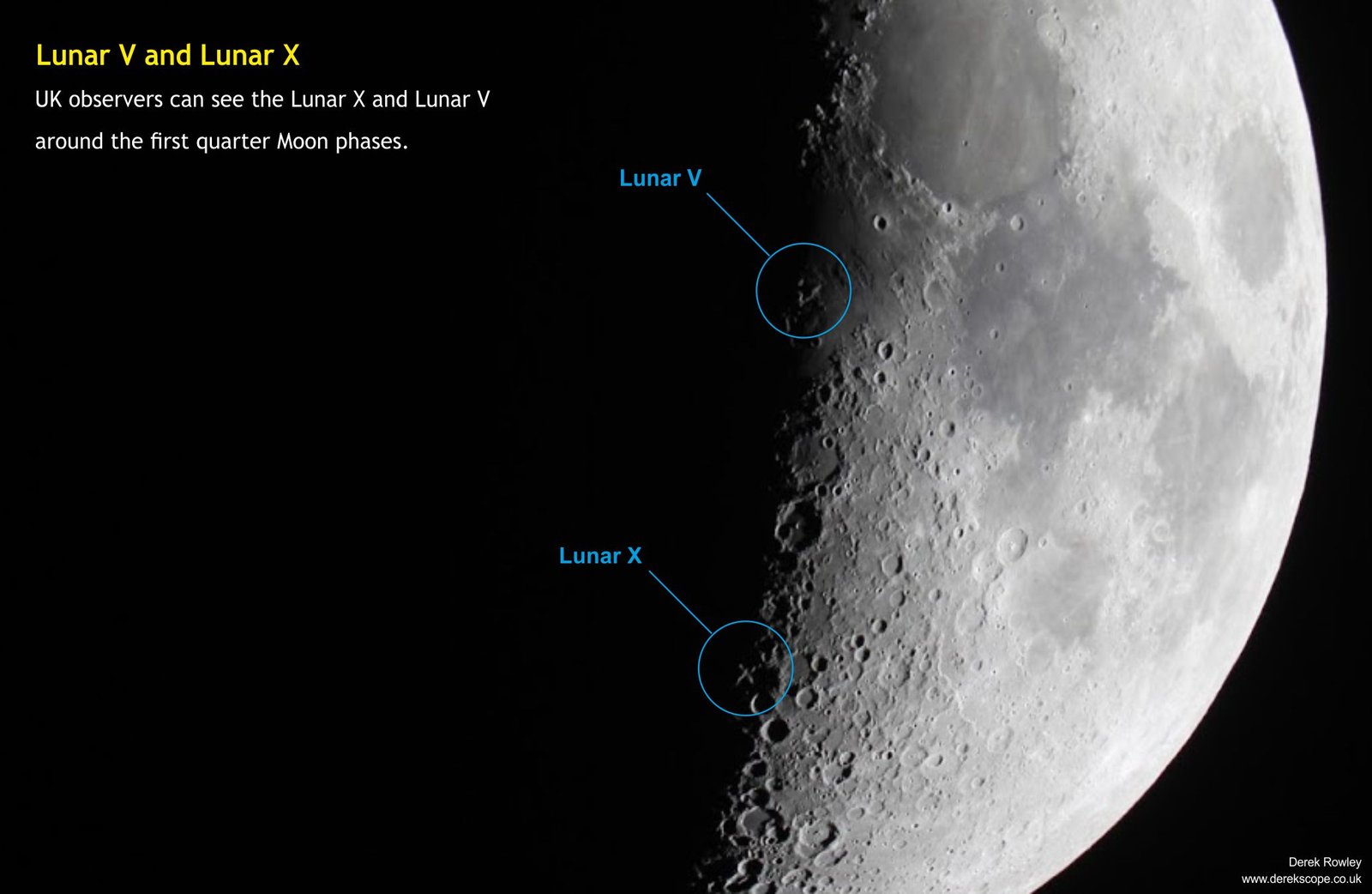
  • Lunar X and Lunar V
    Sunlight catches rims at lunar first quarter to create the bright V and X shapes.
  • Best viewing time in the UK
    The feature remains visible for about 4 hours in total, beginning to fade as the sun rises higher on the lunar surface, typically fading completely by 11:30am.
    o
    Date:
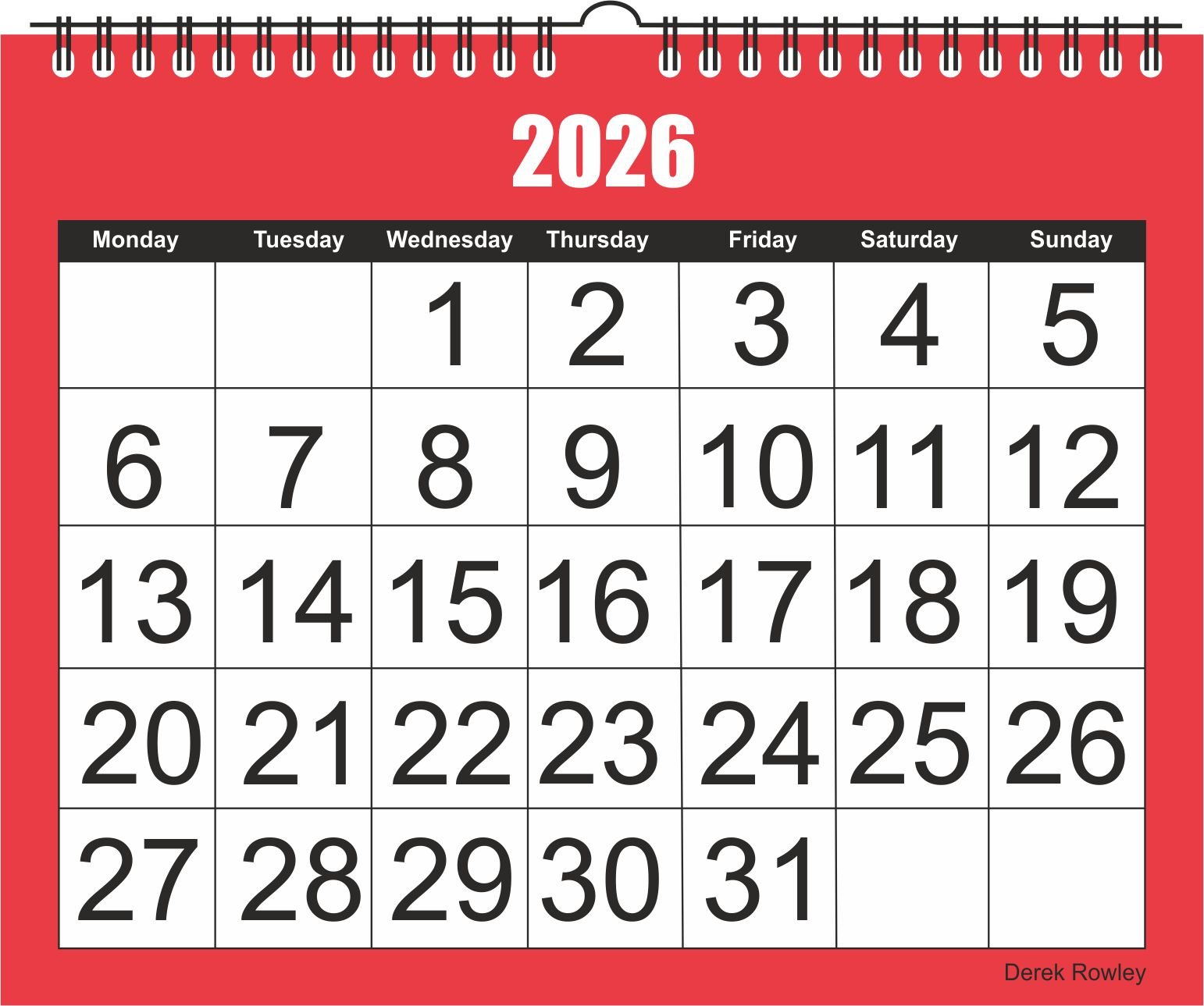
    Tuesday 24th February 2026
    o
    Start formation (become visible):
    07:30 / 7.30am
    o
    Peak visibility (fully formed as best contrast):
    09:30 / 9.30am
    o
    Fade disappearing:
    11:30 / 11.30am
    o
    Visible:
    Difficult (viewing low on the horizon)
    o
    o
  • The Moon repeats its cycle every 29½ days, so these effects happen every month, just on slightly different dates – see the complete full timetable for 2026, 2027, 2028, 2029 and 2030.
    o
  • Equipment
    While sometimes visible with high-power binoculars, a telescope is recommended to see the fine detail of the crater rims forming the Lunar X and V.
    o

Posted in Homepage (Posts) | Comments Off on Tuesday 24th February 2026

Monday 23rd February 2026

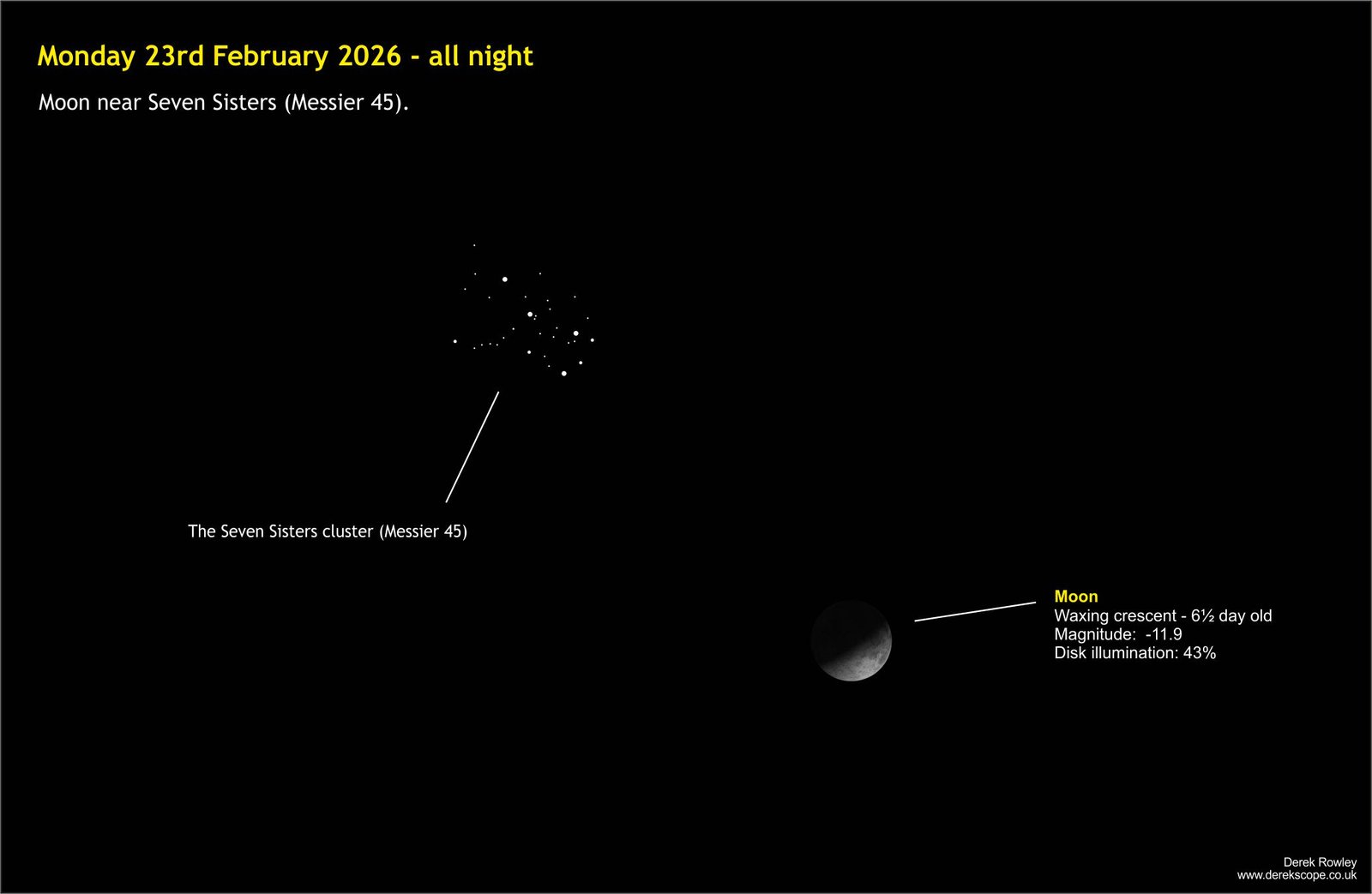
  • Moon & Seven Sisters (M45) – the pair will be visible after dusk, high in the southwest sky.
    o
  • They’ll remain visible for several hours before setting after midnight.
    o

Posted in Homepage (Posts) | Comments Off on Monday 23rd February 2026

Sunday 22nd February 2026

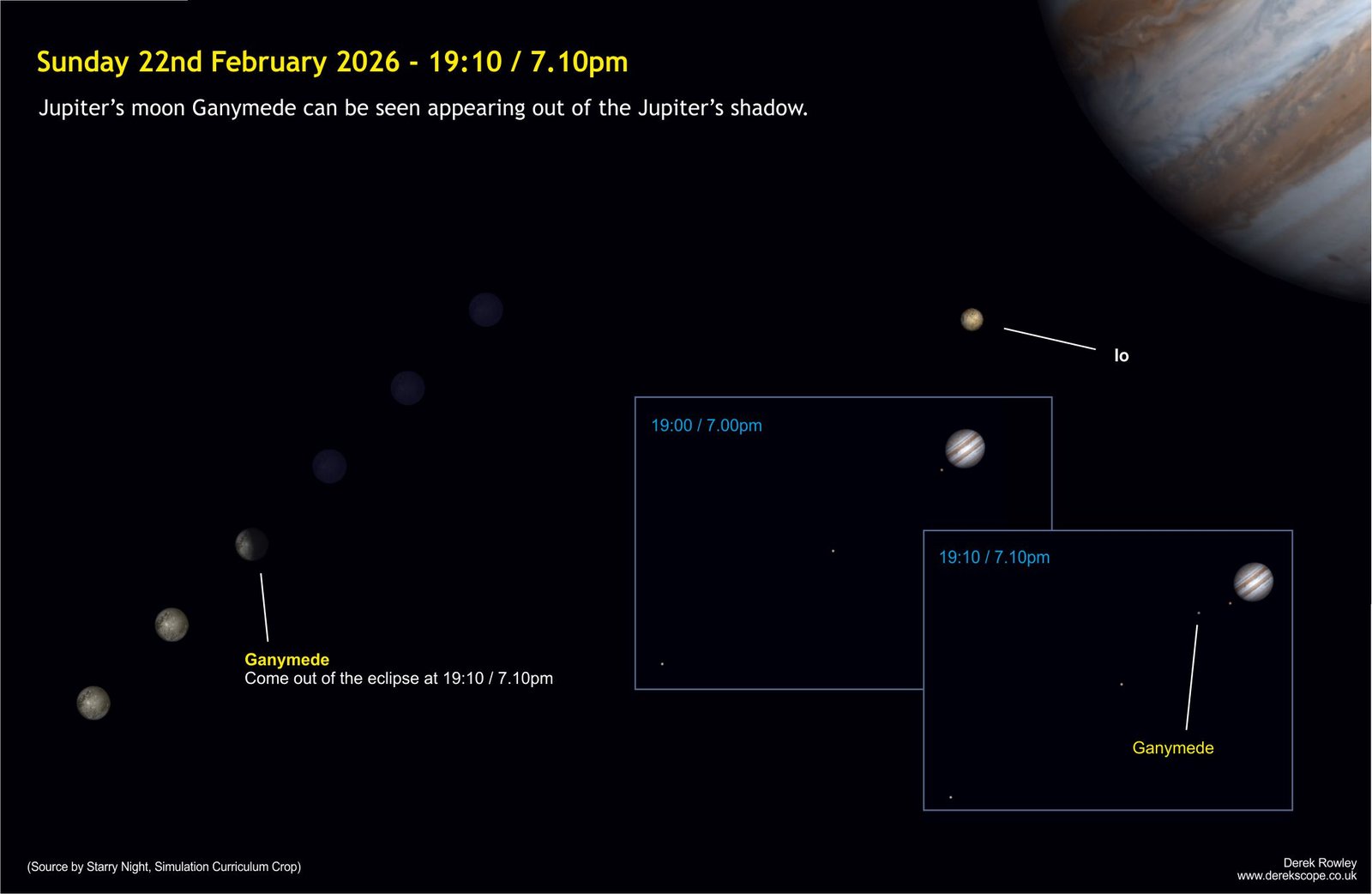
  • One of its moons (Ganymede) will come out from behind the planet.
    o
  • It looks like a tiny dot of light slowly appearing beside Jupiter.
    o
  • With a small telescope or big binoculars, you can see it slowly moving.
    o

Posted in Homepage (Posts) | Comments Off on Sunday 22nd February 2026

Friday 20th February 2026

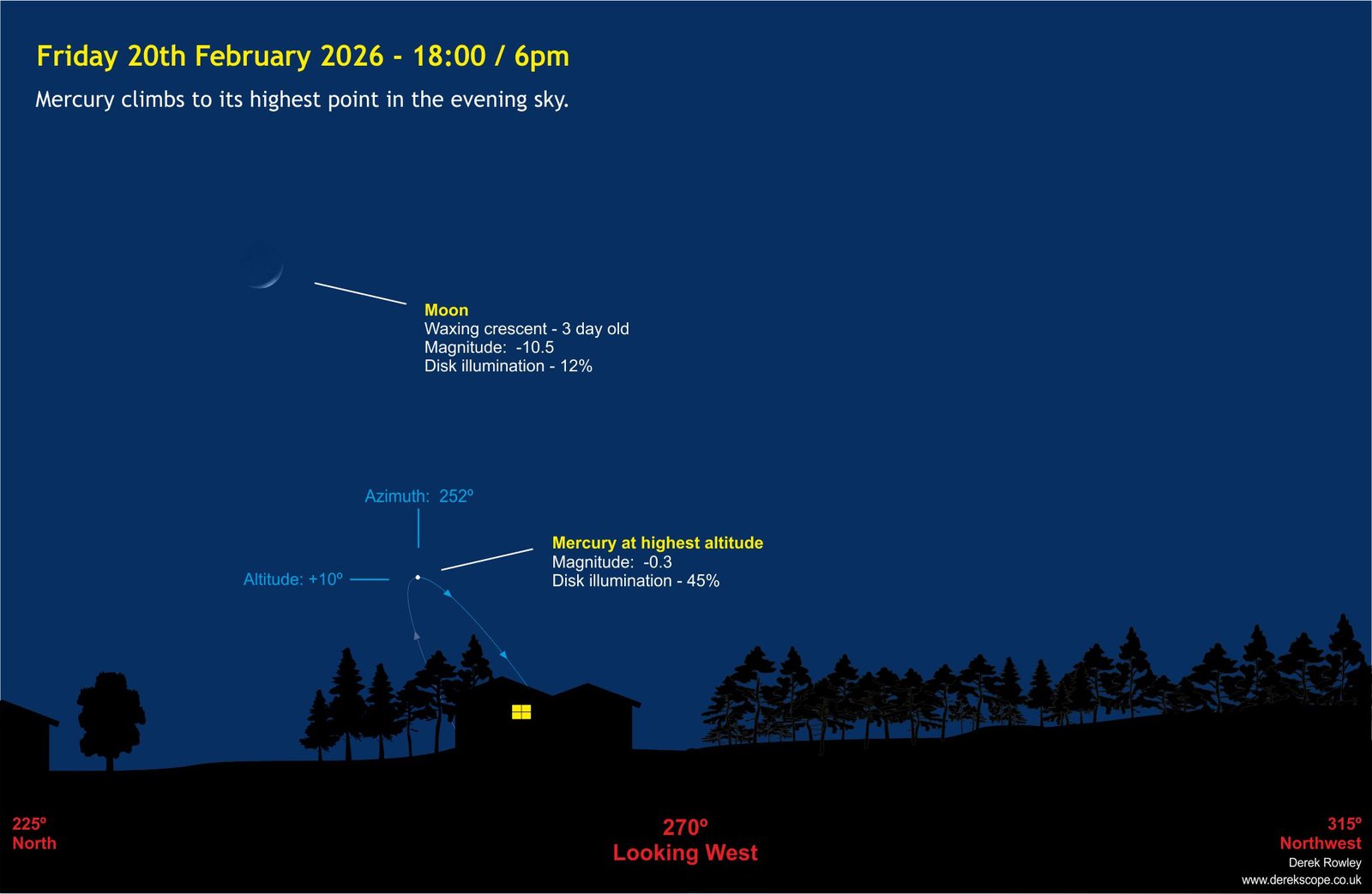
  • Mercury reaches its highest altitude in the evening sky.
    o
  • This makes tonight one of the best evenings for UK observers to catch Mercury in twilight.
    o
  • Just after sunset, look west – Mercury will be at its easiest to spot for this apparition, low in the western sky.
    o
  • BSL Version

o


Posted in Homepage (Posts) | Comments Off on Friday 20th February 2026

Friday 20th February 2026

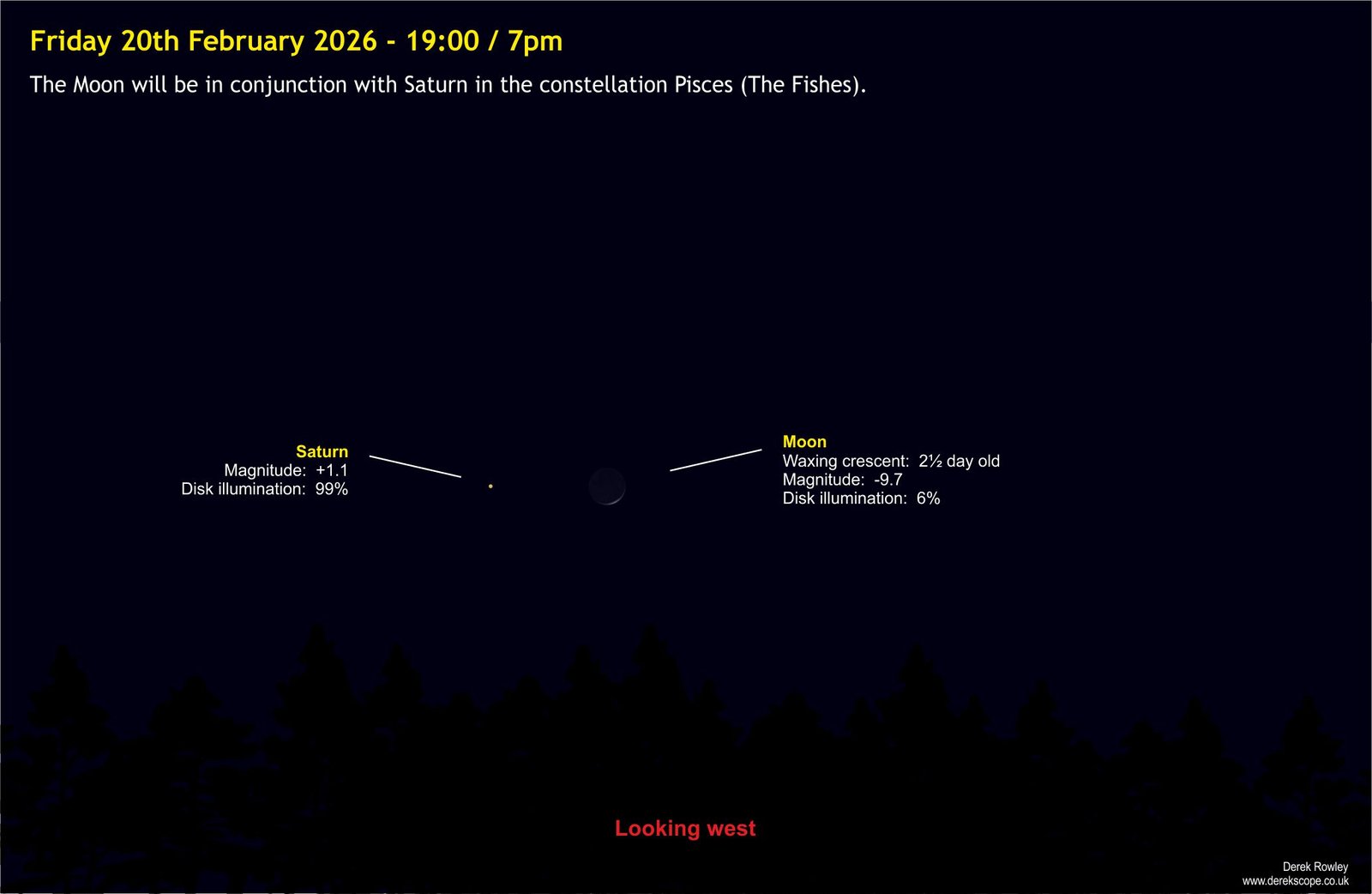
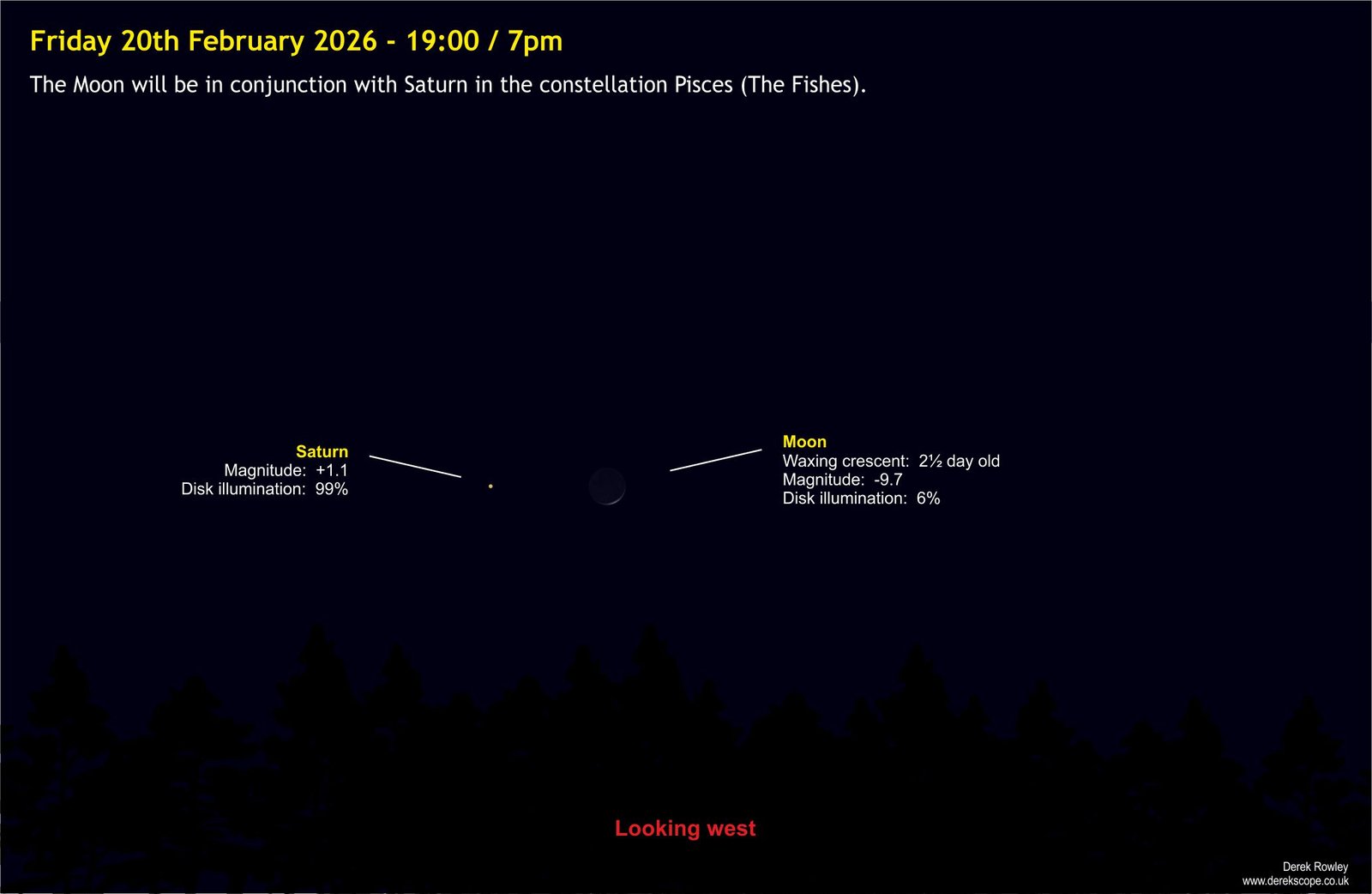
  • Conjunction of the Moon and Saturn – both will be relatively low in the sky, so clear horizon to the west will help.
    o
  • Binoculars will enhance the view, but Saturn’s rings won’t be visible without a telescope.
    o

Posted in Homepage (Posts) | Comments Off on Friday 20th February 2026

Thursday 19th February 2026

  • A 3‑day crescent next to Saturn makes a lovely, gentle pairing – a conjunction.
    o
  • They’re low in the west (Clear horizon, binocular recommended.)
    o

Posted in Homepage (Posts) | Comments Off on Thursday 19th February 2026

Thursday 19th February 2026

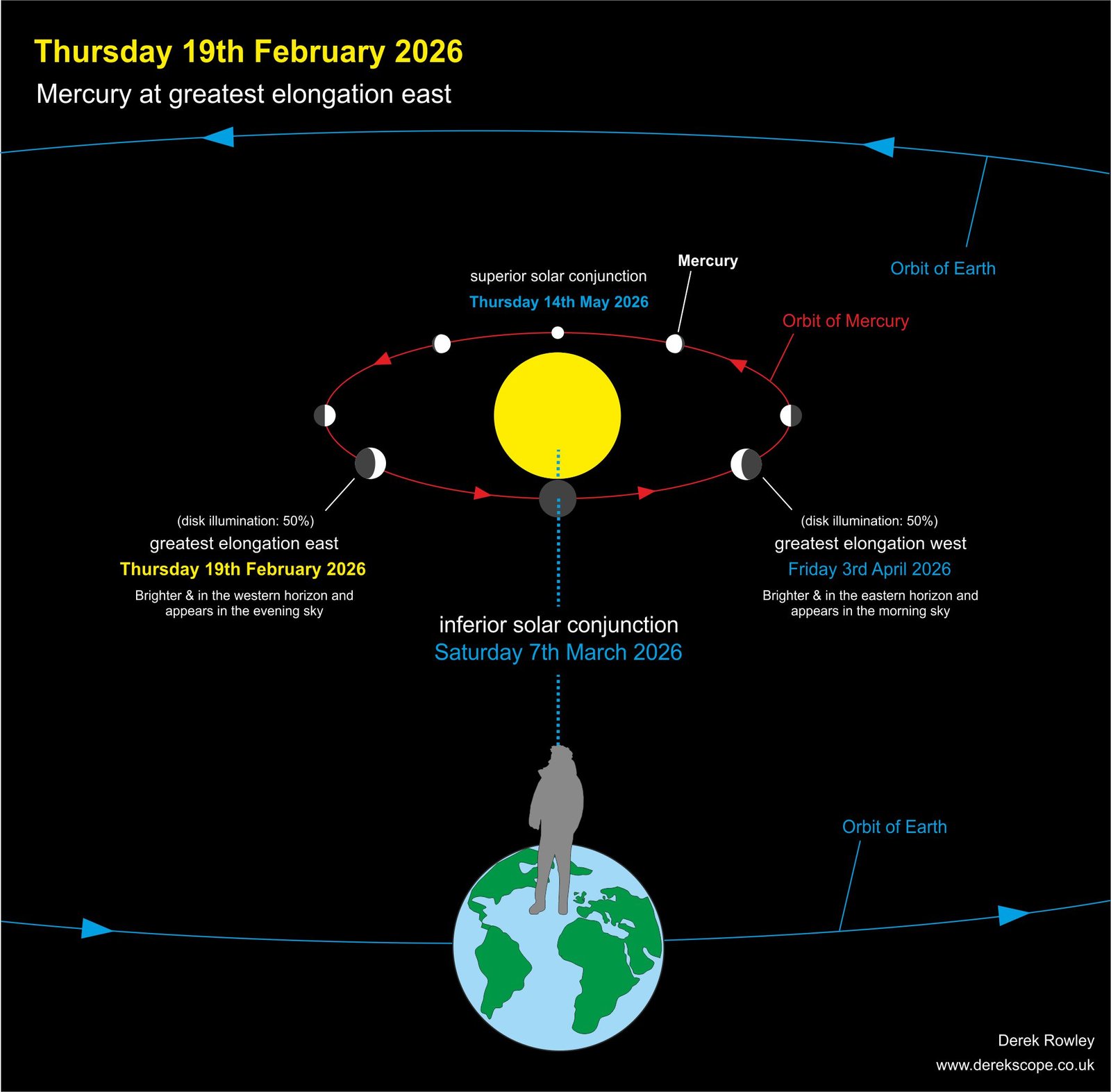
  • Mercury will reach its greatest eastern elongation today, appearing 18° east of the Sun in the evening sky.
    o
  • This will be the best evening apparition of Mercury for the Northern Hemisphere in 2026.
    o

Posted in Homepage (Posts) | Comments Off on Thursday 19th February 2026

Wednesday 18th February 2026

  • Both planets will be visible low in the western sky after sunset.
    o
  • Venus will shine brilliantly as the “Evening Star,” while Mercury will be fainter but still noticeable nearby.
    o
  • Mercury lower down, and the crescent Moon between them – a perfect outreach opportunity.
    o
  • Use binoculars to help after the sky fades.
    o
  • BSL Version

oooo


Posted in Homepage (Posts) | Comments Off on Wednesday 18th February 2026

Tuesday 17th February 2026

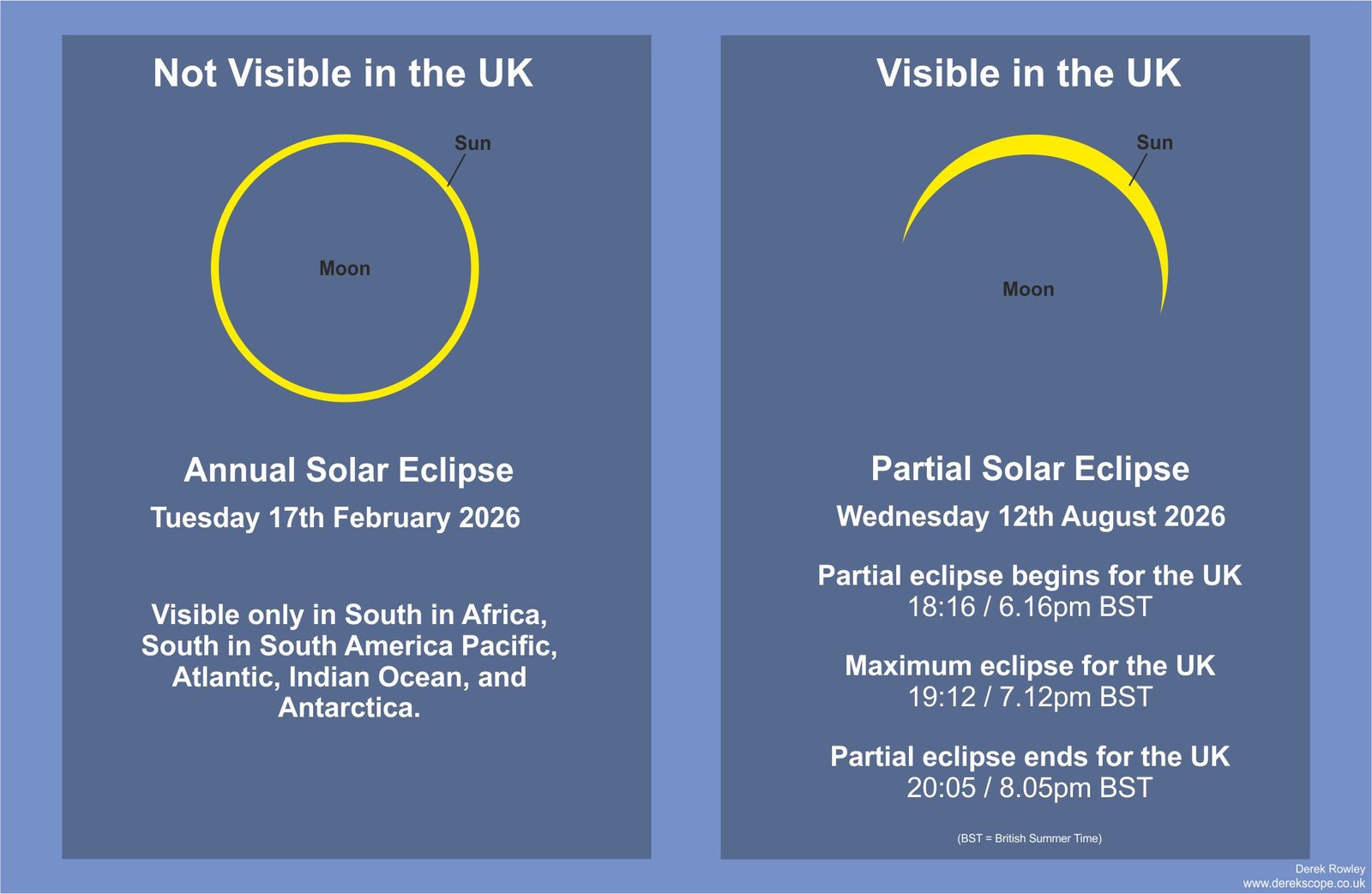
  • Annual Solar Eclipse today
    Not visible from the UK but worth saving the date in August this year.
    o
  • Although today’s annual solar eclipse can’t be seen from Britain, our next UK visible solar eclipse is on Wednesday 12 August 2026.
    o
  • It will be a large partial eclipse across the UK, with the Sun taking a dramatic bite in the evening.
    o
  • BSL Version

oooo


Posted in Homepage (Posts) | Comments Off on Tuesday 17th February 2026