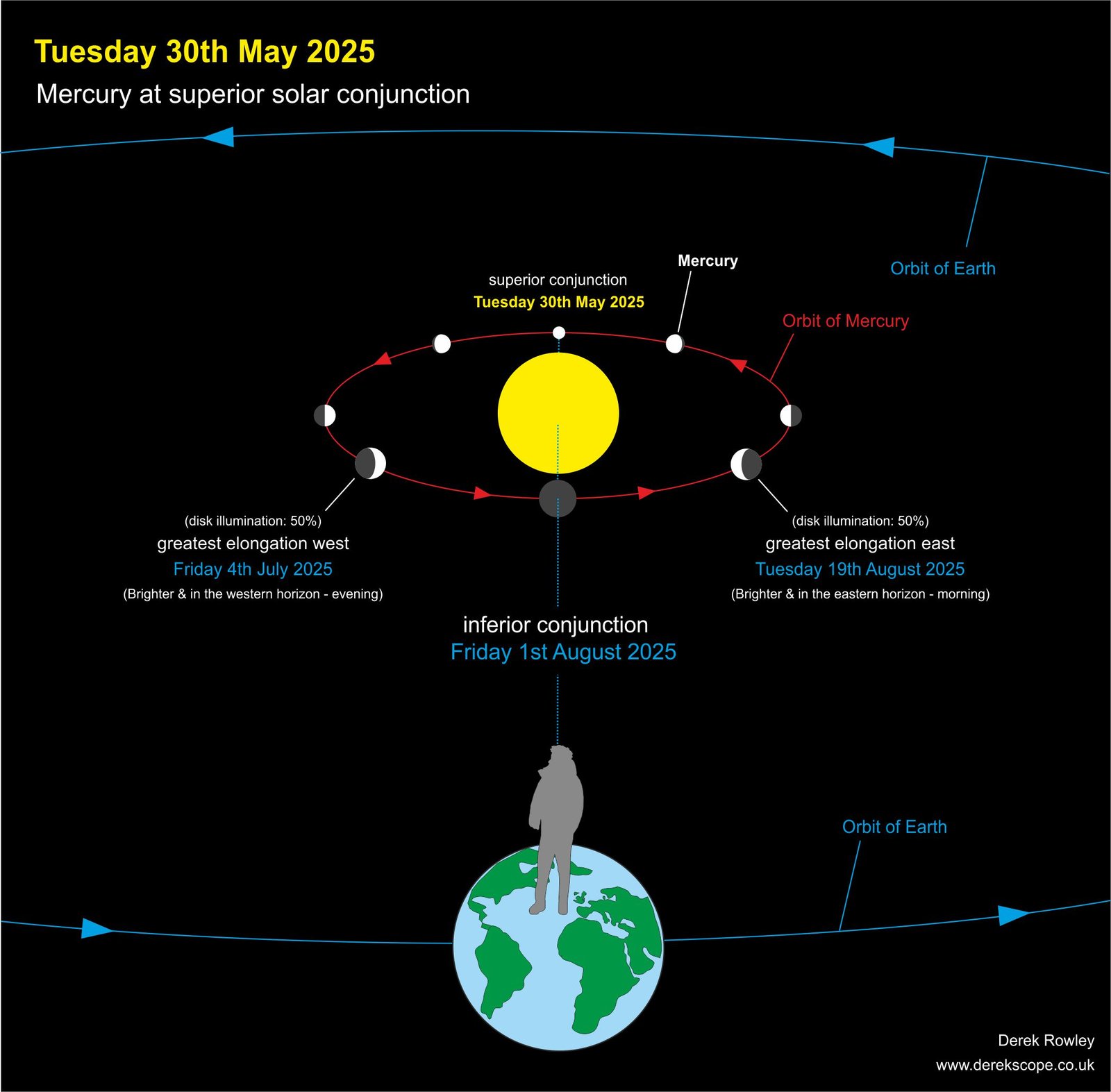
A superior conjunction occurs when Mercury is on the opposite side of the Sun from Earth, making it difficult to observe as it appears behind the Sun.

BSL
Astronomy
(British Sign Language)




BSL available
at ENS optical
Astronomy Telescope
retailers at Birmingham
Facetime
Derek can help with it.
British Sign Languages
Interest to learn
BSL Basic for fun?
o
More information
for your BSL journey.






BSL available
at Roboscopes
Facetime
Derek can help with it.
A superior conjunction occurs when Mercury is on the opposite side of the Sun from Earth, making it difficult to observe as it appears behind the Sun.
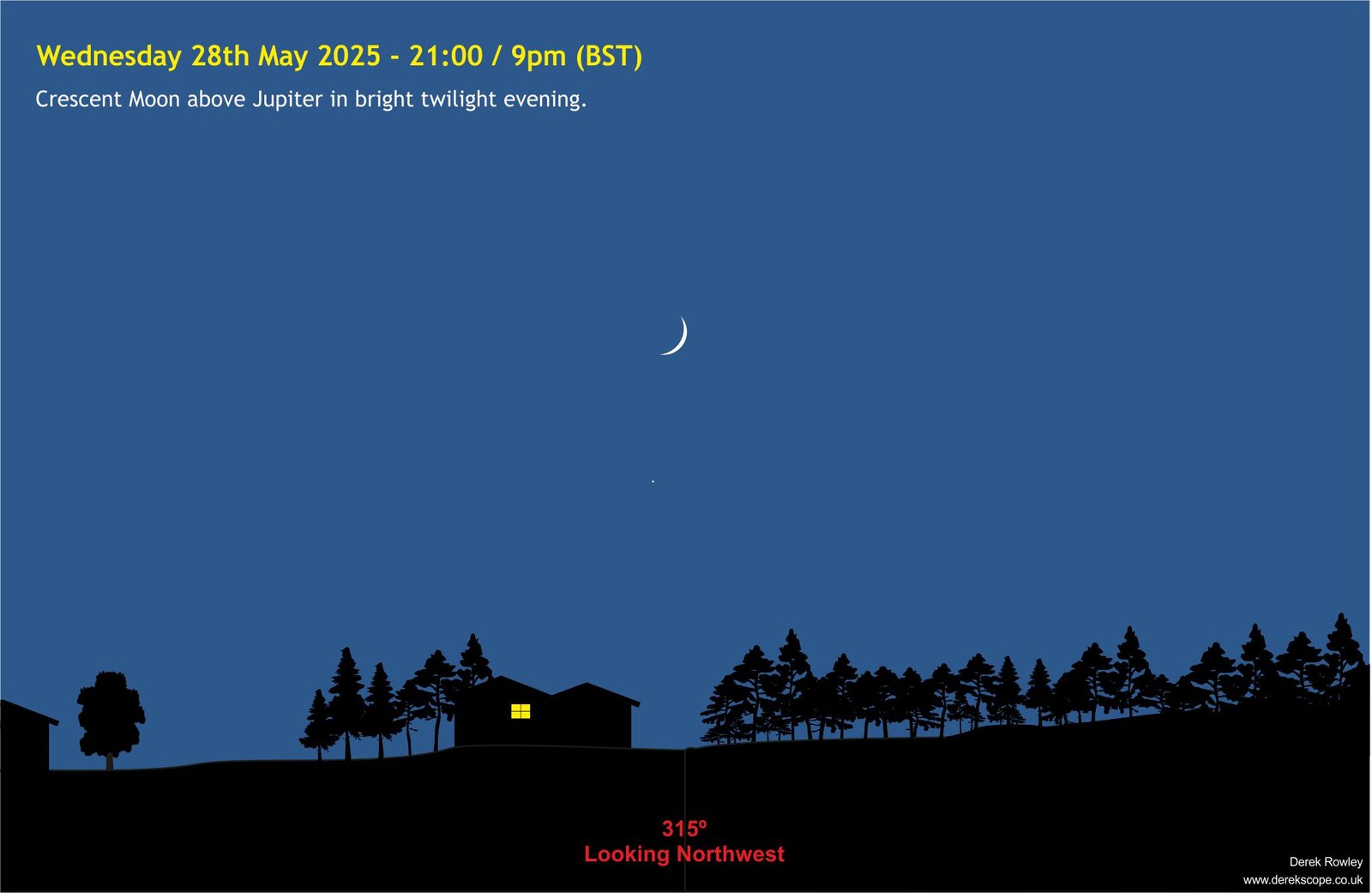
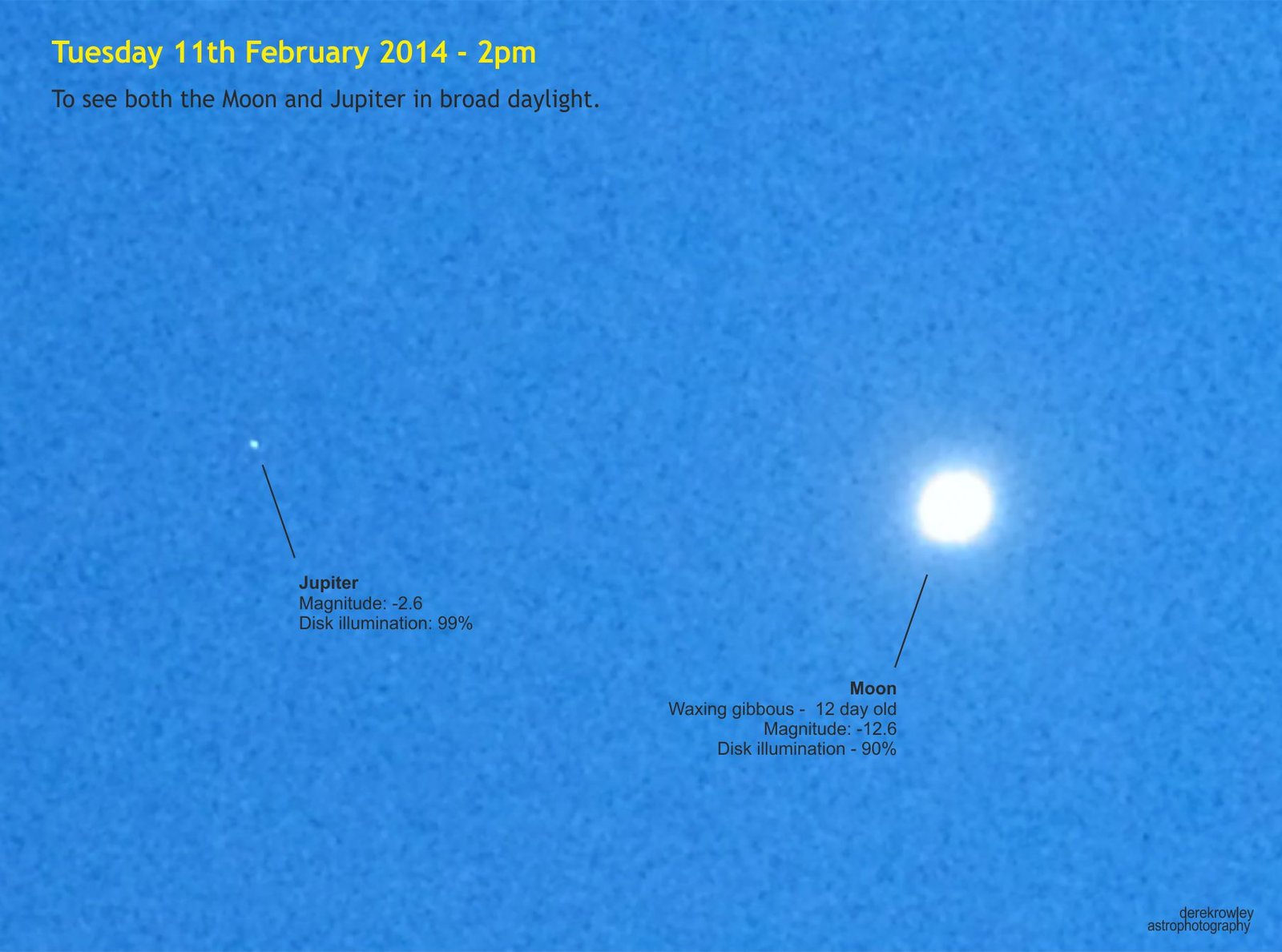
Through the telescope view, the Moon will appear above Jupiter in the early afternoon, around 1pm (BST) in the daylight ~ the Moon will be a 4% illuminated waxing crescent, and Jupiter will be 5 degrees below it.
Or following the bright twilight evening at 9pm (BST), The Moon and Jupiter will share the same right ascension (RA).
See below my archived photo of Moon & Jupiter in broad daylight.
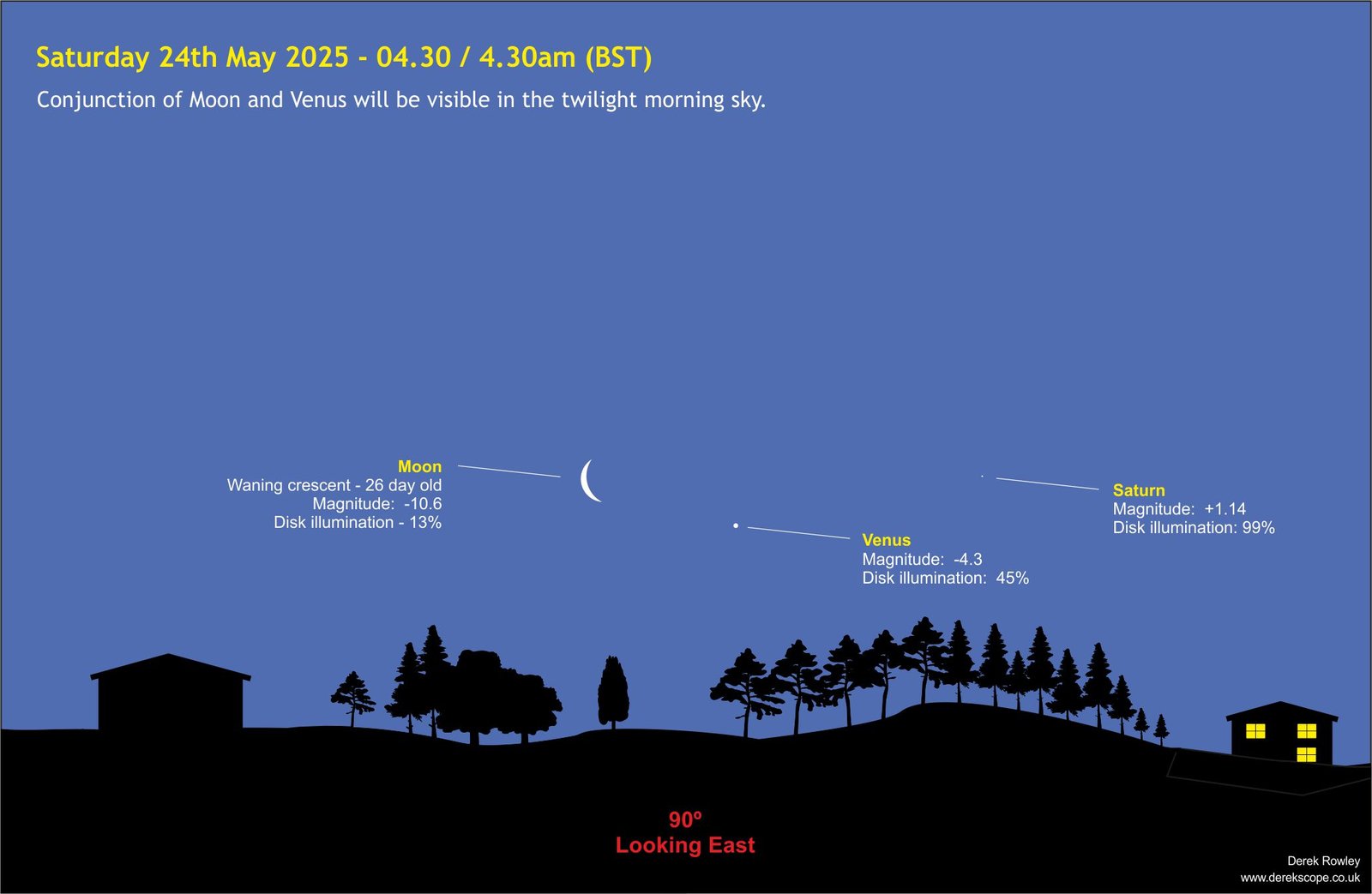
Conjunction of the Moon and Venus will be visible in the twilight morning sky – Venus, appearing as a bright “Morning Star,” will rise in the east, and the thin, waning crescent Moon will be nearby, creating a beautiful visual display.
This event is best viewed from a location with a clear eastern horizon, as the Moon and Venus will be low in the sky before sunrise.

The triangle will be visible in the pre-dawn hours, about 30 minutes before sunrise in the low eastern sky.
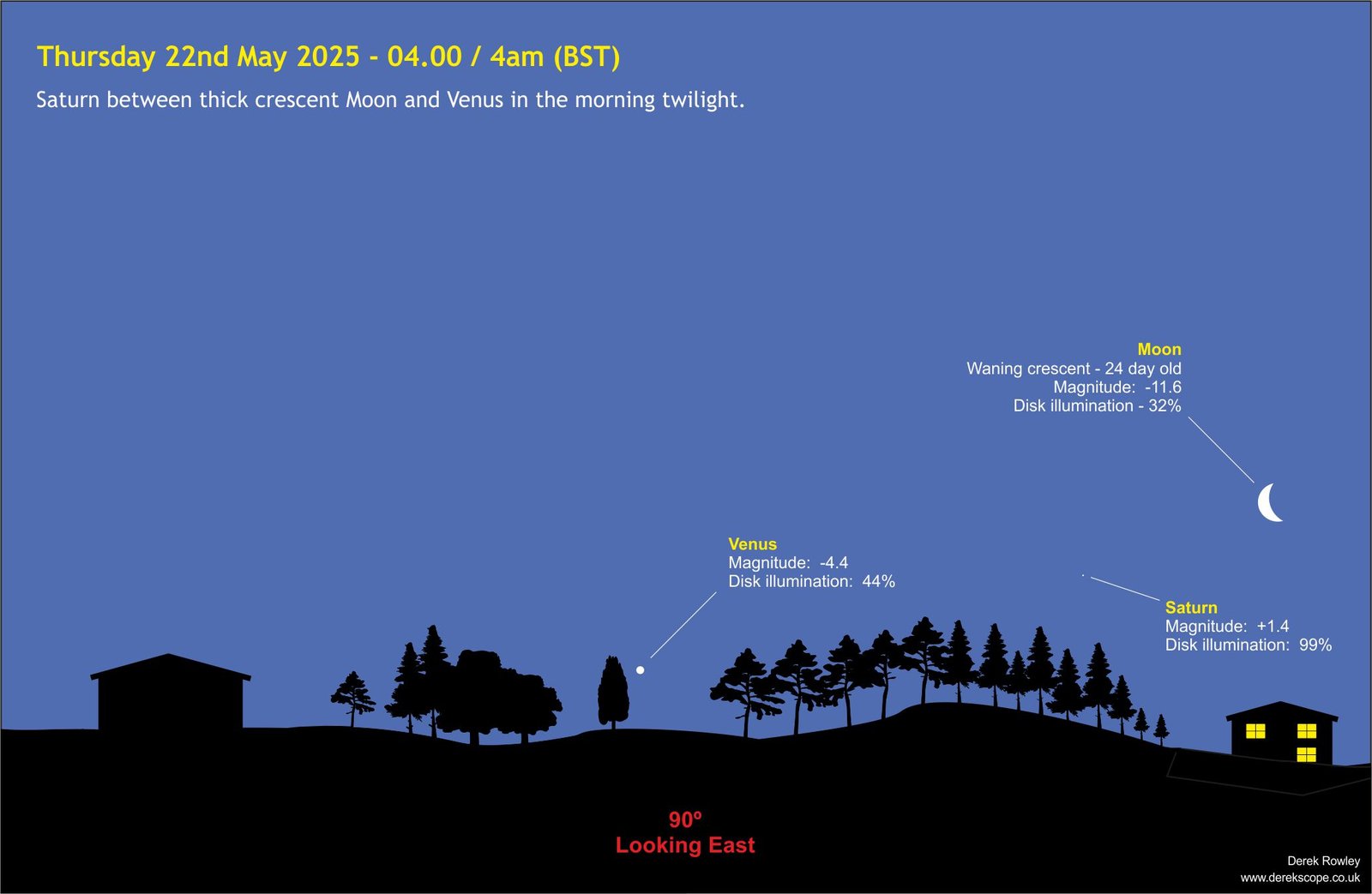
A stunning celestial alignment in the early morning twilight around 4am – Saturn will position itself between the Moon and Venus, creating a beautiful sight in the East-South-eastern sky.
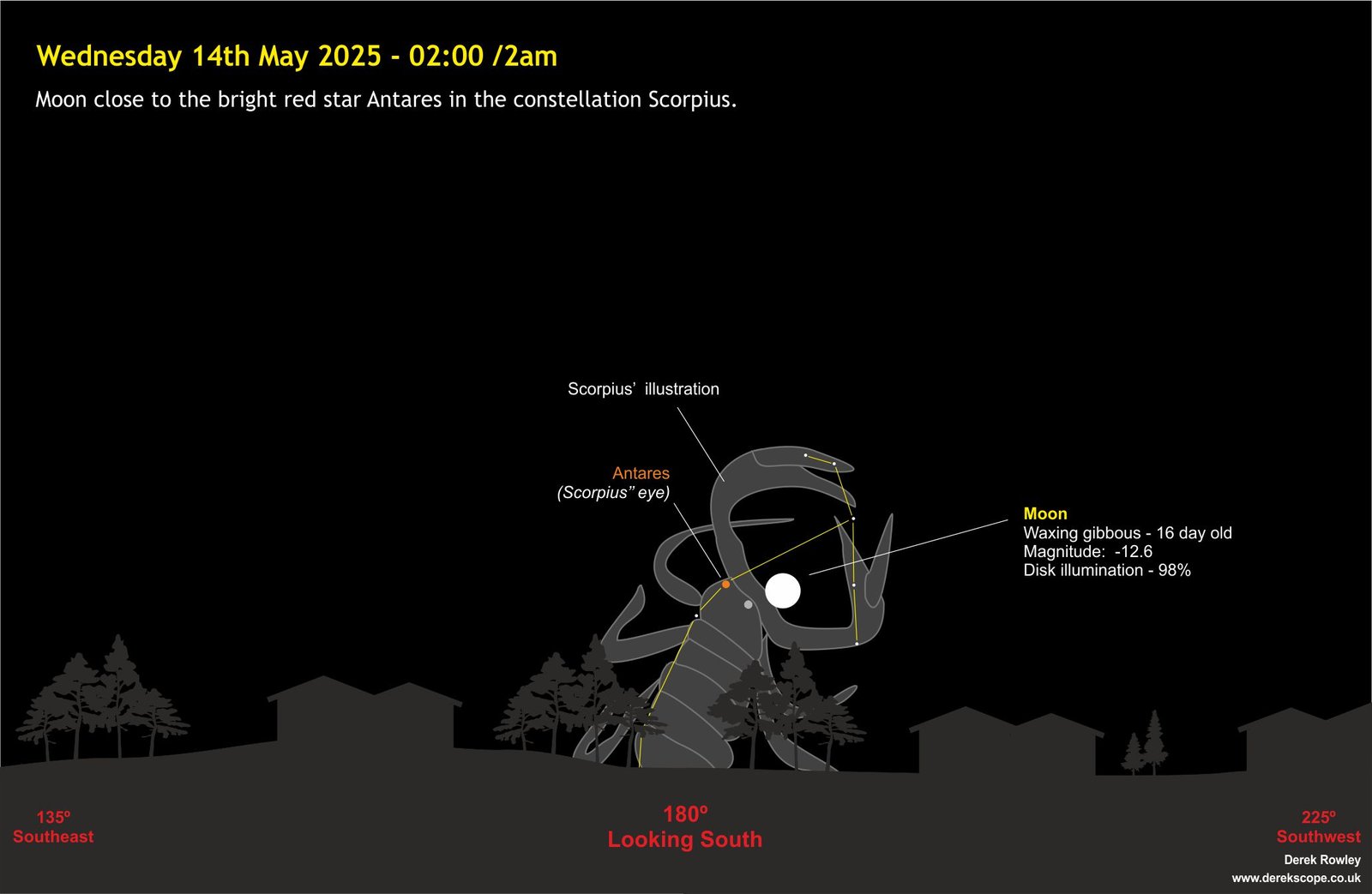
Scorpius, the celestial scorpion, is a fascinating constellation!
“Scorpius’ eye,” which could relate to the bright star Antares in the Scorpius constellation. Antares is often called the “heart of the scorpion” due to its reddish hue and prominent position -it’s a red supergiant star and one of the brightest in the night sky.
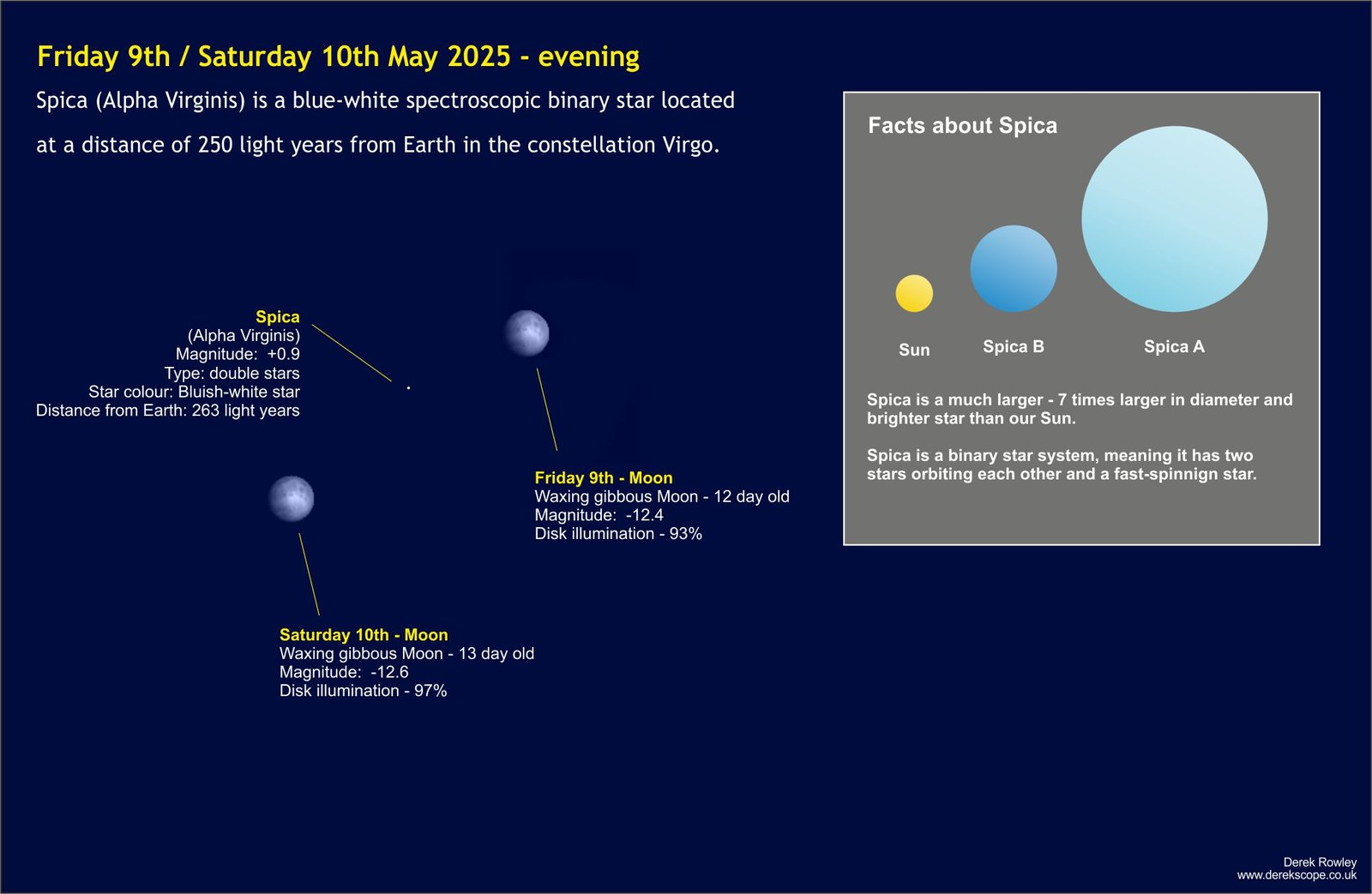
Spica is not a single star, but a binary system, meaning two stars orbit closely around one another, every four days. The stars lie approximately 11 million miles (less than 18 million kilometres) away from each other and appear as a single point of light in the sky.
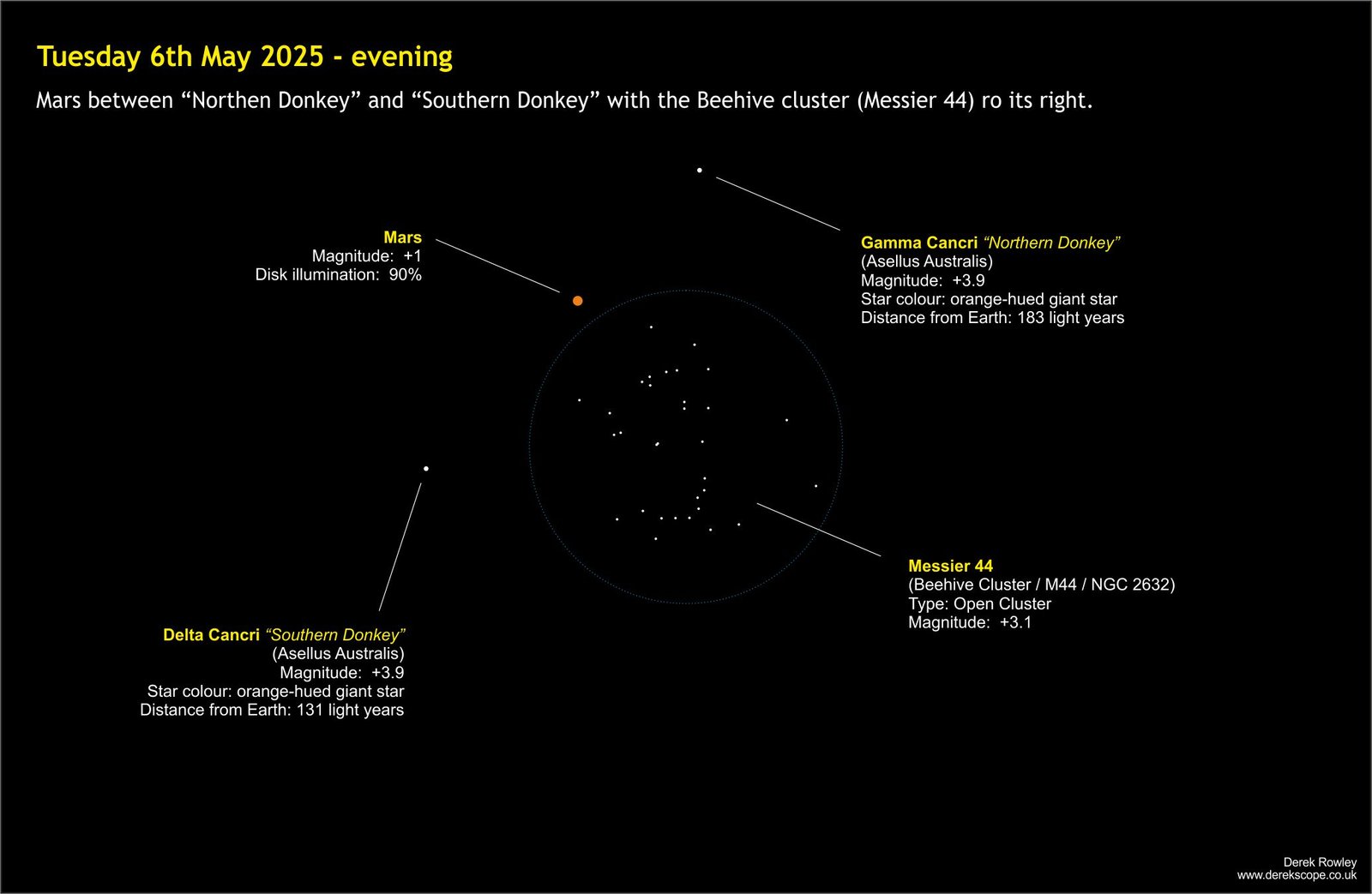
Aselli – the name “Aselli” is Latin for “donkeys”
In astronomy, “Aselli” refers to two stars in the constellation Cancer, specifically Gamma Cancri (Asellus Borealis / Northern Donkey) and Delta Cancri (Asellus Australis / Southern Donkey).
These stars are located near the Beehive cluster (M44), which is also known as the Praesepe.
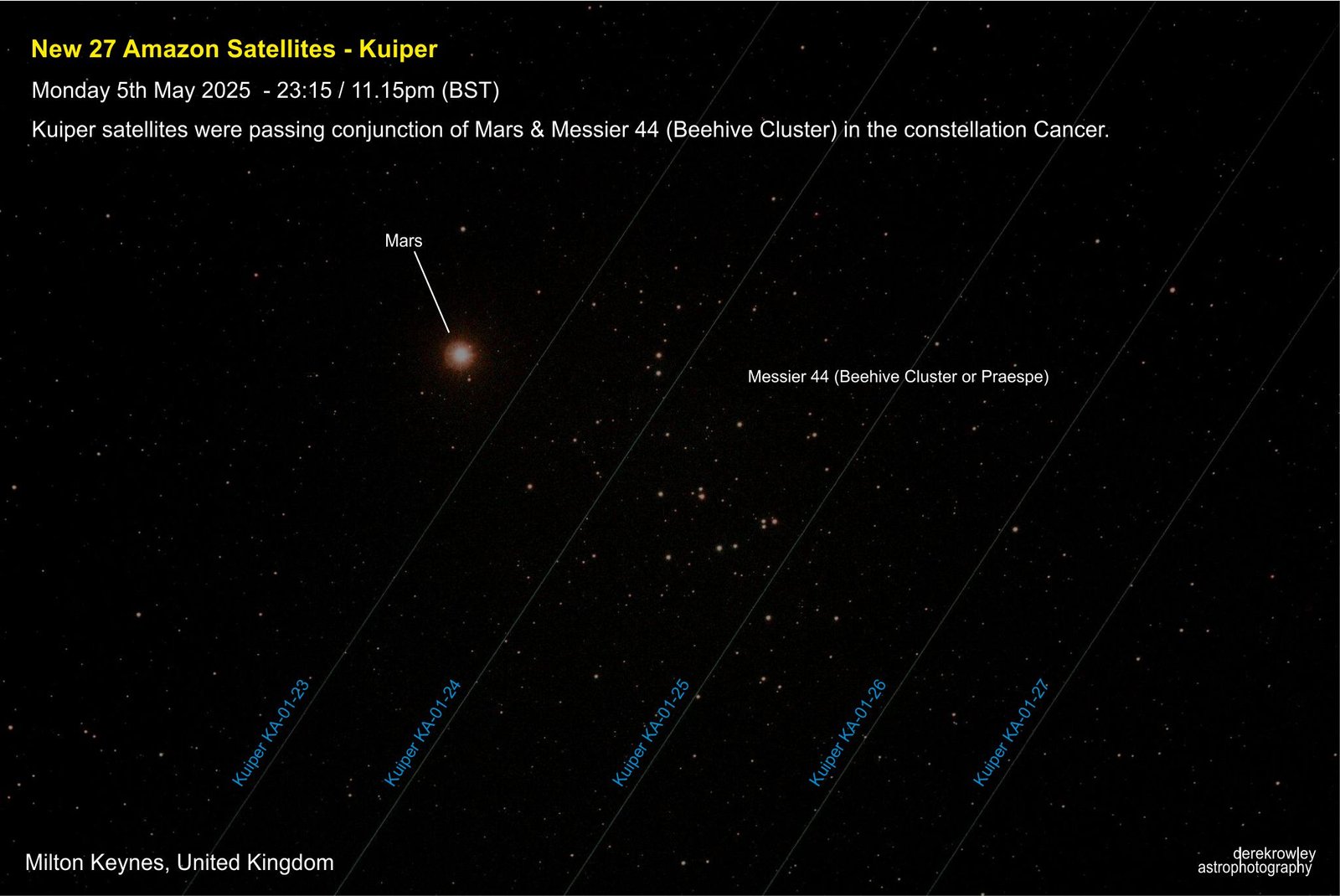
The new operating satellites in orbit are Amazon Kuiper, which left light trails passing conjunction of Mars and Messier 44 (open cluster) in long exposure images.
o
(More information about Amazon Kuiper.)
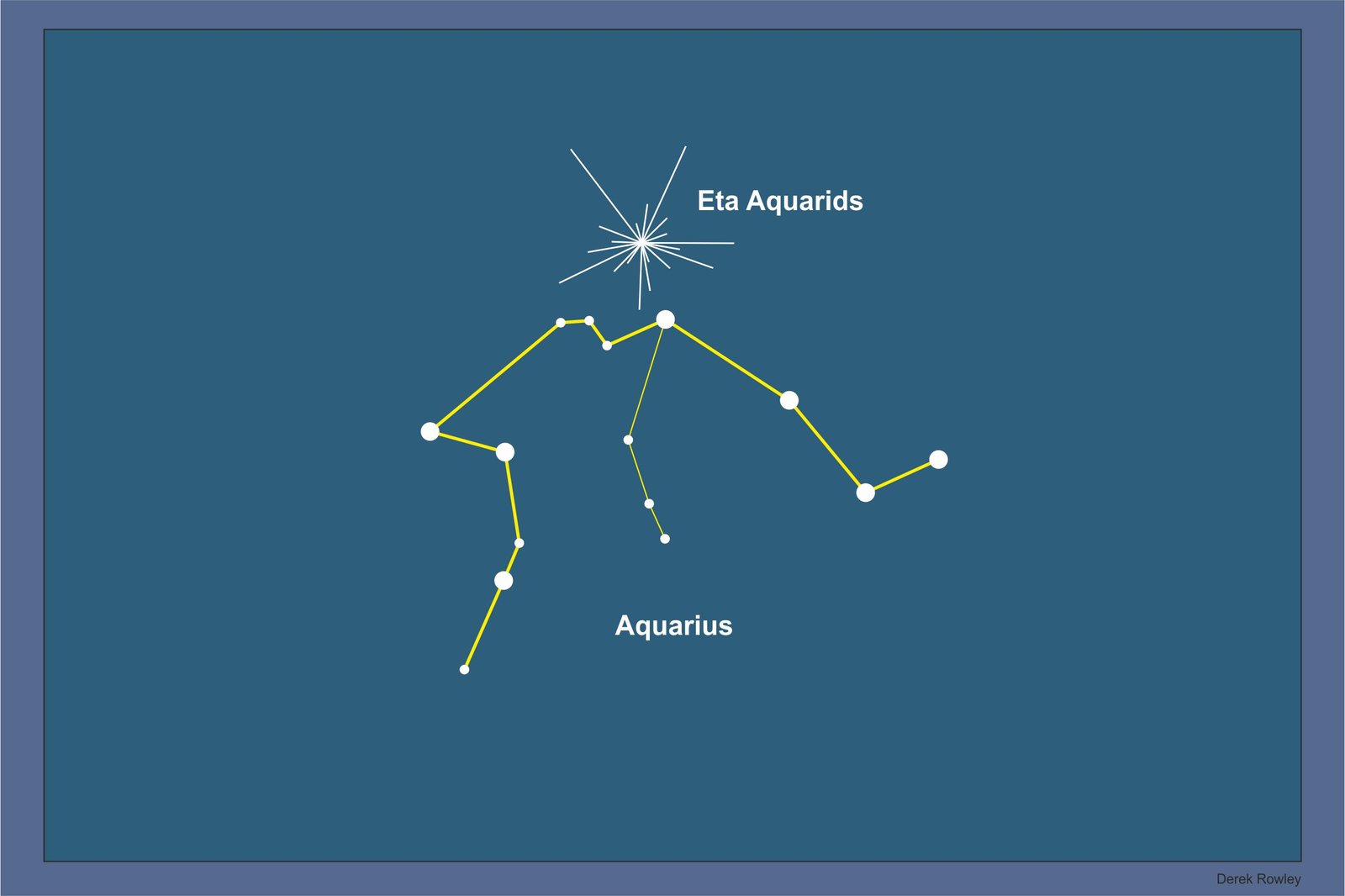
Eta Aquarids (5th thru 6th May)
Note: the radiant of the Eta Aquarids, which peaks around 5th thru 6th May, is challenging to observe from the UK due to its radiant in the constellation Aquarius being quite low on the horizon during dawn in the UK – the low altitude means that fewer meteors are visible because the Earth’s atmosphere obscures part of the view.