
Planetary conjunction – for observers in the British Isles, the best time to look for Mercury is about 45 minutes after sunset, to ensure success, you will need to find a location that offers a level horizon due west unobstructed by houses or trees.

BSL
Astronomy
(British Sign Language)




BSL available
at ENS optical
Astronomy Telescope
retailers at Birmingham
Facetime
Derek can help with it.
British Sign Languages
Interest to learn
BSL Basic for fun?
o
More information
for your BSL journey.





BSL available
at Roboscopes
Facetime
Derek can help with it.
Planetary conjunction – for observers in the British Isles, the best time to look for Mercury is about 45 minutes after sunset, to ensure success, you will need to find a location that offers a level horizon due west unobstructed by houses or trees.
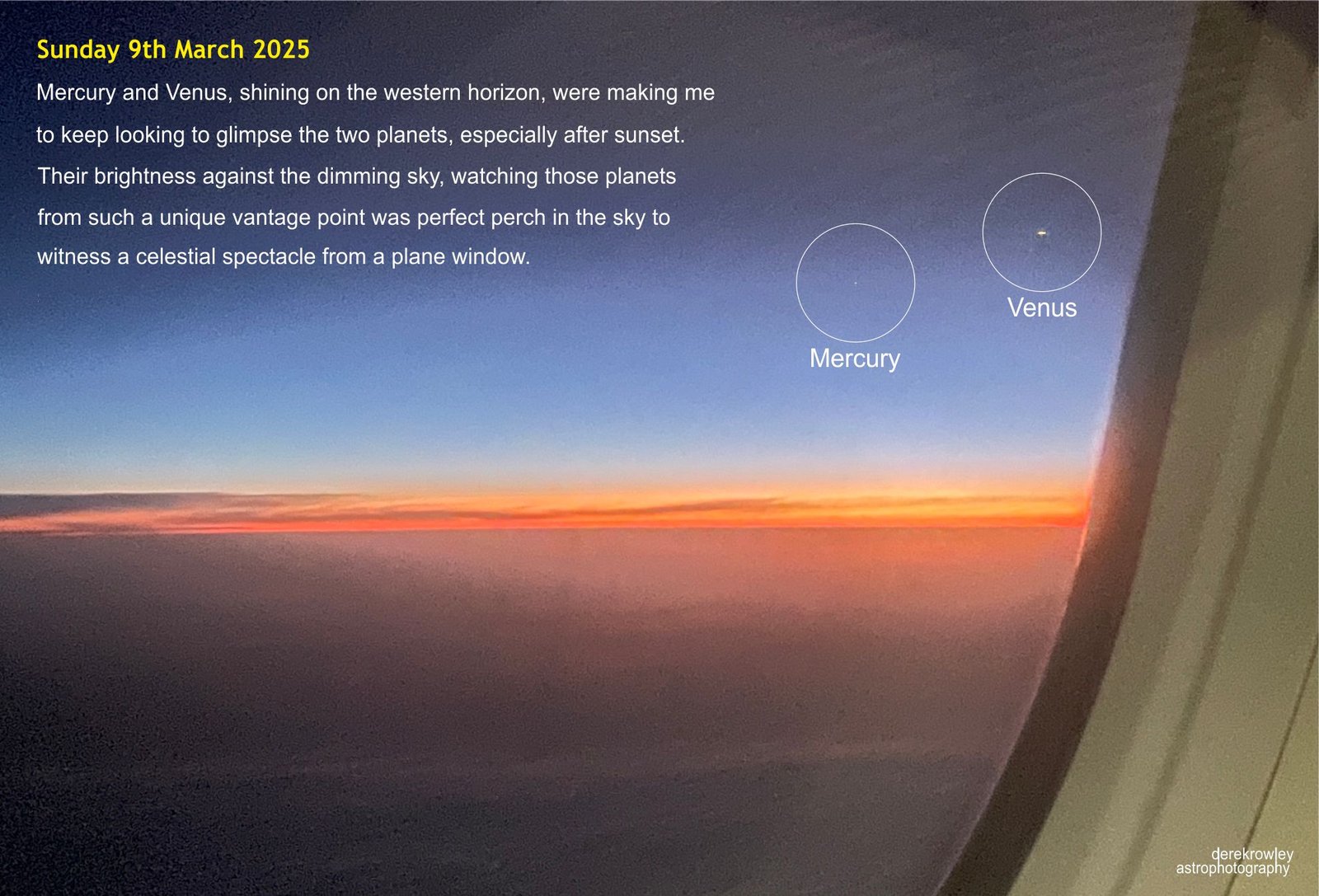
Click above the photo for enlarge to see a Mercury there.
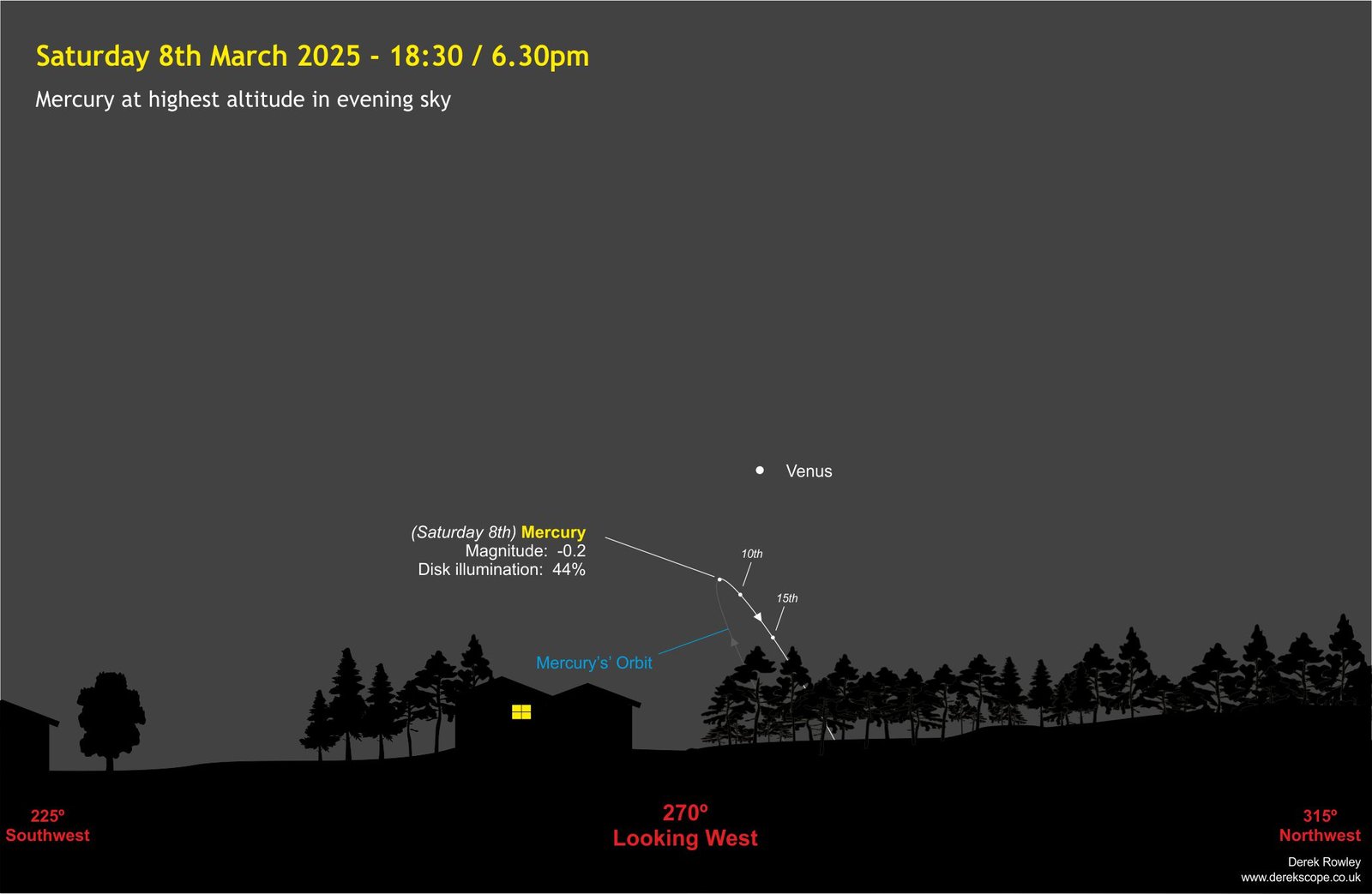

Mercury at highest altitude – this mean Mercury will reach its greatest elongation east, its farthest point from the Sun, for the first time in 2025 on Saturday 8th March as it’s an eastern elongation this will be best seen in the evening.
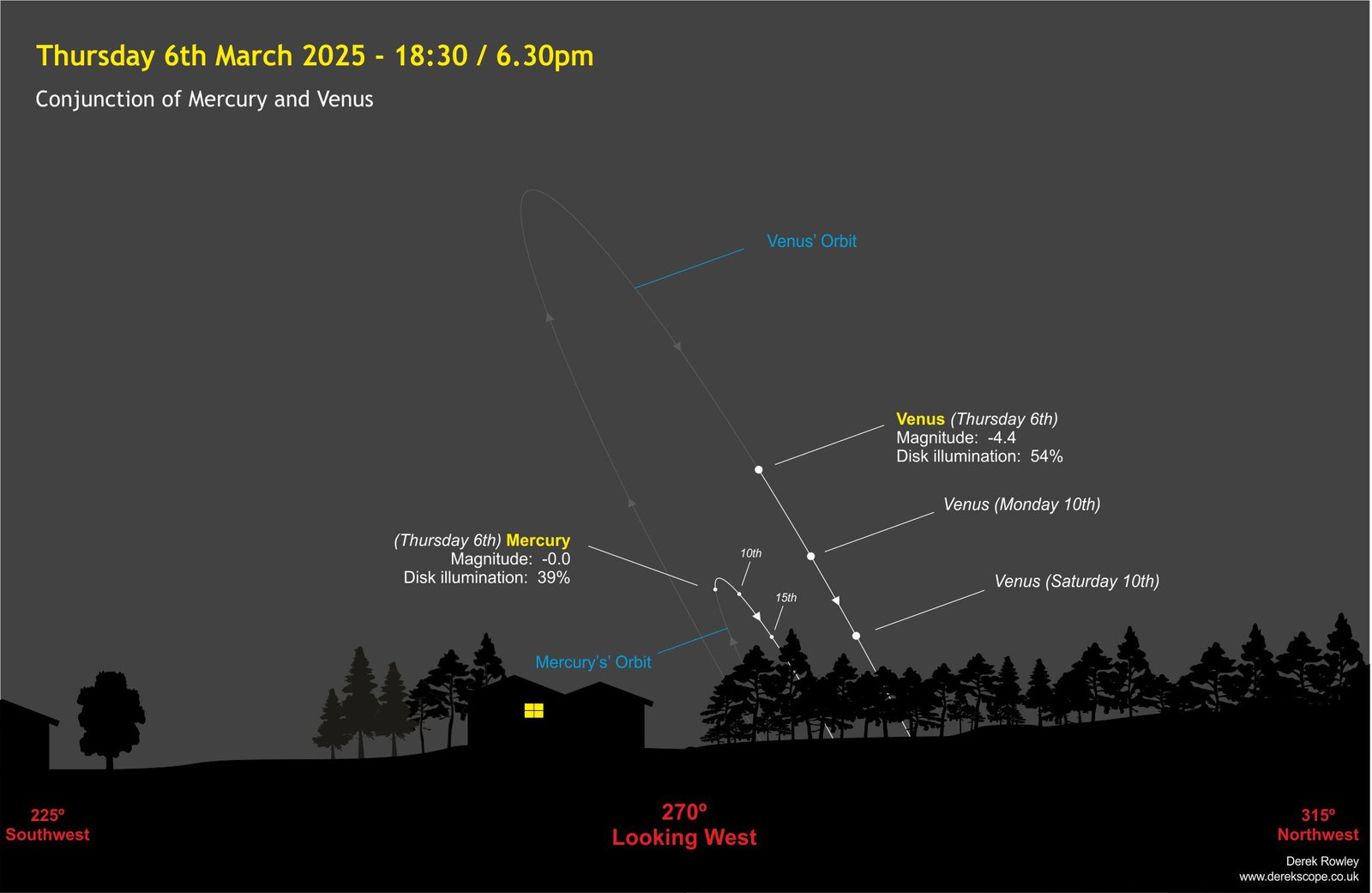
A conjunction of Venus and Mercury is when the planets appear close together in the twilight evening sky.
o
From high latitude view, the pair will become visible at around 18:30 / 6.30pm.
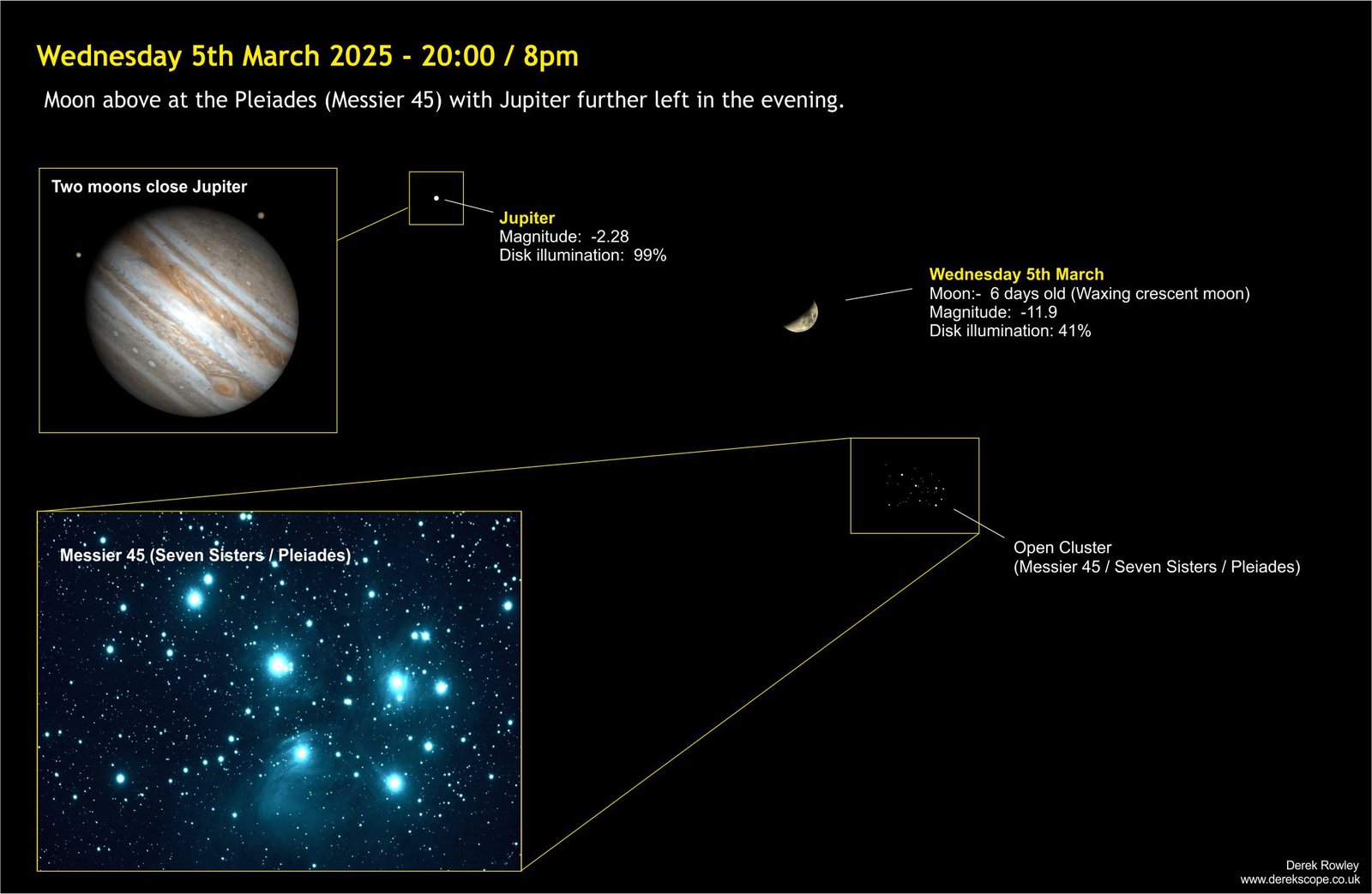
The Pleiades
Also known as Messier 45 or the “Seven Sisters,” is a bright open star cluster located in the constellation Taurus – it’s a stunning sight in the night sky, especially when accompanied by the Moon and Jupiter.
o
This alignment can be observed with the naked eye, but using binoculars or a small telescope can enhance the view and reveal more details – see below to see how two moons are closing to Jupiter tonight.
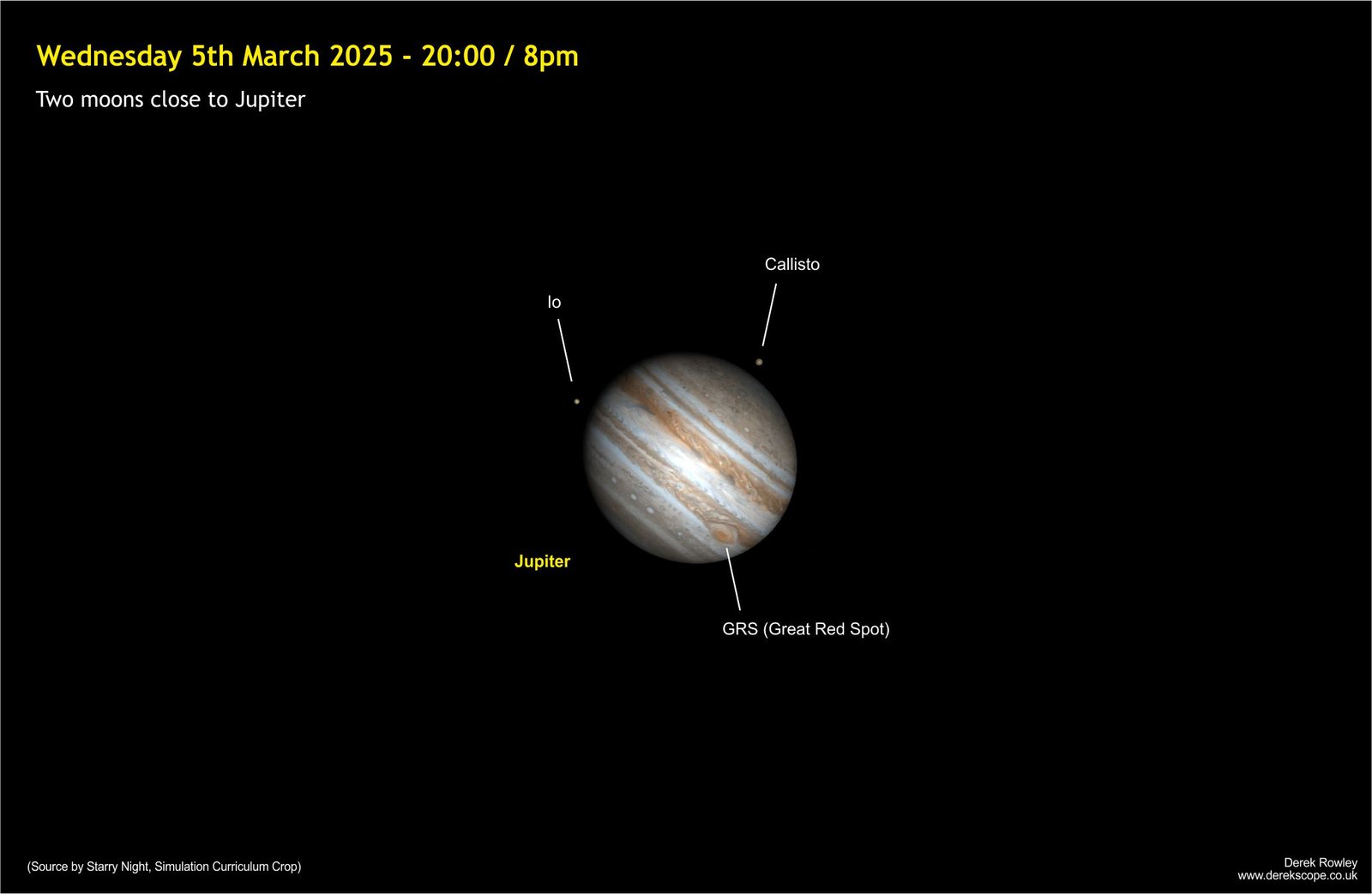
Two moons close to Jupiter
If you’re seeing “two moons close to Jupiter tonight,” you’re likely observing two of Jupiter’s Galilean moons – Io and Callisto, which can often be seen near Jupiter with a decent pair of binoculars or a small telescope – they appear as bright “stars” close to the planet.
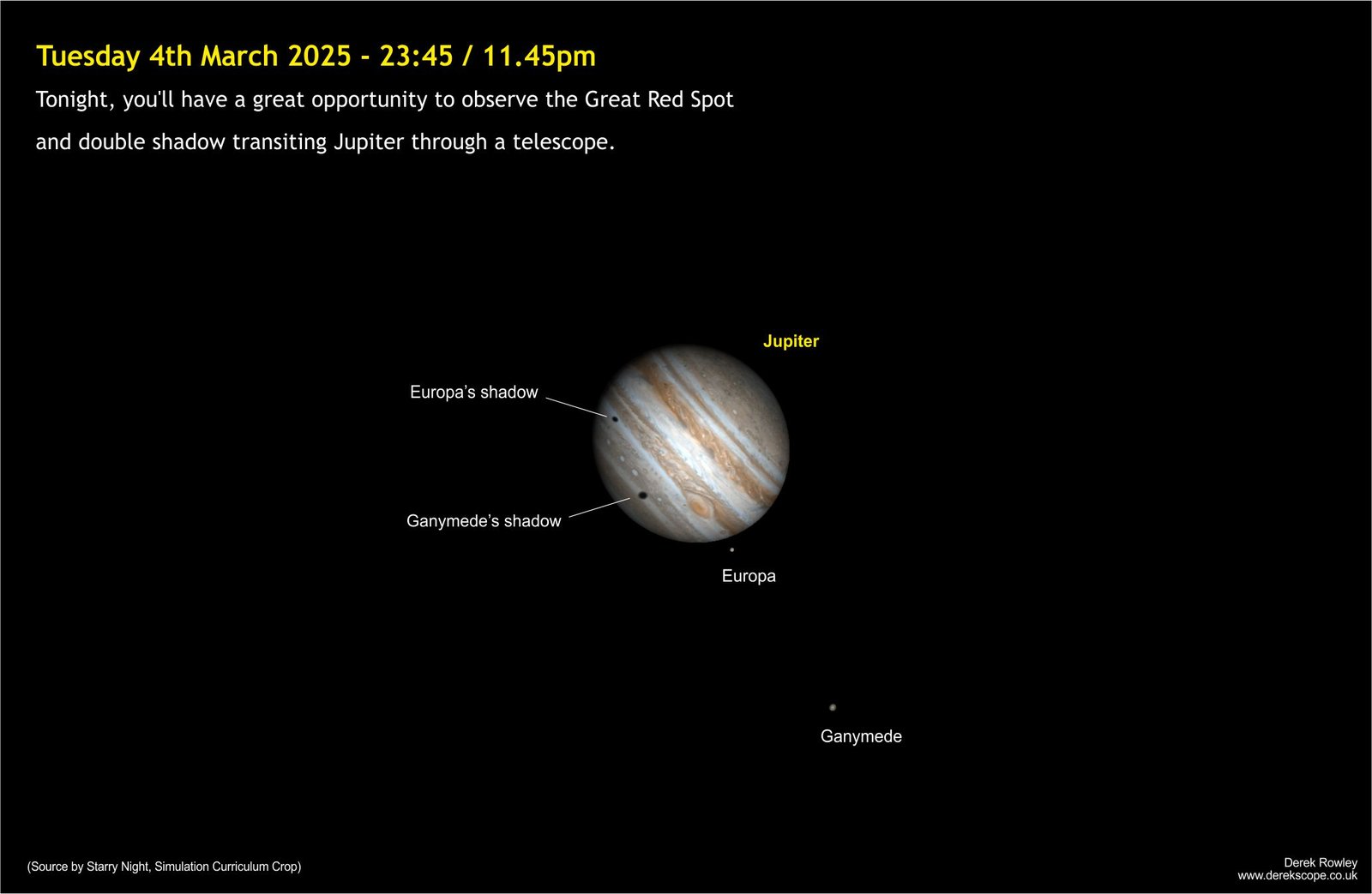
Watching the Great Red Spot and the double shadow transit on Jupiter through a telescope is sure to be an incredible sight.

Spot the Uranus by a pair of binoculars.
How to spot Uranus
– find a Moon of the night sky tonight.
– locate the stars, where the orange circles on the infographic for a star-hopping.
– use binoculars to scan the area for a faint, greenish-blue, Uranus.
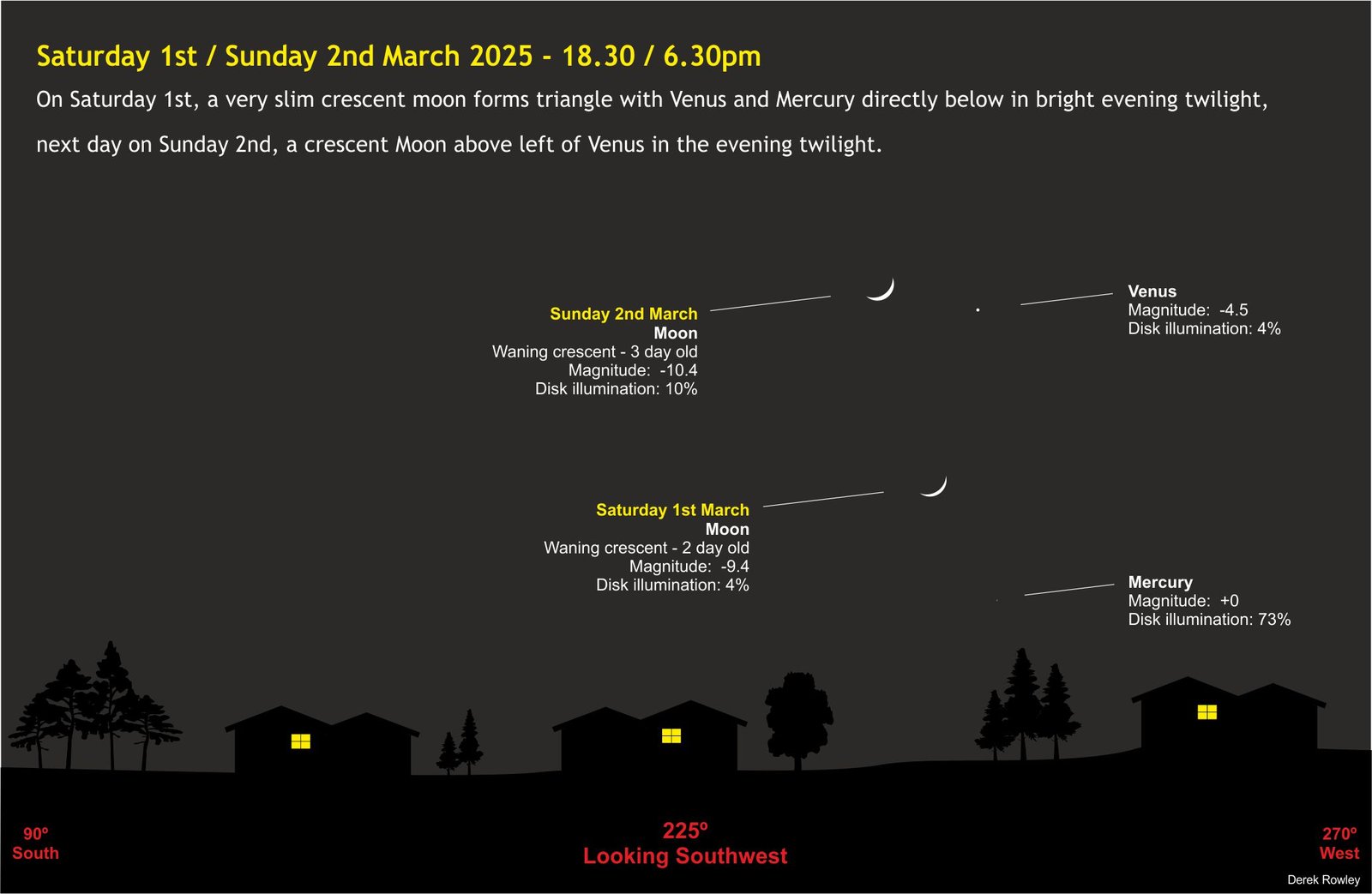
This alignment can indeed be challenging to spot due to the brightness of the twilight sky, but it will be a stunning sight for those who manage to catch it.
How to sign Mercury and Venus in BSL?

Pink glow – this shadow is caused by the Earth itself blocking the sun’s direct rays.
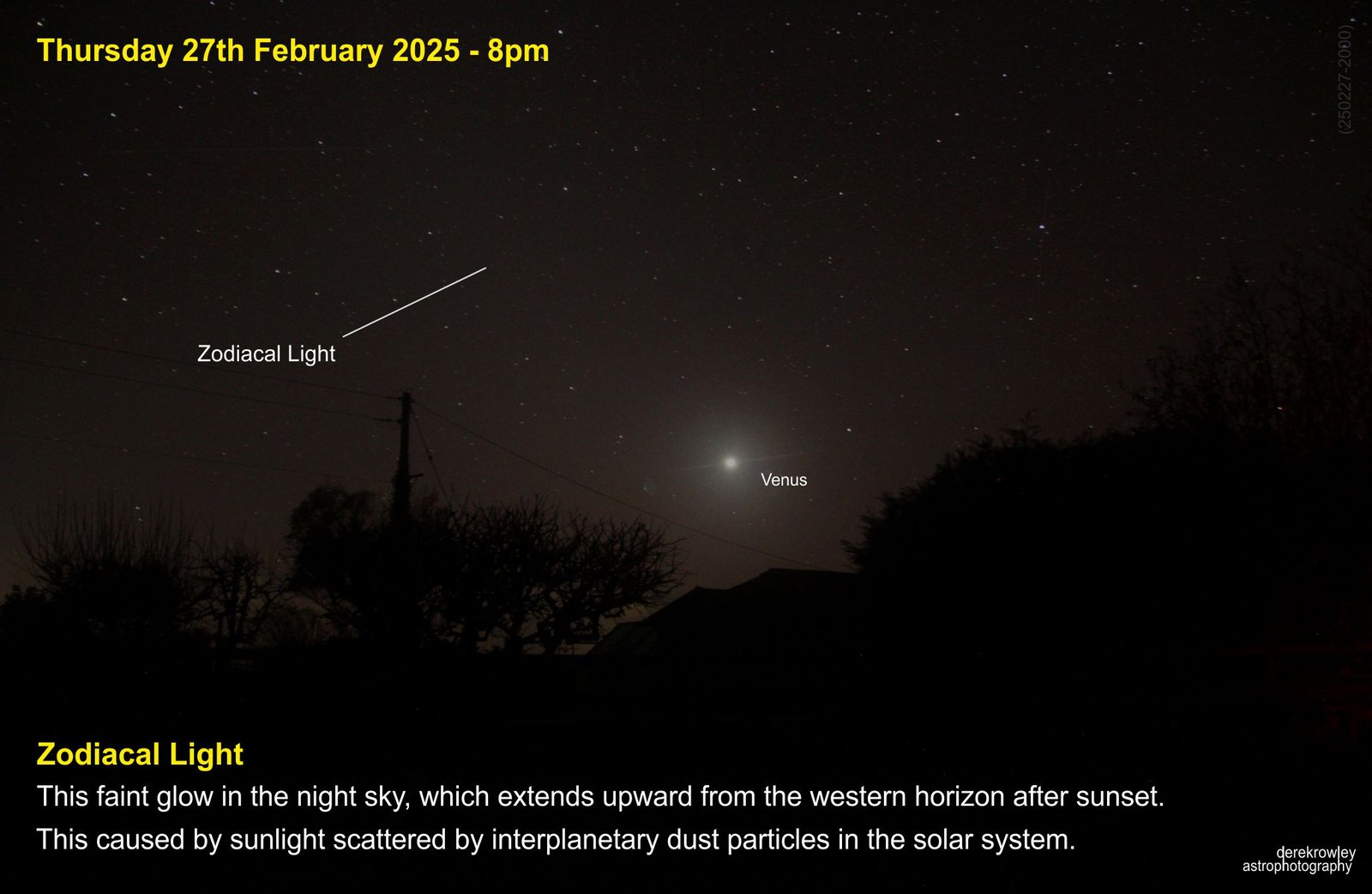
The best time to see the zodiacal light is during the spring and autumn months, when the ecliptic plane is at a steep angle relative to the horizon – it is easier to spot in areas with low light pollution, such as rural locations or dark-sky location.
How to sign zodiacal light in BSL?