Monday 15th December 2024

Algol Minima
o

  • The bright variable star Beta Persei (Algol) reaches its minimum brightness at 04:00 am in the early morning on Monday 15th December and will be visible from the UK.
    o
  • Here’s a list of upcoming minimum brightness times for Algol – read more.
    o

Posted in Homepage (Posts) | Comments Off on Monday 15th December 2024

Sun 14th – Tues 17th Dec 2025

  • NGC 2420 known as a “twinkling comet cluster” and is a rich open cluster in Gemini, about 8,200 light-years away.
    o
  • It’s not associated with comets, though its dense, glittering stars may poetically resemble a “twinkling comet cluster.”
    o
  • Between Sunday 14th – Tuesday 17th December 2025, Jupiter remains over 3° south of NGC 2420, too far for a conjunction or close visual pairing.
    o
  • This separation is significant – not close enough for binocular framing, though both are in Gemini.
    o

Posted in Homepage (Posts) | Comments Off on Sun 14th – Tues 17th Dec 2025

Sat 13th thru Sun 14th Dec 2025

  • The Geminid Meteor Shower reaches its peak on the night of 13th thru 14th December, with excellent viewing conditions this year.
    o
  • The Moon, only 39% illuminated, will rise late around 23:30, providing minimal interference from moonlight.
    o
  • Best viewing from mid-evening (after 9pm) through pre-dawn hours – the radiant is in the constellation Gemini, rising in the northeast.
    o

Posted in Homepage (Posts) | Comments Off on Sat 13th thru Sun 14th Dec 2025

Fri 12th thru Sat 13th December 2025

  • Jupiter’s largest moon, Ganymede, will slip into Jupiter’s shadow at midnight, disappearing from view in telescopes.
    o
  • This rare eclipse begins around 11:30pm on Saturday midnight – watch as Ganymede fades into darkness.
    o

Posted in Homepage (Posts) | Comments Off on Fri 12th thru Sat 13th December 2025

Thursday 11th December 2025

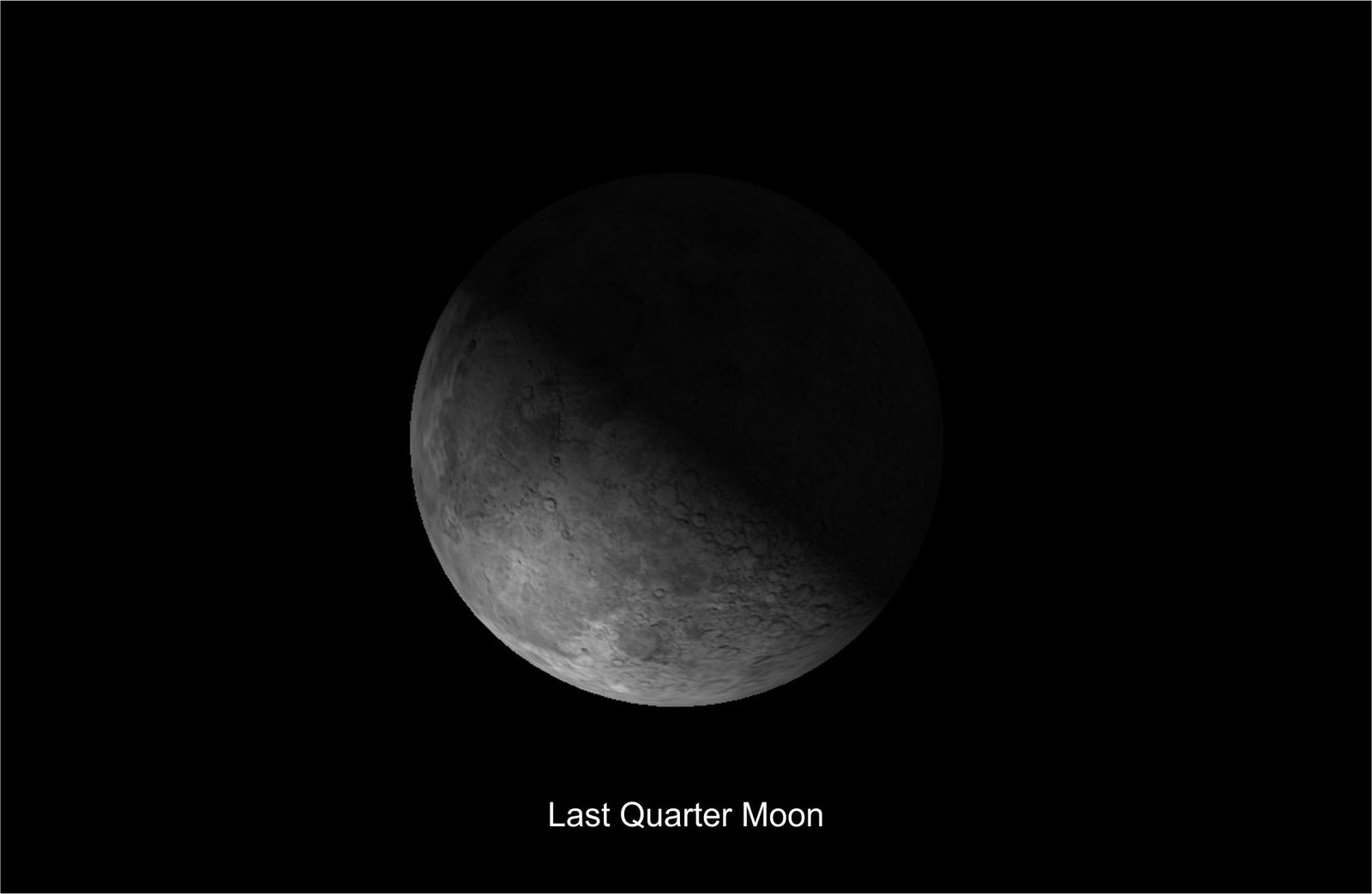
  • The Moon appears half-illuminated, with the left side 50% lit in the constellation Leo ~ it’s the final quarter of the lunar cycle, leading toward the New Moon on Saturday 20th December 2025.
    o

Posted in Homepage (Posts) | Comments Off on Thursday 11th December 2025

Tuesday 9th December 2025

Titan & Rhea to be seen together

  • Saturn’s moons Titan and Rhea are among its brightest satellites.
    o
  • Titan is the largest, with a thick orange atmosphere, while Rhea is smaller and icy.
    o
  • Titan and Rhea will be visible together near Saturn at 22:20 / 10:30 pm tonight, sometimes appearing side by side in telescopic views.
    o
  • Their proximity is striking because Titan usually orbits farther out, while Rhea is closer in.

Posted in Homepage (Posts) | Comments Off on Tuesday 9th December 2025

Wednesday 10th December 2025

  • The lunar occultation of Regulus on Wednesday 10 December 2025 will occur between 07:26 and 08:27 in the early morning, visible in the southwestern sky.
    o
  • Regulus can be seen in daylight with a telescope but under very specific conditions.

Posted in Homepage (Posts) | Comments Off on Wednesday 10th December 2025

Mon 8th thru Tues 9th Dec 2025

Three Acts on Jupiter’s stage in one night!

  • Monday 8th at 9pm
    Io slips into shadow, Callisto’s shadow centred on Jupiter.
    o
  • Monday 8th at 10.30pm
    Callisto’s shadow leaves Jupiter as the Great Red Spot appears.
    o
  • Tuesday 9th at 2.15am
    The Great Red Spot drifts away, and Callisto begins its transit.
    o

(Times above are shown to help you prepare for observing.)


Posted in Homepage (Posts) | Comments Off on Mon 8th thru Tues 9th Dec 2025

Monday 8th December 2025

Titan transits Saturn early evening

  • Saturn is visible from the UK with a telescope.
    o
  • The transit begins around sunset and continues into twilight, offering a rare and poetic view of Saturn’s largest moon crossing the planet’s disk.
    o

Posted in Homepage (Posts) | Comments Off on Monday 8th December 2025

Monday 8th December 2025

  • Mercury reaches greatest western elongation on Monday 8th December 2025.
    o
  • At this point, it will be 20.7° west of the Sun and best visible in the morning sky from the UK.
    o
  • Best seen in the morning sky, rising about 90 minutes before sunrise ~ low in the eastern sky, just above the horizon (Mercury brightness ~ magnitude: -0.5).
    o

Posted in Homepage (Posts) | Comments Off on Monday 8th December 2025